

Published 25 November 2025, updated 14 August 2026
Assessing the Speed of Oncoming Traffic When Emerging from Side Roads: A Complete Guide for Learner Drivers
Emerging from side roads onto busy main roads can feel overwhelming, especially when you’re still learning to judge how fast oncoming traffic is travelling. Many new drivers struggle with this crucial skill, and it’s actually the top reason people fail their driving test. The key to safe emerging is taking enough time to look left and right at least twice in each direction, allowing yourself to properly assess both the speed and distance of approaching vehicles.
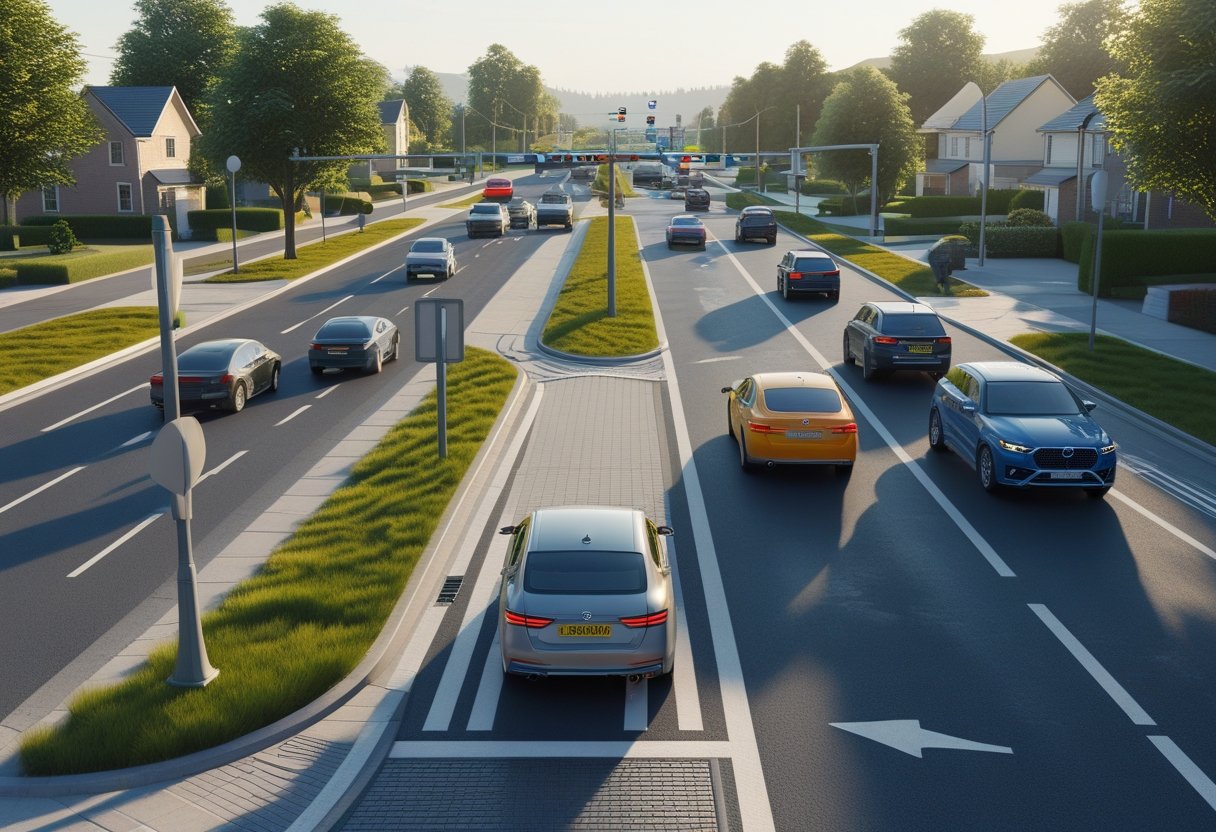
We’ve all been there, sitting at a junction feeling uncertain about whether that car in the distance is moving fast enough to reach us before we can safely pull out. This hesitation is completely normal and actually shows good judgement. The challenge lies in developing the confidence to make quick, accurate decisions whilst never compromising on safety.
Learning to assess traffic speed effectively transforms your driving experience from stressful guesswork into confident decision-making. With the right techniques and plenty of practice, you’ll soon find yourself naturally gauging vehicle speeds and spotting safe gaps in traffic. Let’s explore the practical methods that will help you master this essential driving skill.
Key Takeaways
- Always look left and right at least twice before emerging to catch anything you might have missed on the first glance
- Use the MSPSL routine when approaching junctions and slow down enough to properly assess whether it’s safe to proceed
- When in doubt about a vehicle’s speed or the size of a gap, wait for a clearer opportunity rather than taking unnecessary risks
Judging gaps safely becomes instinctive with mileage, and an intensive driving course packs weeks of practice into days so the skill sticks.
Why Speed Assessment Matters at Junctions
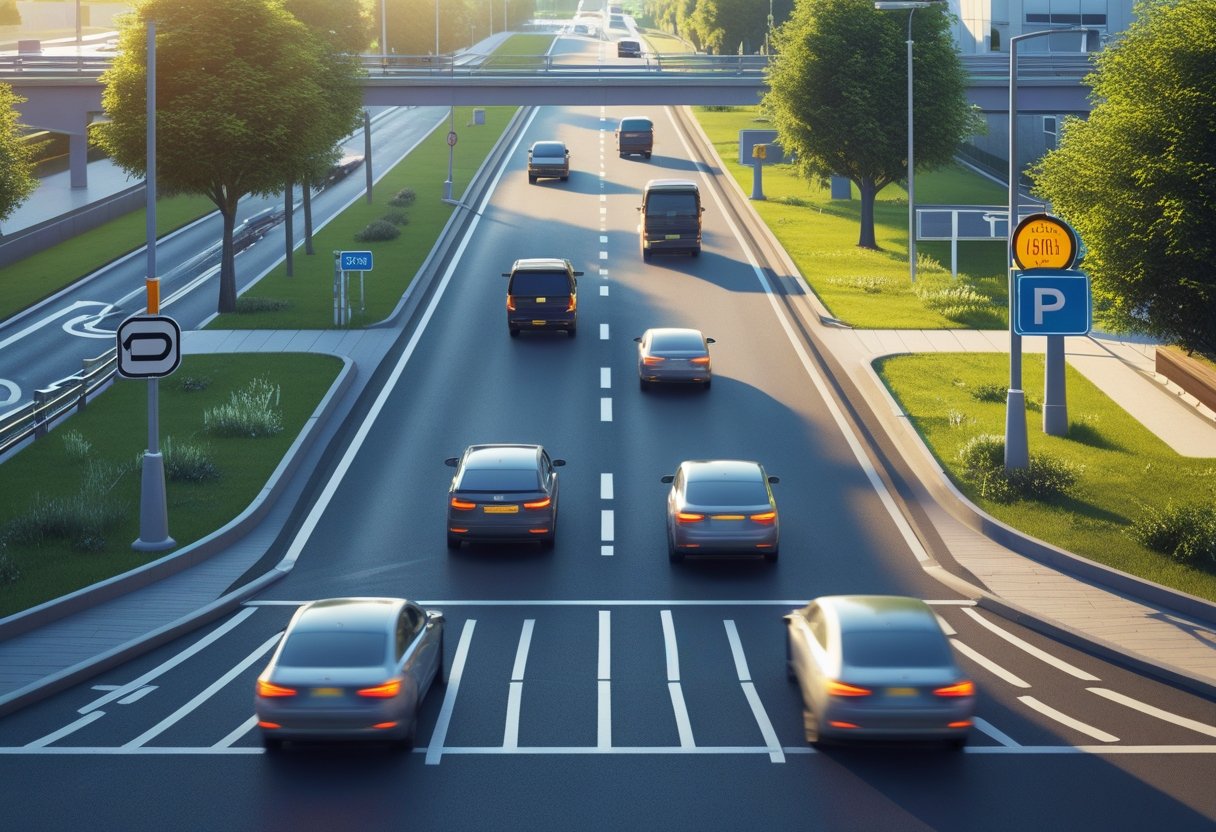
Emerging from side roads requires split-second decisions that can mean the difference between a smooth manoeuvre and a serious collision. The ability to accurately judge how fast traffic is approaching affects every aspect of your driving safety and confidence.
Common Dangers When Emerging from Side Roads
When we’re pulling out from a minor road onto a main carriageway, several hazards can catch us off guard. Misjudging vehicle speeds ranks as the most dangerous mistake we can make.
Fast-approaching cars often appear deceptively slow from our position on the side road. This optical illusion happens because distant vehicles seem to crawl along until they suddenly arrive much quicker than expected.
Motorcycles present particular challenges during our practical driving test and everyday driving. They’re smaller, harder to spot, and often travel faster than we initially perceive.
Heavy vehicles like lorries and buses create their own set of problems. Whilst they might look slow, their massive weight means they need much longer stopping distances.
Weather conditions make speed assessment even trickier. Rain reduces visibility and increases stopping distances for all road users. What looks like a safe gap in dry conditions becomes dangerous when roads are slippery.
Multiple hazards often occur simultaneously at busy junctions. We might spot a car approaching from the left whilst missing a cyclist coming from the right. This divided attention during driving lessons teaches us why thorough observation is crucial.
The Role of Proper Observation
Effective observation goes far beyond a quick glance before pulling out. We need to develop a systematic approach that accounts for all potential dangers.
The “look, assess, look again” method serves us well at junctions. Our first look gives us the overall picture, assessment time lets us judge speeds and distances, then a final check confirms conditions haven’t changed.
Moving our heads rather than just our eyes helps us gather better information. This physical movement ensures we’re not missing anything in our peripheral vision, especially important during our practical driving test.
Sound plays a vital role in speed assessment. A car engine noise can tell us whether a vehicle is accelerating, maintaining speed, or slowing down. Motorcycles often sound closer than they actually are due to their distinctive engine notes.
We should never rush our observations, even when other road users seem impatient behind us. Taking those extra few seconds to properly assess oncoming traffic speeds can prevent accidents that would affect us for years to come.
Key Statistics on Junction-Related Incidents
Junction accidents account for approximately 60% of all road traffic collisions in the UK, with speed misjudgement being a primary contributing factor.
New drivers face higher risks at junctions during their first two years after passing their practical driving test. Statistics show that one in five new drivers experiences a junction-related incident within 24 months of gaining their licence.
The following collision types occur most frequently when emerging from side roads:
- Right-turn accidents: 35% of junction incidents
- Straight-across collisions: 28% of junction incidents
- Left-turn mishaps: 22% of junction incidents
- Multi-vehicle pile-ups: 15% of junction incidents
Time of day significantly affects junction safety statistics. Rush hour periods (7-9 AM and 5-7 PM) see three times more speed-related junction accidents compared to quieter periods.
Rural junctions prove particularly hazardous due to higher approach speeds on country roads. Government data shows that 70% of serious junction accidents occur on roads with speed limits above 40 mph, where our ability to judge approaching vehicle speeds becomes critical for survival.
Understanding Different Types of Junctions
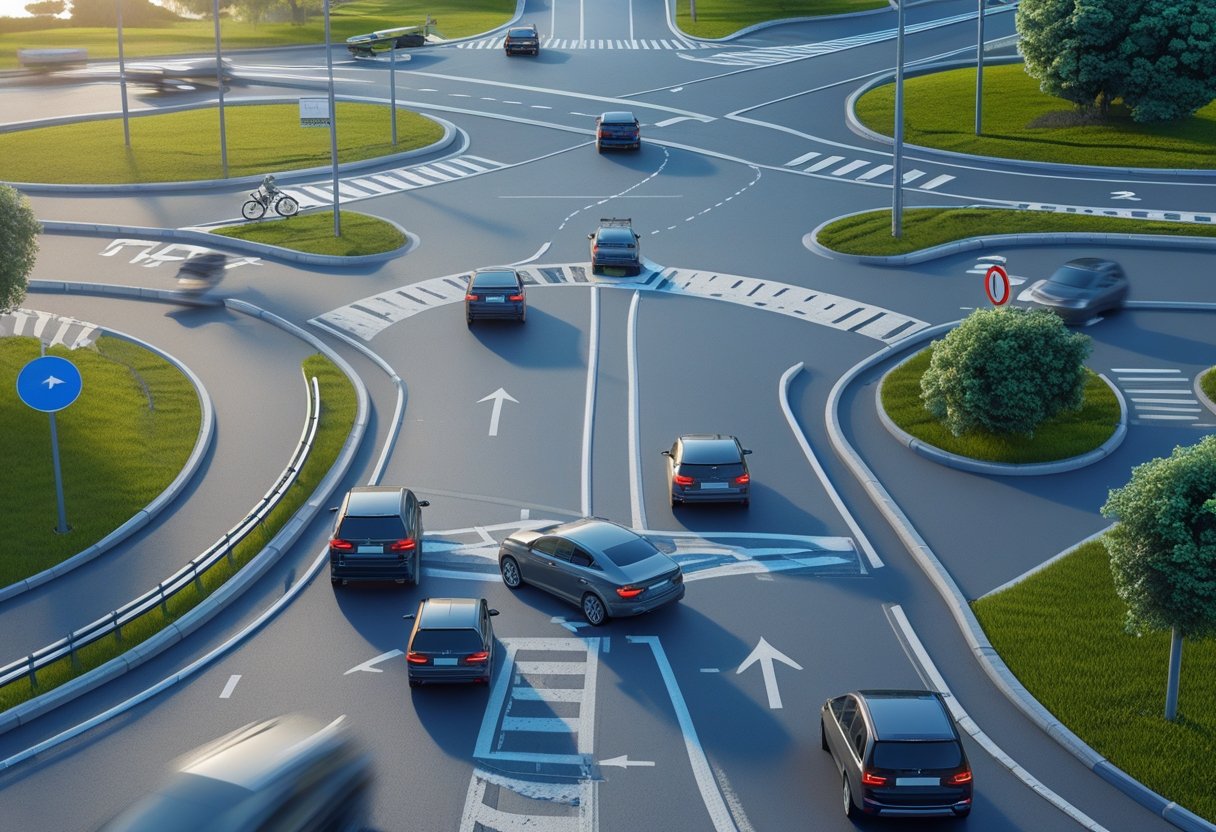
Different junctions present unique challenges when judging oncoming traffic speed. Some offer clear sightlines whilst others restrict your view, and priority rules vary depending on road markings and signs.
Open Versus Closed Junctions
Open junctions give you excellent visibility in all directions before you reach the junction itself. You can see approaching traffic from quite a distance, making it easier to judge speeds accurately.
These junctions typically occur in rural areas or suburban roads with minimal obstructions. You’ll often find them where housing is set back from the road or in open countryside.
Key advantages of open junctions:
- Clear view of approaching vehicles
- More time to assess traffic speed
- Easier decision-making process
Closed junctions restrict your view until you’re right at the give way line. Buildings, hedges, parked cars, or road layout block your sightlines.
You’ll need to creep forward slowly to get a proper view. This means judging traffic speed happens quickly, requiring sharp observation skills.
Common features of closed junctions:
- Limited visibility until the last moment
- Buildings or vegetation blocking views
- Parked vehicles creating blind spots
- Need for extra caution when emerging
T-Junctions and Y-Junctions Explained
T-junctions are where a minor road meets a major road at a right angle. The side road (where you’re emerging from) must give way to traffic on the major road.
These junctions often have clear priority rules. You’ll see give way markings, signs, or both indicating who has right of way.
At T-junctions, traffic approaches from your left and right only. This makes speed assessment slightly simpler than more complex junction types.
T-junction priorities:
- Major road traffic has priority
- Minor road must give way
- Look both ways before emerging
Y-junctions involve a minor road joining a major road at an angle rather than perpendicular. The angled approach can affect your view of oncoming traffic.
The acute angle might create blind spots, particularly when looking back over your shoulder. Take extra care checking your mirrors and physically turning to look.
Priority rules remain the same as T-junctions, but the geometry makes speed judgement trickier.
Crossroads and Complex Junctions
Crossroads involve four roads meeting at one point. Traffic can approach from three different directions when you’re emerging from the fourth.
Priority depends on road markings and signs. Some crossroads have all-way stops, others give priority to the major road, and unmarked crossroads follow specific rules.
Types of crossroads:
- Marked crossroads: Clear signs and road markings indicate priority
- Traffic light controlled: Signals manage traffic flow
- Unmarked crossroads: Special priority rules apply
Complex junctions include multiple lanes, slip roads, or unusual layouts. These might involve several roads meeting at odd angles or staggered junctions.
D junctions create particularly challenging situations. Traffic approaches from multiple directions at varying angles, making speed assessment demanding.
Multi-lane approaches require checking each lane separately. A slow lorry in the near lane might hide a fast car in the far lane.
Unmarked Junctions and Priority Rules
Unmarked junctions lack signs or road markings indicating priority. Special rules determine who gives way in these situations.
At unmarked crossroads, traffic approaching from your right has priority over you. You must give way to vehicles coming from the right.
However, you still need to check left and straight ahead. Other drivers might not know these rules or might misjudge the situation.
Unmarked junction rules:
- Give way to traffic from your right
- Traffic from your left gives way to you
- Proceed with extreme caution
- Make eye contact with other drivers when possible
Rural areas often feature unmarked junctions between minor roads. These require extra vigilance as other drivers might not expect traffic.
Take your time at these junctions. The absence of clear priority markings means everyone needs to be more careful and considerate.
Remember that not all drivers understand unmarked junction rules perfectly. Always err on the side of caution, even when you technically have priority.
The MSPSL Routine and Approach Techniques
The MSPSL routine gives us a structured way to assess traffic speed safely when emerging from side roads. We’ll master using mirrors for early traffic assessment, clear signalling techniques, optimal positioning for visibility, and precise speed control during our approach.
Using Mirrors to Check Traffic Speed
We need to check our mirrors early and often when approaching junctions. Start checking about 10 car lengths before the junction to get a proper read on traffic behind us.
Interior mirror shows us vehicles directly behind. We can judge their speed by watching how quickly they get larger in the mirror.
Door mirrors reveal traffic in adjacent lanes on main roads. Look for motorcycles and cyclists who might be harder to spot.
Watch for these speed indicators in your mirrors:
- Fast-approaching headlights that grow quickly in size
- Vehicles changing lanes frequently (usually indicates higher speeds)
- Heavy goods vehicles that take longer to slow down
- Emergency vehicles with flashing lights
Check mirrors again after signalling to see how traffic responds. Some drivers slow down when they see our indicator, whilst others might try to overtake before we turn.
The key is timing our mirror checks properly. Too early and the situation changes. Too late and we haven’t got enough information to make safe decisions.
Signalling Intentions Early and Clearly
We signal our intentions to help other road users understand what we’re planning. Early signalling gives everyone more time to react and adjust their speed.
When to signal: Start signalling at least 3 seconds before we intend to move. On faster roads, signal even earlier to give drivers more reaction time.
Signal before we begin positioning our vehicle. This tells other drivers why we’re moving across lanes or changing our road position.
Check our signal is working properly. A quick glance at the dashboard indicator confirms our signal is flashing. Faulty bulbs mean other drivers can’t see our intentions.
Cancel signals promptly after completing our manoeuvre. Leaving indicators on confuses other road users about our next move.
Consider hazard lights if we need to stop suddenly whilst assessing traffic. This warns approaching vehicles that we’ve encountered a problem.
Remember that signalling doesn’t give us automatic right of way. We still need to ensure it’s safe before moving, regardless of whether we’ve indicated our intentions clearly.
Positioning for Maximum Visibility
Good positioning helps us see oncoming traffic clearly and lets other drivers spot us easily. We want the best possible view whilst staying safe.
Move to the correct lane position early. For right turns, position towards the centre of our lane without crossing into oncoming traffic.
Stop at the correct point when giving way. Pull forward just enough to see clearly down the main road, but not so far that we block traffic flow.
Avoid cutting corners when turning. This reduces our view of pedestrians and cyclists who might be crossing the junction.
Use creep and peep technique when visibility is poor. Edge forward slowly until we can see clearly, then assess the traffic situation properly.
Kerb awareness matters too. Stay far enough from the kerb to avoid pedestrians stepping out, but close enough to let other traffic pass safely.
Position our vehicle so other drivers can see us clearly. Hiding behind parked cars or in blind spots makes it harder for main road traffic to judge our intentions.
Controlling Speed on Approach
Speed control gives us time to assess traffic properly and react to changing situations. We need to match our speed to the conditions we’re facing.
Reduce speed early when approaching junctions. This gives us more time to observe traffic patterns and make better decisions about when to emerge.
Select the appropriate gear for the situation:
| Situation | Recommended Gear | Why |
|---|---|---|
| Clear junction | 2nd gear | Smooth progress |
| Busy junction | 1st gear | Better control |
| Uphill emergence | 1st gear | Prevent stalling |
Avoid harsh braking that might surprise drivers behind us. Gradual speed reduction feels smoother and gives everyone time to adjust.
Use engine braking to help control our speed. Selecting a lower gear helps slow the vehicle whilst keeping our hands free for steering.
Match speed to visibility. If we can’t see clearly, we need to go slower until the situation becomes clearer.
Be ready to stop completely if needed. Sometimes the safest option is waiting for a better opportunity rather than forcing our way into traffic.
Looking and Judging Oncoming Traffic
When we’re emerging from side roads, our ability to accurately judge oncoming traffic depends on thorough observation and understanding what different road users might do next. We need to check multiple times for vehicles we might have missed and read the subtle clues that tell us about other drivers’ intentions.
Double Checks and Blind Spots
We should never rely on a single look when checking for oncoming traffic. Our mirrors give us valuable information, but they can’t show us everything.
The importance of multiple observations cannot be overstated. We need to check left, right, then left again before moving. This systematic approach helps us catch vehicles that might have been hidden during our first look.
Door pillars in our car can create significant blind spots. A motorcyclist or cyclist might be completely hidden behind the A-pillar between our first and second checks.
Key areas to double-check:
- Just after checking mirrors
- Before moving off
- During the manoeuvre itself
Weather conditions make double checks even more crucial. Rain and fog reduce visibility, whilst bright sunshine can create glare that masks approaching vehicles.
Spotting Cyclists and Motorcyclists
Cyclists and motorcyclists are much harder to spot than cars, yet they approach surprisingly quickly. We need to look specifically for these smaller road users.
Motorcyclists often travel faster than we expect. A bike that looks far away might reach us in seconds. Their narrow profile means they’re easily hidden behind other vehicles or road furniture.
Cyclists can appear from unexpected places. They might be riding close to parked cars or approaching along cycle lanes we hadn’t noticed.
Watch for these signs:
- Movement between parked cars
- Reflective clothing or lights
- Helmets bobbing above car roofs
Sound can be helpful too. We might hear a motorcycle engine before we see the bike itself. However, electric bikes and quiet vehicles mean we can’t rely on sound alone.
Group cyclists present particular challenges. When we spot one cyclist, there might be several more following behind.
Reading Vehicle Movement and Intention
Understanding what oncoming traffic intends to do helps us time our emergence perfectly. We can learn to read the subtle signals that reveal other drivers’ plans.
Vehicle speed tells us a lot. A car maintaining steady speed will reach us at a predictable time. One that’s slowing down might be turning or giving way to us.
Road position gives us clues about intentions. A vehicle moving towards the centre line might be preparing to overtake parked cars. One hugging the left might be planning to turn left.
Look for these movement patterns:
- Brake lights indicating deceleration
- Indicators showing turning intentions
- Steering adjustments suggesting lane changes
We should also watch the driver when possible. Are they looking in our direction? Have they seen us waiting to emerge?
Remember that not all road users follow the same patterns. Learner drivers might behave unpredictably, whilst experienced drivers often signal their intentions clearly through their vehicle positioning and speed.
Emerging Safely from Side Roads
Emerging from a side road requires careful timing and observation skills that develop with practice. We need to assess road markings, position our vehicle correctly, and make accurate judgements about traffic gaps before committing to the manoeuvre.
When and How to Edge Forward
Positioning matters tremendously when we’re preparing to emerge from a minor road. We should stop just behind the white line or road markings, allowing the front of our car to reach the point where we can see clearly in both directions.
Edging forward slowly helps us gather crucial information about traffic conditions. This technique works particularly well when buildings, hedges, or parked cars block our view of the major road.
We must keep our car in first gear with the clutch at biting point. This gives us instant control to either move forward or stop quickly if needed.
Watch for stop signs that require us to come to a complete halt. These appear at junctions where visibility is severely limited, making a full stop legally mandatory.
When edging forward, we should move just far enough to see approaching traffic clearly. Going too far puts us in a dangerous position where we’re partially blocking the major road.
Assessing Gaps for Safe Merging
Gap assessment becomes easier with experience, but new drivers often struggle to judge whether there’s enough space to merge safely. We need to consider both the distance and speed of approaching vehicles.
A safe gap means we can complete our manoeuvre without forcing other drivers to brake or change direction. If we’re unsure, we should wait for a larger, more obvious gap.
Traffic approaching from our right needs more attention when we’re turning left, as these vehicles will reach us first. We should also watch for motorcycles and cyclists who might be harder to spot.
Consider the acceleration capabilities of our vehicle when judging gaps. Smaller engines need longer gaps than more powerful cars to reach traffic speed safely.
Weather conditions affect our decision-making too. Wet or icy roads mean we need larger gaps because both our acceleration and other vehicles’ stopping distances increase significantly.
Dealing with Limited Visibility and Obstacles
Parked cars create blind spots that make emerging much more challenging. We might need to edge forward more carefully when vehicles are parked close to the junction.
Look for pedestrians who might be crossing behind parked cars or walking along the pavement. They have right of way and might not see us approaching.
Buildings, trees, and other obstacles often restrict our view of the major road. We should take extra time at these junctions and be prepared to wait longer for suitable gaps.
Use our mirrors frequently to stay aware of traffic building up behind us. This helps us make better decisions about when to accept slightly smaller gaps.
When visibility is severely limited, we can sometimes use reflections in shop windows or the movement of shadows to detect approaching traffic before we can see the vehicles themselves.
Priority, Right of Way, and Interacting with Other Road Users
Understanding who has priority and how to interact safely with other road users forms the backbone of confident driving. The key lies in recognising different junction types, mastering the art of giving way when turning, and always putting vulnerable road users first.
Who Has Priority at Various Junctions
Main roads always take precedence over side roads, and this fundamental rule shapes most junction encounters. When we’re emerging from a side road, traffic on the main road has the right of way, regardless of whether they’re going straight ahead or turning left.
The situation becomes more nuanced at uncontrolled crossroads. Here’s how priority works:
- Turning left or going straight: We have priority over vehicles turning right from the opposite direction
- Turning right: We must give way to oncoming traffic going straight ahead or turning left
- Equal status roads: The vehicle on the right typically has priority, though extra caution is essential
Give way signs and road markings remove any guesswork about priority. That inverted triangle tells us immediately that oncoming traffic has the right of way, and we must wait for a safe gap.
At roundabouts, traffic already on the roundabout has priority. We give way to vehicles approaching from our right, but recent Highway Code updates mean we must also watch for cyclists who may be staying in the left lane throughout their journey around the roundabout.
Turning Left or Right: Giving Way Correctly
Turning left might seem straightforward, but we still need to check for pedestrians crossing the road we’re entering. They have priority if they’ve already started crossing, and we must give way accordingly.
Turning right presents greater complexity because we’re crossing the path of oncoming traffic. The golden rule is simple: give way to all oncoming vehicles unless they’re also turning right.
When both vehicles are turning right, we can use two approaches:
- Nearside to nearside: Passing in front of each other (less common but safer for visibility)
- Offside to offside: Passing behind each other (more common but requires extra caution for pedestrians)
Clear signalling becomes crucial when turning at any junction. We signal our intentions early, position our vehicle correctly, and maintain that signal until we’ve completed the manoeuvre. This helps other road users understand our intentions and plan their actions accordingly.
Remember that having priority doesn’t guarantee safety. We always stay alert and prepared to give way, even when technically we have the right of way.
Pedestrians and Vulnerable Road Users
The Highway Code’s recent hierarchy of road users puts pedestrians at the top, and this dramatically changes how we approach junctions. Pedestrians crossing or waiting to cross at a junction now have priority over turning traffic.
Before turning into any side road, we check for pedestrians who might be crossing. If they’ve started crossing, we wait. If they’re waiting to cross, we give way and let them pass safely.
Cyclists require special attention because they’re less visible and more vulnerable than cars. When turning left, we check mirrors and blind spots carefully to avoid cutting across a cyclist’s path. They might be travelling faster than expected, particularly when filtering through slower traffic.
The “Dutch Reach” technique helps prevent accidents when we park. Using our far hand to open the car door forces us to turn our body and check for passing cyclists or pedestrians.
At zebra crossings and parallel crossings, we must give way to pedestrians and cyclists. We approach these crossings at a speed that allows us to stop safely if someone steps out.
Horse riders and horse-drawn vehicles need extra space and patience. We pass them slowly (under 10mph) with at least 2 metres clearance, understanding that horses can be unpredictable around traffic.
The key is developing a mindset where we actively look out for vulnerable road users rather than simply avoiding them.
Special Situations: Crossroads and Complicated Junctions
Crossroads and complex junctions require extra skill when judging oncoming traffic speeds because you’re dealing with vehicles coming from multiple directions. These situations often include traffic signals, box junctions, or physical obstructions that can make it harder to see approaching cars.
Box Junctions and Traffic Signals
Box junctions are marked with yellow criss-cross lines that help prevent traffic from blocking the junction. When you’re emerging at these junctions, you need to be absolutely certain you can clear the entire box before entering.
The golden rule is simple: don’t enter unless your exit is clear. This means looking beyond the junction to ensure traffic isn’t queued up on the other side.
At traffic-controlled junctions, timing becomes crucial:
- Watch for amber lights that might catch drivers in a dilemma zone
- Be aware that some drivers accelerate to beat red lights
- Green lights don’t guarantee safety, so always check both ways
Signal-controlled crossroads can actually help you judge speeds better. When lights change, you’ll often see a natural gap in traffic flow. Use these moments to your advantage, but never assume all drivers will stop immediately when lights change.
Box junctions often appear at busy crossroads where traffic flow is heavy. The yellow markings give you a clear reference point for where you need to be looking and help you judge whether approaching vehicles will reach the junction before you can safely emerge.
Dealing with Staggered and Multi-Arm Crossroads
Staggered crossroads don’t line up perfectly, which can confuse right-of-way rules and make speed assessment trickier. You might find yourself dealing with traffic from unusual angles.
At these junctions, there’s often no clear major road. This means you need to treat approaching traffic from all directions with equal caution.
Key points for staggered crossroads:
- Approach speeds vary because drivers aren’t sure who has priority
- Sight lines can be limited due to the offset design
- Multiple decision points exist as traffic negotiates the unusual layout
Multi-arm junctions, where more than four roads meet, present similar challenges. Traffic can approach from unexpected directions, and drivers’ behaviour becomes less predictable.
We recommend taking extra time at these locations. Position yourself where you can see all approaching roads clearly. Don’t rush your assessment of oncoming traffic speeds, as these complex layouts often catch drivers off guard too.
The offset nature of staggered crossroads means you might need to assess traffic speeds twice: once when crossing the first carriageway, then again for the second part of your manoeuvre.
Emerging at Junctions with Obstructions or Parked Vehicles
Parked cars near junctions create blind spots that make judging oncoming speeds much harder. You might not see approaching vehicles until they’re quite close, giving you less time to assess their speed accurately.
The key is positioning yourself correctly. Edge forward gradually until you can see past the obstruction, but don’t commit to emerging until you’re certain about approaching traffic.
Common obstructions include:
- Parked cars on either side of the junction
- Large vehicles like buses or lorries
- Street furniture such as signs or bollards
When parked cars block your view, approaching drivers can’t see you either. This creates a dangerous situation where neither party has adequate warning.
We suggest using a “peep and creep” approach. Move forward just enough to get a clear view, then pause to properly assess any oncoming traffic speeds. Don’t feel pressured to rush this process.
Sometimes you’ll need to wait for a larger gap than usual because the obstruction reduces your reaction time. What might normally be an acceptable gap becomes marginal when your vision is limited.
Remember that other drivers might also be struggling with reduced visibility, so they may not have seen you waiting to emerge.
Developing Your Skills and Building Confidence
Building your skills to accurately assess oncoming traffic takes consistent practice and gradual exposure to different driving situations. We’ll explore how to develop these abilities through varied practice conditions and learn from each driving experience to prepare you for test day success.
Practising in Different Road Conditions
Starting your driving practice on quieter roads builds a solid foundation. We recommend beginning with residential streets where traffic moves slowly and gaps are easier to spot.
Rainy weather changes everything about judging speed. Wet roads make vehicles appear closer than they actually are. The spray from tyres can also hide important visual cues about how fast cars are travelling.
During your driving lesson, ask your instructor to take you to different types of junctions. T-junctions require different skills than Y-junctions or roundabouts.
Night driving presents unique challenges. Headlights can be deceiving when estimating distance and speed. Bright lights might make a car seem closer, whilst dim lights can hide a vehicle’s true speed.
Practice on various road types:
- Residential areas (20-30 mph limits)
- Suburban roads (30-40 mph zones)
- Dual carriageways (50-70 mph traffic)
Each environment teaches you something different about traffic patterns and speed assessment.
Learning from Real-Life Scenarios
Every driving lesson offers chances to improve your judgment skills. We encourage you to discuss tricky situations with your instructor immediately after they happen.
Common scenarios to master:
- Rush hour traffic: Stop-start patterns make speed harder to judge
- School zones: Mixed speeds with pedestrians and parked cars
- Shopping areas: Frequent lane changes and unpredictable driver behaviour
Keep a mental note of situations where you felt uncertain. These become valuable learning opportunities for future driving practice sessions.
Your instructor can create specific scenarios to challenge your skills safely. They might park near busy junctions during different times of day to show you how traffic patterns change.
Weather-related practice is crucial. Rain, fog, and bright sunshine all affect how we perceive approaching vehicles. Each condition requires slight adjustments to your assessment technique.
Preparing for the Practical Driving Test
Your practical driving test will include several junction scenarios where speed assessment skills are tested. Examiners watch for confident decision-making and safe gap selection.
Test day tips:
- Take your time at junctions
- Use all available observation points
- Don’t rush decisions under pressure
- Communicate uncertainty by waiting for clearer gaps
Mock tests with your instructor help identify weak areas. They can simulate test conditions and provide feedback on your junction approach.
Common test mistakes include:
- Pulling out into inadequate gaps
- Hesitating too long at clear junctions
- Misjudging speeds on faster roads
Practice the same routes your test centre uses. Local driving conditions become familiar, helping you feel more confident on test day.
Regular driving lessons in your final weeks should focus heavily on junction work. This keeps your skills sharp and builds the muscle memory needed for quick, accurate assessments.
Frequently Asked Questions
Judging the speed of oncoming traffic requires mastering specific observation techniques, understanding common timing mistakes, and adapting to different weather conditions. These skills help you make confident decisions about when it’s safe to pull out from junctions.
What’s the best technique to gauge the speed of oncoming vehicles before entering a main road?
We recommend using the “pedestrian crossing test” as your starting point. If you imagine having enough time to walk across the road at a comfortable pace, you’ll likely have sufficient time to drive across safely.
Watch the approaching vehicle’s headlights or front bumper for a few seconds. Fast-moving cars appear to grow larger quickly in your vision. Slower vehicles seem to creep towards you gradually.
Count how long it takes for a car to travel between two fixed points, like lamp posts or road markings. This gives you a clearer picture of their actual speed than just looking at the vehicle itself.
Use your wing mirrors to track vehicles approaching from behind on the main road. This helps you understand the overall traffic flow and timing patterns.
Can you share any tips for accurately judging the speed of traffic when at a junction?
Position yourself where you can see clearly down the main road without blocking other road users. Edge forward slowly if parked cars or hedges obstruct your view.
Look for visual clues that indicate speed. Engine noise, tyre noise on wet roads, and how quickly vehicles pass stationary objects all help you assess their pace.
Practice the “three-second rule” in reverse. If an approaching car is three seconds away from your junction, consider whether you can safely complete your manoeuvre in that time.
Watch for vehicles that are slowing down, perhaps to turn into nearby side roads. These create better opportunities to pull out safely than you might initially think.
What are the common mistakes to avoid when evaluating how fast traffic is moving?
Never rely solely on a single glance to judge traffic speed. Our eyes can play tricks on us, especially when we’re nervous or rushed.
Avoid pulling out just because there’s a gap in traffic. The size of the gap matters less than having enough time to accelerate safely to match the traffic flow.
Don’t assume all vehicles are travelling at the same speed. Motorcycles, delivery vans, and cars often move at different paces, even on the same stretch of road.
Stop second-guessing yourself once you’ve made a decision to go. Hesitation at the crucial moment can turn a safe emergence into a dangerous one.
How does one confidently decide when to merge into traffic from a side street?
We believe confidence comes from having a clear decision-making process. First, identify a suitable gap in traffic that gives you plenty of time to complete your manoeuvre.
Make sure you can see clearly in both directions before committing. If your view is restricted, edge out slowly until you have full visibility of the main road.
Choose your moment decisively. Once you’ve spotted a safe gap and checked all around, move smoothly and purposefully onto the main road.
Accelerate appropriately to match the traffic flow. There’s no point pulling out into a perfect gap if you then crawl along, causing following vehicles to brake suddenly.
What’s your advice to novice drivers on mastering the timing for safe gaps in fast-moving traffic?
Start by practising on quieter roads where traffic moves more slowly. This builds your confidence and helps you develop good observation habits without pressure.
Remember that larger gaps aren’t always better if the traffic is moving very slowly. Sometimes a smaller gap in faster-moving traffic can be safer than waiting ages for a perfect opportunity.
Trust your instincts, but back them up with solid observation. If something feels wrong about the timing, wait for the next opportunity rather than taking unnecessary risks.
Consider asking an experienced driver to sit with you and talk through their decision-making process. Hearing how others assess traffic situations can really help your own development.
Could you clarify the role of weather conditions in assessing traffic speed whilst pulling out of side roads?
Wet roads significantly affect stopping distances, so vehicles that appear far enough away in dry conditions might be too close in the rain. Always allow extra time and space during poor weather.
Reduced visibility from rain, fog, or snow makes it harder to judge both distance and speed accurately. Take more time to observe and be more cautious with your timing decisions.
Strong winds can affect vehicle stability, particularly for motorcycles and high-sided vehicles. Watch for vehicles that might be struggling to maintain steady speeds or road position.
Bright sunshine creates its own challenges, including glare that can hide approaching vehicles or make speed judgment difficult. Use your sun visor and take extra care when looking into bright light.
Getting this right with an instructor beside you
Car control comes from repetition with someone watching and correcting you, which is hard to replicate from an article.
LPOD Academy intensive courses run from 10 to 50 hours with the same instructor throughout, covering around 95% of England, Wales and Scotland.
If you are not sure how many hours you need, the recommendation tool asks a few questions and suggests a package.
Ready to pass in weeks, not months?
LPOD Academy runs tailored intensive driving courses from 10 to 50 hours across most of the UK, with your theory and practical test support included.
View our intensive course packages
Find the right course for you
Ready to Book Driving Lessons?
LPOD Academy offers intensive driving courses across the UK. Find your nearest location: