

Published 19 November 2025, updated 12 July 2026
The Impact of Rush‑Hour Traffic on Test Performance: Navigating Peak Demands
When you’re learning to drive, the thought of tackling rush-hour traffic during your test can feel overwhelming. Those packed roads, stop-start queues, and impatient drivers create a completely different testing environment compared to quieter periods. Yet understanding how peak traffic conditions affect test performance can actually work in your favour, helping you prepare more effectively and approach your driving assessment with greater confidence.
Rush-hour conditions are far less unnerving once you have met them head on, and you can train for busy roads with an intensive driving course that deliberately builds experience in heavier traffic.

Rush-hour traffic conditions significantly impact driving test performance by introducing real-world challenges that reveal both strengths and weaknesses in your driving skills under pressure. The increased volume of vehicles, reduced speeds, and frequent stops create unique scenarios that test your patience, observation skills, and ability to make quick decisions. These conditions often expose areas where you need additional practice, from managing clutch control in heavy traffic to maintaining proper following distances when vehicles are moving slowly.
We’ll explore why peak traffic periods are actually crucial for developing robust driving skills, examine practical ways to simulate these challenging conditions during your preparation, and discover the key metrics that matter most when navigating busy roads. You’ll learn how to identify potential problem areas before they affect your test performance and develop long-term strategies that will serve you well beyond passing your driving test.
Why Rush-Hour Traffic Is Crucial for Test Performance
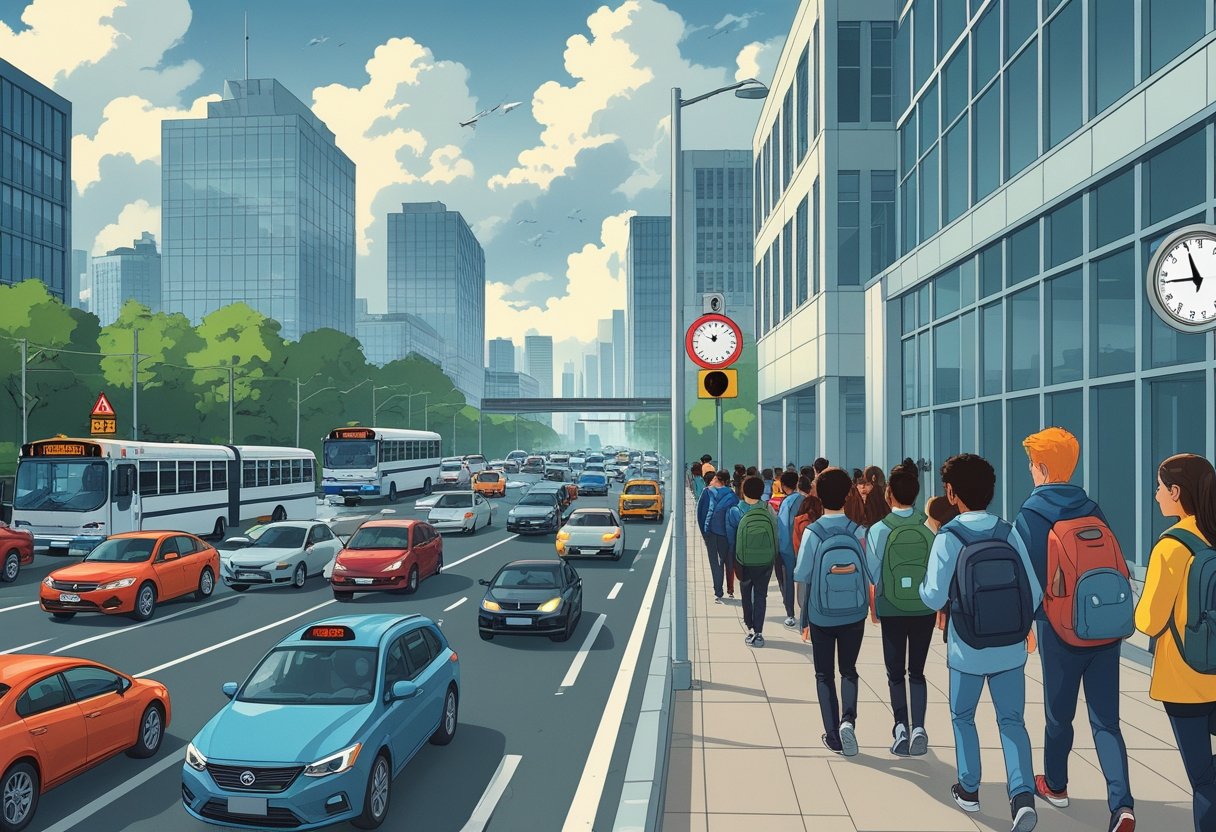
Rush hour testing reveals how well traffic systems handle their most demanding periods. During peak congestion, traffic density reaches maximum levels, creating the perfect conditions to evaluate how urban mobility solutions perform under genuine stress.
The Reality of Congestion and Peak Loads
Rush hour traffic creates the harshest testing environment we encounter in urban settings. When traffic volume jumps from 200 vehicles per hour to over 2,000 during peak periods, systems face their ultimate challenge.
Peak load conditions mirror what happens on our busiest motorways. The M25 during morning rush hour doesn’t gradually build up traffic. Instead, we see sharp spikes that push infrastructure to its breaking point.
These conditions expose weaknesses that lighter traffic never reveals. A traffic management system might work brilliantly at 3am but fail completely when faced with school run congestion.
Real peak hour characteristics include:
- Traffic volumes 300-400% higher than off-peak times
- Journey times that can triple or quadruple
- System response times that slow dramatically
- Queue formations that cascade across multiple junctions
We need to test during these genuine peak periods because they represent reality. Office workers don’t choose when to commute, and our systems must handle this concentrated demand reliably.
How Traffic Density Influences Outcomes
Traffic density directly affects how well our systems perform when we need them most. Higher density creates a domino effect that amplifies every small problem into a major issue.
During rush hour, vehicle spacing drops from comfortable gaps to mere metres apart. This density shift changes everything about traffic flow patterns and system behaviour.
Traffic density impacts include:
| Density Level | Vehicles/km | System Response | Failure Risk |
|---|---|---|---|
| Light | 15-25 | Excellent | Very Low |
| Moderate | 40-60 | Good | Low |
| Heavy | 80-120 | Reduced | High |
| Gridlock | 150+ | Poor/Failed | Critical |
When density reaches gridlock levels, even minor incidents create chaos. A broken-down car that would cause a 5-minute delay at off-peak times can shut down entire route networks during rush hour.
We observe this amplification effect on smart motorways where variable speed limits work well in moderate traffic but struggle when density peaks. The same technology that smooths flow at 60% capacity often fails at 95% capacity.
Recognising Urban Mobility and Its Challenges
Urban mobility during rush hour presents unique challenges that reveal system limitations. City centres become pressure cookers where multiple transport modes compete for limited space.
Key urban mobility stressors:
- Bus priority systems competing with heavy car traffic
- Pedestrian crossings creating additional stops during peak flow
- Cycle lanes affecting traffic distribution patterns
- Delivery vehicles disrupting established traffic rhythms
London’s traffic management demonstrates these challenges perfectly. During the 8am rush, we see buses bunching together, cycle superhighways creating bottlenecks, and delivery lorries blocking key junctions.
Each element adds complexity that testing must capture. A traffic light system that works well with just cars faces entirely different demands when buses request priority whilst cyclists wait at advanced stop lines.
Weather compounds these challenges significantly. Rush hour traffic in rain creates conditions that even sophisticated systems struggle to manage effectively.
The combination of high density, multiple transport modes, and environmental factors makes rush hour the definitive test of urban mobility solutions.
Simulating Rush-Hour Conditions in Performance Testing
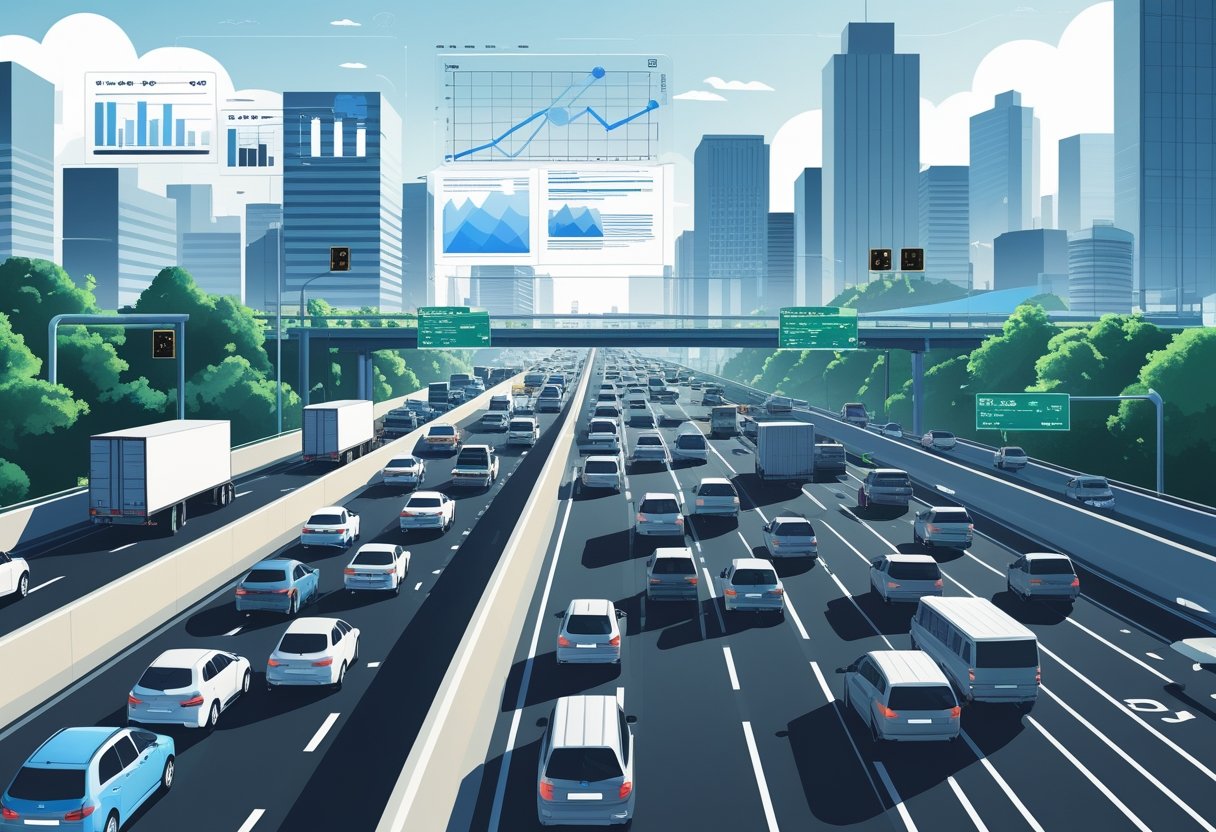
Creating realistic rush-hour scenarios requires strategic use of virtual users, careful replication of actual traffic patterns, and robust monitoring tools to capture system behaviour under pressure. We achieve authentic test conditions by combining these elements to mirror the unpredictable nature of peak traffic periods.
Role of Virtual Users and Test Scripts
Virtual users form the backbone of our rush-hour simulations. These digital entities replicate real user behaviour patterns during peak periods.
We design test scripts that mirror genuine user journeys. Each script captures specific actions like logging in, browsing content, or completing transactions. The key lies in varying these patterns randomly rather than following identical sequences.
Realistic timing matters enormously. Real users don’t click buttons instantly. Our scripts include natural delays between actions, mimicking how people actually interact with applications during busy periods.
We typically deploy virtual users in waves rather than all at once. This approach creates authentic traffic surges:
- Initial wave: 20% of total users
- Peak surge: 80% within 5 minutes
- Sustained load: Maintain for 30-45 minutes
- Gradual decline: Mirror real traffic patterns
Different user types require separate script categories. Casual browsers behave differently from power users completing complex tasks.
Replicating Realistic Traffic Flows
Authentic traffic flow simulation goes beyond simply increasing user numbers. We study actual usage patterns from production systems to understand peak behaviour.
Geographic distribution plays a crucial role. Users from different regions access systems at varying times. We configure virtual users to simulate this geographic spread accurately.
Session duration varies significantly during rush periods. Some users complete quick tasks whilst others engage in lengthy sessions. Our simulations reflect this diversity through mixed session lengths.
Real traffic includes failed attempts and retry behaviour. Users mistype passwords, experience connection issues, or abandon transactions. We incorporate these realistic failure patterns into our test scenarios.
Performance bottlenecks often emerge at specific system components during peak loads. Database queries slow down, API calls timeout, or cache systems become overwhelmed. Our traffic patterns target these vulnerable areas systematically.
We also simulate external factors like third-party service delays or network congestion that commonly occur during busy periods.
Tools for Observing System Responses
Monitoring tools provide essential visibility into system behaviour during simulated rush-hour conditions. We employ multiple observation layers to capture comprehensive performance data.
Application Performance Monitoring (APM) tools track response times, error rates, and resource consumption in real-time. These tools highlight exactly where systems struggle under pressure.
Database monitoring reveals query performance degradation and connection pool exhaustion. We watch for slow queries that perform acceptably under light loads but become problematic during peak traffic.
| Monitoring Area | Key Metrics | Critical Thresholds |
|---|---|---|
| Response Time | Page load speed | >3 seconds |
| Error Rate | Failed requests | >1% failure rate |
| Database | Query duration | >500ms average |
| Memory | RAM usage | >85% utilisation |
Real-time dashboards display system health during testing. We configure alerts for critical thresholds so we can react immediately to performance issues.
Log analysis tools help identify error patterns and user experience problems. These insights guide optimisation efforts after testing completes.
Infrastructure monitoring tracks server CPU, memory, and network usage. This data reveals whether hardware resources adequately support peak loads or require scaling adjustments.
Key Performance Metrics During Peak Traffic
When we evaluate system performance during rush-hour conditions, three critical metrics tell us everything we need to know about how well our applications handle the pressure: how much traffic gets processed, how quickly responses arrive, and whether the system stays online when users need it most.
Throughput and Requests per Second
Throughput measures how many requests our system processes successfully within a specific timeframe. During peak traffic hours, this metric becomes absolutely crucial for understanding our application’s capacity limits.
We typically measure throughput in requests per second (RPS). A healthy system might handle 1,000 RPS during normal hours but struggle when rush-hour traffic pushes demand to 5,000 RPS.
Peak vs Off-Peak Comparison:
| Time Period | Typical RPS | Peak RPS | Performance Drop |
|---|---|---|---|
| Normal Hours | 1,000-2,000 | 2,500 | Minimal impact |
| Rush Hour | 3,000-6,000 | 8,000+ | 40-60% reduction |
The key challenge lies in maintaining consistent throughput when traffic spikes unexpectedly. Systems that handle steady loads beautifully often buckle under sudden surges.
We’ve found that monitoring throughput patterns helps predict when bottlenecks will occur. Most applications show warning signs before complete failure.
Latency and Response Time
Response time tells us how long users wait for their requests to complete. During peak traffic periods, even small increases in latency can create frustrating user experiences.
Average response times often double or triple during rush hours. A system responding in 200ms during quiet periods might take 800ms when traffic peaks.
Critical latency thresholds include:
- Excellent: Under 200ms
- Acceptable: 200-500ms
- Poor: 500ms-2 seconds
- Unacceptable: Over 2 seconds
We measure both average latency and percentile-based metrics. The 95th percentile shows us what the slowest 5% of users experience, which matters more than average response times.
Network congestion during peak hours affects latency significantly. Database queries that normally complete quickly may timeout when competing with thousands of simultaneous requests.
System Availability Under Stress
Availability measures whether our system remains accessible when users need it most. Rush-hour traffic tests reveal which components fail first under pressure.
High availability during peak periods requires robust infrastructure planning. Systems must handle traffic spikes without crashing or becoming unresponsive.
Common availability challenges during peak traffic:
- Database connection pool exhaustion
- Memory overflow from queued requests
- CPU overload causing service timeouts
- Third-party API rate limiting
We aim for 99.9% uptime, but peak traffic can push even well-designed systems below this target. The difference between 99% and 99.9% availability means 8.7 hours versus 52 minutes of downtime per year.
Monitoring tools help us spot availability issues before complete outages occur. Early warning systems trigger alerts when response rates drop below acceptable thresholds.
Detecting and Addressing Performance Bottlenecks
Performance bottlenecks during busy traffic periods can turn even the most confident driving test into a stressful experience. By learning to spot these friction points early and understanding what causes traffic slowdowns, we can develop practical strategies to keep our performance steady when the roads get hectic.
Identifying Points of Friction
The first step in tackling performance bottlenecks is recognising where they typically occur during peak traffic hours. We’ll often notice our driving performance starts to suffer at predictable locations and situations.
Major junction approaches are classic friction points. When traffic backs up at roundabouts or traffic lights, we might find ourselves making rushed decisions or second-guessing our positioning.
School zones during drop-off times create unique challenges. The combination of parked cars, pedestrians, and impatient parents can quickly overwhelm our processing abilities.
Motorway merge points become particularly tricky during rush hour. The pressure to match traffic speed whilst finding safe gaps can cause our confidence to wobble.
We should also watch for our own warning signs:
- Gripping the steering wheel more tightly
- Checking mirrors excessively
- Hesitating at decisions we’d normally make smoothly
- Feeling rushed or flustered
Weather conditions amplify existing bottlenecks. Rain or fog during busy periods creates a perfect storm for performance issues.
The key is developing self-awareness about when and where our driving starts to feel less controlled. Once we spot these patterns, we can prepare specific strategies for each situation.
Common Causes of Slowdowns
Understanding what creates traffic bottlenecks helps us anticipate and respond better to challenging driving conditions. Most slowdowns aren’t random but follow predictable patterns.
Lane closures and roadworks are obvious culprits, but their impact goes beyond just reduced capacity. The anxiety of merging under pressure often causes us to make hesitant moves that disrupt traffic flow.
Accidents and breakdowns create ripple effects that extend far beyond the incident location. Even minor fender-benders can cause significant delays as drivers slow down to look.
Traffic light timing plays a huge role in urban bottlenecks. Poorly synchronised lights create stop-and-go patterns that test our clutch control and observation skills.
Rush-hour volume simply overwhelms road capacity in many areas. The sheer number of vehicles means longer queues and more complex decision-making scenarios.
Human behaviour often makes bottlenecks worse. Aggressive driving, late lane changes, and phone use create unpredictable situations that challenge our defensive driving skills.
Commercial vehicle movements during business hours add another layer of complexity. Delivery lorries and buses require more space and time, affecting traffic flow patterns.
System performance during these peak periods depends largely on how well we adapt our driving style to match the conditions rather than fighting against them.
Approaches to Bottleneck Resolution
The most effective way to handle traffic bottlenecks is developing a toolkit of practical responses that we can deploy when performance starts to decline.
Planning alternative routes gives us options when main roads become clogged. We should familiarise ourselves with back roads and quieter streets that can bypass problem areas.
Adjusting our timing is often the simplest solution. Leaving 15 minutes earlier or later can mean the difference between smooth sailing and gridlock stress.
Maintaining steady following distances helps us stay calm and reduces the stop-start pattern that amplifies traffic problems. This buffer gives us time to think and react smoothly.
Practising specific scenarios builds confidence for challenging situations. We can work on roundabout approaches, motorway merging, and lane changes during quieter periods.
Staying flexible with our positioning allows us to adapt as conditions change. Being ready to switch lanes early or take alternative exits keeps our options open.
Managing our stress response is crucial for maintaining good system performance. Deep breathing, positive self-talk, and accepting that delays happen helps us stay focused.
Using technology wisely means checking traffic apps before we set off, but not becoming dependent on constant updates that can distract us from driving.
The goal isn’t to eliminate all traffic challenges but to develop resilience and adaptability that keeps our driving performance consistent regardless of external pressure.
Enhancing User Experience Amid High Traffic
When rush-hour traffic puts systems under pressure, we must focus on maintaining smooth performance and reliable monitoring. Smart design choices and effective traffic control systems help preserve the quality experience users expect, even during the busiest periods.
Maintaining Quality During Peak Demand
We’ve all experienced that sinking feeling when an app freezes during busy periods. Peak traffic times test every system’s limits, but smart preparation keeps things running smoothly.
Load distribution becomes crucial when traffic spikes hit. We can spread demand across multiple servers rather than letting one system bear the entire burden. This approach prevents those frustrating crashes that happen right when you need something most.
Modern applications handle rush-hour stress through intelligent queuing systems. Instead of rejecting users outright, these systems manage waiting times transparently. Think of it like a well-organised queue at your favourite coffee shop during morning rush.
We should also implement graceful degradation strategies. When traffic peaks, non-essential features temporarily scale back whilst core functions remain fully operational. Users get what they need most without experiencing complete system failures.
Caching frequently accessed data reduces server strain significantly. Popular content loads instantly because it’s stored closer to users. This simple technique keeps response times fast even when thousands of people access the same information simultaneously.
Design for Reliability and Speed
Smart design choices make the difference between systems that thrive under pressure and those that crumble. We build resilience into every layer, from user interfaces to backend infrastructure.
Responsive design principles ensure interfaces work smoothly regardless of traffic volume. Clean, streamlined layouts load faster and consume less bandwidth. When networks get congested, simpler designs still deliver excellent user experience.
We prioritise critical path optimisation during peak periods. Essential functions like login, core navigation, and primary features receive priority bandwidth allocation. Secondary features can wait, but users must access what they came for.
Progressive loading techniques keep users engaged whilst content appears. Rather than showing blank screens, we display partial content immediately. Users see progress happening, which reduces frustration during slower loading periods.
Real-time performance monitoring helps us spot problems before they affect users. We track response times, error rates, and user satisfaction metrics continuously. Quick detection means faster fixes and happier users.
Impact of Traffic Control and Monitoring
Advanced monitoring systems transform how we manage high-traffic situations. Modern traffic monitoring solutions provide the insights needed to maintain excellent user experience when demand surges.
Video analytics tools now offer real-time visibility into system performance patterns. These systems detect unusual traffic spikes early, triggering automatic scaling responses. We can address problems before users notice any slowdown.
Smart traffic control mechanisms distribute load intelligently across available resources. VIDES (Video Incident Detection and Enforcement Systems) concepts apply beyond physical roads – they help manage digital traffic flow through applications and websites.
Automated scaling responds to traffic patterns instantly. When monitoring detects increased demand, additional server capacity comes online automatically. Users experience consistent performance regardless of how busy things get.
We implement intelligent routing to direct users through the fastest available paths. Like traffic management systems that guide cars around congested areas, smart applications route requests through less busy servers and network paths.
Regular traffic pattern analysis helps predict future demand spikes. We study historical data to anticipate busy periods and prepare resources accordingly. Prevention beats reaction every time.
Long-Term Strategies for Managing Peak Traffic
Cities worldwide are investing billions into innovative traffic management systems and forward-thinking urban mobility solutions. These comprehensive approaches combine real-time data analysis with strategic infrastructure planning to create lasting improvements in how we navigate busy roads.
Optimising Traffic Management Systems
Modern traffic management relies heavily on smart technology and data-driven decisions. We’re seeing remarkable progress with adaptive traffic light systems that respond to actual traffic conditions rather than following fixed schedules.
These intelligent systems can adjust signal timing based on real-time vehicle counts and speeds. When sensors detect heavier traffic approaching from one direction, the lights automatically extend green phases where needed most.
Real-time data collection has transformed how we understand traffic patterns. Cities now use:
- Speed sensors that monitor traffic flow continuously
- Camera systems that count vehicles at key junctions
- Mobile phone data that tracks movement patterns anonymously
- GPS information from navigation apps
The results speak for themselves. Houston’s adaptive signal system reduced travel delays by roughly 25% within the first year of implementation.
Coordinated traffic corridors create “green waves” along major routes. When signals work together, drivers can travel several miles without stopping at red lights during peak periods.
We’re also seeing exciting developments in self-organising traffic systems. These networks allow individual intersections to make smart decisions based on local conditions whilst sharing information with nearby signals.
Planning for Future Challenges
Urban mobility planning requires us to think decades ahead, not just months. Population growth and changing work patterns will reshape how people move around cities.
Infrastructure investment remains crucial for long-term success. This includes building new roads where needed, but also improving public transport links and creating dedicated cycling lanes.
Smart planners are using traffic forecasting models to predict where congestion will worsen. These tools consider factors like:
- Housing development plans
- New business districts
- School catchment changes
- Major event venues
Technology integration will play an increasingly important role. Vehicle-to-infrastructure communication systems are already being tested, where cars can “talk” to traffic lights to optimise timing.
We’re also seeing cities experiment with dynamic pricing models. Singapore and London have shown that charging higher fees during busy periods can encourage people to travel at different times.
Multi-modal transport hubs are becoming essential. These facilities make it easy to switch between driving, trains, buses, and bicycles. When public transport becomes more convenient, fewer people drive during rush hour.
The most successful cities are those that balance immediate traffic improvements with sustainable long-term growth strategies.
Frequently Asked Questions
Many learner drivers wonder how busy traffic periods might impact their test experience and what they can do to prepare. These questions explore practical strategies for managing tests during congested periods and understanding how traffic conditions might influence your performance.
How can peak traffic times affect learner drivers’ focus during their test?
Rush-hour conditions can significantly impact your concentration during a driving test. The constant stop-and-go movement requires heightened attention to multiple vehicles around you.
Heavy traffic creates more visual distractions. You’ll need to monitor cars changing lanes, pedestrians weaving between stopped vehicles, and cyclists filtering through traffic gaps.
The increased mental workload can be overwhelming. Your brain processes more information when surrounded by numerous moving vehicles, traffic signals, and potential hazards.
Time pressure from congestion might make you feel rushed. However, examiners understand that traffic delays are beyond your control and won’t penalise you for circumstances outside your influence.
What are some strategies to stay calm and centred during a driving test in congested traffic conditions?
Deep breathing techniques work brilliantly in heavy traffic. Take slow, controlled breaths when you’re stopped at lights or in queues to maintain your composure.
Focus on one task at a time rather than worrying about everything simultaneously. Check your mirrors, signal clearly, and move deliberately through each manoeuvre.
Use positive self-talk to boost confidence. Remind yourself that you’ve practised these skills and that congested traffic actually gives you more time to think between actions.
Maintain proper following distances even when traffic is slow. This gives you breathing room and demonstrates excellent hazard perception to your examiner.
Remember that other drivers are also dealing with the same frustrating conditions. Stay patient and avoid taking any aggressive behaviour from other road users personally.
Could you share some tips on how to optimise the timing of a driving test to avoid the stress of rush-hour conditions?
Mid-morning slots between 10:00 and 11:30 typically offer the clearest roads. Most commuters have reached their destinations, and lunch-time traffic hasn’t begun building.
Early afternoon appointments around 1:00 to 2:30 can also provide favourable conditions. School runs haven’t started, and many people are taking lunch breaks.
Avoid booking tests between 7:00-9:00 and 4:30-6:30 on weekdays. These periods see the heaviest congestion as people travel to and from work.
Consider weekend morning slots if available. Saturday mornings often have lighter traffic, though some test centres have limited weekend availability.
Check local traffic patterns around your test centre. Some areas have unique rush-hour timings due to shift patterns at nearby factories or business districts.
What insights are there about the correlation between rush-hour traffic and the likelihood of passing a driving test?
Some driving instructors believe rush-hour tests might actually be easier in certain ways. Slower speeds give you more time to make decisions and spot potential hazards.
Heavy traffic reduces opportunities for high-speed manoeuvres that some learners find challenging. You’re less likely to encounter dual carriageways or fast roundabouts during congested periods.
However, dense traffic increases the complexity of observations and judgements. You’ll need to demonstrate excellent awareness of multiple hazards simultaneously.
The key factor isn’t the traffic itself but your preparation for those conditions. Students who’ve practised extensively in busy traffic often perform better during rush-hour tests.
Examiner expectations remain consistent regardless of traffic conditions. They’re looking for the same safe, competent driving standards whether roads are clear or congested.
In what ways can preparation for a driving test include elements specific to navigating through busy traffic periods?
Practice lane discipline in heavy traffic by maintaining your position and avoiding unnecessary lane changes. This skill becomes crucial when multiple vehicles are jostling for position.
Work on smooth clutch control for stop-start conditions. Jerky movements become more noticeable and potentially dangerous when you’re surrounded by other vehicles.
Develop your skills at reading traffic flow patterns. Learn to anticipate when lanes will move and how to merge safely in congested conditions.
Master the art of patience behind the wheel. Practice remaining calm during long waits at traffic lights or in slow-moving queues.
Focus on maintaining safe following distances even when other drivers don’t. This demonstrates maturity and hazard awareness that examiners value highly.
Could you highlight how an instructor might incorporate rush-hour scenarios in driving lessons to better equip learners for the test?
Experienced instructors schedule specific lessons during busy periods to expose learners to real-world conditions. These sessions build confidence through gradual exposure to challenging scenarios.
Practice sessions might include navigating busy shopping centre car parks during peak times. This environment mimics the close-quarters maneuvering required in heavy traffic.
Instructors often focus on commentary driving during congested periods. You’ll learn to verbalise what you’re seeing and planning, which helps maintain focus during stressful situations.
Role-playing different traffic scenarios helps build decision-making skills. Your instructor might simulate situations like aggressive drivers or unexpected lane closures.
Progressive training starts with quieter busy roads before moving to major routes during rush hour. This builds your skills systematically rather than throwing you into the deep end immediately.
Ready to pass in weeks, not months?
LPOD Academy runs tailored intensive driving courses from 10 to 50 hours across most of the UK, with your theory and practical test support included.
View our intensive course packages
Find the right course for you
Ready to Book Driving Lessons?
LPOD Academy offers intensive driving courses across the UK. Find your nearest location: