

Published 18 November 2025, updated 14 August 2026
Maintaining a Safe Distance Behind Large Vehicles: Essential Tips and Techniques
Sharing the road with massive lorries and coaches can feel intimidating, especially when you’re still building your confidence behind the wheel. These towering vehicles create unique challenges that require smart driving strategies, and understanding how to maintain proper spacing is one of the most crucial skills you’ll develop as a driver.
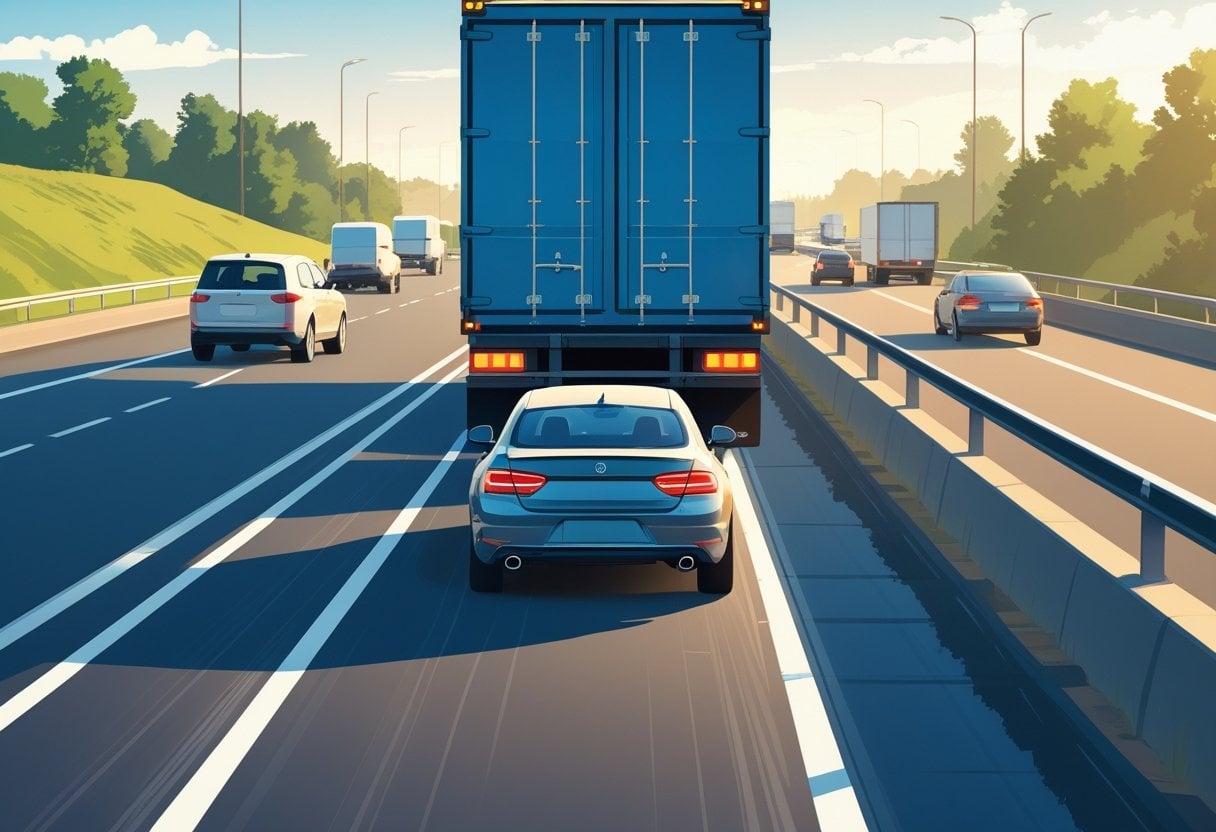
The golden rule is maintaining at least a four-second following distance when driving behind large vehicles, giving you vital extra time to react if something goes wrong. Unlike smaller cars, these giants need much more time and space to stop, and their sheer size blocks your view of potential hazards ahead. Getting this spacing right isn’t just about following rules, it’s about protecting yourself and everyone else on the road.
We’ll explore why these massive vehicles demand such respect, share practical techniques for measuring safe distances, and help you recognise those tricky situations where you’ll need even more space. By the end, you’ll feel much more confident navigating around lorries, buses, and other large vehicles, turning what might feel like a nerve-wracking experience into just another part of your driving journey.
Sharing the road with lorries and coaches feels far less daunting once it becomes routine, which is exactly what happens when you build heavy-vehicle awareness on an intensive driving course.Why Keeping a Safe Distance From Large Vehicles Matters
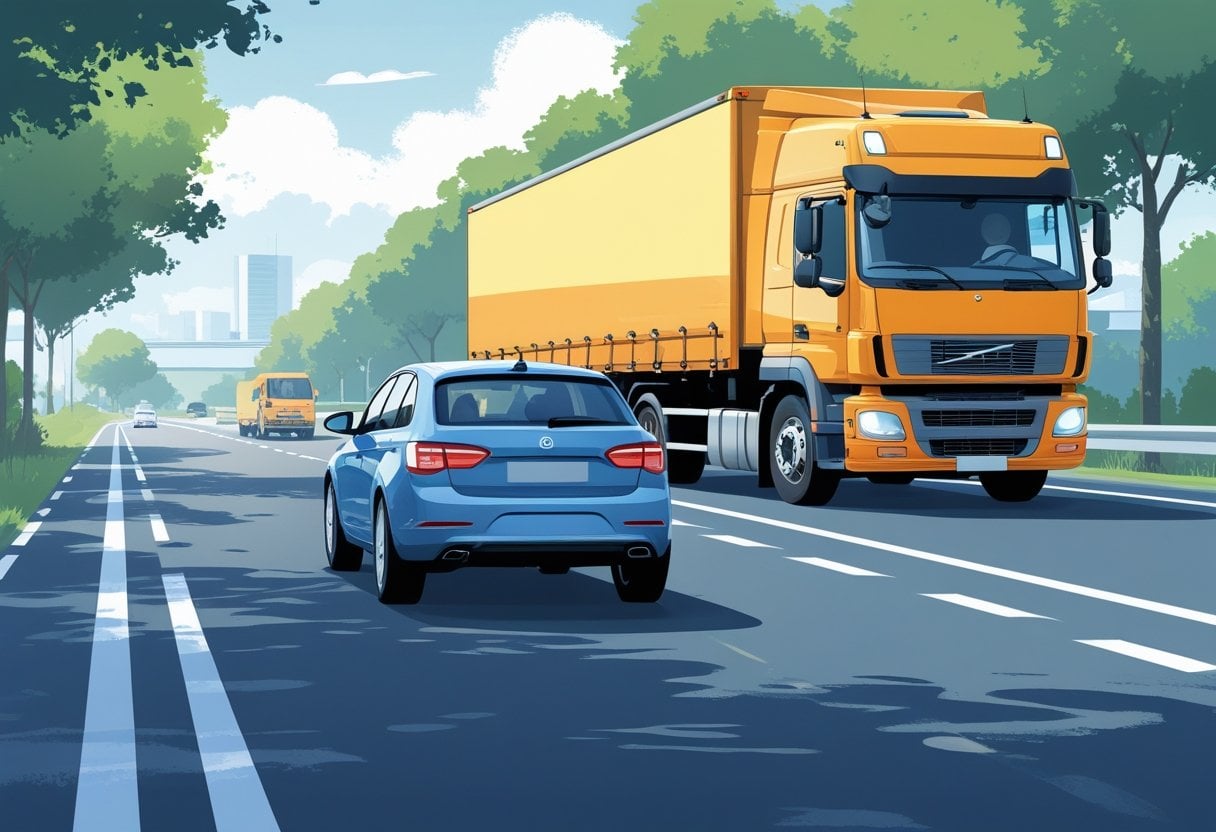
Large vehicles create unique hazards that require extra caution from drivers. Staying too close puts you at risk of serious accidents, whilst proper distance gives you the time and space needed to react safely.
The Risks of Tailgating Lorries and Buses
When we drive too close behind large vehicles, we’re putting ourselves in real danger. Visibility becomes severely limited because we can’t see what’s happening ahead on the road.
Lorries and buses have massive blind spots where drivers simply cannot see us. If we can’t see their wing mirrors, they definitely can’t see us either.
The stopping distances are drastically different. A fully loaded lorry needs much more time and space to stop than our car does. When traffic suddenly slows down, that lorry might not be able to stop in time if we’re tucked right behind it.
Crashes involving large vehicles often result in serious injuries or fatalities. The sheer weight and size difference means our smaller vehicle bears the brunt of any impact.
Weather makes everything worse. Rain creates spray that can reduce our vision to almost nothing when we’re following too closely. Snow and ice make stopping distances even longer for heavy vehicles.
How Following Distance Improves Reaction Time
Keeping proper distance gives us precious extra seconds to respond to hazards. Those few seconds can mean the difference between a safe stop and a collision.
The three-second rule becomes even more important behind large vehicles. We should actually increase this to four or five seconds for lorries and buses.
More space means we can see further ahead. We spot brake lights, road signs, and potential problems much sooner when we’re not stuck behind a wall of metal.
Our stress levels drop significantly when we’re not constantly worried about sudden stops. This relaxed state actually makes us better, more alert drivers.
Emergency manoeuvres become possible with proper distance. If something goes wrong, we have room to change lanes or take evasive action safely.
Consequences of Ignoring Safe Gaps
Driving too close behind large vehicles leads to expensive and dangerous outcomes. Insurance claims skyrocket because rear-end collisions are almost always the following driver’s fault.
Our driving test examiner will fail us immediately for tailgating. It shows we don’t understand basic road safety principles.
Fuel consumption increases when we’re constantly braking and accelerating to match the erratic speed of heavy vehicles in traffic.
Vehicle wear and tear accelerates from all that stop-start driving. Brake pads, tyres, and clutches suffer when we can’t maintain steady speeds.
Road rage incidents often stem from following too closely. Other drivers get frustrated when we’re breathing down their necks, leading to aggressive behaviour that puts everyone at risk.
The worst consequence is causing a serious accident. Lives can be lost or forever changed because we didn’t leave enough space.
Recommended Safe Following Distances
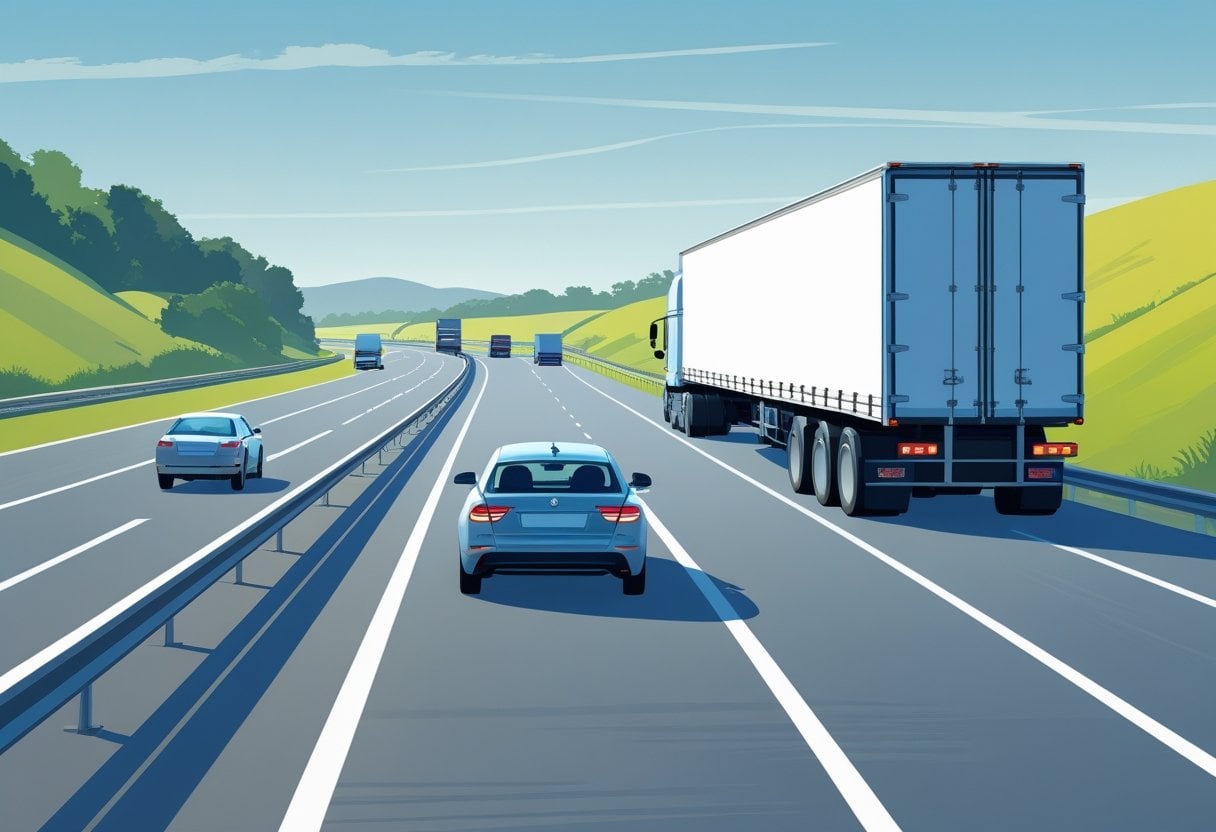
Different driving environments require specific gap distances to keep you protected behind large vehicles. Speed limits, traffic density, and weather conditions all influence how much space you’ll need to stay safe on the road.
Guidelines for Motorways and Dual Carriageways
On faster roads, we need significantly more distance behind lorries and coaches. The speeds involved give us less time to react when something goes wrong.
The 4-second rule works brilliantly for motorway driving. Pick a fixed point ahead, like a bridge or sign. When the large vehicle passes it, count “one thousand and one, one thousand and two” until you reach the same spot.
For speeds above 70 mph, we recommend adding an extra second. This accounts for the increased stopping distances at higher speeds.
| Speed | Minimum Gap | Recommended Gap |
|---|---|---|
| 60-70 mph | 3 seconds | 4 seconds |
| Above 70 mph | 4 seconds | 5 seconds |
Lane positioning matters just as much as following distance. Stay slightly to one side of your lane when possible. This helps you see around the large vehicle and gives other drivers a better view of traffic ahead.
Best Practices in Urban and Rural Settings
Town and city driving presents different challenges. Traffic moves slower, but we face more sudden stops and unpredictable movements.
The 2-second rule serves us well in built-up areas. Large vehicles need extra room for turning and often stop unexpectedly for deliveries or passengers.
Watch for buses pulling away from stops. They’ll accelerate slowly, and passengers might still be boarding. Leave extra room during school hours when buses make frequent stops.
Rural roads require special attention. Narrow lanes mean we can’t always see around large vehicles easily. Farm vehicles move slowly and turn into fields without much warning.
Keep a 3-second gap on country roads. This gives you time to react to tractors, combine harvesters, or livestock that might appear suddenly.
Adjusting Gaps for Adverse Weather Conditions
Poor weather dramatically increases stopping distances. We must double our normal following gaps when conditions deteriorate.
Rain reduces tyre grip significantly. What normally takes 4 seconds to stop might need 8 seconds on wet roads. Large vehicles struggle even more with their extra weight.
In fog, increase your gap and use dipped headlights. Don’t follow the red lights of the vehicle ahead blindly. They might be moving faster or slower than safe conditions allow.
Ice and snow create the most dangerous conditions. Following distances should increase by up to 10 times normal gaps. A 2-second gap becomes 20 seconds in icy conditions.
Strong winds affect large vehicles more than cars. Lorries and coaches can be pushed sideways suddenly. Extra space gives you room to manoeuvre if they move unexpectedly into your path.
Unique Challenges When Driving Behind Large Vehicles
Large vehicles create specific hazards that smaller cars don’t face. These challenges include blocked views that hide road conditions ahead, much longer braking distances due to their weight, and the need for extra space when turning corners.
Limited Visibility and Blind Spots
When we drive behind HGVs or buses, our forward view becomes severely restricted. These massive vehicles block our ability to see traffic conditions, road hazards, or upcoming exits that lie ahead.
The visibility problem works both ways. If we can’t see the driver’s mirrors, they can’t see us either. This creates a dangerous blind spot situation where neither driver knows what the other might do next.
HGVs have much larger blind spots than regular cars. These zones extend:
- Directly behind the vehicle for several metres
- Along both sides, especially the passenger side
- Directly in front of the cab
We should avoid staying in these blind spots for long periods. The safest approach is to either overtake safely when conditions allow or drop back to where the driver can clearly see us in their mirrors.
Poor weather makes visibility worse. Rain, fog, or spray from wet roads can make it nearly impossible to see around large vehicles. We need extra caution during these conditions.
Longer Stopping Distances for Heavy Vehicles
Heavy vehicles take much longer to stop than cars due to their enormous weight. A fully loaded HGV can weigh up to 44 tonnes, compared to a typical car’s 1.5 tonnes.
This weight difference means serious consequences. When traffic suddenly slows, the HGV driver needs much more time and distance to bring their vehicle to a complete stop.
If we’re following too closely, we put ourselves in real danger. Should the HGV need to brake suddenly, we might not have enough space to stop safely behind them.
The physics work against us. Even if we can stop our car quickly, the HGV behind us might not be able to stop in time. This is why maintaining proper distance protects everyone on the road.
Speed also plays a crucial role. At higher speeds, these stopping distance differences become even more dramatic and potentially deadly.
Wide Turns and Their Impact on Spacing
Large vehicles need extra road space when turning, often using more than just their own lane. HGV drivers sometimes need to swing wide or cut corners to complete turns safely.
Left turns present particular challenges. The driver might not see us if we try to squeeze past during the manoeuvre. We should wait until they’ve completed their turn before attempting to pass.
Right turns also require patience. The vehicle might need to move into our lane temporarily to make the corner. Giving them space prevents accidents and keeps traffic flowing smoothly.
At roundabouts, extra caution is essential. Large vehicles might need to use multiple lanes to navigate safely around the circle. We shouldn’t try to undertake or squeeze alongside them.
The key is anticipating these wide turns. When we see an HGV approaching a junction or roundabout, we should hang back and give them the room they need to manoeuvre safely.
Techniques for Measuring and Maintaining Proper Distance
When we’re driving behind large vehicles, knowing how to measure and maintain the right distance becomes absolutely crucial for our safety. We’ll explore practical methods like the two-second rule, using fixed landmarks as our guides, and keeping an eye on traffic gaps to ensure we’re always positioned safely.
The ‘Two-Second Rule’ Explained
The two-second rule serves as our most reliable tool for maintaining safe following distances, especially when we’re tucked behind lorries or buses. Here’s how we put it into practice: we pick a stationary object ahead, like a road sign or bridge.
When the rear of the large vehicle passes that object, we start counting “one thousand and one, one thousand and two.” If we reach the same object before finishing our count, we’re following too closely.
Why two seconds works so well:
- Gives us adequate reaction time
- Accounts for our vehicle’s braking distance
- Creates a safety buffer for unexpected stops
Behind large vehicles, we might need to extend this to three or even four seconds. Heavy vehicles take longer to stop, and their size can block our view of the road ahead.
We should practise this technique until it becomes second nature. It’s particularly important during busy traffic periods when we might feel pressured to close the gap.
Using Landmarks as Reference Points
Fixed landmarks give us brilliant reference points for judging distance, particularly when standard counting methods feel tricky. We can use bridges, lamp posts, road signs, or even painted lines on the carriageway.
Effective landmark techniques:
- Bridge method: When the large vehicle passes under a bridge, count until we reach the same spot
- Sign spacing: Use consecutive road signs to gauge multiple car lengths
- Lane markings: Broken white lines typically measure about 3 metres with 9-metre gaps
The beauty of landmarks lies in their consistency. Unlike trying to estimate car lengths, these fixed points don’t change based on our perception or the vehicle we’re driving.
We find this method particularly helpful on motorways where regular spacing of signs and bridges provides constant reference points. It takes the guesswork out of distance estimation.
Remember, landmarks work best when we choose objects that are clearly visible and won’t be obscured by the large vehicle ahead.
Monitoring Following Gaps in Traffic
Traffic flow creates natural patterns we can use to our advantage when maintaining safe distances. We need to become skilled at reading these patterns, especially in heavy traffic situations.
Key monitoring strategies:
- Watch multiple vehicles ahead: Don’t just focus on the immediate vehicle in front
- Observe traffic rhythm: Notice how vehicles naturally space themselves
- Anticipate compression zones: Areas where traffic typically bunches up
When traffic starts to slow, we see vehicles naturally creating smaller gaps. This is when our distance monitoring becomes most critical. Large vehicles need more space to stop safely.
We should resist the urge to fill every gap that opens up. Other drivers might try to squeeze into our safety buffer, but we can simply ease off the accelerator slightly to recreate our safe distance.
Traffic density considerations:
- Heavy traffic: Maintain minimum safe distance, be extra alert
- Light traffic: We can afford larger safety margins
- Stop-and-go conditions: Increase following distance to reduce constant braking
During rush hours, monitoring becomes even more important as frustrated drivers often make sudden lane changes or aggressive moves around large vehicles.
Situations Requiring Extra Caution and Space
Certain driving conditions demand even more caution when we’re behind large vehicles. Traffic jams create unique challenges with limited escape routes, whilst sudden stops can catch us off guard if we’re too close.
Navigating Traffic Jams and Slow-Moving Lorries
Traffic jams turn into tricky situations when we’re stuck behind HGVs. We can’t see what’s happening ahead, which makes it harder to spot potential problems early.
Key strategies for heavy traffic:
- Increase following distance to 6-8 seconds instead of the usual 3-4 seconds
- Stay in our lane rather than constantly switching positions
- Watch the brake lights of vehicles several cars ahead, not just the lorry in front
Slow-moving lorries on single carriageways present their own challenges. We might feel pressure from traffic building up behind us, but rushing an overtake is dangerous.
When traffic backs up behind a slow lorry, we should resist the urge to tailgate. This creates a domino effect of vehicles bunching together. Instead, we maintain our safe distance and stay patient.
Emergency vehicles need extra room to navigate around large vehicles in traffic. If we’re too close to the lorry ahead, we can’t move aside quickly enough.
Dealing With Sudden Stops and Emergency Manoeuvres
Large vehicles can’t stop as quickly as we might expect. Their massive weight means they need much more distance to come to a complete halt.
Critical stopping considerations:
| Vehicle Type | Stopping Distance at 50mph |
|---|---|
| Car | Approximately 53 metres |
| HGV (loaded) | Up to 85 metres |
| Articulated lorry | Up to 100 metres |
We need to anticipate that the lorry ahead might brake suddenly for hazards we can’t see yet. Road debris, broken-down vehicles, or animals can appear without warning.
Emergency response tips:
- Keep our escape routes clear by staying aware of adjacent lanes
- Avoid sudden lane changes when close to large vehicles
- Signal early if we need to move away from a large vehicle
If an HGV starts an emergency manoeuvre, we should give it maximum space. These vehicles might need to swing wide or use multiple lanes to avoid hazards safely.
Night-Time and Low Visibility Driving Considerations
Driving behind large vehicles becomes significantly more challenging when visibility drops. Their size blocks our view of street lighting and upcoming road signs.
Night driving adjustments:
- Double our following distance compared to daylight conditions
- Use dipped headlights to avoid creating glare in the lorry driver’s mirrors
- Watch for additional warning lights on the vehicle ahead
Poor weather compounds these visibility issues. Rain on our windscreen gets worse when passing large vehicles, as they throw up significant spray.
Fog creates particularly dangerous conditions. We might not see the lorry’s brake lights until it’s too late if we’re following too closely.
Weather-specific spacing:
- Wet conditions: Add 2-3 seconds to normal following distance
- Fog or heavy rain: Increase to 8-10 seconds minimum
- Snow or ice: Consider 10+ seconds behind large vehicles
HGVs from other countries with left-hand drive configurations have different blind spots. At night, it’s harder to spot these vehicles, so we should assume all large vehicles have limited visibility and adjust accordingly.
Smart Driving Habits for Safer Roads
Good driving habits extend far beyond maintaining proper distance from other vehicles. When we practice patience, communicate clearly with other road users, and stay calm under pressure, we create a safer environment for everyone on the road.
Staying Patient and Avoiding Aggressive Overtaking
We’ve all been there: stuck behind a slow-moving lorry or caravan, feeling the urge to overtake quickly. But patience truly pays off when it comes to road safety.
Aggressive overtaking creates unnecessary risks. When we rush to get past large vehicles, we often misjudge the time and space needed. This leads to dangerous situations where we’re forced to pull back in too quickly or cut other drivers off.
Here are the key signs we should avoid aggressive overtaking:
- Limited visibility ahead of the vehicle we want to pass
- Oncoming traffic within a reasonable distance
- Road markings that prohibit overtaking
- Approaching hills, bends, or junctions
Instead, we can plan our journeys with extra time built in. When we’re not rushing, we make better decisions. We wait for genuinely safe opportunities to overtake, and we complete the manoeuvre smoothly without putting pressure on ourselves or others.
Remember, arriving a few minutes later is always better than not arriving at all.
Communicating Intentions With Other Road Users
Clear communication prevents confusion and potential accidents. When we signal our intentions properly, other drivers can respond appropriately and maintain safe distances.
Our indicators are our primary communication tool. We should signal early when changing lanes around large vehicles, giving everyone adequate notice. This is especially important when moving back into the left lane after overtaking.
We can also use these communication methods effectively:
- Hazard lights when stopping suddenly or in slow-moving traffic
- Gentle horn use to alert drivers in blind spots (not aggressively)
- Maintaining position to show we’re not planning sudden moves
- Eye contact with other drivers when safe and appropriate
Large vehicle drivers appreciate clear signals. Lorry and bus drivers have significant blind spots, so when we communicate our intentions clearly, we help them drive more safely too.
Position matters as much as signalling. When we maintain consistent lane position and avoid weaving, other drivers can predict our movements more easily.
Keeping Calm in High-Pressure Situations
Traffic situations can become stressful quickly, especially when dealing with large vehicles in busy conditions. How we respond to pressure directly affects our driving safety.
Stress narrows our focus and slows reaction times. When we feel overwhelmed, we’re more likely to make poor decisions like following too closely or attempting risky overtakes.
We can manage pressure by using these techniques:
| Situation | Calm Response |
|---|---|
| Tailgating by other drivers | Maintain safe distance, let them pass when possible |
| Slow traffic behind lorries | Accept the pace, use time to observe road conditions |
| Multiple lane changes needed | Plan moves well ahead, signal early |
| Aggressive drivers nearby | Give extra space, avoid eye contact or gestures |
Breathing techniques help during tense moments. Taking slow, deep breaths when we feel pressure building helps us stay focused on safe driving rather than emotional reactions.
We should also remember that other drivers’ behaviour isn’t personal. That impatient driver behind us doesn’t know us, they’re likely just having a difficult day. When we don’t take things personally, we can respond more rationally and safely.
Frequently Asked Questions
Understanding proper following distances behind large vehicles involves knowing specific measurements, recognising warning signs when you’re too close, and adapting to different weather and road conditions that affect stopping distances.
What’s the recommended following distance when behind a lorry or bus?
We recommend maintaining at least a four-second gap behind lorries and buses in good weather conditions. This gives you proper reaction time and better visibility around the vehicle.
To measure this distance, pick a fixed point ahead like a bridge or sign post. Count the seconds between when the large vehicle passes it and when you reach the same spot.
In wet conditions, we suggest increasing this to six seconds. Heavy rain or snow means you’ll need even more space to stop safely.
How can I tell if I’m too close to a heavy goods vehicle ahead?
The clearest sign you’re too close is when you can’t see the lorry’s wing mirrors. If the driver can’t see you in their mirrors, you’re definitely in their blind spot.
Another warning sign is when you can only see the back doors or rear of the vehicle filling your entire windscreen. This means you have virtually no view of the road ahead.
You should also check if you’re following the vehicle’s exact path through corners. When you’re too close, you end up mimicking their movements instead of choosing your own safe line through bends.
Could you offer top tips for anticipating the actions of bus and truck drivers?
Watch for early indicators like the vehicle starting to slow down gradually. Large vehicles need much more time and distance to stop than cars, so drivers begin braking earlier.
Pay attention to their lane positioning, especially approaching roundabouts or tight corners. HGV drivers often position wide before turning because they need extra room to manoeuvre.
Look for hazard lights or indicators being used well in advance. Professional drivers typically signal their intentions earlier than car drivers because they know their vehicles respond more slowly.
We also recommend watching the road ahead beyond the large vehicle when possible. This helps you spot potential hazards like traffic lights or congestion before the truck driver reacts.
Why is it more challenging to judge safe following distances in poor weather conditions?
Wet roads dramatically increase your stopping distance, sometimes doubling the space you need to come to a complete halt. Large vehicles create even more spray, reducing your visibility further.
In foggy conditions, it becomes much harder to judge distances accurately. What looks like a safe gap might actually be far too close when visibility drops.
Rain and spray from large vehicles can reduce your vision to almost zero when overtaking. This makes maintaining proper following distance absolutely critical for your safety.
Winter conditions add another layer of complexity, as ice and snow affect both your vehicle’s grip and the large vehicle’s stopping ability.
What are the signs that I need to increase my following distance behind a lorry?
Heavy traffic ahead is a clear signal to drop back further. When vehicles are bunching up, you’ll need extra space to react to sudden changes in speed.
Uphill sections require more following distance because loaded lorries accelerate slowly. You don’t want to get stuck crawling up a hill too close behind a struggling vehicle.
Construction zones or roadworks are another situation where extra space becomes essential. Narrow lanes and changing road surfaces make close following particularly risky.
If the lorry is carrying an abnormal load or displaying warning signs, we recommend significantly increasing your following distance.
How can changes in road conditions affect the safe space needed behind a large vehicle?
Wet surfaces can triple your stopping distance compared to dry roads. Large vehicles throw up considerable spray, making it even harder to see and react to hazards.
Steep downhill sections require extra caution because loaded lorries pick up speed and need longer distances to slow down safely.
Loose gravel or temporary road surfaces reduce tyre grip for both you and the large vehicle. This means both of you need more space to stop effectively.
Night driving changes everything too. Reduced visibility means you should automatically increase following distances, especially behind vehicles that block your view of oncoming traffic and road signs.
Getting this right with an instructor beside you
Car control comes from repetition with someone watching and correcting you, which is hard to replicate from an article.
LPOD Academy intensive courses run from 10 to 50 hours with the same instructor throughout, covering around 95% of England, Wales and Scotland.
If you are not sure how many hours you need, the recommendation tool asks a few questions and suggests a package.
Ready to pass in weeks, not months?
LPOD Academy runs tailored intensive driving courses from 10 to 50 hours across most of the UK, with your theory and practical test support included.
View our intensive course packages Find the right course for youReady to Book Driving Lessons?
LPOD Academy offers intensive driving courses across the UK. Find your nearest location: