

Adapting Driving Style for Wet Weather and Heavy Rain: Confident, Safe Driving When It Matters Most
Wet weather driving doesn’t have to feel overwhelming or scary. When rain starts falling, many drivers naturally feel their confidence dip, but understanding how to adapt your driving style for these conditions can transform anxiety into assurance.

The key to safe wet weather driving lies in making deliberate adjustments to your speed, following distance, and overall approach before you even encounter challenging conditions. Rather than viewing rainy days as something to endure, we can help you see them as opportunities to develop advanced driving skills that will serve you well throughout your driving career.
Throughout this guide, we’ll walk you through everything from preparing your vehicle and maximising visibility to handling tricky situations like aquaplaning and navigating flooded roads. You’ll discover practical techniques for maintaining control, learn when winter tyres might benefit you, and get answers to the most common questions about wet weather driving. By the end, you’ll feel genuinely prepared to handle whatever the British weather throws your way.
Preparing Yourself and Your Vehicle for Wet Weather
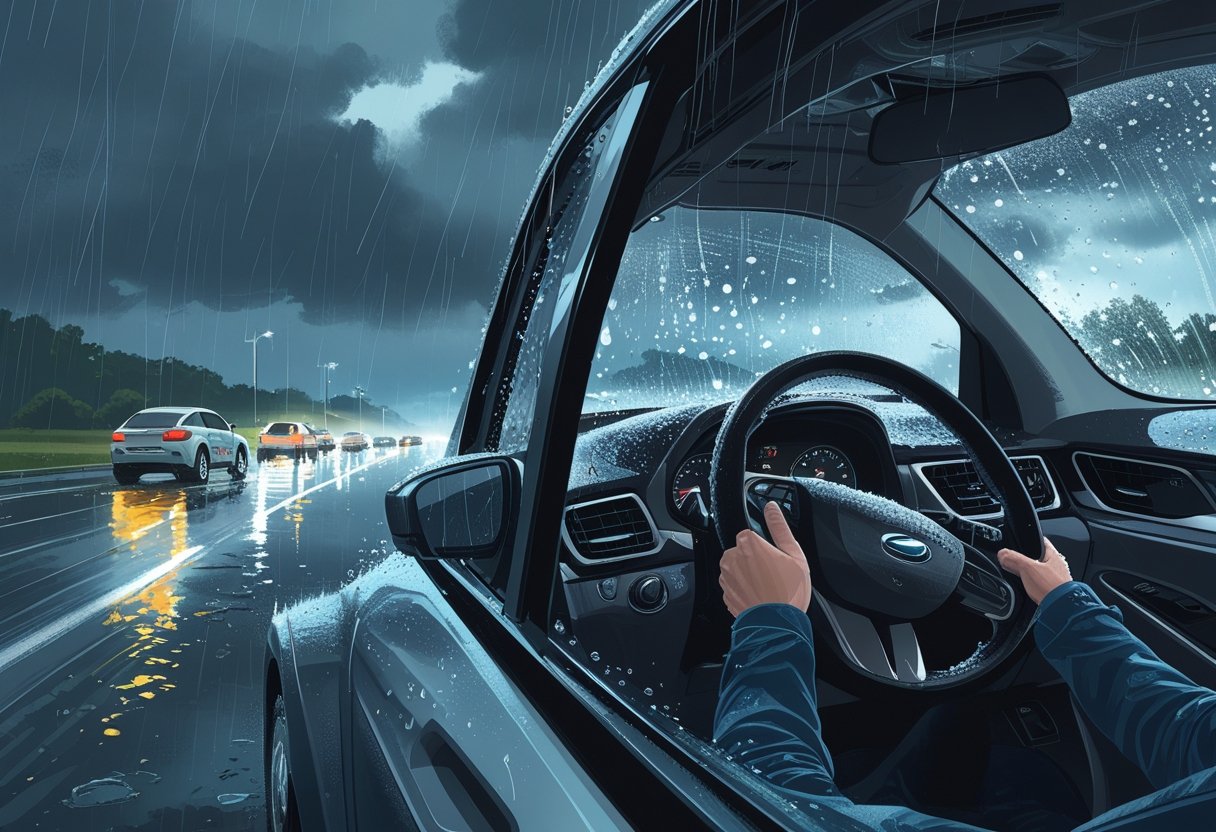
Getting ready for wet weather driving means taking time to plan your journey carefully and ensuring your car is properly equipped to handle challenging conditions. We’ll focus on checking your tyres are roadworthy and your visibility systems are working perfectly.
Pre-Trip Planning and Assessing the Conditions
Before we even think about turning the key, we need to ask ourselves a crucial question: is this journey really necessary? Heavy rain can transform familiar roads into hazardous obstacle courses, so if we can delay our trip until conditions improve, that’s often the wisest choice.
When we must travel, planning becomes our best friend. We should check local weather forecasts and traffic reports to identify potential problem areas. Roads that flood regularly, steep hills, and underpasses are all worth avoiding when possible.
Essential planning steps include:
- Mapping alternative routes away from flood-prone areas
- Adding extra time to our journey for slower speeds
- Informing someone about our intended route and arrival time
- Charging our mobile phone fully before departure
- Checking fuel levels (we’ll use more with lights and heating on)
We should also consider travelling with others when possible. Having a passenger can help spot hazards and provide assistance if problems arise.
Tyre Tread Depth and Pressure Checks
Our tyres are the only contact point between our car and the wet road, making them absolutely critical for safety. The legal minimum tread depth is 1.6mm, but we really need at least 3mm for effective wet weather performance.
We can check tyre tread depth using a 20p coin. Insert it into the main grooves of the tyre. If we can see the outer band of the coin, our tyres need replacing immediately. This simple test could prevent dangerous aquaplaning situations.
Key tyre maintenance points:
- Check all four tyres, including the spare
- Look for uneven wear patterns that suggest alignment issues
- Ensure tyre pressures match manufacturer recommendations
- Examine sidewalls for cuts, bulges, or damage
- Consider the age of our tyres (rubber degrades over time)
Properly inflated tyres with good tread depth will grip the road surface better, channel water away effectively, and reduce our stopping distances significantly in wet conditions.
Windscreen Wipers, Washers, and Visibility Essentials
Clear visibility can make the difference between a safe journey and a dangerous situation. Our windscreen wipers work harder in heavy rain than at any other time, so they need to be in perfect condition.
We should inspect wiper blades for splits, tears, or hardened rubber that leaves streaks. If our wipers are chattering, juddering, or missing patches of water, replacement is overdue. Modern aero-style wipers often perform better than traditional designs, especially at higher speeds.
Complete visibility checklist:
- Test front and rear wipers on different speed settings
- Top up washer fluid with quality screen wash
- Clean all windows inside and out before departure
- Check headlights, brake lights, and indicators work properly
- Ensure air conditioning is functioning (prevents misting)
Our washer system deserves attention too. We’ll need plenty of fluid to clear spray from other vehicles and road grime. Quality screen wash cuts through dirt more effectively than water alone.
Remember that clean windows aren’t just about comfort – they’re essential safety equipment that helps us spot hazards, read road signs, and judge distances accurately in challenging wet weather conditions.
Visibility and Lighting Techniques in Heavy Rain
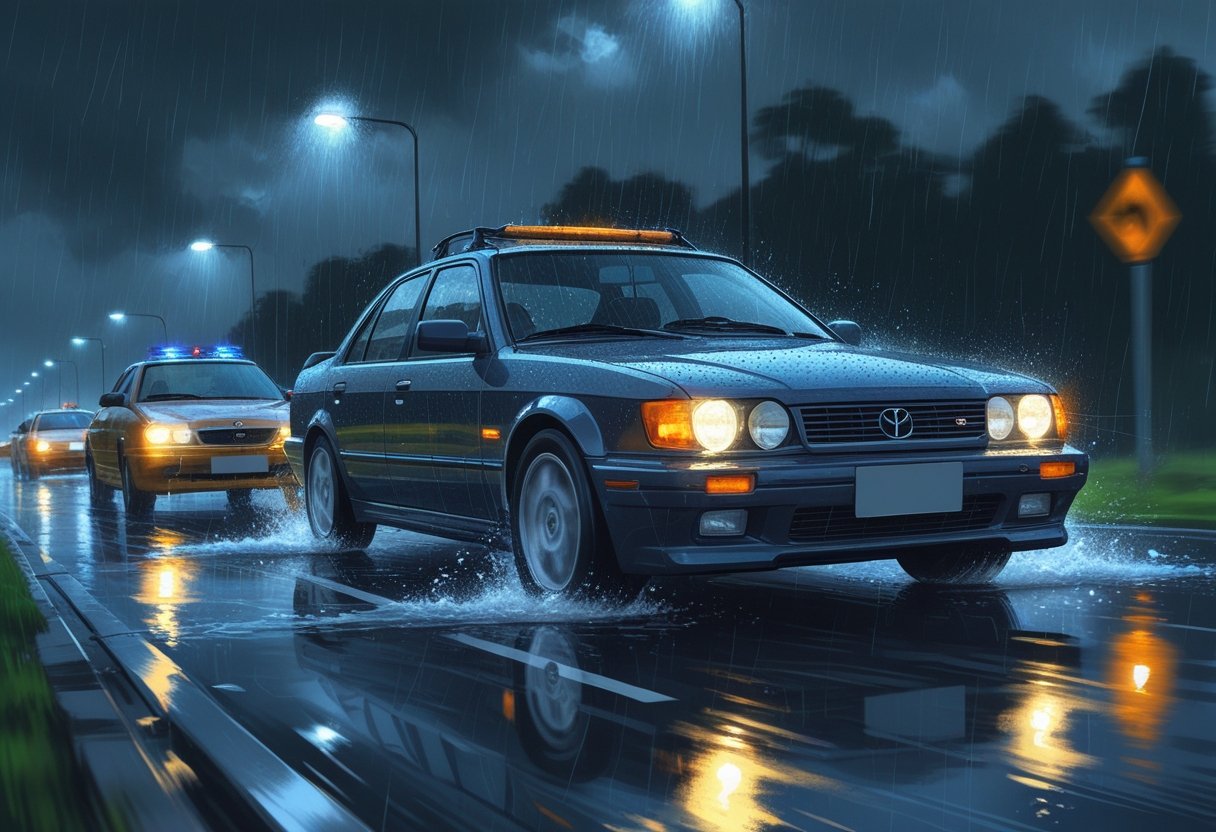
When heavy rain hits, your visibility drops dramatically and other drivers struggle to spot you on the road. Mastering proper headlight use and learning how to handle spray and glare will keep you safer during challenging downpours.
Correct Use of Low Beam Headlights and Fog Lights
Always switch on your low beam headlights the moment rain begins, even during daylight hours. This isn’t just about helping you see better. It’s about making sure other drivers can spot your car through the grey curtain of rain.
Low-beam headlights cut through rain without creating dangerous glare that bounces back at you. High beams actually work against you in heavy rain because they reflect off water droplets and create a blinding wall of light.
Fog lights deserve special attention during particularly heavy downpours. Your front fog lights sit lower on your car and cast a wide, flat beam that hugs the road surface. This helps you see lane markings and kerbs when rain creates foggy conditions.
However, we need to talk about rear fog lights. Many drivers switch these on the moment it starts drizzling, but this creates problems. Only use rear fog lights when visibility drops below 100 metres. Otherwise, you’ll dazzle the driver behind you and mask your brake lights, making it harder for them to judge your speed and stopping distance.
Coping with Spray, Glare, and Foggy Conditions
Large lorries and buses create massive spray clouds that can blind you for several seconds. Drop back further when you’re following these vehicles, and avoid overtaking until the spray clears.
When spray hits your windscreen, resist the urge to switch your wipers to maximum speed immediately. Start with a moderate setting and increase gradually. Wipers moving too fast can actually smear water and reduce visibility.
Keep your air conditioning running even when it feels cold outside. This prevents your windows from misting up inside, which happens quickly when warm, damp air meets cooler glass. Direct the airflow towards your windscreen and side windows.
Glare from other vehicles becomes more intense on wet roads. The water acts like a mirror, doubling the brightness of oncoming headlights. Look slightly to the left of oncoming traffic to avoid being dazzled, but don’t stare at the kerb for too long.
Clean your windscreen inside and out before driving in heavy rain. Dirty glass amplifies glare and makes water droplets more visible, creating additional visual distractions when you need clarity most.
Safe Driving Techniques for Wet Roads
When rain starts falling, we need to completely rethink how we approach driving. Success on wet roads comes down to three fundamental changes: slowing down and steering more gently, extending our braking distances well beyond the standard two-second rule, and creating much larger gaps between ourselves and other vehicles.
Reducing Speed and Smoother Steering
The moment we encounter wet conditions, our first instinct should be to ease off the accelerator. Wet roads dramatically reduce tyre grip, making it far easier to lose control even at moderate speeds.
We should aim to reduce our speed by at least 10-15mph below the posted limit. This isn’t just about being cautious – it’s about physics. Water creates a slippery barrier between our tyres and the road surface.
Steering inputs need to become much more deliberate and gentle. Sharp turns or sudden steering corrections can easily send us into a skid. Instead, we want to make smooth, gradual movements with the steering wheel.
If we feel the steering becoming light or unresponsive, we might be experiencing aquaplaning. The key here is to resist the urge to brake hard or make sharp steering corrections. We should gently ease off the accelerator and allow the car to slow naturally until we regain proper tyre contact.
Adjusting Braking Distances and the Two-Second Rule
Standard braking distances simply don’t apply in wet weather. The Highway Code states that stopping distances at least double in wet conditions due to reduced tyre grip on slippery surfaces.
This means our familiar two-second rule needs an immediate upgrade to at least four seconds. We can test this by watching the car ahead pass a fixed point, then counting “one thousand and one, one thousand and two” all the way up to four.
Braking technique becomes crucial in these conditions. We should apply the brakes earlier and more gently than usual. Hard, sudden braking can lock up our wheels and send us sliding – exactly what we’re trying to avoid.
Modern cars often have ABS systems that help prevent wheel lock-up, but we shouldn’t rely on technology alone. Gentle, progressive braking gives us much better control and helps maintain stability.
Increasing Following Distance for Better Reaction Time
Creating larger gaps isn’t just about braking distance – it’s about giving ourselves precious extra seconds to react to changing conditions ahead.
We recommend maintaining at least a six-second gap in heavy rain or when visibility is severely reduced. This might feel excessive, but it provides a crucial safety buffer when other drivers make unexpected moves.
Larger following distances also help us avoid the spray kicked up by vehicles ahead. Heavy goods vehicles and buses create particularly thick clouds of spray that can completely obscure our vision for several seconds.
When someone cuts into our safety gap, we shouldn’t get frustrated. Simply ease off the accelerator slightly to re-establish our following distance. It’s a small price to pay for staying safe and in control of our vehicle in challenging conditions.
Handling Aquaplaning and Loss of Traction
Aquaplaning happens when water builds up between your tyres and the road surface, causing you to lose control completely. We’ll show you how to spot the warning signs early and what to do if your car starts sliding on wet roads.
Spotting and Avoiding Hydroplaning Risks
The key to avoiding aquaplaning lies in recognising dangerous conditions before they catch you off guard. Heavy rainfall, large puddles, and worn tyres create the perfect storm for losing traction.
Watch for these warning signs:
- Standing water in road dips or poor drainage areas
- Spray patterns from vehicles ahead showing deep water
- Your engine suddenly sounds louder as tyres lose grip
- The steering wheel feels unusually light in your hands
Your tyres play a crucial role in preventing hydroplaning. Tread depth below 3mm significantly increases your risk, even though the legal limit is 1.6mm. We recommend checking your tyre pressure monthly too.
Speed makes all the difference. Research shows that driving under 35mph dramatically reduces aquaplaning risk, even in several inches of water.
Follow these prevention strategies:
- Reduce speed when you see standing water ahead
- Follow the tracks of vehicles in front (at a safe distance)
- Avoid sudden steering movements or harsh braking
- Switch off cruise control in wet conditions
- Choose your lane carefully, avoiding outside lanes where water collects
How to React if Your Car Starts Aquaplaning
Don’t panic if you feel your car starting to aquaplane. Your natural instincts might tell you to brake hard or steer sharply, but these reactions will make things worse.
Take these immediate steps:
- Keep both hands firmly on the steering wheel
- Ease off the accelerator gently (don’t slam the brakes)
- Hold the wheel straight, resisting the urge to overcorrect
- Turn off cruise control if it’s engaged
You’ll feel your tyres gradually regain contact with the road surface. The steering will start to feel normal again, and you’ll regain control of acceleration and braking.
Once you’ve recovered control, reduce your speed further and increase your following distance. Pull over safely when possible to check your tyres and take a moment to calm your nerves.
Remember that aquaplaning can happen again if conditions haven’t improved. Stay alert for the warning signs we mentioned earlier, and don’t let one successful recovery make you overconfident about the road conditions ahead.
Navigating Standing Water, Deep Puddles, and Flooded Roads
Knowing how to assess water depth and when to turn back can save you from costly damage or dangerous situations. We’ll walk you through safe techniques for driving through water when necessary and what to do if things go wrong.
Assessing Water Depth and When to Turn Back
Never drive through moving water or standing water deeper than 10cm (4 inches). This golden rule protects your engine and keeps you safe.
Look for depth gauges on some roads. These helpful markers show exactly how deep the water is. If there’s no gauge, watch other cars go through first.
Here’s what different water depths mean for your car:
| Water Depth | Risk Level | Action |
|---|---|---|
| Under 10cm | Moderate | Proceed with extreme caution |
| 10-30cm | High | Turn back if possible |
| Over 30cm | Dangerous | Never attempt |
Your car can float in just 60cm of standing water. Moving water becomes deadly at only 30cm deep because it can sweep your vehicle away.
If you can see the kerb or road markings underwater, that’s usually a good sign. When you can’t see the bottom or the water looks murky, it’s time to find another route.
Trust your instincts. If something feels wrong about the water ahead, turn around safely and find an alternative path.
Driving Through Water Safely: Step-by-Step
Before entering the water, let any approaching cars pass first. This prevents you from meeting another vehicle halfway through.
Keep your engine running at higher revs than usual (around 2000-3000 RPM). This stops water from getting into your exhaust pipe.
Drive incredibly slowly, around 3-4 mph. Going faster creates a bow wave that can flood your engine or drench pedestrians on the pavement.
Stay in first gear and keep moving steadily. Stopping in water lets it seep into dangerous places under your bonnet.
Keep the clutch slightly engaged to maintain those higher revs. Your engine needs to stay above the water level that’s flowing around your car.
Watch for hidden dangers like loose manhole covers or deep potholes. Floodwater loves to hide these nasty surprises.
Once you’re through, test your brakes immediately. Wet brakes don’t work properly, so pump them gently while moving to dry them out.
What to Do If You Stall or Break Down in Water
Stay calm and don’t panic. Your safety matters more than your car, and help is available.
If your engine cuts out, don’t try to restart it immediately. Water might have entered the engine, and turning the key could cause expensive damage.
Call for professional help straight away. It’s usually safer to wait inside your car than to get out into potentially contaminated floodwater.
If you must leave your vehicle, be extremely careful. Floodwater often contains harmful bacteria from drains and sewers.
Watch out for these hidden dangers:
- Manhole covers that have shifted or disappeared
- Deep holes or kerbs you can’t see
- Fast-changing water levels
- Slippery surfaces underneath
Never walk through moving water that’s above your knees. Just 15cm of fast-flowing water can knock you off your feet.
If water starts rising around your car, move to higher ground inside the vehicle if possible. Call emergency services and wait for professional rescue rather than attempting to wade through dangerous conditions.
Special Considerations: Winter Tyres and Seasonal Wet Weather Challenges
Winter tyres offer remarkable advantages during wet and cold conditions, particularly when temperatures drop below 7°C. Extended periods of winter rain and challenging seasonal weather require specific adaptations to keep you safe on the roads.
Benefits of Winter Tyres for Wet and Cold Conditions
Winter tyres truly shine when we’re dealing with wet roads and cold temperatures. The softer rubber compound stays flexible even when it’s chilly outside, giving you much better grip than standard tyres.
Enhanced Water Dispersion
The deeper tread patterns and special grooves called sipes work brilliantly to channel water away from your tyres. This dramatically reduces your risk of aquaplaning, even when you’re driving through puddles or heavy downpours.
Superior Braking Performance
We’ve seen winter tyres cut braking distances significantly on wet, cold surfaces. When you need to stop suddenly on a slippery road, those extra metres can make all the difference between a safe stop and an accident.
Improved Road Contact
The flexible compound maintains better contact with the road surface in cold, wet conditions. This means you’ll feel more confident steering around corners or navigating through standing water.
Winter tyres work best as a complete set of four. Mixing different tyre types can create unpredictable handling, especially when roads are wet and slippery.
Adapting for Extended Periods of Rain or Winter
Long spells of wet weather require us to adjust our approach to winter driving. These conditions can be particularly challenging because roads stay constantly damp and temperatures hover around that tricky 7°C mark.
Monitor Road Surfaces Closely
During extended wet periods, watch for areas where water collects. These spots can become treacherous, especially early in the morning when temperatures are lowest.
Adjust Your Following Distance
We recommend increasing your following distance even more during prolonged wet spells. Road surfaces can become surprisingly slippery after days of continuous moisture.
Check Tyre Pressure Regularly
Cold, wet weather can cause tyre pressure to drop more quickly. Check your pressure weekly during winter months, as properly inflated tyres perform better in wet conditions.
Plan Your Routes Carefully
Consider avoiding routes with poor drainage or steep hills during extended rainy periods. Rural roads and areas prone to flooding need extra caution.
Keep your windscreen washer fluid topped up and ensure your wipers are in good condition. Clear visibility becomes even more critical during long periods of winter weather.
Frequently Asked Questions
Wet weather driving raises many questions about proper technique, safety measures, and vehicle handling. These answers cover essential strategies for maintaining control, preventing dangerous situations like aquaplaning, and using your car’s features effectively in challenging conditions.
What are the best techniques for maintaining control of your vehicle during a downpour?
The key to staying in control starts with reducing your speed significantly. We recommend dropping to at least 10-15 mph below the normal speed limit when rain becomes heavy.
Keep your hands positioned correctly at 10 and 2 on the steering wheel. This gives you maximum control if your car starts to slide or lose grip.
Gentle movements work best in wet conditions. Avoid sudden steering inputs, harsh acceleration, or aggressive braking that could cause your tyres to lose their grip on the slippery surface.
If you feel your steering become light or unresponsive, you might be experiencing aquaplaning. Ease off the accelerator gently and avoid braking until you regain proper contact with the road.
How can you effectively reduce the risk of hydroplaning on wet road surfaces?
Proper tyre maintenance is your first line of defence against aquaplaning. Check that your tread depth measures at least 3mm, though the legal minimum is 1.6mm.
Reduce your speed when you spot standing water or large puddles ahead. Higher speeds increase the likelihood that your tyres will ride on top of the water rather than cutting through it.
We suggest following the wheel tracks of the vehicle ahead when possible. These paths often have less standing water because previous cars have displaced it.
Avoid sudden lane changes or sharp turns when driving through wet areas. Smooth, predictable movements help your tyres maintain better contact with the road surface.
In what ways should you modify your following distance when driving in heavy rain?
The standard two-second rule needs to become a four-second rule in wet conditions. Stopping distances can double when roads are slick and visibility drops.
Count “one-thousand-one, one-thousand-two” up to four as the car ahead passes a fixed point like a lamp post. You should reach that same point after finishing your count.
Heavy vehicles and buses create significant spray that can blind you momentarily. Increase your following distance even more when stuck behind these larger vehicles.
Remember that other drivers might brake unexpectedly due to poor visibility or standing water. Extra space gives you precious time to react safely.
Could you offer some advice on the optimal use of headlights in poor visibility associated with rainy conditions?
Switch to dipped headlights as soon as visibility starts to deteriorate, even during daylight hours. This helps other drivers spot you more easily through the rain and spray.
Never use your rear fog lights unless visibility drops below 100 metres. They’re incredibly bright and can dazzle drivers behind you, making the situation more dangerous.
Full beam headlights will reflect off raindrops and actually reduce your ability to see ahead. Stick with dipped beams throughout your journey.
Consider cleaning your headlight lenses before setting off. Dirty or cloudy lights perform poorly in wet conditions when you need maximum visibility.
What should drivers be aware of regarding brake usage when the roads are slick and wet?
Apply your brakes much earlier and more gently than you would in dry conditions. Wet roads reduce the friction between your tyres and the surface considerably.
Test your brakes lightly after driving through deep puddles or standing water. Water can reduce their effectiveness temporarily until it evaporates from the heat of gentle use.
Avoid slamming on your brakes if you start to skid. This often makes the situation worse by locking your wheels and reducing your steering control.
If your car has ABS brakes, you might feel a pulsing sensation through the pedal during emergency stops on wet roads. This is normal and means the system is working to prevent wheel lock.
What steps can you take to ensure your tyres are prepared for the challenges of wet weather driving?
Check your tyre tread depth regularly using a 20p coin. Insert it into the tread grooves, and if you can see the outer band, your tyres need replacing soon.
Maintain proper tyre pressure according to your vehicle handbook. Under-inflated tyres have a larger contact patch that can increase the risk of aquaplaning.
Consider the age of your tyres as well as their condition. Rubber compounds harden over time, reducing their grip on wet surfaces even if the tread looks acceptable.
Inspect your tyres for uneven wear patterns that might indicate alignment issues. These problems become more dangerous in wet conditions when maximum grip is essential.