

Breathing Techniques to Use at Traffic Lights: A Calm Driving Advantage
Traffic can be stressful, especially when you’re learning to drive. Your heart might race at busy junctions, or you might feel overwhelmed when lights change unexpectedly. The good news is that those red, amber, and green lights can become your best friends for staying calm and focused behind the wheel.
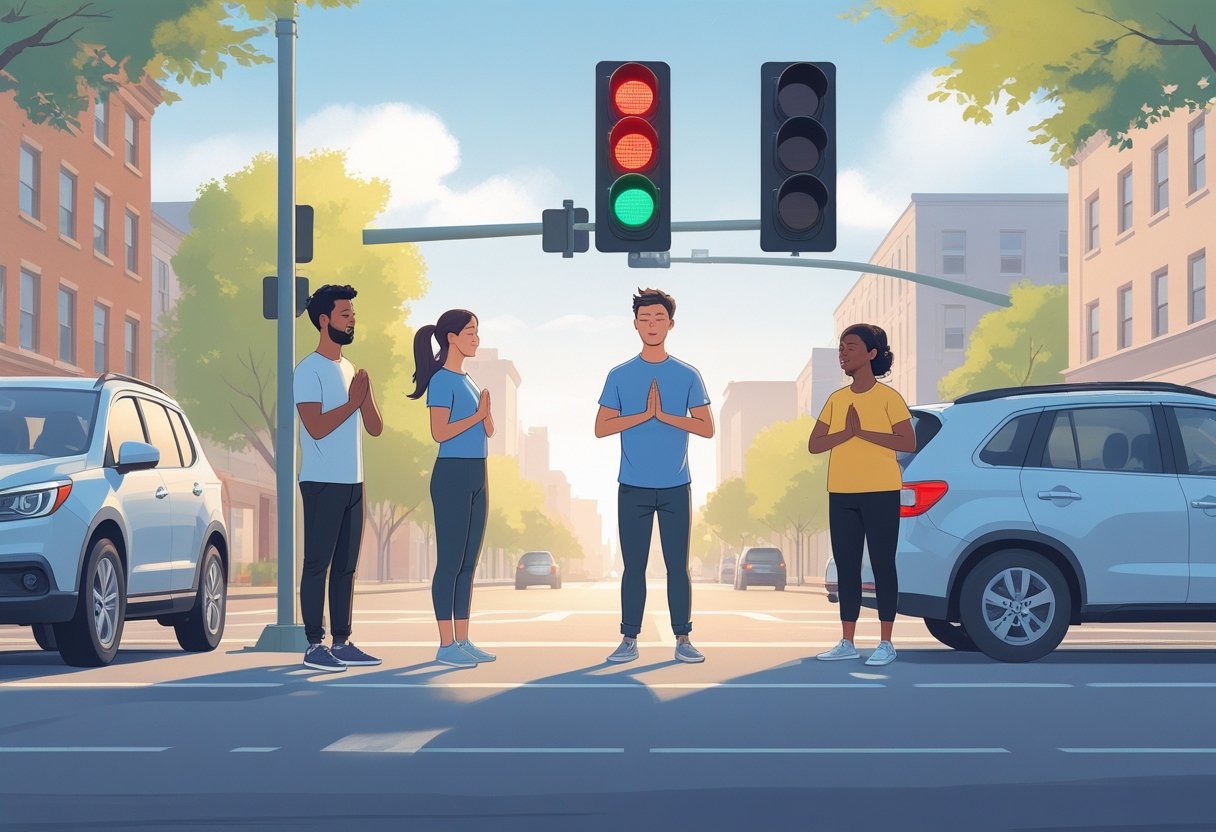
Simple breathing exercises at traffic lights can transform stressful driving moments into opportunities for relaxation and better focus. This technique works because it gives your brain a chance to reset, helping you feel more in control and confident on the road. We’ll show you exactly how to use each colour of the traffic light system to build better breathing habits.
Throughout this guide, we’ll explore why breath work matters so much for drivers, walk through specific exercises for each light, and share practical tips for making these techniques stick. Whether you’re preparing for your driving test or simply want to feel more relaxed behind the wheel, these simple strategies can make every journey more enjoyable and safe.
Understanding the Traffic Light Technique
The Traffic Light Technique transforms ordinary driving moments into powerful opportunities for emotional growth and stress management. This approach uses the familiar red, amber, and green light system to create structured breathing exercises that help drivers develop better self-regulation skills.
Origins and Benefits for Drivers
The Traffic Light Technique emerged from therapeutic settings where mental health professionals needed simple, visual tools to help people manage anxiety and overwhelming emotions. We’ve adapted this brilliant concept specifically for drivers who spend countless hours navigating stressful road conditions.
When we’re stuck in traffic or approaching a red light, our natural response often involves frustration or impatience. These feelings trigger our body’s stress response, releasing cortisol and adrenaline that make us feel tense and irritable.
The technique works by interrupting these automatic reactions. Instead of letting stress build up, we use each traffic light as a gentle reminder to pause and breathe mindfully.
Key benefits for drivers include:
- Reduced road rage and aggressive driving behaviours
- Lower blood pressure during commutes
- Improved focus and reaction times
- Better emotional control in challenging traffic situations
Many drivers report feeling more relaxed and centered after incorporating this practice into their daily routines. The beauty lies in its simplicity: we’re simply repurposing time we’d normally spend feeling frustrated.
How the Three-Light System Supports Emotional Learning
Each colour in the traffic light system corresponds to a specific breathing action that supports different aspects of emotional learning. This structured approach helps us develop better self-awareness and emotional regulation skills over time.
Red Light: Stop and Breathe
When we see red, we take a deep breath in through our nose. This simple action interrupts our stress response and signals our nervous system to slow down. The stopping motion mirrors what we’re already doing with our vehicle.
Amber Light: Awareness Breathing
During amber, we focus on feeling our breath moving in and out. This builds the connection between our mind and body, helping us notice tension before it becomes overwhelming.
Green Light: Breathe and Go
As the light turns green, we take one final conscious breath before moving forward. This helps us carry that sense of calm into the next part of our journey.
The traffic light technique trains our brain to associate these visual cues with relaxation rather than stress. Over weeks of practice, this becomes an automatic response that serves us well beyond driving situations.
Why Breath Matters in Everyday Driving
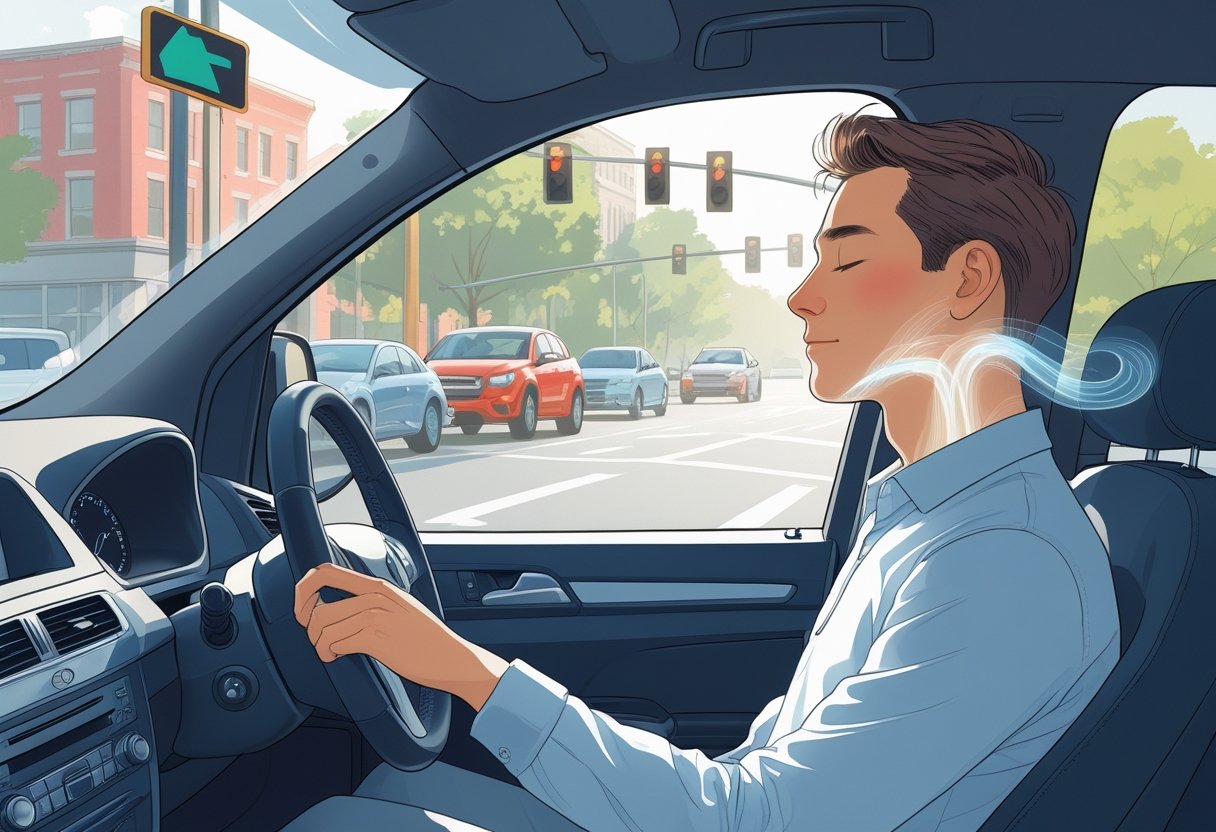
Our breathing patterns directly influence how we respond to stress and make split-second decisions whilst driving. When we master simple breathing techniques, we develop stronger emotional intelligence and self-control that keeps us safer on Britain’s busy roads.
Breathing and Emotional Intelligence behind the Wheel
Deep breathing creates space between trigger and reaction. When that white van cuts us up or traffic grinds to a halt, our first instinct might be frustration or anger.
But here’s what happens when we breathe properly: we activate our parasympathetic nervous system. This biological shift gives us precious seconds to choose our response rather than react automatically.
Emotional intelligence behind the wheel means recognising our feelings without letting them drive our actions. We might still feel annoyed when someone jumps the queue at a roundabout, but controlled breathing helps us stay calm.
Research shows that drivers who practice breathing techniques experience:
- 40% less road rage incidents
- Better decision-making under pressure
- Improved focus during challenging conditions
The key is consistency. We don’t need perfect zen-like calm. We just need enough emotional awareness to keep our wits about us when things get tricky.
Linking Deep Breathing to Self-Control at Crossroads
Traffic lights offer perfect opportunities to reset our mental state. Those 30-60 second pauses become powerful moments for self-control practice.
Here’s the connection: controlled breathing equals controlled responses. When we’re stuck at lights feeling impatient, a few deep breaths can shift our entire mindset.
Try this simple technique:
- Inhale slowly for 4 counts through your nose
- Hold briefly for 2 counts
- Exhale for 6 counts through your mouth
This 4-2-6 pattern activates our body’s relaxation response. We’re literally rewiring our stress patterns whilst waiting for green.
Self-control improves with practice. Each traffic light becomes a mini training session. We’re building mental muscles that help us stay patient with learner drivers, resist the urge to speed through amber lights, and maintain focus during long journeys.
The beauty is that nobody else knows we’re doing it. We’re quietly becoming calmer, more skilled drivers one breath at a time.
Step-By-Step: Breathing Exercises at Red, Amber, and Green Lights
We can transform every traffic light into a mindfulness opportunity using specific breathing patterns that match each signal phase. Each light colour becomes a cue for different deep breathing techniques that help us stay calm and focused whilst driving.
Red Light: Stop and Breathe
The red light gives us the perfect chance to press pause on stress and reset our nervous system. This is our longest window for proper breathing exercises.
The 4-7-8 Red Light Technique:
- Inhale through your nose for 4 counts
- Hold your breath for 7 counts
- Exhale slowly through your mouth for 8 counts
- Repeat 2-3 cycles if the light allows
Keep both hands relaxed on the steering wheel. Let your shoulders drop away from your ears. Feel your belly expand as you breathe in, not just your chest.
Quick Box Breathing Alternative:
- Breathe in for 4 counts
- Hold for 4 counts
- Exhale for 4 counts
- Hold empty for 4 counts
This traffic light technique works brilliantly when you’re feeling overwhelmed or anxious. The structured counting gives your mind something specific to focus on rather than worrying about traffic or your destination.
Remember, we’re not trying to force anything. Just gentle, conscious breathing that helps us arrive feeling more centred and alert.
Amber Light: Awareness and Reset
Amber lights offer us a brief but valuable moment for a quick awareness check and mental reset before moving forward.
The Three-Breath Reset:
- One deep breath in through the nose
- Slow exhale whilst scanning your body for tension
- Final cleansing breath to release any tightness
Use this short window to notice how you’re feeling. Are your hands gripping the wheel too tightly? Is your jaw clenched? Are your shoulders hunched up?
The Colour Breathing Technique:
- Breathe in your favourite calming colour (perhaps soft blue or gentle green)
- Imagine this colour filling your entire body
- Exhale any stress or frustration as a darker colour leaving your system
This quick practice helps bridge the gap between the restful red light pause and the active green light ahead. We’re essentially giving ourselves a mini-reset that takes just seconds but can shift our entire driving experience.
The amber phase reminds us to stay present rather than rushing ahead mentally to our next destination.
Green Light: Move Forward with Clarity
As we accelerate through green lights, we can maintain our calm energy with breathing techniques that keep us grounded whilst driving.
Steady Rhythm Breathing:
- Breathe in for 3-4 counts as you check mirrors and begin moving
- Exhale for 4-5 counts whilst maintaining smooth acceleration
- Continue this pattern for the first few seconds of driving
The Moving Meditation:
Count your breaths from 1 to 10, then start again. If you lose count (which happens), simply return to 1 without any self-criticism.
Keep your breathing natural and unforced. We don’t want to create distraction by over-focusing on complex patterns whilst navigating traffic.
Integration Tips:
- Use your peripheral vision to stay aware of traffic
- Let your breathing stay smooth and even
- If you notice tension creeping back in, return to deeper belly breaths
The goal isn’t perfect breathing technique but rather maintaining that sense of calm awareness we cultivated at the red light. We’re carrying this peaceful energy forward into our driving rather than losing it the moment we start moving again.
Coaches’ Tips for Building Better Habits
Building lasting breathing habits during your commute starts with small, consistent actions and the right motivation to keep you going. Success comes from making these techniques feel natural rather than forced.
Integrating Mindful Breathing into Your Driving Routine
We recommend starting with just one traffic light per journey. Pick the same junction each day and commit to three deep breathing cycles whilst you wait.
Morning commuters find success by linking breathing exercises to their coffee routine. Take five mindful breaths before starting the engine. This creates a natural trigger that your brain will remember.
Coaches often suggest the “red light reset” approach. Every time you see red, it becomes your cue to breathe deeply. Start with belly breathing: in through your nose for four counts, out through your mouth for six.
Here’s what works best:
- Set phone reminders for the first week
- Use dashboard sticky notes as visual prompts
- Practice during weekend drives when there’s less pressure
- Begin with 30-second sessions and gradually increase
The key is consistency over perfection. Missing a day won’t derail your progress, but skipping three days in a row might reset your habit-building process.
Motivating Yourself for Lasting Results
We’ve found that tracking small wins keeps drivers motivated long-term. Note how you feel before and after each breathing session using a simple 1-10 stress scale.
Reward systems work brilliantly for habit formation. Treat yourself to something small after completing one week of consistent practice. This could be your favourite coffee or a new playlist.
Coaches recommend finding an accountability partner among family or friends. Share your progress weekly and ask them to check in on your breathing routine.
Visual progress helps maintain momentum:
- Mark successful days on a calendar
- Take photos of yourself looking relaxed after breathing exercises
- Keep a voice memo diary of how traffic feels different
Remember that building habits takes roughly 66 days on average. The first three weeks feel challenging, but persistence pays off. Your nervous system will thank you with calmer commutes and better stress management throughout your day.
Managing Emotions and Stress at Busy Junctions
Traffic-heavy intersections can trigger strong emotional responses, from frustration to anxiety. Learning to identify what sets us off and transforming those reactions into purposeful breathing can help us stay calm and focused.
Recognising Emotional Triggers in Traffic
We all have specific situations that get under our skin whilst driving. Heavy traffic queues might make us feel trapped. Aggressive drivers cutting in could spark anger. Understanding our personal triggers helps us prepare before emotions take control.
Common emotional triggers at junctions include:
- Long waits at red lights
- Drivers jumping the queue
- Being honked at by impatient motorists
- Missing a green light cycle
- Pedestrians crossing slowly
Our bodies give us warning signals before emotions peak. We might notice our jaw clenching, shoulders rising, or hands gripping the steering wheel tighter. Some of us hold our breath or start breathing quickly when stressed.
Developing emotional intelligence means catching these early signs. The moment we feel our chest tightening or irritation building, that’s our cue to act. Traffic lights actually give us perfect opportunities to check in with ourselves.
Take a quick mental scan whilst waiting. Are your muscles tense? Is your breathing shallow? These physical clues tell us when it’s time to use our breathing techniques.
Turning Emotional Reactions into Positive Action
Once we spot those trigger signs, we can channel that energy into something helpful. Instead of letting frustration build, we transform it into focused breathing practice. This shift from reaction to action puts us back in the driver’s seat emotionally.
The traffic light breathing reset works like this:
- Red light: Take three slow, deep breaths
- Amber approaching: One final calming breath
- Green light: Drive with renewed focus
When someone cuts us up or traffic crawls, we have a choice. We can let anger simmer and ruin our journey, or we can use that moment as a breathing opportunity. The key is making this switch quickly, before emotions spiral.
Self-control grows stronger each time we choose breathing over boiling. Start with simple techniques like counting breaths or extending your exhales. Even 30 seconds of mindful breathing can shift our entire mood.
Remember, other drivers can’t control how we feel. That power belongs to us. Every red light becomes a chance to reset, every traffic jam an opportunity to practise patience through breath.
Practical Tools and Reminders for Consistent Practice
Building lasting habits requires clever prompts and honest self-assessment. Visual reminders in your car and simple daily check-ins help transform breathing at traffic lights from an occasional thought into an automatic response.
Simple Visual Cues for In-Car Use
Small sticky notes placed on your dashboard serve as gentle nudges to practise the traffic light technique. Write simple phrases like “breathe deeply” or “stop and breathe” on bright colours that catch your eye naturally.
Position these reminders where they won’t obstruct your view but remain visible during stops. The gear stick area or radio display work brilliantly for this purpose.
Phone notifications can reinforce your practice without creating distractions. Set location-based alerts that trigger when you approach common traffic light areas on your regular routes.
Mirror hangers or small car accessories with breathing symbols create subtle visual anchors. A small heart or wave shape reminds you to check in with your breath without drawing attention from other road users.
The key lies in making these cues obvious enough to notice but subtle enough to feel natural. Replace or move them weekly to prevent your brain from filtering them out completely.
Daily Reflection to Strengthen Progress
Evening check-ins help cement your progress and identify improvement areas. Ask yourself three quick questions: Did I remember to breathe at traffic lights today? How did my body feel during stops? What moments felt most challenging?
Keep a simple tally on your phone or notebook. Mark successful breathing moments versus missed opportunities. This isn’t about perfection but about building awareness of your patterns.
Weekly pattern spotting reveals your strongest and weakest practice times. Perhaps you remember morning breathing but forget during evening commutes when tiredness sets in.
Celebration matters just as much as problem-solving. Acknowledge days when breathing felt automatic or when you stayed calm during unexpected delays. These victories build confidence for continued growth.
Notice how your overall stress levels shift as breathing becomes more habitual. Many learner drivers find their general anxiety decreases within just two weeks of consistent practice.
Frequently Asked Questions
These breathing exercises work brilliantly during those everyday moments when you’re stopped at traffic lights, helping you stay calm and focused behind the wheel. We’ve gathered the most common questions drivers ask about using breath work to manage stress and anxiety whilst driving.
What are some simple breathing exercises I can perform while waiting at traffic lights to help with driving anxiety?
The four-seven-eight technique works wonders at red lights. Breathe in through your nose for four counts, hold for seven, then exhale through your mouth for eight counts.
Keep both hands on the steering wheel throughout. This keeps you ready to drive whilst calming your nervous system.
Box breathing offers another brilliant option. Inhale for four counts, hold for four, exhale for four, then pause for four before repeating.
We recommend starting with just two or three cycles. You’ll feel more relaxed without losing focus on the road ahead.
How can I use breath control to stay calm and focused in heavy traffic?
Steady, rhythmic breathing helps regulate your stress response during challenging traffic situations. Focus on making your exhales slightly longer than your inhales to activate your body’s relaxation response.
Try the 4-6 pattern whilst stationary. Breathe in for four counts, then slowly exhale for six counts through slightly parted lips.
Keep your shoulders relaxed and avoid gripping the steering wheel too tightly. This prevents tension from building up in your upper body.
When traffic starts moving, return to natural breathing patterns. Save the structured techniques for when you’re completely stopped.
Are there quick stress-relief breathing techniques suitable for busy intersections?
The three-breath reset works perfectly for brief stops at busy junctions. Take one deep breath in, pause slightly, then release slowly whilst consciously relaxing your shoulders.
This technique takes less than thirty seconds but effectively interrupts stress patterns. You’ll feel more centred without missing important traffic cues.
Belly breathing offers another quick option. Place one hand lightly on your stomach and feel it rise as you inhale naturally.
We suggest practising these techniques during quieter drives first. This builds confidence before using them in busier traffic situations.
Can you suggest a breathing routine that helps maintain alertness during long waits at red lights?
Energising breath work can actually boost your alertness rather than make you drowsy. Try gentle diaphragmatic breathing combined with light shoulder rolls to stay fresh and focused.
Breathe deeply into your lower ribs whilst gently moving your shoulders backwards in small circles. This increases oxygen flow and prevents stiffness.
Count your breaths from one to five, then start again. This keeps your mind engaged whilst promoting relaxation.
Avoid overly slow breathing patterns during long waits. These might make you feel too relaxed when you need to stay sharp and ready.
What is the best way to practice deep breathing without getting distracted from the road?
Keep your eyes open and maintain awareness of your surroundings throughout any breathing exercise. Your peripheral vision should stay active even whilst focusing on your breath.
Start with shorter, simpler techniques until they become second nature. Complex counting patterns can divert attention from important traffic signals.
We recommend practising in your parked car first. This builds muscle memory so the techniques feel automatic when you’re actually driving.
Position your mirrors properly before starting your journey. This ensures you can monitor traffic movement whilst breathing consciously at lights.
Could you guide me through a step-by-step calming breath exercise for those moments I’m stuck at a traffic signal?
Here’s our favourite traffic light breathing sequence that works brilliantly for anxious moments. First, check your mirrors and ensure your handbrake is on if you’ll be waiting for more than a few seconds.
Rest your hands comfortably on the steering wheel. Let your shoulders drop away from your ears and soften your facial muscles.
Breathe in slowly through your nose for three counts, feeling your ribcage expand gently. Hold this breath for just two counts, nothing dramatic or forced.
Exhale steadily through slightly parted lips for four counts. Imagine releasing tension with each out-breath whilst staying alert to your surroundings.
Repeat this cycle twice more if the light is still red. As amber appears, take one final natural breath and prepare to move off smoothly.