

Can International Students Get a Provisional Driving Licence? UK Step-by-Step Guide
Moving to the UK as an international student brings excitement and challenges in equal measure. One question that crops up frequently is whether you can get behind the wheel legally whilst studying here. Yes, international students can absolutely apply for a provisional driving licence in the UK, but you’ll need to wait at least six months after becoming a UK resident before you can start the process.
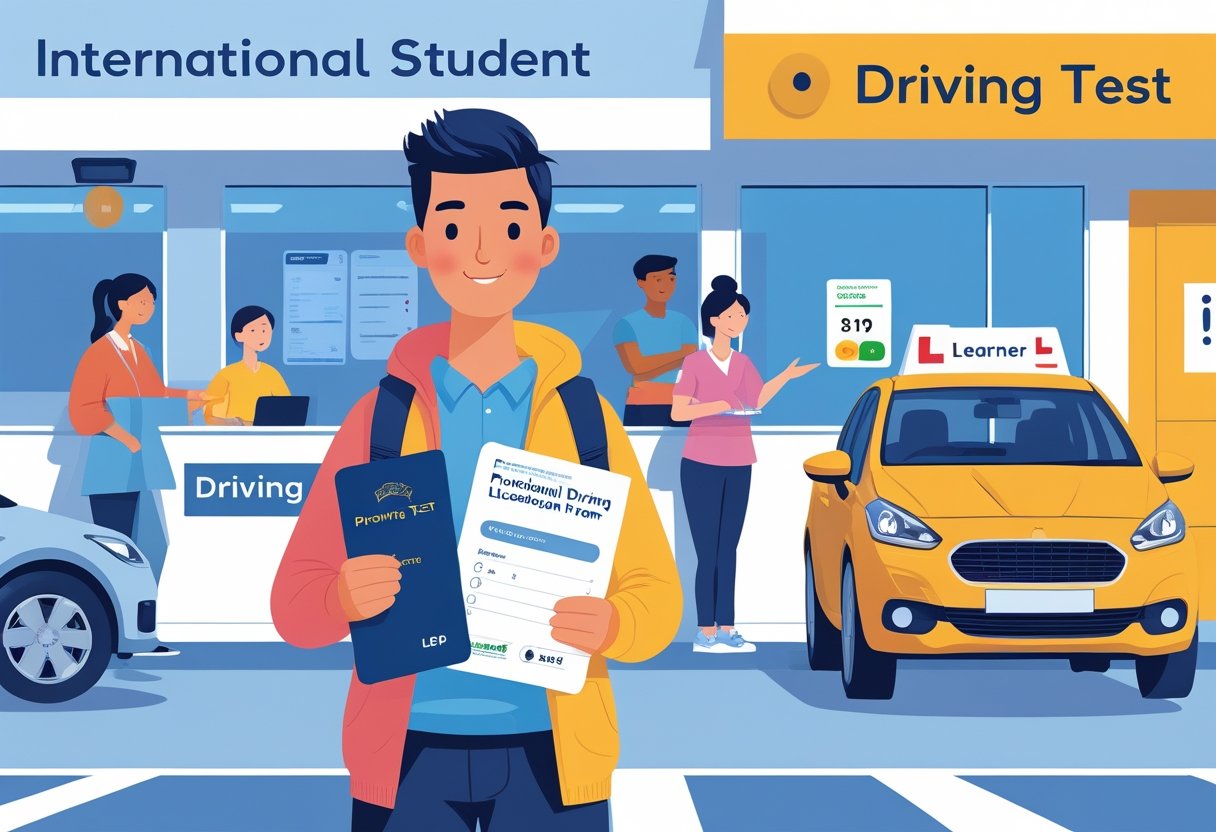
The brilliant news is that many international students can actually drive on their home country licence for up to 12 months before needing to switch to a UK licence. This gives you breathing space to settle into your studies and decide whether getting a UK licence makes sense for your situation. Whether you’re from an EU country, a designated territory, or somewhere else entirely, there are clear pathways to get you legally driving on British roads.
We’ll walk you through everything you need to know about eligibility requirements, how long you can use your existing licence, and the step-by-step process of applying for your provisional licence. Plus, we’ll cover the essentials like preparing for your theory and practical tests, finding the right driving instructor, and sorting out insurance. By the end of this guide, you’ll feel confident about taking your next steps towards driving independence in the UK.
Eligibility for International Students Applying for a Provisional Licence
International students can absolutely get a provisional driving licence in the UK, provided they meet specific residency requirements and have proper documentation. The age threshold starts at 15 years and 9 months, and you’ll need recognised identification plus confirmation of your legal status in Britain.
Residency and Age Requirements
The exciting news is that age works in your favour as an international student. You can apply for your provisional licence at just 15 years and 9 months old. This gives you plenty of time to get sorted before you actually start driving at 17.
The residency requirement is where things get a bit more specific. You must have lived legally in Great Britain for at least 185 days. That’s roughly six months, which most international students will easily meet during their first academic year.
Your immigration status needs to give you permission to live in England, Scotland, or Wales. Student visas absolutely count for this requirement. We’ve found that many international students worry unnecessarily about this – if you’re studying here legally, you’re almost certainly eligible.
The 185-day rule doesn’t have to be continuous either. If you’ve popped home for holidays or semester breaks, those days still count towards your total.
Recognised Identification Documents
Getting your paperwork right is crucial, but it’s more straightforward than you might think. The DVLA accepts several forms of identification from international students.
Your passport remains the gold standard identification document. Whether it’s from your home country or elsewhere, a valid passport will do the job perfectly. Make sure it’s not expired – we can’t stress this enough!
If you have a biometric residence permit (BRP), this works brilliantly as identification too. Many international students find their BRP particularly useful because it clearly shows their legal status in the UK.
You might need to prove your identity online when applying. The system usually asks for photo ID like your passport. Don’t worry if the online verification feels a bit fiddly – it’s designed to keep your details secure.
Some students have multiple forms of ID available. Pick whichever one you’re most comfortable using and has the clearest photo.
Medical Conditions and Fitness to Drive
Your health and fitness to drive matter enormously for everyone’s safety on the roads. The good news is that most medical conditions don’t automatically disqualify you from getting a provisional licence.
You must be able to read a number plate from 20 metres away. If you wear glasses or contact lenses, that’s absolutely fine – just make sure your prescription is up to date.
Certain medical conditions need to be declared when you apply. These include epilepsy, diabetes treated with medication, heart conditions, or mental health issues that might affect your driving. Being honest about these isn’t about excluding you – it’s about keeping everyone safe.
The DVLA can provide guidance if you’re unsure whether your condition affects your application. They’re surprisingly helpful and want to support you through the process rather than create barriers.
Remember, having a medical condition often just means additional checks rather than an outright rejection. Many students with various health conditions successfully get their provisional licences and go on to become excellent drivers.
How Long International Students Can Drive on Their Existing Licence
The length of time you can drive in the UK depends entirely on where your current licence was issued. EU and EEA licence holders enjoy the longest validity period, whilst those from designated countries get up to 12 months, and non-designated countries face stricter requirements after just one year.
Rules for EU and EEA Licences
If you’re lucky enough to hold a driving licence from an EU or EEA country, you’ve got the best deal when it comes to driving in the UK. You can continue driving for as long as your licence remains valid or until you reach 70 years of age – whichever comes first.
This means if your EU licence doesn’t expire for another five years, you can happily drive in the UK for that entire period. There’s no need to rush into getting a UK provisional licence unless you fancy it.
The beauty of this arrangement is its simplicity. You don’t need to worry about complex exchange processes or additional paperwork. Just keep your current licence valid and you’re sorted.
Remember though, once your EU licence expires or you hit 70, you’ll need to look into getting a proper UK driving licence if you want to keep motoring about.
Designated Countries and Licence Exchange Process
Students from designated countries – including places like Australia, Canada, and New Zealand – can drive in the UK for up to 12 months. This gives you plenty of time to settle in and decide whether you need a permanent UK licence.
The 12-month period starts from when you become a UK resident, not from when you first arrive. This distinction matters because it affects your timeline for any future licence applications.
Many designated countries have licence exchange agreements with the UK. This means you might be able to swap your home licence for a UK one without taking any driving tests. It’s worth checking if your country has this arrangement – it could save you considerable time and money.
If you’re from a designated country but want to drive beyond that first year, you’ll need to apply for a UK provisional licence. The good news is you’ve got a whole year to prepare and understand the UK’s driving requirements.
Non-Designated Countries and International Driving Permits
If your licence comes from a non-designated country, the rules become a bit more challenging. You can drive for up to one year using your existing licence, but after that, you’ll need proper UK documentation.
An International Driving Permit (IDP) can help during this initial period. It translates your home licence into multiple languages and makes things easier when dealing with car rental companies or police stops.
Here’s what happens after your first year:
- You must apply for a UK provisional licence
- You’ll need to pass both theory and practical driving tests
- You must wait until you’ve been UK resident for 6 months before applying
The six-month residency requirement means you need to plan ahead. Start researching the UK driving test process early, so you’re ready to begin once you’ve hit that residency milestone.
Don’t let these requirements discourage you – thousands of international students successfully navigate this process every year. With proper preparation, you’ll be back on UK roads with full legal status.
Applying for a Provisional Driving Licence as an International Student
Getting your provisional licence sorted is your first big milestone on the road to driving independence in the UK. We’ll walk you through both online and postal applications, plus give you the complete lowdown on costs and timelines so you can plan ahead with confidence.
Online Application Process
The online route is absolutely brilliant for international students who want their provisional licence fast. Head straight to the official gov.uk website where you’ll find the application form waiting for you.
You’ll need your passport or Biometric Residence Permit handy before starting. The system asks for your National Insurance number too, so grab that from your correspondence with HMRC or student finance.
The digital application walks you through each step clearly. You’ll answer questions about your identity, address history, and any medical conditions that might affect your driving. Don’t worry if you’ve moved around a lot as a student – just provide your UK address details as accurately as possible.
One fantastic perk of applying online is the photo service. You can often use a recent digital photo rather than getting new passport photos taken. The system checks everything instantly, which means fewer delays down the line.
Applying by Post and the D1 Form
Sometimes the postal route works better, especially if you’re having technical difficulties online or prefer handling paperwork in person. You’ll need to get hold of the D1 form from any Post Office branch.
The D1 form looks quite lengthy at first glance, but don’t let that put you off. Take your time filling it out completely – rushing through often leads to mistakes that delay processing.
You’ll need to include original identity documents with your postal application. Send your passport or Biometric Residence Permit along with the completed form. We know it feels nerve-wracking posting these important documents, but DVLA handles thousands safely every day.
Include passport-style photos that meet the strict requirements. The photos must be recent, clear, and taken against a plain background. Many Post Office branches offer photo services that guarantee DVLA compliance.
Fees and Waiting Times
Your provisional driving licence costs £34, regardless of whether you apply online or by post. This fee stays the same for all applicants, including international students.
Online applications typically arrive within one to two weeks. It’s genuinely exciting when that envelope drops through your letterbox! Postal applications using the D1 form usually take around three weeks, sometimes longer during busy periods.
We always recommend applying well before you need to start driving lessons. This gives you breathing room if any documents need clarifying or if there are unexpected delays.
Payment online happens through debit or credit card, making the process smooth and immediate. For postal applications, you’ll need to include a cheque or postal order made payable to DVLA.
Preparing for the UK Driving Tests
You’ll need to pass both a theory test and practical test to earn your full UK driving licence. The theory test checks your knowledge of road rules and hazard awareness, whilst the practical test evaluates your actual driving skills on real roads.
The Theory Test Explained
Your theory test consists of two parts that you’ll complete on the same day. The multiple-choice section presents 50 questions about road signs, traffic laws, and safe driving practices. You’ll need to score at least 43 out of 50 to pass this portion.
The hazard perception test comes next. You’ll watch 14 video clips showing real driving situations from a driver’s perspective. Each clip contains at least one developing hazard that could require you to change speed or direction.
Timing matters here. Click your mouse when you spot a hazard starting to develop. Click too early or too late, and you won’t score points for that hazard. The maximum score is 75 points, and you’ll need 44 points to pass.
Book your theory test online through the official DVSA website. Test centres operate across the UK, so you can usually find one within reasonable travelling distance.
Studying the Highway Code and Hazard Perception
The Highway Code becomes your best friend during test preparation. This official guide covers everything from basic road signs to complex roundabout rules. Don’t just memorise facts – understand the reasoning behind each rule.
Focus on these key areas:
- Road signs and markings
- Stopping distances at different speeds
- Right-of-way rules at junctions
- Vulnerable road users like cyclists and pedestrians
Download the official DVSA theory test app for practice questions. Third-party apps can be helpful, but stick with official materials for the most accurate content.
For hazard perception practice, watch the official DVSA clips repeatedly. Look for pedestrians stepping into roads, cars pulling out of junctions, or vehicles braking suddenly ahead. Practice clicking at the right moment – not when you first see a potential problem, but when it starts becoming an actual hazard.
Booking and Taking the Practical Test
You can only book your practical test after passing your theory test. The theory test certificate stays valid for two years, giving you plenty of time to develop your practical skills.
Your driving instructor will help you decide when you’re ready. Most learners need around 40-45 hours of professional lessons, though this varies significantly based on individual progress.
During your practical test, you’ll demonstrate:
- Vehicle safety checks (the “show me, tell me” questions)
- Reversing manoeuvres like parallel parking
- Independent driving for about 20 minutes using sat nav
- General driving skills in various road conditions
The test lasts approximately 40 minutes total. Your examiner will guide you through different road types, from quiet residential streets to busier main roads. Stay calm and drive as you’ve practised – your instructor wouldn’t have recommended the test if you weren’t ready.
Book early, as waiting times can stretch several weeks in busy areas. Consider taking your test in a quieter town if your local centre has long delays.
Taking Driving Lessons and Getting Ready for the Road
Once you’ve got your provisional driving licence sorted, it’s time to start learning the practical skills you’ll need behind the wheel. Finding the right instructor and understanding how supervised practice works will set you up for success when test day arrives.
Finding an Approved Driving Instructor
Your choice of driving instructor can make or break your learning experience. We recommend looking for an Approved Driving Instructor (ADI) who’s registered with the DVSA.
You can spot qualified instructors easily – they’ll display a green ADI badge in their windscreen. This badge proves they’ve passed rigorous training and regular check-ups.
What to look for in a good instructor:
- Clear communication style that matches how you learn best
- Patience with international students who might need extra time
- Flexible lesson times that work around your uni schedule
- Dual-control car for safety during practice
Ask mates at university for recommendations. Word-of-mouth referrals often lead to the best matches.
Many instructors offer trial lessons at reduced rates. This gives you a chance to see if their teaching style clicks with you before committing to a full course.
Don’t be afraid to switch instructors if things aren’t working out. Your comfort and progress matter more than hurt feelings.
Supervised Practice with a Provisional Licence
Having a provisional driving licence opens up more practice opportunities beyond paid lessons. You can drive with qualified supervisors in their own cars, which helps build confidence.
Your supervisor must be over 21 and have held a full UK licence for at least three years. They need to sit in the front passenger seat at all times.
Legal requirements for supervised practice:
- Display L plates on front and rear of the vehicle
- Supervisor must be alert and ready to take control
- Car must be properly insured for learner drivers
- No motorway driving allowed with L plates
We suggest mixing professional lessons with supervised practice. This combination gives you varied experience whilst keeping costs manageable.
Practice different scenarios like car parks, quiet residential streets, and busy town centres. Each environment teaches unique skills you’ll need for your test.
Essential Skills for Passing the Tests
Success in your driving tests requires mastering both theory knowledge and practical abilities. We’ve found that students who prepare systematically tend to pass more quickly.
Theory test preparation:
- Study the Highway Code thoroughly – UK rules differ from other countries
- Practice hazard perception clips daily for at least two weeks
- Take mock tests until you consistently score above 85%
Practical skills to focus on:
- Mirror-signal-manoeuvre routine for every action
- Smooth gear changes and clutch control
- Confident reversing and parking manoeuvres
- Reading road signs and following directions
Many international students struggle with roundabouts initially. Spend extra time practising these since they’re common on UK roads.
Your instructor should conduct mock tests before booking your real practical exam. This helps identify any weak spots that need attention.
Remember, nerves are normal on test day. The examiner wants you to succeed, so stay calm and trust your training.
Vehicle, Documentation, and Car Insurance Requirements
International students must secure proper insurance coverage and understand vehicle documentation rules before getting behind the wheel. You’ll need valid insurance, registration documents, and MOT certificates to drive legally in the UK.
Mandatory Car Insurance for Learner Drivers
Getting car insurance with a provisional driving licence might feel daunting, but it’s absolutely essential. Every learner driver needs insurance coverage before taking their first lesson, whether you’re driving a family car or using a driving instructor’s vehicle.
Learner driver insurance comes in several forms. You can add yourself to an existing policy as a named driver, which often costs less than getting your own policy. Alternatively, temporary learner insurance lets you practise in someone else’s car for short periods.
Many insurers offer provisional licence holders competitive rates. Don’t let the initial quotes discourage you – shop around and compare different providers. Some companies specialise in learner driver policies and understand your unique circumstances as an international student.
Your insurance must cover you for the specific vehicle you’ll be driving. Third-party coverage is the legal minimum, but comprehensive insurance gives you better protection. Remember, driving without valid insurance can result in hefty fines and serious legal consequences.
Required Vehicle Documents
When you’re learning to drive, certain documents must always accompany you on the road. Your provisional driving licence is obviously essential – keep it with you during every lesson and practice session.
The vehicle’s registration document (V5C) proves legal ownership. You don’t need to carry this whilst driving, but the car owner should have it readily available. Police can request to see this document if they stop you.
Insurance certificates or cover notes must be current and valid. Digital versions on your smartphone are perfectly acceptable. Make sure the policy specifically covers you as a provisional licence holder.
Your supervising driver must hold a full UK driving licence for the vehicle category you’re learning in. They need to have held this licence for at least three years and be over 21 years old.
Road Tax and MOT Information
Understanding road tax and MOT requirements helps ensure you’re always driving legally. Vehicle Excise Duty (road tax) must be paid and current for any car you’re learning in. You can check this online using the vehicle’s registration number.
MOT certificates are mandatory for cars over three years old. This annual test ensures the vehicle meets safety and environmental standards. Learning in a car without valid MOT is illegal and potentially dangerous.
Cars exempt from road tax still need to be registered with DVLA. Electric vehicles and some low-emission cars qualify for zero-rate tax, but you still must declare this annually.
Your driving instructor’s car will have all necessary documentation sorted. However, if you’re practising with friends or family members, double-check their vehicle has current road tax, valid MOT, and proper insurance coverage that includes you.
Frequently Asked Questions
International students often have specific questions about getting their provisional driving licence in the UK. These common concerns cover everything from the initial application steps to understanding what documents you’ll need and any restrictions that might apply.
What are the first steps an international student should take to apply for a UK provisional driving licence?
Your driving journey begins with checking you meet the basic requirements. You’ll need to be at least 15 years and 9 months old and able to read a number plate from 20 metres away.
Most importantly, you must have permission to live in Great Britain for at least 185 days. This shows you’re not just visiting on a short-term basis.
Once you’ve ticked these boxes, head to the DVLA website to start your online application. It’s straightforward and much faster than posting forms around.
You’ll need to create an account if you don’t already have one. The system will guide you through each step, making the whole process quite manageable.
Which documents are required for non-UK residents to obtain a provisional driving licence in the UK?
We know gathering documents can feel overwhelming, but the requirements are actually quite reasonable. You’ll need valid photo identification, typically your passport, which proves both your identity and right to be in the UK.
Your visa or immigration documents are essential too. These demonstrate you have permission to live in Great Britain for the required period.
If you’re applying online, you might need to verify your identity digitally. The system will tell you exactly what’s needed during the application process.
Keep digital copies of everything handy. This makes the online application much smoother and helps if you need to reference anything later.
Is there a specific visa type that international students need to have to be eligible for a UK provisional licence?
The brilliant news is that there isn’t one specific visa type you must have. What matters is that your visa gives you permission to live in Great Britain for at least 185 days.
Most student visas easily meet this requirement. Whether you’re on a Tier 4, Student visa, or other study-related permission, you’re likely covered.
The key thing we look for is that you’re not just visiting temporarily. Your immigration status needs to show you’ll be here long enough to make getting a licence worthwhile.
If you’re unsure about your specific situation, check with your university’s international student services. They’re experts at helping students navigate these requirements.
How does the application process for a provisional driving licence vary for international students?
Here’s some encouraging news: the application process is largely the same for everyone. International students follow the exact same online application through the DVLA website.
The main difference is in document verification. You might need additional checks on your immigration status and right to remain in the UK.
This can sometimes mean your licence takes a bit longer to arrive. Whilst most people receive theirs within a week, yours might take extra time for these additional checks.
Don’t worry if the process seems to take longer than expected. The DVLA just wants to make sure everything’s properly verified before issuing your licence.
What’s the maximum duration an international student can drive with a provisional licence in the UK?
Your provisional licence doesn’t have a specific time limit once you’ve got it. You can hold it for as long as your immigration status allows you to remain in the UK.
The licence itself is typically valid for ten years, just like any other UK provisional licence. This gives you plenty of time to learn and pass your tests.
However, your ability to drive legally depends on maintaining your right to live in the UK. If your visa expires, you’ll need to sort that out to continue driving legally.
We’d recommend progressing to your full licence when you’re ready. It opens up much more flexibility and independence in your driving.
Can international students use their provisional driving licence to drive anywhere in the UK, or are there restrictions?
Your provisional licence works throughout England, Scotland, and Wales – that’s the whole of Great Britain covered. You’ll have the same driving privileges as any other provisional licence holder.
Remember though, provisional licences come with important restrictions. You must always have a qualified supervisor with you and display L plates on your vehicle.
You cannot drive on motorways with a provisional licence. This rule applies to everyone, regardless of nationality or student status.
These restrictions exist to keep you safe whilst you’re learning. Once you pass your practical test, you’ll have full freedom to drive independently anywhere in the UK.