

Do L‑Plates Have to Be Magnetic or Sticker‑Type? Your Complete Guide
Whether you’re just getting started with driving lessons or preparing for practice sessions with family, you’ve probably wondered about those red L-plates and how exactly you’re supposed to attach them to your car. The good news is that you have options when it comes to getting legal on the road.
L-plates don’t have to be magnetic – you can use either magnetic or sticker-type plates, as long as they meet the legal size and visibility requirements. Both types are perfectly acceptable under UK law, so your choice comes down to practical considerations like your car’s materials, how often you’ll be removing them, and your personal preferences.
We’ll walk you through everything you need to know about choosing the right type of L-plates for your situation, from understanding the legal requirements to finding the best spots for placement on your vehicle. You’ll discover which option works best for different car types, how to keep your plates secure and visible, and where to find quality approved plates that won’t let you down when you need them most.
Legal Requirements for Displaying L Plates
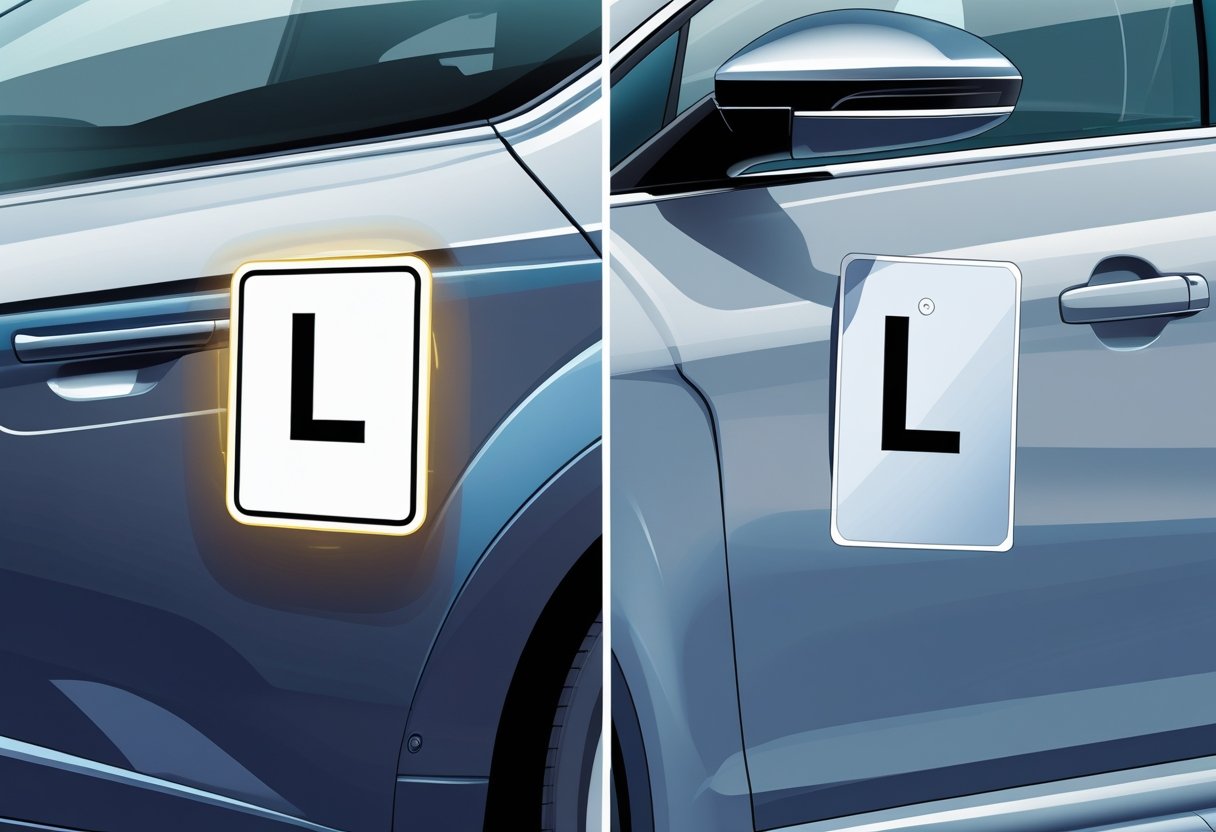
UK law requires all learner drivers to display L plates on their vehicles, but the good news is you have flexibility in choosing between magnetic and sticker options. Both types are legally acceptable as long as they meet specific size and design standards, and L plates become mandatory the moment you start practising on public roads with a provisional licence.
Magnetic vs Sticker-Type: What the Law Says
The law doesn’t actually specify whether your L plates must be magnetic or adhesive stickers. What matters is that they meet the official requirements and stay securely attached to your vehicle.
Both magnetic and sticker-type L plates are completely legal. The choice comes down to your personal preference and practical needs.
Magnetic L plates attach easily to metal surfaces and can be removed without leaving residue. They’re perfect if you’re sharing a car or switching between vehicles during lessons.
Sticker-type L plates use adhesive backing and tend to stay put better in harsh weather. They’re ideal for consistent use on one vehicle, though they might leave slight marks when removed.
The key legal requirement is that your plates stay visible and secure whilst driving. If an L plate falls off or becomes obscured, you could face penalties regardless of which type you chose.
We recommend checking your L plates regularly to ensure they remain clean and properly positioned. Both types work brilliantly when maintained correctly.
When Are L Plates Mandatory?
L plates become legally required the moment you drive on any public road with a provisional licence. There are absolutely no exceptions to this rule in the UK.
You must display L plates during:
- Driving lessons with an approved instructor
- Private practice with a qualified supervisor
- Your practical driving test (though some test centres provide temporary plates)
The supervising driver shares responsibility for ensuring L plates are properly displayed. They must be at least 21 years old and hold a full licence for three years minimum.
Important: You cannot legally drive on public roads without L plates, even for short distances. This includes driving to petrol stations, car parks, or moving the vehicle down your street.
The penalty for missing L plates is harsh. You can receive up to six penalty points on your provisional licence, which could delay your full licence application significantly.
Remove your L plates immediately after passing your practical test, though keeping them on isn’t illegal.
Approved Materials and Quality Standards
Your L plates must meet strict government specifications to be road legal, regardless of whether they’re magnetic or sticker-type.
Size Requirements:
- Minimum plate size: 178mm x 178mm
- Red letter ‘L’ height: minimum 79mm
- Letter width: minimum 14mm
- Background: white with red ‘L’
Display Standards:
- One plate on the front of your vehicle
- One plate on the rear of your vehicle
- Both plates must be clearly visible to other road users
- Cannot obstruct lights, number plates, or driver visibility
Quality matters significantly for safety and legal compliance. Cheap plates often fade quickly or don’t meet size requirements properly.
Look for L plates marked as meeting British Standards when shopping. Most reputable driving schools and motor retailers stock approved versions.
Top tip: Buy extras! Having spare L plates prevents awkward situations if one falls off or gets damaged during practice sessions.
Both magnetic and adhesive options are readily available from driving instructors, motor factors, and online retailers at very reasonable prices.
Choosing Between Magnetic and Sticker‑Type L Plates
Both magnetic and self-adhesive L plates are perfectly legal options for learner drivers. Magnetic plates offer convenience and reusability, whilst sticker-type plates provide superior grip and durability in harsh weather conditions.
Advantages of Magnetic L Plates
Magnetic L plates are brilliant for learners who share vehicles or switch between different cars regularly. We love how easy they are to pop on and off without any fuss.
Convenience is king with magnetic plates. You can attach them in seconds and remove them just as quickly when you’re not driving. This makes them perfect if your family car gets used by other drivers too.
There are two main types to choose from:
- Magnetic strips (top and bottom edges only)
- Fully magnetic backing (entire rear surface)
Fully magnetic versions tend to stay put better, especially at motorway speeds. They grip the car’s metal surface more securely than strip versions.
Cost-effectiveness is another big plus. Since you can reuse magnetic plates countless times, they’re brilliant value for money. You won’t need to buy replacements every few months.
The downside? They can slide around on curved surfaces or in strong winds. Some learners find they need to check their plates haven’t shifted during longer drives.
Benefits of Self‑Adhesive L Plates
Self-adhesive L plates are fantastic when you need absolute security and don’t mind a semi-permanent solution. They stick like glue once applied properly.
Weather resistance is where sticky plates really shine. Rain, snow, and fierce winds won’t budge them. They’re brilliant for learners in areas with unpredictable weather conditions.
These plates work perfectly on any surface too. Whether your car has plastic bumpers, glass surfaces, or curved bodywork, adhesive plates will stick securely where magnets simply can’t grip.
Durability is impressive with quality self-adhesive plates. They’ll stay crisp and clear throughout your learning journey without fading or peeling at the edges.
The trade-off is removal challenges. Sticky plates can leave marks or residue on paintwork when you take them off. You’ll also need fresh plates if you switch vehicles, which adds to the cost over time.
For learners using one specific car throughout their learning period, adhesive plates offer unbeatable peace of mind.
Proper Installation and Placement of L Plates
Getting your L plates positioned correctly isn’t just about following the law. It’s about ensuring other drivers can see you clearly and giving yourself the best chance at safe, successful driving practice.
Visibility and Legal Positioning
Your L plates must be clearly visible from both the front and rear of your vehicle. This means you’ll need at least two plates, though there’s nothing stopping you from using more if it improves visibility.
Size matters when it comes to legal compliance. Each L plate must measure exactly 178mm x 178mm to meet DVSA requirements. The red ‘L’ itself also has specific dimensions and positioning requirements within that square.
The key is positioning your plates as close to vertical as possible. Most cars work brilliantly with rear plates on the boot and front plates on the bonnet. However, your car’s unique shape might require creative placement.
Consider these prime positioning spots:
- Boot lid or rear bumper (rear visibility)
- Bonnet or front grille area (front visibility)
- Clean, flat metal surfaces for magnetic plates
- Side windows only if body placement isn’t feasible
Clean the mounting surface thoroughly before attaching magnetic plates. A spotless surface ensures better grip and prevents your plates from taking an unexpected tumble during practice sessions.
Common Mistakes to Avoid
One frequent slip-up involves placing L plates where they obstruct your vision. Avoid sticking plates directly in your line of sight through windows, particularly the rear windscreen where they can mess with your distance judgement.
Don’t fall into these placement traps:
- Covering important vehicle information (number plates, lights)
- Using damaged or faded plates that are hard to read
- Positioning plates at awkward angles that reduce visibility
- Forgetting to remove plates when qualified drivers use the car
Magnetic plates need proper care to stay put. Cheap magnets or dirty surfaces often lead to plates sliding off mid-journey. That’s not just embarrassing, it could land you in hot water legally.
Window-mounted plates seem convenient but create blind spots you don’t need as a learner. Your instructor will thank you for keeping windows crystal clear. Save stick-on plates for cars that will only be used by learner drivers, as they’re tricky to remove without damaging paintwork.
Durability and Maintenance Tips
Taking proper care of your L plates will save you money and protect your car’s paintwork from potential damage. The key is understanding how different plate types react to weather and knowing the right cleaning techniques.
Protecting Against Damage and Weather
Weather can be your L plates’ worst enemy, but a few smart habits will keep them in top condition. Remove magnetic L plates whenever you’re not driving, especially during heavy rain or when parking for extended periods.
Moisture trapped between magnetic plates and your car creates those dreaded milky patches on paintwork. This happens most often on bright colours like red or blue cars, where the damage shows up clearly.
For adhesive plates, check the edges regularly during wet weather. Water can seep underneath loose corners and cause the adhesive to fail or damage paint.
Strong winds are another concern. Magnetic plates with partial magnetisation around the edges often peel away at motorway speeds. Look for plates with full magnetic backing for better grip.
UV rays cause both types to fade over time. If possible, park in shade during summer months to extend your plates’ lifespan and prevent colour differences on your car’s surface.
Caring for Magnetic and Adhesive L Plates
Cleaning your L plates properly keeps them looking professional and functioning well. Magnetic plates need regular cleaning of both the plate surface and your car’s contact area.
Use warm soapy water to remove dirt and grime from magnetic plates. Dry them completely before reattaching to prevent moisture damage. Clean the car’s surface too, as dirt particles can scratch paintwork when trapped under the magnet.
For adhesive plates, gentle cleaning is essential. Use a damp cloth with mild soap, avoiding harsh chemicals that might weaken the adhesive or cause the plastic to crack.
Store magnetic plates flat when not in use. Bending damages the magnetic backing and reduces their holding power. Keep adhesive plates in their original packaging to protect the sticky surface.
Replace plates when they show signs of wear, fading, or reduced adhesion. Worn L plates not only look unprofessional but may also fail legal visibility requirements.
Replacing or Removing L Plates Safely
Removing L plates properly helps protect your car’s paintwork and saves money on replacements. The method depends on whether you’re using sticker-type or magnetic plates.
How to Remove Sticker-Type L Plates
Taking off sticker L plates requires patience to avoid damaging your car’s surface. Start by gently peeling from one corner using your fingernail or a plastic card.
Work slowly across the plate rather than yanking it off quickly. This prevents the adhesive from tearing and leaving sticky residue behind.
If the plate resists, try warming it slightly with a hair dryer on low heat. The warmth softens the adhesive and makes removal much easier.
For stubborn adhesive residue:
- Use white spirit or adhesive remover
- Apply with a soft cloth and rub gently
- Wash the area with soapy water afterwards
- Avoid harsh chemicals that might damage paintwork
We recommend changing tape-attached plates every week or two. Fresh tape removes more easily and prevents build-up of sticky residue that becomes harder to clean over time.
Switching Between Magnetic and Sticker Options
Many learner drivers find magnetic L plates more convenient when sharing family cars. You can switch between different types depending on your needs.
Test magnetic plates on your car first. Some vehicles have plastic panels where magnets won’t stick properly. The boot lid and bonnet are usually the best spots for strong magnetic attachment.
Quality matters with magnetic plates:
- Better plates have magnetism across the entire back surface
- Cheaper versions only magnetise around the edges
- Full-surface magnetic plates stay secure at higher speeds
Store removed magnetic plates on a metal surface to keep them flat. This prevents warping that could reduce their magnetic strength.
Keep both types handy if you use different cars for practice. Magnetic plates work brilliantly on your instructor’s car, whilst stickers might suit an older family vehicle better.
Where to Buy Approved L Plates in the UK
Getting the right L plates is easier than you might think, with plenty of trusted options available both online and in stores. The key is knowing which retailers stock properly approved plates and what features to look for when making your purchase.
Trusted Retailers and Online Stores
We’ve found that some of the most reliable places to pick up quality L plates are right on your high street. Halfords stands out as one of the top choices, offering both magnetic and sticky options either in their physical stores or through their website.
Screwfix is another excellent option, particularly if you’re after magnetic plates. They stock brands like Hilka Pro-Craft, which offer pairs of magnetic L plates that comply with Department of Transport regulations.
For online shopping, the official DVSA website sells magnetic L plates directly. This gives you complete peace of mind knowing you’re getting government-approved products straight from the source.
The Range offers fully magnetic DVLA approved learner L plates at competitive prices. Their plates are designed to stick securely without leaving marks on your vehicle.
Many local automotive shops and even some supermarkets stock L plates too. Home Bargains sells convenient 4-packs that include both L plates and optional P plates for when you pass your test.
What to Look For When Purchasing
The most important thing to check is that your L plates carry proper approval markings. Look for DVLA approved or DVSA approved labels on the packaging. These ensure the plates meet legal size and visibility requirements.
Magnetic backing tends to be the most popular choice among learners. The best magnetic L plates have magnets across the entire back surface, not just strips. This provides better grip and stability while driving.
Make sure the plates are weatherproof and won’t fade in sunlight. Quality PVC construction helps ensure your L plates stay bright and visible in all conditions.
Check that you’re getting at least two plates in the pack. You’ll need one for the front and one for the rear of your vehicle, so a standard 2-pack covers your legal requirements perfectly.
Frequently Asked Questions
L-plates must meet specific legal requirements for size, positioning, and display, whilst learners face penalties of up to 6 points for incorrect usage. Both magnetic and adhesive types are legally acceptable, provided they comply with government regulations.
What are the rules for displaying L-plates on a vehicle when learning to drive?
We need to display red L-plates clearly on both the front and rear of our vehicle whenever we’re learning to drive. The plates must be visible from a reasonable distance and cannot be hidden behind anything.
In Wales, we have the option to use D plates instead of or alongside L-plates. The letter D stands for “dysgwr,” which means learner in Welsh.
We should remove L-plates when the vehicle isn’t being used by a learner driver. This helps avoid confusion for other road users and shows we’re following proper driving etiquette.
Are there specific size or material requirements for L-plates used on cars in the UK?
L-plates must comply with government sizing regulations to be legal for road use. We can choose from several approved materials including magnetic, self-adhesive, self-cling, and tie-on varieties.
The plates need to be waterproof and durable enough to withstand various weather conditions. They must display the red letter L clearly against a white background.
Official DVSA plates guarantee compliance with all legal requirements. This takes the guesswork out of choosing the right size and ensures we won’t face any issues during lessons or tests.
Is it permissible to use self-adhesive L-plates, or must they be attached to the vehicle in another way?
Self-adhesive L-plates are perfectly legal and acceptable for learner drivers. We can choose whichever attachment method works best for our situation.
Magnetic plates tend to be most popular because they’re incredibly easy to attach and remove. Self-cling plates work on windows but we should avoid placing them where they might block our vision.
Tie-on plates offer another alternative, particularly useful for vehicles where magnetic or adhesive options don’t work well. The key is ensuring whatever type we choose stays securely attached whilst driving.
When it comes to L-plates, how should they be positioned to comply with the Highway Code’s guidelines?
We must position L-plates on the outside of our vehicle where they’re clearly visible to other road users. Both front and rear plates are mandatory, not optional.
The plates shouldn’t be obscured by bumpers, number plates, or any other part of the vehicle. We need to ensure they remain clean and readable throughout our journey.
Good positioning means other drivers can easily spot that we’re learning. This helps them give us extra space and patience on the road, creating a safer learning environment for everyone.
Can I fashion my own L-plates for driving practice, or do I need to purchase pre-made plates?
We must use L-plates that meet official government regulations for size, colour, and design. Making our own plates risks non-compliance with these strict requirements.
Purchasing approved plates ensures we meet all legal standards without any uncertainty. Official DVSA plates guarantee compliance and help us avoid potential penalties.
The cost of proper L-plates is minimal compared to the risk of fines or penalty points. It’s simply not worth trying to create homemade versions when approved options are readily available.
Are there any penalties for not displaying L-plates correctly during driving lessons or practice?
We can receive up to 6 penalty points on our driving record for failing to display L-plates properly. These points go on our licence even before we’ve passed our driving test.
Incorrect display includes having no plates, wrong positioning, or using plates that don’t meet legal requirements. Even small mistakes can result in penalties from traffic enforcement.
The consequences extend beyond just penalty points. Insurance companies may view L-plate violations seriously, potentially affecting our premiums and coverage options once we become qualified drivers.