

How Examiners Mark Mirror Use: A Guide to Passing Your Driving Test
When you’re sitting in that test car, your driving examiner isn’t just watching the road ahead. They’re carefully observing every glance you make towards your mirrors, noting when you check them and, just as importantly, when you don’t. Examiners score mirror use as either correct checks, minor faults, or serious faults, with consistent failure to check mirrors potentially leading to test failure.
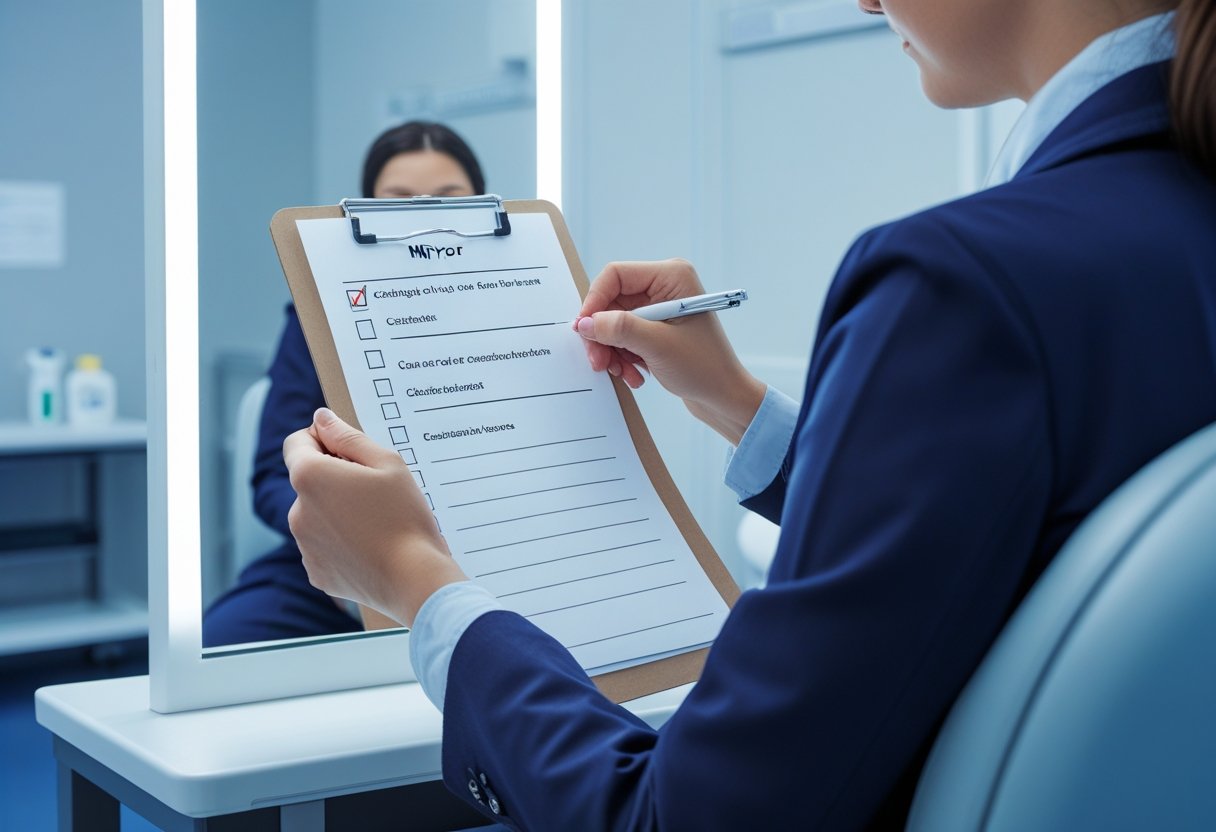
Understanding exactly how examiners mark your mirror use can transform your approach to this crucial driving skill. We’ll walk you through the specific situations where mirror checks matter most, from approaching junctions to changing lanes, and show you how to demonstrate the awareness examiners want to see.
The good news is that mirror use is completely within your control. With the right knowledge about timing, technique, and examiner expectations, you can master this aspect of your driving test and build habits that will keep you safe for years to come.
Understanding How Examiners Assess Mirror Use
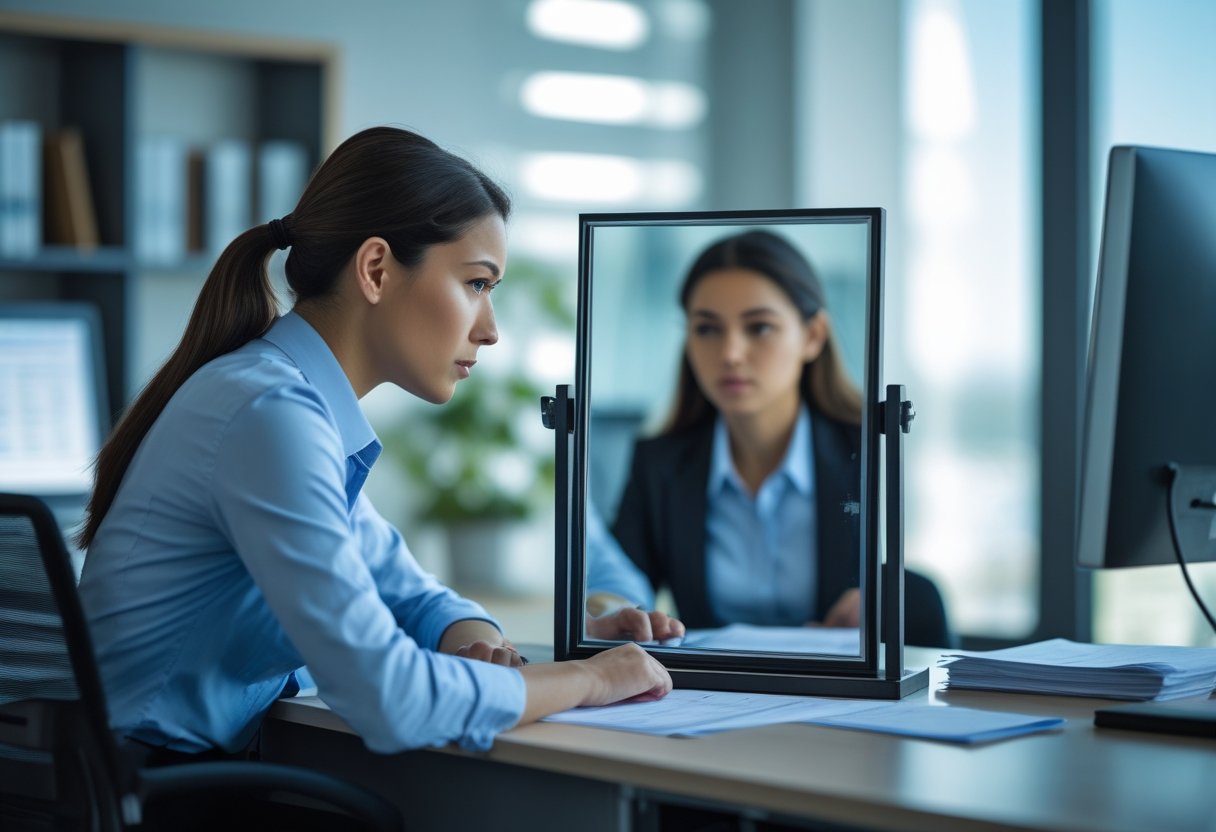
Driving test examiners have specific criteria they follow when marking your mirror use, focusing on timing, frequency, and whether you act on what you see. They watch for consistent mirror checks before signalling, changing direction, or adjusting speed, whilst noting any dangerous oversights that could result in immediate test failure.
Marking Criteria for Mirrors
Mirror use accounts for roughly 20% of your total driving test assessment. That’s a significant portion, which shows just how crucial proper mirror technique is for passing.
Examiners mark mirror faults in three categories:
- Minor faults: Missing occasional mirror checks or checking too late
- Serious faults: Poor mirror use that could potentially cause danger
- Dangerous faults: Failing to check mirrors in critical situations, leading to immediate test failure
We see examiners looking for the Mirror-Signal-Manoeuvre (MSM) routine every single time you make a move. You’ll receive one minor fault each time you use mirrors incorrectly.
The key difference between fault levels depends on the potential consequences. Missing a mirror check when pulling away from a quiet kerb might earn a minor fault. However, changing lanes without checking mirrors on a busy road could result in a dangerous fault and instant failure.
Examiners expect mirror use to be automatic, not just something you remember during manoeuvres.
What Driving Test Examiners Look For
Timing is everything when it comes to impressing your examiner. We need to check mirrors in good time, giving ourselves space to react to what we see behind us.
Examiners specifically watch for mirror checks before:
- Opening car doors
- Moving away from the kerb
- Signalling intentions
- Changing direction at junctions
- Switching lanes
- Adjusting speed significantly
Proper sequence matters too. Start with your rear-view mirror first, then check the appropriate exterior mirror. If you’re turning left, check your left mirror. For right turns or overtaking, check your right mirror.
Acting on mirror information separates good candidates from great ones. Simply glancing isn’t enough. Examiners want to see you respond appropriately to what you’ve observed.
Regular scanning throughout your drive shows awareness. Don’t just check mirrors when approaching hazards. Make it a continuous habit that demonstrates your commitment to road safety.
Common Mirror-Related Mistakes
Signalling without checking mirrors first is the most frequent error we encounter. This dangerous habit can mislead other drivers and pedestrians, often resulting in serious faults.
Many learners rely solely on side mirrors, forgetting the rear-view mirror completely. Remember, we always start with the interior mirror before moving to exterior ones.
Last-minute mirror checks create problems too. Rushing through mirror observations just before manoeuvres doesn’t give you time to process and react to the information.
Another classic mistake involves ignoring blind spots. Even after checking mirrors, a quick shoulder check can prevent accidents with cyclists or motorcyclists tucked in your blind areas.
Sudden braking without mirror awareness catches many candidates out. Before slowing down significantly, check your rear-view mirror to assess following traffic. This simple check prevents rear-end collisions.
We often see learners checking mirrors but failing to act on what they see. If there’s a vehicle close behind, adjust your actions accordingly rather than proceeding regardless.
Essential Mirror Checks: When and How to Use Them
Proper mirror use follows specific patterns that examiners watch closely during your test. We’ll focus on the three most critical situations where mirror checks can make or break your performance: moving off safely, changing lanes smoothly, and adjusting your speed appropriately.
Checking Mirrors Before Moving Off
Moving off is often the very first thing examiners assess, so getting your mirror routine right sets a positive tone for the entire test.
The correct sequence matters enormously. Start with your interior rear-view mirror, then check the appropriate side mirror based on your position. If you’re parked on the left, check your right side mirror. If you’re positioned on the right side of the road, use your left side mirror instead.
Don’t rush this process. We see many learners glance quickly at mirrors without actually processing what they’ve seen. Take that extra half-second to properly assess what’s behind you.
The blind spot check comes next, and it’s absolutely essential. Turn your head to look over your shoulder in the direction you’re moving. This catches anything your mirrors might miss, particularly cyclists or motorcyclists.
Timing is everything here. Complete all your mirror checks just before you start moving, not whilst you’re already in motion. Examiners want to see deliberate, purposeful observation that shows you’re genuinely aware of your surroundings.
Mirror Use When Changing Lanes
Lane changes demand the most thorough mirror work you’ll do during your test. Get this wrong, and you’re looking at a serious or even dangerous fault.
Always follow the mirror-signal-manoeuvre sequence. Interior mirror first, then the side mirror for your intended direction. Only after these checks should you signal your intention to other road users.
Multiple checks are your friend. Don’t just check once and assume everything stays the same. Glance at your side mirror again as you begin the manoeuvre to catch any vehicles that might have moved into your path.
The blind spot check is absolutely non-negotiable when changing lanes. Even experienced drivers get caught out by vehicles in their blind spots. Make it obvious to the examiner that you’re checking by turning your head clearly.
Left lane changes need extra attention for cyclists. They often travel faster than you might expect and can appear seemingly from nowhere. That final side mirror check before you move could prevent a serious incident.
Using Mirrors When Slowing Down or Speeding Up
Speed changes might seem straightforward, but they require just as much mirror awareness as any other manoeuvre.
Check your interior mirror before you slow down. The driver behind you needs time to react to your changing speed. If someone’s following too closely, you can adjust how gradually you slow down to give them more warning.
This applies to all speed reductions: approaching traffic lights, pedestrian crossings, or simply adjusting to slower traffic ahead. Make it a habit every single time.
Accelerating also needs mirror awareness. Before you speed up after traffic lights change or when joining faster traffic, check your interior mirror. You need to know if the vehicle behind expects you to accelerate or if they’re preparing to overtake.
The key is anticipation. Your mirrors tell you how your speed changes will affect other road users. Use this information to make smoother, more considerate adjustments that show the examiner you’re thinking beyond just your own vehicle.
Mirror Observations at Junctions, Roundabouts, and Crossings
These critical road features demand heightened mirror awareness because they’re where most accidents happen. Examiners watch closely for the MSM routine (mirrors, signal, manoeuvre) and expect you to check your mirrors before every change in direction or speed.
Left and Right Turns at Junctions
We’ll be honest with you: this is where many test candidates slip up. The examiner expects you to check your mirrors well before you reach the junction, not at the last second.
The golden sequence looks like this:
- Interior mirror first – check what’s behind you
- Left or right door mirror – depending on your intended direction
- Signal your intention clearly and in good time
- Check mirrors again after signalling
When turning left, we need that left door mirror check to spot cyclists who might be filtering up the inside. They’re often in your blind spot, and failing to check for them can result in a dangerous fault.
Right turns require extra vigilance. Check your interior mirror, then your right door mirror before signalling. After signalling, another quick mirror check helps you assess if faster traffic is approaching from behind.
Common mistakes we see:
- Signalling first, then checking mirrors (wrong order!)
- Only checking the interior mirror
- Rushing the mirror checks
The examiner isn’t just ticking boxes here. They’re watching to see if you genuinely process what you observe in those mirrors and adjust your driving accordingly.
Approaching and Exiting Roundabouts
Roundabouts can feel overwhelming, but your mirror work here follows a clear pattern. Think of it as multiple junction scenarios rolled into one flowing movement.
Approaching the roundabout:
Check your interior mirror first, followed by the appropriate door mirror for your intended direction. Left for first exit, right for last exit, and a combination for straight ahead.
The key insight here is that your mirror observations continue throughout the roundabout experience. As you navigate around, check your interior mirror to monitor following traffic. This becomes especially important when changing lanes on larger roundabouts.
Exiting requires fresh mirror checks:
- Interior mirror to assess following traffic
- Left door mirror before moving to the exit lane
- Another left mirror check before the actual exit
We’ve noticed that many learners forget about mirrors once they’re on the roundabout itself. Don’t make this mistake! Examiners are watching for continuous awareness, not just the initial approach checks.
Multi-lane roundabouts demand extra attention. If you need to change lanes while circulating, treat it like any other lane change: mirrors, signal, manoeuvre.
Handling Pedestrian Crossings and Traffic Lights
These locations might seem straightforward, but they’re actually prime spots where examiners assess your anticipation skills through mirror use.
Approaching traffic lights:
When you spot lights ahead, check your interior mirror immediately. Are vehicles following closely? This information helps you decide whether to stop safely or continue through (if amber appears).
If the lights change to amber and you need to stop, that mirror check becomes crucial. You’ll know if the car behind might struggle to stop in time.
Pedestrian crossings demand special attention:
As you approach any crossing, check your mirrors before reducing speed. This is particularly important at zebra crossings where you might need to stop suddenly for waiting pedestrians.
Watch for pedestrians who might step out unexpectedly. Your mirror awareness helps you understand your options: can you stop safely, or might sudden braking cause the vehicle behind to collide with you?
The examiner is looking for:
- Proactive mirror use before speed changes
- Understanding of following traffic behaviour
- Smooth coordination between observation and action
Traffic lights and crossings also test your ability to communicate with other road users. A quick hazard light flash (after checking mirrors) can warn following traffic if you’re stopping suddenly for pedestrians.
Remember, these aren’t just mechanical checks. We’re building a complete picture of the traffic situation around us, and mirrors are our eyes to the world behind.
Mastering Blind Spot Checks and Side Mirror Use
Proper blind spot awareness and side mirror technique are crucial skills that can make or break your driving test performance. These checks require precise timing and consistent execution during manoeuvres.
Identifying and Checking Your Blind Spot
Your blind spot is the area around your vehicle that your mirrors can’t show you. This hidden zone typically sits just behind your shoulder on both sides of the car.
The shoulder check is your best friend here. Turn your head briefly to glance over your shoulder before changing lanes or merging. We recommend a quick look, not a long stare that takes your attention off the road ahead.
Timing matters enormously. Check your interior mirror first, then your side mirror, and finish with the shoulder check. This sequence gives you the complete picture of what’s happening around your vehicle.
Don’t forget about motorcycles and cyclists. They often lurk in blind spots and can appear seemingly from nowhere. A proper shoulder check will spot them before you make your move.
Practice this routine until it becomes second nature. Examiners watch for smooth, confident movements rather than hesitant or awkward head turns.
Side Mirror Techniques for Manoeuvres
Your side mirrors are powerful tools for safe driving, but only when used correctly. We need to check them before every signal and manoeuvre, not during or after.
Follow the mirror-signal-manoeuvre routine religiously. Check your mirrors, decide if it’s safe to signal, then begin your manoeuvre. This order prevents confusion and shows the examiner you’re thinking ahead.
For lane changes, use your offside mirror (right mirror) when moving right, and your nearside mirror (left mirror) when moving left. Always combine this with a blind spot check.
When turning left, glance in your left side mirror one final time before committing to the turn. This catches any cyclists or motorcyclists who might have moved up beside you.
Act on what you see in your mirrors. If another vehicle is too close behind you, increase your following distance to the car in front. This creates a safety buffer that protects everyone.
Remember, examiners score mirror use throughout your entire test, not just during specific manoeuvres.
Faults and the Driving Test Marking Sheet
Examiners record mirror-related mistakes on the DL25 marking sheet using three categories of faults. These range from minor slips that might not affect your test result to serious errors that lead to instant failure.
Types of Driving Faults Related to Mirror Use
Minor faults are the most common type we see on driving tests. These happen when you occasionally forget to check your mirrors or don’t use them quite right.
For example, you might miss checking your rear-view mirror once before signalling. Or perhaps you glance at your wing mirror but don’t make it obvious enough for the examiner to notice.
The good news? You can make up to 15 minor faults and still pass your driving test. However, there’s a catch we need to mention.
If you keep making the same mirror mistake, the examiner will start viewing it differently. What began as minor faults can quickly become a serious fault if you repeatedly miss the same mirror check.
Serious faults occur when your mirror use (or lack of it) affects other road users. This might happen if you change lanes without checking your mirrors properly.
The examiner will mark this as a serious fault because you’ve created a potentially dangerous situation. Just one serious fault means an instant test failure.
Dangerous faults are the most severe category. These happen when your poor mirror use puts someone in immediate danger.
Imagine pulling out at a junction without checking your mirrors and nearly colliding with another vehicle. That’s a dangerous fault, and like serious faults, even one means you’ve failed.
Consequences of Mirror-Related Errors
Understanding how mirror faults affect your test result helps you prepare better. We’ve already mentioned that 15+ minor faults mean failure, but let’s look deeper.
The “totting up” system means examiners watch for patterns in your driving faults. If you accumulate several minor mirror-related errors, they might decide your mirror use isn’t consistent enough.
This could result in a serious fault being marked instead of multiple minors. It’s the examiner’s way of saying your mirror awareness needs significant improvement.
Failed tests due to mirror errors are surprisingly common. Many learners focus so hard on steering and speed that they forget this crucial safety skill.
The positive side? Mirror use is completely within your control. Unlike dealing with unexpected road conditions, you can master this skill through practice.
Test feedback on your DL25 form will show exactly where you went wrong with mirrors. Use this information to focus your practice sessions before your next attempt.
Remember, examiners aren’t trying to catch you out. They’re ensuring you can drive safely and considerately around other road users.
Practical Tips for Passing on Mirror Use
Building strong mirror habits and knowing how to bounce back from mistakes will boost your confidence during the test. These strategies help you demonstrate consistent awareness and recover gracefully if you slip up.
Positive Habits to Develop
Make mirror checks automatic through regular practice. Start every lesson by consciously focusing on your mirrors until it becomes second nature. We recommend the “mirror scan” technique: glance at your interior mirror, then left door mirror, then right door mirror in a smooth sequence.
Time your checks perfectly. Always check mirrors before you signal, not during or after. This shows the examiner you’re gathering information first, then making decisions based on what you see.
Create a mental checklist for key situations:
- Before moving off: Check all three mirrors
- Approaching junctions: Quick scan of mirrors
- Changing lanes: Interior mirror, then relevant door mirror
- Slowing down: Brief check to see following traffic
Practice the “six-second rule.” Check your interior mirror every six seconds during normal driving. This keeps you constantly aware of what’s happening behind you.
Act on what you see. Don’t just look in mirrors, respond appropriately. If there’s a fast-approaching vehicle, wait before pulling out. If someone’s tailgating, increase your following distance to create more space.
Recovering from a Missed Mirror Check
Stay calm and don’t panic. Missing one mirror check won’t automatically fail your test. Examiners understand that nerves can affect performance, and they’re looking for overall competence, not perfection.
Don’t overcompensate by checking mirrors excessively. If you realise you’ve missed a check, simply return to your normal routine. Suddenly checking mirrors every two seconds will actually worry the examiner more than the original mistake.
Focus on the next opportunity. Instead of dwelling on what you missed, concentrate on getting the next mirror check right. This positive mindset prevents one small error from snowballing into bigger problems.
Continue with confident driving. Maintain your normal speed and positioning. Hesitant or overly cautious driving after a mistake often leads to more faults than the original error itself.
Use your peripheral vision wisely. If you’re unsure whether you checked mirrors before a manoeuvre, don’t try to remember mid-turn. Complete the action safely and focus on doing better next time.
Frequently Asked Questions
Mirror checks should follow the Mirror-Signal-Manoeuvre routine before every action, with regular glances throughout your journey. Examiners watch for smooth, natural mirror use that demonstrates genuine awareness rather than mechanical head movements.
What are the key moments during a driving test when I should be checking my mirrors?
We always recommend checking mirrors before every signal, turn, or speed change. This includes pulling away from the kerb, approaching roundabouts, and entering junctions.
Lane changes require particularly careful mirror work. Check your rear-view mirror first, then the relevant side mirror, and don’t forget that crucial blind spot glance.
Speed adjustments need mirror checks too. Whether you’re slowing for traffic lights or accelerating onto a dual carriageway, your mirrors tell you what’s happening behind.
Parking manoeuvres demand constant mirror awareness. The examiner expects you to use all your mirrors throughout reversing, not just at the beginning.
How can an examiner tell if I’m using my mirrors effectively during the test?
Examiners watch your eye movements and head position to spot genuine mirror use. Simply moving your head without actually looking won’t fool them.
They notice when you take appropriate action after checking mirrors. If you see a cyclist approaching and adjust your timing accordingly, that shows effective mirror use.
Your overall awareness becomes obvious through your driving decisions. Smooth lane positioning and well-timed signals demonstrate that you’re genuinely processing what you see.
The examiner can also observe traffic situations from their mirrors. They’ll know if you’ve missed something important that should have influenced your driving.
What’s the best way to prove to the examiner that I’m aware of my surroundings?
Make your mirror checks deliberate but natural. A slight head movement shows you’re actively looking, not just glancing randomly.
Respond to what you observe in your mirrors. If there’s a fast-approaching vehicle, wait a moment before signalling or adjust your speed appropriately.
Use your mirrors frequently throughout the journey, not just before major manoeuvres. Regular checks every 8-10 seconds show continuous awareness.
Combine mirror use with good positioning and timing. When you check mirrors and then make smooth, well-judged decisions, your awareness becomes clear.
Could you offer some advice on how to seamlessly integrate mirror checks into my driving routine?
Start with the Mirror-Signal-Manoeuvre sequence until it becomes second nature. Practice this routine on every lesson until you don’t need to think about it.
Link mirror checks to specific triggers like approaching traffic lights or seeing road signs. This creates natural reminders to check your surroundings.
Make mirror use part of your scanning pattern. Look ahead, check mirrors, observe junctions, then repeat this cycle throughout your journey.
Practice commentary driving during lessons. Saying “checking mirrors, car behind keeping distance” helps build the habit and shows your instructor your awareness.
How often should I be checking my mirrors to satisfy the requirements of a driving test?
We recommend glancing in your mirrors every 8-10 seconds during normal driving. This keeps you constantly updated on surrounding traffic without becoming obsessive.
Increase the frequency in complex situations. Busy roundabouts, motorway merging, and urban areas need more frequent checks.
Quality matters more than quantity. Five meaningful mirror checks that influence your driving beat twenty meaningless glances.
The examiner wants to see purposeful mirror use, not constant head-bobbing. Check when it makes sense, then act on what you observe.
What are the common mistakes learners make in mirror usage that I should avoid to impress my examiner?
Signalling before checking mirrors creates dangerous situations. Always follow Mirror-Signal-Manoeuvre order, never Signal-Mirror-Manoeuvre.
Many learners check mirrors but ignore what they see. If your mirrors show a cyclist approaching, adjust your actions accordingly.
Forgetting blind spot checks during lane changes causes serious faults. Side mirrors can’t show everything, so that shoulder check is essential.
Some students only check one mirror when they need several. Lane changes require rear-view mirror, relevant side mirror, and blind spot checks.
Last-minute mirror checks don’t give you time to react safely. Check early enough to make smooth decisions based on what you observe.