

How to Move Off Safely on Hills, Slopes and From Behind Parked Cars
Learning to move off safely in challenging situations can feel overwhelming, but it’s one of the most important skills you’ll master as a new driver. Whether you’re facing a steep hill, navigating a gentle slope, or pulling out from behind a parked car, these scenarios will happen regularly once you pass your test.
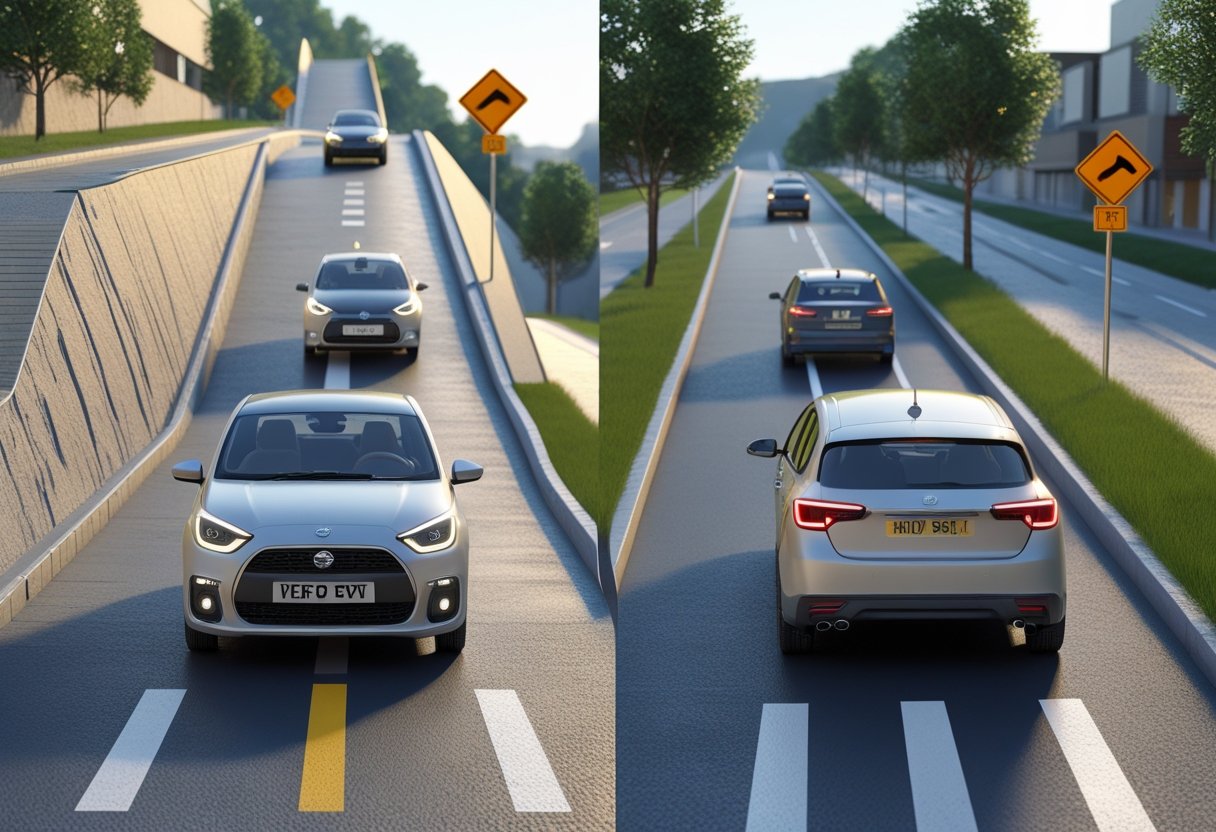
The key to moving off safely in any situation is using the prepare, observe, move technique whilst adapting your approach to match the specific conditions you’re facing. This systematic method gives you complete control over your vehicle and helps you make smart decisions about when it’s safe to go. Many learner drivers struggle with these situations because they rush the process or forget to check their blind spots properly.
We’ve all been there – that moment when your heart starts racing as you prepare to move off on a hill or squeeze past a parked car. The good news is that with the right technique and plenty of practice, these manoeuvres become second nature. You’ll soon feel confident tackling any moving off situation that comes your way.
Key Takeaways
- Master the prepare, observe, move technique and adapt it for different road conditions like hills and tight spaces
- Find your clutch biting point consistently and learn how to control it on slopes to prevent rolling backwards
- Always check your blind spots by looking over your shoulder and only signal when other road users will actually benefit from it
Mastering the Basics of Moving Off
Before tackling hills and tricky parking situations, you need solid fundamentals. The POM routine gives you a reliable framework, whilst proper control setup and thorough observations keep you safe in any scenario.
Understanding the POM Routine
The POM routine stands for Prepare, Observe, Move. It’s your roadmap to confident starts every single time.
Prepare means getting your car ready for action. In a manual car, you’ll press the clutch fully down and select first gear. Give the accelerator a gentle press until you hear the engine respond slightly.
Now comes the crucial bit: finding the biting point. Slowly lift the clutch pedal until you feel the car wanting to move forward. The engine note will change, and you might feel a slight vibration through the pedal.
Keep your handbrake on during this stage. We’re not going anywhere yet!
Observe is where patience pays off. This isn’t a quick glance around. You’re gathering vital information about your surroundings.
Move happens only when it’s genuinely safe. Release the handbrake gradually whilst lifting the clutch slightly more and adding a touch more accelerator. The car should pull away smoothly.
Essential Controls and Setup
Your seating position affects everything. Sit where you can comfortably reach all pedals without stretching or cramping your legs.
In a manual car, your left foot controls the clutch exclusively. Your right foot handles both brake and accelerator. Never use both feet on these pedals simultaneously.
| Control | Purpose | Technique |
|---|---|---|
| Clutch | Connects engine to wheels | Press fully, lift slowly to bite point |
| Accelerator | Controls engine power | Light pressure, listen to engine |
| Handbrake | Holds car stationary | Release gradually when moving off |
The biting point feels different in every car. Some clutches engage high up, others low down. Take a moment to find it before attempting to move.
Your steering wheel should sit comfortably in your hands. You’ll need precise control, especially when moving off from tight spots.
Checking Mirrors and Blind Spots
Mirrors show you most of what’s happening, but they can’t see everything. Blind spots exist in every vehicle, and they catch out even experienced drivers.
Start with your interior mirror. Check for vehicles approaching from behind. Are they slowing down or maintaining speed?
Your door mirrors reveal traffic in adjacent lanes. Look for motorcycles, cyclists, or cars that might not expect you to pull out.
The critical blind spot check comes next. Turn your head and look over your right shoulder. This quick glance reveals vehicles hiding in the area your mirrors can’t cover.
Don’t rush these observations. A car travelling at 30mph covers a lot of ground quickly. What looked clear three seconds ago might not be clear now.
Check ahead too. Pedestrians, cyclists, or other hazards might have appeared whilst you were preparing the car.
Only signal if other road users will benefit from knowing your intentions. Unnecessary signals can confuse people.
Finding and Controlling the Biting Point
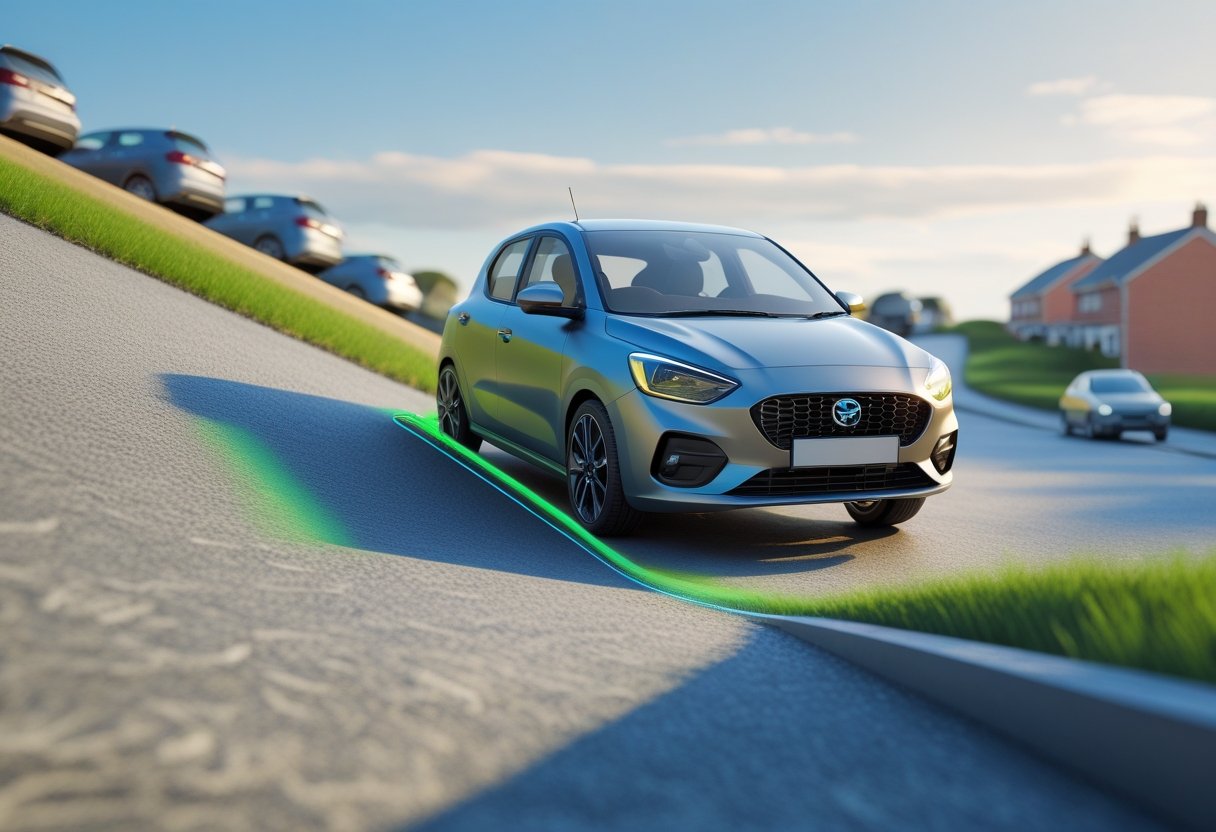
The biting point is where your clutch starts to connect with the engine, creating that crucial moment when your manual car begins to move. Mastering this balance between clutch and accelerator gives you complete control over smooth starts, whether you’re on steep hills or squeezing out from behind parked cars.
Locating the Biting Point in First Gear
Finding the biting point takes practice, but we promise it becomes second nature once you get the feel for it.
Start by pressing the clutch pedal all the way down to the floor. Select first gear and apply a small amount of pressure to the accelerator pedal. Keep this gentle pressure steady throughout the process.
Now comes the important part. Slowly lift the clutch pedal until you feel the car’s behaviour change. The engine note will drop slightly, and you might feel a gentle vibration through the pedal.
This is your biting point. The car wants to move forward but your handbrake is holding it back. You’ll notice the front of the car might dip slightly as the clutch plates start to engage.
Each car feels different, so don’t worry if it takes a few attempts. Some clutches bite higher up, others lower down. The key is recognising that moment when the engine and gearbox start working together.
Balancing Clutch and Accelerator
The secret to smooth starts lies in creating harmony between your left foot on the clutch and your right foot on the accelerator.
Think of it like a seesaw. As you slowly raise the clutch pedal, you need to gradually increase the pressure on the accelerator. Too much gas and you’ll shoot forward. Too little and you’ll stall.
We recommend practicing this balance whilst stationary with the handbrake on. Find your biting point, then gently add more accelerator whilst keeping the clutch steady. You’ll hear the engine working harder but the car stays put.
The golden rule: Make small, gradual movements with both feet. Jerky movements lead to stalling or kangaroo hops down the road.
Your right foot should provide just enough power to match what the clutch is asking for. On hills, you’ll need more accelerator pressure to prevent rolling backwards.
Clutch Control for Smooth Starts
Perfect clutch control transforms nervous, jerky starts into confident, flowing movements that impress your passengers and keep you safe.
Once you’ve found the biting point and balanced your accelerator, hold both feet absolutely still for a moment. This gives the clutch plates time to fully engage without shocking the drivetrain.
Release the handbrake smoothly, then very gradually continue lifting the clutch pedal. The car should move forward in a controlled manner. If you lift too quickly, you’ll get that uncomfortable jerking sensation.
Pro tip: Keep some clutch control even after you start moving. Don’t just dump the pedal and hope for the best. Gentle, progressive release gives you better control, especially when moving off behind parked cars where precision matters.
Remember, the clutch pedal isn’t an on-off switch. It’s more like a dimmer switch that gradually connects your engine’s power to the wheels. Master this thinking, and you’ll never fear hill starts or tight parking situations again.
Moving Off Safely on Hills and Slopes
Hills and slopes demand extra skill and confidence from every driver. You’ll need perfect clutch control, smart use of your parking brake, and different techniques for uphill versus downhill starts.
Preventing Rollback With the Parking Brake
Your parking brake becomes your best friend when stopping on any incline. It holds your car steady whilst you prepare to move off, preventing that heart-stopping moment when you start rolling backwards.
Always apply your parking brake firmly when you stop on a hill. This gives you complete control over the situation. Your car stays exactly where you want it, giving you time to think and prepare.
When you’re ready to move off, keep that parking brake engaged. Get your car ready with first gear selected and find your biting point with the clutch. Only release the parking brake once you feel the car wanting to move forward.
This technique works brilliantly on steep hills. The steeper the slope, the more crucial your parking brake becomes. Many experienced drivers still use this method because it’s so reliable.
Practice this sequence until it feels natural. Parking brake on when you stop, find your biting point, feel the car pull slightly forward, then release handbrake smoothly.
Uphill Starts: Extra Power and Precision
Moving off uphill requires more power and patience than level ground starts. Your engine needs extra help to overcome gravity, so we’ll give it exactly what it needs.
Press the accelerator slightly more than usual before you start releasing the clutch. You’ll hear the engine working harder, which is perfectly normal. This extra power prevents stalling and gives you confidence.
Release the clutch much more slowly on hills. Find that biting point and hold it there for a moment longer. You’ll feel the car strain slightly against the parking brake, telling you it’s ready to move.
| Uphill Technique | Key Points |
|---|---|
| More throttle | Give 20-30% more power than flat ground |
| Slower clutch release | Take twice as long to find biting point |
| Hold the bite | Keep clutch steady until car moves forward |
The secret lies in perfect timing. Hold your clutch at the biting point whilst the car builds power. Only when you feel forward momentum should you release handbrake and continue lifting the clutch.
Downhill Starts: Unique Challenges
Downhill starts present completely different challenges that catch many learners off guard. Gravity becomes your enemy and your friend simultaneously, requiring a delicate touch.
Your car will want to roll forward immediately when you release handbrake. This forward momentum actually helps your engine, so you need less power than usual. Be gentle with the accelerator.
Select first gear as normal, but use much lighter pressure on the accelerator pedal. Too much power on a downhill start can cause wheel spin or jerky movement. Less is definitely more here.
Control becomes everything on downhill slopes. Release your clutch slowly whilst keeping your foot ready over the brake pedal. This gives you instant stopping power if needed.
Watch your speed carefully as you move off downhill. The slope will naturally accelerate your car, so be prepared to use gentle braking. Many new drivers forget this and pick up speed too quickly.
Practice makes perfect with downhill starts. Find a quiet slope and practice until you can move off smoothly without jerky movements or excessive speed.
Moving Off From Behind Parked Cars
When you’re tucked behind a parked vehicle, you’ll need to use the POM routine whilst checking your blind spots carefully. The key is making yourself visible to other drivers and choosing the right moment to pull out smoothly.
Visibility and Making Safe Decisions
Getting a clear view of the road ahead starts before you even think about moving off. We need to check what’s beyond the parked car, not just around it.
Check these areas systematically:
- Your mirrors (rear-view and both wing mirrors)
- Over your right shoulder for blind spots
- Through the parked car’s windows if possible
- The road surface ahead for hazards
Position yourself so you can see past the parked vehicle without pulling out too far. Sometimes a slight forward creep helps, but don’t commit to the manoeuvre yet.
Look for pedestrians who might step out from behind cars. They can’t see you either, which makes this particularly risky.
Wait if you spot:
- Fast-approaching traffic that would need to brake for you
- Cyclists in your blind spot
- Pedestrians near the parked car
- Insufficient gap in oncoming traffic
The golden rule is simple: if other road users would need to change speed or direction because of your move, wait for a better opportunity.
Signalling and Timing Your Move
Your signal becomes crucial when moving off from behind parked cars. Other drivers need to know your intentions well before you start moving.
Signal right as soon as you’ve decided to move off. This gives approaching traffic advance warning, especially important since you’ll be pulling out at an angle.
Perfect timing means:
- Signalling early but not too early (avoid confusing other drivers)
- Choosing a gap that’s comfortable, not just adequate
- Moving off smoothly without rushing
Count the seconds between you and approaching vehicles. You’ll need at least a six-second gap in most situations, more if traffic is moving quickly.
Don’t feel pressured to go just because someone’s waiting behind you. Patient, safe decisions always trump speed.
Use the POM routine religiously: Prepare your vehicle with clutch control, Observe all around thoroughly, then Move when it’s genuinely safe.
Managing Tight Spaces and Obstacles
Narrow roads and tight parking situations require extra finesse. Your steering and speed control become absolutely critical here.
Start with gentle steering input as you pull away. Sharp movements can swing your rear end toward parked cars or push your front end too wide into oncoming traffic.
In tight spaces:
- Keep your speed very low using clutch control
- Make small steering adjustments rather than big corrections
- Stop and reassess if you feel squeezed for space
- Remember your car’s width and allow extra clearance
Watch for opening car doors, especially on busy streets. Parked cars often mean people getting in and out.
If the road’s too narrow for safe passage with oncoming traffic, wait. Let approaching vehicles pass completely before attempting your move.
Key measurements to judge:
- Distance between parked cars
- Width available for oncoming traffic
- Your vehicle’s turning circle
- Clearance on both sides
Practice makes these judgements automatic. Start in quiet areas with plenty of space, then gradually work up to busier, tighter spots as your confidence grows.
Executing an Angled Start
Moving off from behind a parked car requires precise steering control and heightened awareness of your surroundings. You’ll need to pull out more gradually than usual, which means managing your clutch control carefully whilst keeping watch for hazards from multiple directions.
Steering Away From Obstructions
Getting past a parked vehicle means we need to swing out into the road more than during a normal pull-away. This requires confident, deliberate steering movements.
Position your hands properly at the quarter-to-three position on the steering wheel before you begin. You’ll need good control for the manoeuvre ahead.
Start by turning the wheel briskly to the right (assuming you’re parked on the left) as you begin moving. Don’t be hesitant with this initial steering input – you need to clear the obstruction decisively.
The key timing happens next. As your car’s bonnet clears the parked vehicle, straighten the steering wheel gradually to bring your car back into the proper lane position.
Watch your door mirrors during this process. You should see the parked car moving away from your vehicle as you pull out. If you’re too close, adjust your steering angle accordingly.
Many learners make the mistake of under-steering initially, then over-correcting later. Practice finding that sweet spot where you clear the obstruction without swinging too wide into oncoming traffic.
Adapting Your Observations
An angled start demands much more careful observation than a standard pull-away. We’re moving into traffic more slowly, which creates additional risks we must manage.
Check behind you first through your rear-view mirror. Vehicles approaching from behind might not expect your slower-than-normal acceleration and could catch up quickly.
Your left door mirror becomes crucial during the manoeuvre. Watch for cyclists or motorcyclists who might be filtering through traffic. They can appear in your blind spot surprisingly fast.
Look ahead for oncoming traffic before you begin steering out. Judge their speed and distance carefully. Remember, you’ll be occupying more of the road during your pull-out phase.
Don’t forget your right door mirror once you start moving. As you swing out, vehicles from behind on your right might be overtaking or changing lanes.
Consider a quick glance over your right shoulder if the situation feels uncertain. Sometimes direct vision catches hazards that mirrors might miss.
The golden rule: if you’re not completely certain it’s safe, wait. An extra few seconds of observation beats a potential collision every time.
Adjusting Speed and Position
Angled starts require different speed control compared to normal pull-aways. We need smooth, controlled movement that gives us time to steer accurately whilst staying safe.
Clutch control becomes critical during this manoeuvre. Bring the clutch to the biting point slowly and hold it there while you assess the traffic situation.
Release your handbrake only when you’re ready to commit to the manoeuvre. Keep that clutch at the biting point to prevent rolling backwards on slopes.
Apply gentle pressure to the accelerator as you let the clutch bite further. Your initial speed should be slower than a normal pull-away because you need time for steering adjustments.
Gradual acceleration works best. As you clear the parked vehicle and straighten your steering, you can increase your speed to match the traffic flow.
Position yourself properly in your new lane once the manoeuvre is complete. Don’t drift towards the centre line or sit too close to parked cars on your left.
If you’re on a hill, remember that gravity works against you throughout this process. Keep that clutch control steady and don’t rush the accelerator inputs.
Building Confidence and Avoiding Common Mistakes
Moving off on hills and from tight spaces requires solid preparation and sharp observation skills. The key is developing smooth clutch control whilst staying relaxed when traffic builds up behind you.
Practising Mindful Observations
We often see learners rush their checks when they feel pressured to move quickly. This leads to missed hazards and unsafe moves.
Start by making your POM routine deliberate and thorough. Check each mirror for at least two seconds, not just a quick glance. Look for cyclists, pedestrians, and approaching vehicles.
Your observation checklist:
- Rear-view mirror for following traffic
- Left door mirror for cyclists
- Right door mirror for overtaking cars
- Blind spot check over your right shoulder
- Road ahead for pedestrians or obstacles
When parked behind cars, peer around the vehicle in front before moving. Check if pedestrians are crossing between parked cars.
On hills, watch for cars rolling backwards above you. Some drivers struggle with hill starts and might drift into your path.
Practice these checks in quiet car parks first. Build the habit when there’s no pressure, and it becomes natural in busy traffic.
Perfecting Control in a Manual Car
Clutch control separates confident drivers from nervous ones. Poor clutch control causes stalling, rolling backwards, and jerky starts that shake your confidence.
Find your biting point before you need to move. Press the clutch down fully, select first gear, then slowly lift until you feel the car wanting to move forward. This is your sweet spot.
On hills, follow this sequence:
- Set more gas than usual (higher revs)
- Find the biting point and hold it steady
- Release the handbrake gradually
- Add more gas as the clutch comes up
In a manual car, your left foot does the thinking whilst your right foot provides the power. Keep the clutch steady at the biting point until you’re moving confidently forward.
Practice hill starts on the same slope repeatedly. Each car’s clutch feels different, so spend time learning your vehicle’s personality.
Staying Calm Under Pressure
Traffic queuing behind you creates mental pressure that leads to rushed mistakes. We’ve all felt that anxiety when cars start honking.
Remember that other drivers have been in your position. Most understand that learners need extra time. Take the time you need to move off safely.
When you feel rushed:
- Take three deep breaths before starting your checks
- Remind yourself that safety comes before speed
- Focus only on your next action, not the traffic behind
- If you stall, stay calm and restart your routine
If someone honks, don’t let it fluster you into making dangerous moves. Aggressive drivers create their own delays by pressuring others into mistakes.
Practice positive self-talk: “I’m learning, I’m improving, I’ve got this.” Replace “I can’t do this” with “I’m getting better each time.”
Use quieter times to build your skills. Early mornings or Sunday afternoons give you space to practice without heavy traffic pressure.
Frequently Asked Questions
Hill starts and moving off safely present unique challenges that many learner drivers face. These practical techniques focus on clutch control, timing, and maintaining vehicle stability in tricky situations.
What’s the best approach for finding the right biting point on a steep incline?
Finding your biting point on a hill requires gentle patience and steady practice. We recommend starting with your handbrake engaged and slowly releasing the clutch until you feel the car wanting to move forward.
You’ll notice the engine sound change slightly and the car may dip at the back when you reach the biting point. This is your golden moment.
Practice this feeling on gentler slopes first. Each car feels different, so take time to get familiar with your specific vehicle’s clutch response.
The steeper the hill, the more precise your clutch control needs to be. Don’t rush this process.
Could you share some tips for smoothly transitioning from brake to accelerator on a hill?
The secret lies in using your handbrake as your best friend during hill starts. Keep it engaged whilst you find your biting point with the clutch.
Once you’ve located the biting point, gently press the accelerator to around 1500-2000 revs. Now smoothly release the handbrake as you continue lifting the clutch.
Your right foot stays steady on the accelerator throughout this process. Many learners make the mistake of lifting off the gas too quickly.
Practice the coordination between handbrake release and clutch control. This timing becomes natural with repetition.
How can one master the art of hill starts without rolling backwards?
Rolling backwards happens when we don’t hold the car at the biting point long enough. The handbrake becomes your safety net here.
Never release your handbrake until you feel the car pulling forward against it. This prevents any backward movement.
Keep steady pressure on the accelerator whilst slowly releasing the clutch beyond the biting point. The car should move forward smoothly.
If you feel the car starting to roll back, immediately apply the handbrake and start the process again. There’s no shame in taking your time.
What are the key steps to take when pulling away from behind a parked car without stalling?
Position yourself with enough space from the parked vehicle to pull out safely. We suggest at least a car door’s width.
Check your mirrors thoroughly, then look over your shoulder for cyclists or pedestrians in your blind spot. Signal your intention early.
Find your biting point gently whilst steering away from the parked car. Keep your movements smooth and controlled.
Watch for oncoming traffic and only commit to the manoeuvre when you have a clear, safe gap. Patience prevents stalling and keeps everyone safe.
In what ways can I ensure I don’t cause a tailback when starting on a slope?
Preparation prevents traffic buildups behind you. Get ready before you need to move off by preparing your gears and handbrake position.
Practice your hill starts until they become second nature. Confidence in your technique means quicker, smoother departures.
If you do stall, stay calm and restart methodically. Most drivers understand that learners need extra time.
Consider the traffic flow around you. Sometimes waiting for a bigger gap gives you more time to execute a relaxed hill start.
What techniques should I use to maintain control of the car when moving off on an incline?
Smooth inputs keep your car stable on hills. Avoid jerky movements with the steering wheel, clutch, or accelerator.
Use first gear for most hill starts as it provides the power you need without straining the engine. Second gear works for very gentle slopes.
Keep both hands on the steering wheel once you’ve released the handbrake. Your car needs clear direction as it gains momentum.
Focus on gradual acceleration rather than sudden bursts of power. Steady progress beats dramatic wheel spinning every time.