

Learning to Drive an Electric Vehicle: Your Confident Guide to the Road
Electric vehicles are quickly becoming the new normal on British roads, and if you’re thinking about learning to drive, there’s never been a better time to consider starting with an EV. Learning to drive in an electric car is actually easier than traditional petrol or diesel vehicles because they have no gears to worry about, no clutch to master, and they won’t stall when you’re getting the hang of things. The quiet, smooth operation makes them perfect for nervous learners who want to focus on the fundamentals without wrestling with mechanical complexity.
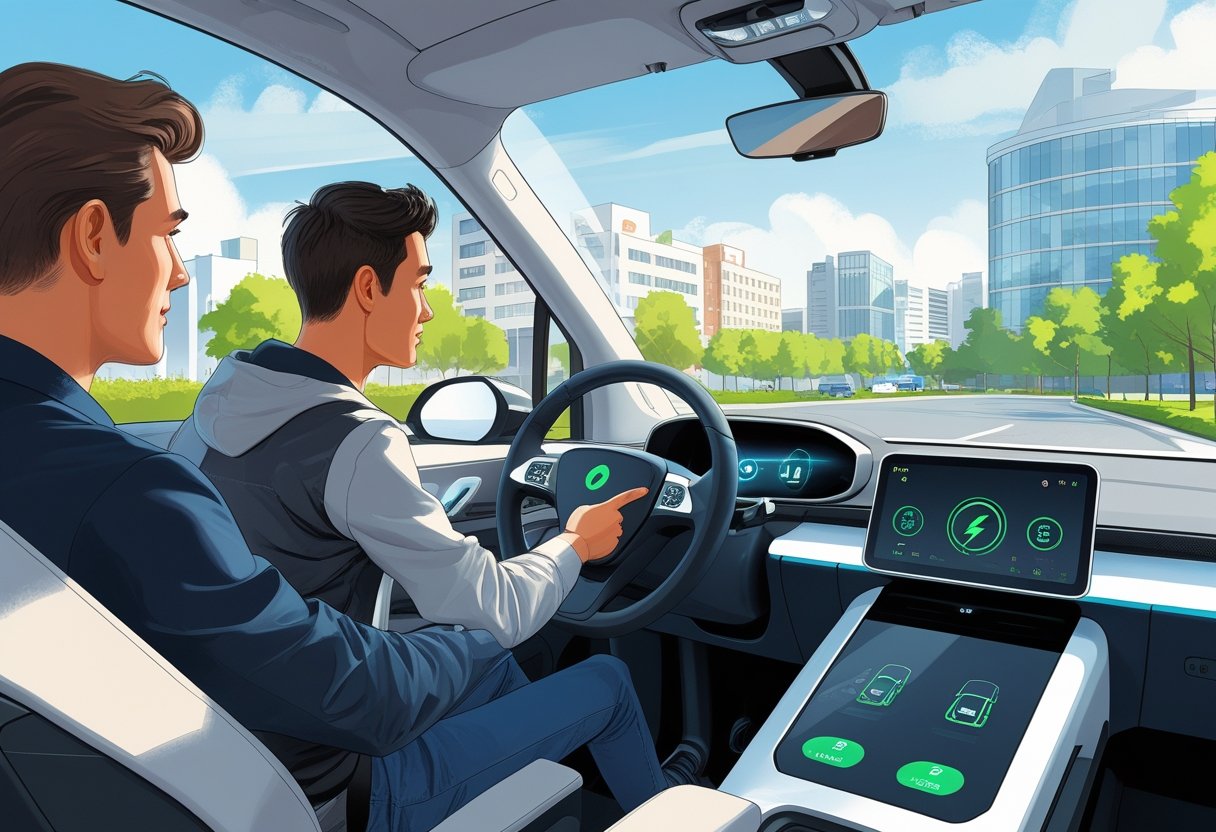
We know the idea of switching to electric might feel a bit daunting at first. After all, most driving instructors still use conventional cars, and your mates probably learned in their dad’s old Ford Focus. But here’s the thing: electric cars are genuinely simpler to operate once you understand the basics. There’s no complicated gear changes, no handbrake hill starts to master, and the instant response from the electric motor gives you much better control at low speeds.
What’s brilliant about starting your driving journey with an electric vehicle is that you’re future-proofing your skills from day one. With the 2030 ban on new petrol and diesel cars approaching, electric vehicles will dominate our roads within the next decade. By learning in an EV now, you’ll be ahead of the curve and completely comfortable with the technology that’s reshaping how we drive.
Key Takeaways
- Electric cars are simpler for learners because they have automatic transmission, no clutch, and won’t stall during practice
- Starting with an EV prepares you for the future of driving as electric vehicles become the standard on British roads
- New EV drivers need to learn charging basics and range management alongside traditional driving skills
Getting Started With Electric Vehicles
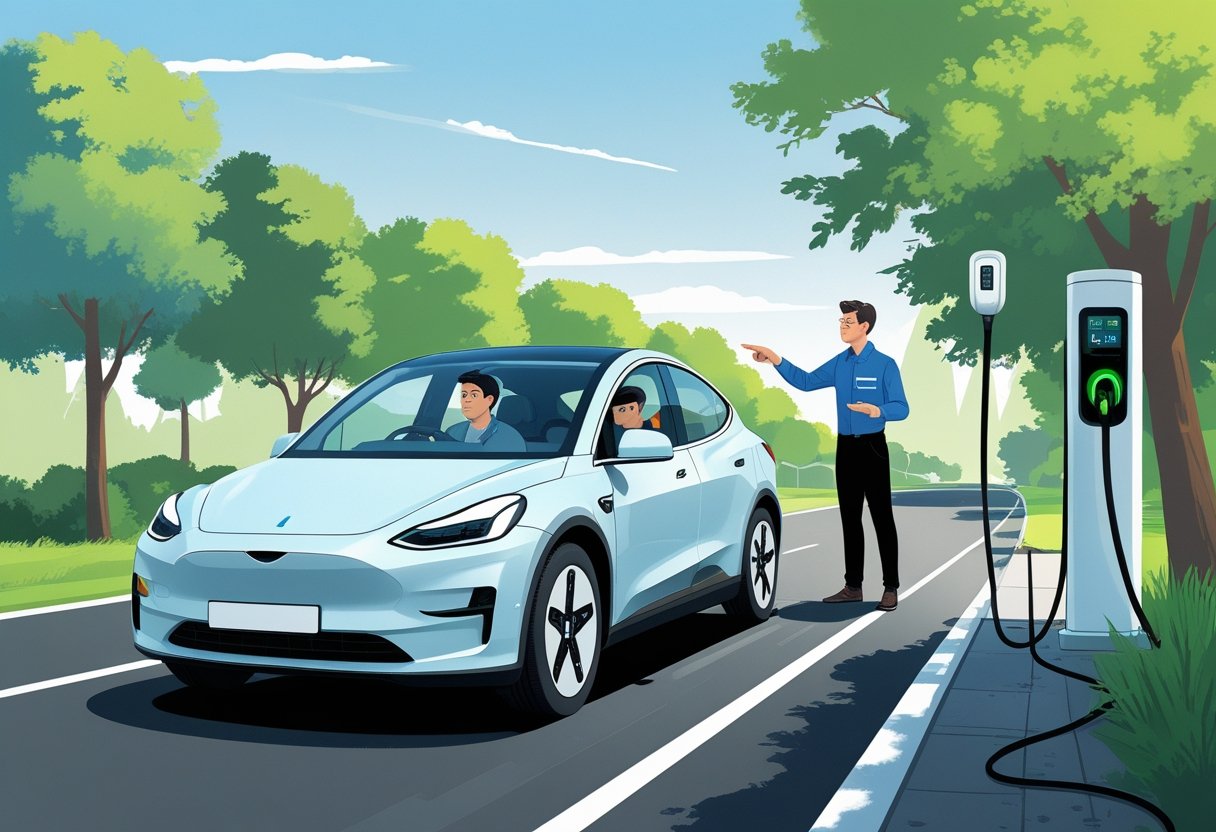
Electric mobility is rapidly transforming how we learn to drive, offering simpler operation without clutches or gears while producing zero emissions. Understanding the different types of electric cars and their advantages helps new drivers make informed decisions about their learning journey.
The Rise of Electric Mobility
We’re witnessing a remarkable shift in the motoring world. Electric vehicles are no longer futuristic concepts but everyday reality on British roads.
The government has set a ban on new petrol and diesel cars from 2030. This means electric mobility isn’t just an option anymore, it’s becoming essential.
Electric car sales are soaring across the UK:
- More charging points appear daily
- Car manufacturers release new EV models regularly
- Driving schools increasingly offer electric vehicle lessons
For learner drivers, this timing couldn’t be better. You’ll be learning skills that match the future of driving.
Electric cars produce zero emissions during driving. This helps tackle air pollution in our cities and towns.
The technology keeps improving too. Modern electric vehicles offer impressive ranges and faster charging times than ever before.
Why Choose an EV to Learn In?
Learning in an electric car offers genuine advantages that make your driving journey smoother and more enjoyable.
No clutch control means less stress. You won’t face the dreaded stall at traffic lights or struggle with hill starts. This lets you focus on other important skills like observation and road positioning.
Electric vehicles respond instantly when you press the accelerator. There’s no delay like with traditional engines, making them feel more predictable and easier to control.
The quiet operation creates a calmer learning environment. You can hear your instructor clearly without engine noise drowning out important guidance.
Many learners find electric cars less intimidating. Without complex gear changes, you can concentrate on developing your road sense and hazard awareness.
One important consideration: Taking your test in an electric vehicle means you’ll only be licensed to drive automatic cars. You won’t be able to drive manual petrol or diesel cars without taking another test.
However, most electric car drivers never want to return to manual transmissions anyway.
Types of Electric Vehicles Explained
Understanding the different types of electric vehicles helps you choose the right one for learning.
Battery Electric Vehicles (BEVs) run entirely on electricity stored in large batteries. These produce zero emissions and offer the simplest driving experience. Popular examples include the Nissan Leaf and Tesla Model 3.
Plug-in Hybrid Electric Vehicles (PHEVs) combine electric motors with petrol engines. They can drive on electricity alone for short distances but switch to petrol for longer journeys.
Hybrid Electric Vehicles (HEVs) use both electric and petrol power but can’t be plugged in to charge. The Toyota Prius is a well-known example.
For learning to drive, BEVs offer the best experience. They’re the quietest, most responsive, and simplest to operate.
Most driving schools using electric cars choose BEVs. They provide consistent performance and help you develop pure electric driving habits from day one.
The charging process varies between types, but BEVs typically charge at home overnight or at public charging stations during longer trips.
Key Differences: Electric Cars vs Internal Combustion Engines
Electric motors deliver power completely differently than traditional petrol engines, creating a driving experience that feels remarkably smooth and responsive. You’ll notice the absence of gear changes, engine noise, and vibrations that come with conventional cars.
Driving Experience: Smooth, Quiet, Simple
The moment you press the accelerator in an electric car, you’ll understand why so many drivers make the switch. There’s no rumbling engine or mechanical whirring beneath the bonnet.
Electric motors operate almost silently. The loudest sounds you’ll hear are typically the tyres on the road or wind passing over the car. This creates a peaceful cabin environment that many find relaxing during daily commutes.
The smoothness extends beyond just sound. Internal combustion engines create vibrations as pistons fire and components move rapidly. Electric motors eliminate these vibrations entirely.
Your passengers will notice the difference immediately. Conversations become easier at motorway speeds. Music sounds clearer through the speakers.
Simplicity defines the electric driving experience. There’s no clutch to master if you’re learning manual transmission. No worry about stalling at traffic lights or rolling backwards on hills.
The car responds predictably every time you press the accelerator. This consistency helps new drivers build confidence more quickly than traditional vehicles.
Instant Torque and Regenerative Braking
Electric motors deliver their full power immediately when you press the accelerator. Unlike petrol engines that need to build up revs, electric motors provide instant torque from the moment they start spinning.
This means acceleration feels immediate and smooth. You’ll pull away from traffic lights faster than most petrol cars, even in basic electric models.
Regenerative braking changes how you slow down. When you lift your foot off the accelerator, the electric motor switches roles and becomes a generator. It captures energy that would normally be lost and sends it back to the battery.
This creates a gentle slowing effect without touching the brake pedal. Many electric cars offer different levels of regeneration:
- Light regeneration: Feels similar to engine braking in petrol cars
- Medium regeneration: Noticeable slowing when you lift off
- Strong regeneration: Allows one-pedal driving in many situations
One-pedal driving becomes natural quickly. You can control most of your speed using just the accelerator pedal, only using the brake for emergency stops or final positioning.
No More Gears: How Electric Motors Work
Electric motors don’t need gearboxes like internal combustion engines do. Petrol engines only work efficiently within specific rev ranges, requiring multiple gears to match different speeds.
Electric motors deliver consistent power across their entire speed range. This eliminates the complexity of gear changes entirely.
Most electric cars use single-speed transmissions. You simply select drive, reverse, or park. There’s no clutch control to learn and no gear patterns to memorise.
The motor spins smoothly from zero to maximum speed without interruption. This creates seamless acceleration that feels natural and effortless.
How to drive an electric car becomes intuitive because of this simplicity. New drivers can focus on road awareness, steering, and positioning rather than managing engine speed and gear selection.
Some high-performance electric cars do use two-speed gearboxes, but these change automatically. You’ll never need to operate them manually, keeping the driving experience straightforward and enjoyable.
Learning the Basics: First Steps in the Driver’s Seat
Getting behind the wheel of your first electric vehicle brings unique considerations that differ from traditional petrol cars. From silent startups to regenerative braking systems, we’ll guide you through the essential elements that make driving an EV a distinctive experience.
Starting Up and Setting Off
Starting an electric car feels almost magical compared to traditional vehicles. There’s no rumbling engine or vibrations to signal you’re ready to go.
Getting Started:
- Press the brake pedal firmly
- Push the power button (usually located near the steering wheel)
- Wait for the dashboard lights to illuminate
- Select ‘D’ for Drive on the gear selector
Most electric vehicles won’t make any sound when they start. You’ll know your EV is ready when the dashboard displays show active status. Many new EV drivers find this silence initially unsettling, but you’ll quickly appreciate the peaceful experience.
Moving Off Smoothly:
Unlike petrol cars, electric vehicles deliver instant torque. This means acceleration happens immediately when you press the accelerator pedal. Start with gentle pressure to avoid sudden lurching forward.
Practice finding the ‘bite point’ with the accelerator. Electric cars respond more quickly than you might expect. Begin with very light touches until you get comfortable with the responsiveness.
Understanding Drive Modes
Modern electric vehicles offer multiple driving modes that change how your car behaves. These modes affect acceleration, energy consumption, and overall driving experience.
Common Drive Modes:
- Eco Mode: Maximises battery range by limiting power output
- Normal Mode: Balanced performance and efficiency
- Sport Mode: Delivers maximum acceleration and responsiveness
Regenerative Braking Levels:
Most EVs let you adjust how much energy the car recovers when you lift off the accelerator. Higher regenerative settings create stronger deceleration, whilst lower settings feel more like traditional cars.
One-Pedal Driving:
Many electric vehicles offer one-pedal driving mode. When activated, lifting your foot off the accelerator creates strong regenerative braking that can bring the car to a complete stop. This takes practice but becomes incredibly smooth once mastered.
Start with lower regenerative settings whilst learning. You can gradually increase the intensity as you become more comfortable with how the electric vehicle responds.
Safety Features and Sound Systems
Electric cars include unique safety considerations that EV drivers need to understand. The silent operation creates both benefits and responsibilities.
Pedestrian Safety:
Your electric vehicle operates silently at low speeds, making it harder for pedestrians to hear you approaching. Most modern EVs include artificial sound generators that activate automatically below certain speeds.
Always remain extra vigilant around car parks, school zones, and residential areas. The quiet operation means people may not notice your presence as easily as they would a petrol car.
Key Safety Features:
- Emergency sounds: Horns work normally for alerting other road users
- Warning lights: More crucial in an electric car due to silent operation
- Parking sensors: Often more sensitive to compensate for quiet running
Dashboard Alerts:
Electric vehicle dashboards display different information than traditional cars. Watch for battery level indicators, charging status, and range estimates. These become second nature with practice.
Keep your mobile phone charged for navigation apps that show nearby charging points. This backup proves invaluable whilst you’re learning optimal route planning with your electric car.
Maximising Your EV Range and Efficiency
Getting the most from your electric car’s battery means adopting smarter driving habits and understanding how regenerative braking works. We’ll also show you how proper battery care keeps your EV running at peak performance for years to come.
Developing Efficient Driving Habits
Smooth, steady driving is your secret weapon for squeezing extra miles from your EV battery. Unlike petrol cars that work efficiently at motorway speeds, electric cars prefer a gentler pace.
Keep your speed between 30-50 mph when possible. At these speeds, your electric motor operates most efficiently and draws less power from the battery.
Acceleration techniques that save energy:
- Accelerate gradually rather than flooring it
- Use Eco Mode instead of Sport Mode
- Coast whenever you can, especially downhill
- Maintain steady speeds on longer journeys
Harsh acceleration might feel exciting, but it drains your battery faster than you’d expect. Think of it like sipping tea versus gulping it down.
Plan your routes to avoid motorways when time allows. Those slower A-roads might seem less convenient, but they’ll give you significantly better range.
Cold weather affects battery performance, so pre-condition your car whilst it’s still plugged in. This warms the cabin using mains electricity rather than precious battery power.
Mastering Regenerative Braking
Regenerative braking turns your electric motor into a generator, feeding energy back to your EV battery every time you slow down. It’s like having a tiny power station working whenever you lift off the accelerator.
Most electric cars offer different regenerative braking modes. Start with the gentlest setting and work your way up as you get comfortable.
Key regenerative braking tips:
- Learn to anticipate traffic lights and junctions
- Use one-pedal driving when available
- Practice smooth deceleration rather than sudden stops
- Let the car slow naturally when approaching corners
The magic happens when you look ahead and plan your movements. See a red light coming up? Lift off the accelerator early and watch as your battery gains a little extra charge.
B-Mode or similar settings increase regenerative braking strength. These modes work brilliantly in stop-start traffic where you’re constantly slowing down and speeding up.
Remember, traditional braking doesn’t recover energy, so the more you can rely on regenerative braking, the further you’ll travel.
Managing Battery Health
Your EV battery performs best when you treat it with respect and follow a few simple charging habits. Proper care now means better range and longer battery life down the road.
Charge to 80% for daily use rather than always hitting 100%. This reduces stress on the battery cells and helps maintain capacity over time.
Essential battery care practices:
- Avoid letting the battery drop below 20%
- Charge overnight at home when possible
- Use rapid charging sparingly for long journeys only
- Keep software updated for battery optimisation improvements
Temperature extremes aren’t your battery’s friend. Park in shade during summer and use a garage in winter when you can.
If you’re not driving for several days, leave the battery between 40-60% charged. This sweet spot keeps the cells healthy during storage.
Modern electric cars manage most battery protection automatically, but understanding these basics helps you make better choices. Your future self will thank you when your EV still delivers excellent range years from now.
Charging Your Electric Vehicle
Understanding charging options and building good habits will keep you moving confidently on UK roads. The right charging setup at home combined with smart planning for longer journeys makes electric car ownership straightforward and cost-effective.
Types of Charging Points and Connectors
We need to understand three main charging speeds that power electric cars across the UK. Slow charging (up to 7kW) works brilliantly for overnight home charging and typically adds around 30 miles of range per hour.
Fast charging (7kW to 22kW) appears at shopping centres and car parks. These units can fully charge most EV batteries in 3-8 hours depending on your car’s capacity.
Rapid charging (25kW to 350kW) transforms motorway services into quick pit stops. Ultra-rapid chargers can add 200 miles of range in just 20-30 minutes for most modern electric cars.
Most UK public chargers use Type 2 connectors for AC charging. Your car likely came with a Type 2 cable that works at home charge points and many public locations.
DC rapid charging uses either CCS (Combined Charging System) or CHAdeMO connectors. CCS dominates newer electric cars, whilst CHAdeMO appears on older Nissan and Mitsubishi models. Tesla vehicles use their own Supercharger network but can access other networks with adaptors.
How to Charge at Home and On the Road
Installing a home charge point transforms your daily routine. We recommend getting a dedicated 7kW wall box fitted by a registered installer rather than using a standard three-pin plug.
Home charging costs roughly £17 for 220 miles compared to £37-53 at public chargers. Many energy suppliers offer special EV tariffs with cheaper overnight rates, making home charging even more economical.
You’ll need off-street parking like a driveway or garage. The government offers grants up to £350 for flats, rental properties, and certain housing situations.
Public charging requires planning but gets easier with practice. Download apps like Zap-Map or Electroverse to locate nearby chargers and check real-time availability.
Most public chargers need contactless payment or smartphone apps. We suggest registering with major networks like BP Pulse, Ionity, and Tesla before you need them.
Start charging sessions early in longer journeys. Charging speeds slow down after 80% battery capacity, so frequent shorter top-ups work better than waiting until nearly empty.
Charging Etiquette and Planning Ahead
Good charging manners keep the network flowing smoothly for all EV drivers. Move your car promptly once charging finishes, as many locations charge idle fees after your session completes.
Park properly within charging bay markings and avoid blocking access for other users. Don’t unplug someone else’s car, even if charging appears finished.
Plan charging stops around meal breaks or shopping trips. This makes waiting time productive and reduces range anxiety on longer journeys.
Check charging apps before travelling to identify backup options if your preferred charger is busy or broken. Popular motorway services can have queues during peak travel times.
Winter weather reduces EV battery efficiency by 10-20%. Factor this into journey planning and consider charging to higher levels during cold months.
Keep charging cables tidy and return them to designated holders. Report broken chargers through provider apps to help maintain the network for everyone.
Tips for UK Roads and Infrastructure
The UK’s charging network grows rapidly with over 35,000 public charging points nationwide. Cities and major routes have excellent coverage, whilst rural areas continue expanding.
Motorway services offer the fastest charging but cost more than destination chargers at hotels, shopping centres, and leisure facilities. We recommend mixing both types for optimal costs and convenience.
Scotland offers particularly strong public charging infrastructure through ChargePlace Scotland. Many chargers there remain free or very low cost.
Join charging networks before travelling to streamline payments and access member benefits. Some employers offer workplace charging that can supplement home charging perfectly.
Consider your typical driving patterns when choosing an electric car. Most UK drivers cover under 40 miles daily, easily managed with home charging and occasional public top-ups.
Download multiple charging apps as different providers serve different areas. Having options prevents being caught short when your preferred network isn’t available locally.
Life as a New EV Driver: Practical Tips and Next Steps
Your first few months as an electric vehicle owner will bring exciting discoveries and small adjustments that quickly become second nature. You’ll develop new habits around charging, learn to appreciate the quiet acceleration, and discover how electric mobility fits seamlessly into your daily routine whilst contributing to zero emissions transport.
Adjusting to the Electric Driving Mindset
The shift to electric driving feels different at first, but these changes quickly become natural. Your electric vehicle responds instantly when you press the accelerator. There’s no engine noise to guide you, so you’ll rely more on the speedometer initially.
Regenerative braking changes how you drive. When you lift your foot off the accelerator, the car slows down and charges the battery. This means less use of the brake pedal in normal driving.
Practice one-pedal driving in quiet areas first. Many EV drivers find they rarely use the brake pedal except for emergency stops. The car does most of the slowing work for you.
Range becomes part of your daily vocabulary. Check your battery level like you would fuel, but remember that electric vehicles show more detailed information. Your car’s computer learns your driving patterns and gives better range estimates over time.
Cold weather affects battery performance, so expect slightly less range in winter. Plan accordingly, but don’t worry too much. Modern electric vehicles handle temperature changes well.
Battery management becomes routine. Charge to 80% for daily use and save 100% charging for longer journeys. This keeps your battery healthy for years to come.
Navigating Everyday Journeys and Long Trips
Daily driving with an electric vehicle often proves simpler than expected. Home charging transforms your routine. Plug in when you arrive home, like charging your phone overnight.
For regular commutes, you’ll rarely need public charging. Most EV drivers charge at home and arrive at work with plenty of battery remaining.
Journey planning for longer trips requires more thought initially. Download charging apps like Zap-Map or PlugShare to find charging points along your route.
Key apps for new EV drivers:
- Manufacturer app for vehicle information and updates
- Charging network apps for payment and point locations
- Journey planners for route optimization with charging stops
Plan charging stops during natural breaks. Grab coffee or lunch whilst your car charges. Rapid chargers add significant range in 20-30 minutes.
Keep a charging cable in your boot and know your car’s charging port location. Different charging networks may require different payment methods, so have multiple options ready.
Motorway services now feature multiple rapid chargers. Popular routes have charging points every 20-30 miles, making longer journeys straightforward with minimal planning.
Community, Support, and the Road Ahead
The EV community welcomes newcomers enthusiastically. Online forums, local EV groups, and social media communities offer advice, support, and shared experiences from fellow electric vehicle owners.
Workplace charging continues expanding. Ask your employer about installing charging points. Many companies offer this as an employee benefit, making daily charging even more convenient.
Public charging infrastructure grows rapidly. The UK now has over 42,000 charging points across 15,500 locations. New installations appear monthly in supermarkets, car parks, and residential areas.
Share your experiences with friends and family. New EV drivers often become advocates, helping others understand electric mobility benefits. Your positive experiences encourage others to consider zero emissions transport.
Stay updated with manufacturer software updates. These improve performance, add features, and sometimes increase range. Your electric vehicle actually improves over time through these updates.
Government incentives continue supporting electric vehicle adoption. Research current grants for home charging installation and company car benefits that make EV ownership more affordable.
The transition to electric driving marks participation in transport’s future. Each journey contributes to cleaner air and reduced emissions whilst offering a superior driving experience.
Frequently Asked Questions
We’ve gathered the most common questions about learning to drive electric vehicles, covering everything from transitioning between fuel types to maximising battery performance and understanding charging systems.
What top tips would you suggest for someone transitioning from driving a petrol vehicle to an electric one?
The biggest shift you’ll notice is regenerative braking. This clever system slows your car down whilst putting energy back into the battery.
Start by practising one-pedal driving in quiet areas. When you lift off the accelerator, the car naturally slows down much more than a petrol vehicle would.
Plan your journeys around charging points initially. Download charging apps like Zap-Map or Pod Point to locate stations along your route.
Get comfortable with the silence. Electric motors run quietly, so you might miss audio cues you’re used to hearing from traditional engines.
How can I maximise the battery life of my electric vehicle during everyday driving?
Smooth acceleration and gentle braking work wonders for your battery range. Imagine there’s a cup of tea on your dashboard that you don’t want to spill.
Keep your speed steady on motorways. Most electric cars perform best between 50-60 mph for maximum efficiency.
Use eco mode when it’s available. This setting adjusts the car’s performance to squeeze every mile from your battery charge.
Pre-condition your car whilst it’s still plugged in. Heating or cooling the cabin before you drive means the battery doesn’t work as hard during your journey.
Are there any specific maintenance routines I should follow for my electric car?
Electric vehicles need far less maintenance than petrol cars. There’s no oil to change, fewer moving parts to service, and brake pads last longer thanks to regenerative braking.
Check your tyre pressure monthly. Electric cars are heavier than traditional vehicles, so proper tyre inflation helps with efficiency and safety.
Keep your charging port clean and dry. A quick wipe with a damp cloth prevents dirt from interfering with connections.
Schedule annual battery health checks with qualified technicians. Most manufacturers offer comprehensive service plans specifically designed for electric vehicles.
Could you guide me through the process of charging an electric vehicle at home?
Home charging is surprisingly straightforward. You’ll need a dedicated charging point installed by a certified electrician, typically mounted on your garage wall or driveway.
The installation usually takes 2-3 hours. Your energy supplier might offer special tariffs for electric vehicle charging, often cheaper during off-peak hours.
Simply plug your car in when you arrive home, just like charging your mobile phone. Most people charge overnight when electricity rates are lowest.
A full home charge typically costs between £5-15, depending on your car’s battery size and local electricity rates.
What should I be aware of when it comes to the range and battery performance of electric vehicles in extreme weather conditions?
Cold weather can reduce your range by 10-20%. Batteries work harder in freezing temperatures, and heating the cabin draws extra power.
Plan shorter journeys during winter months or identify additional charging stops along longer routes. Keep your car garaged when possible to maintain battery temperature.
Hot weather affects batteries too, though usually less dramatically than cold. Air conditioning uses battery power, so consider using ventilation when driving at lower speeds.
Battery management systems in modern electric cars help protect against extreme temperature damage. Your car will warn you if conditions might affect performance.
How do the driving dynamics of an electric vehicle differ from those of a traditional combustion engine car?
Electric motors deliver instant power, called torque. This means immediate acceleration when you press the pedal, without waiting for the engine to rev up.
The battery placement keeps the centre of gravity low, making electric cars feel stable around corners. You’ll notice less body roll compared to many petrol vehicles.
Regenerative braking changes how the car feels when you slow down. It takes some getting used to, but most drivers find it intuitive after a few practice sessions.
Electric cars run almost silently, which makes for a peaceful driving experience. You’ll hear more road noise and wind at higher speeds since there’s no engine sound to mask them.