

Mirror‑Signal‑Manoeuvre: Practical Exercises to Improve Mirror Usage for Confident Driving
Mirror, signal, manoeuvre sounds simple enough, doesn’t it? Yet countless learner drivers struggle with this fundamental driving skill, often failing their tests because they haven’t mastered the basics of proper mirror usage. The MSM routine forms the backbone of safe driving, but it’s the mirror component that catches most people out during their lessons and exams.
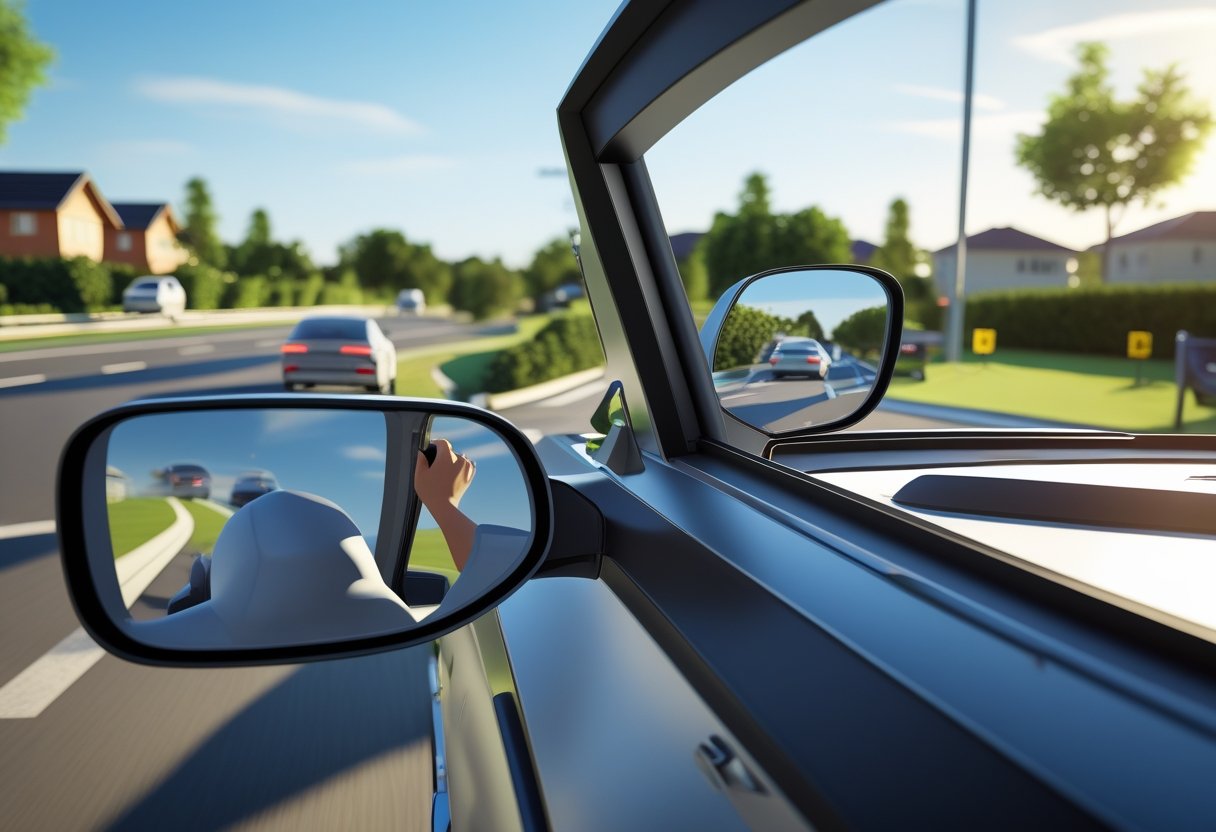
We’ve designed specific practical exercises that transform hesitant glances into confident, systematic mirror checks that become second nature. These aren’t just theory-based tips, but real-world drills you can practise with your instructor or supervising driver. When you master these exercises, you’ll notice a dramatic improvement in your spatial awareness and overall driving confidence.
The beauty of focused mirror training lies in how quickly it transforms your entire driving experience. Once you develop proper mirror habits through targeted practice, the signal and manoeuvre components of MSM become much more natural and precise. Every mirror check becomes an opportunity to gather crucial information about your surroundings, making you a safer and more considerate driver on Britain’s roads.
Key Takeaways
- Regular mirror check exercises help develop natural scanning habits that improve road awareness and safety
- Proper mirror usage forms the foundation for effective signalling and smooth manoeuvres in all driving situations
- Targeted practice drills can quickly transform uncertain mirror glances into confident, systematic observation skills
The Importance of the MSM Routine

The mirror-signal-manoeuvre routine serves as your safety foundation and confidence builder throughout every driving journey. This systematic approach prevents accidents, develops essential defensive driving habits, and helps you avoid the common pitfalls that catch many learner drivers off guard.
Why Mirror-Signal-Manoeuvre Matters for Road Safety
Every year, thousands of accidents happen because drivers failed to check their mirrors properly or missed crucial information about surrounding traffic. The MSM routine acts as your safety net, ensuring you gather all the vital details before making any move.
When we check mirrors systematically, we spot potential dangers that could otherwise catch us completely off guard. That cyclist filtering up your left side becomes visible. The car closing in behind you at speed gets noticed before you brake suddenly.
Mirror checks prevent these common accident scenarios:
- Lane-changing collisions when vehicles sit in blind spots
- Rear-end crashes from sudden braking without warning following traffic
- Left-turn accidents involving cyclists or motorcyclists
- Overtaking incidents where faster traffic approaches from behind
Think of MSM as asking yourself three simple questions every time: What’s happening behind me? Do others need to know my plans? Is it safe to go ahead now?
This routine builds what driving instructors call defensive driving habits. You’re not just reacting to what’s directly in front of you anymore. Instead, you’re developing a complete picture of your surroundings and planning several moves ahead.
The beauty lies in how this becomes automatic with practice. Your brain starts processing mirror information without conscious effort, freeing up mental space to handle more complex traffic situations during your driving test and beyond.
How the MSM Routine Builds Confidence Behind the Wheel
Nothing beats the feeling of knowing you’ve checked everything properly before making a manoeuvre. This systematic approach gives you solid ground to stand on when making driving decisions, especially during those nerve-wracking test situations.
Many learner drivers tell us that MSM provides something concrete to focus on when anxiety creeps in. Rather than feeling overwhelmed by everything happening around you, you can channel that nervous energy into executing each step methodically.
The routine creates predictable patterns in your driving that other road users learn to trust. When you signal clearly and position yourself correctly, everyone knows what to expect from you. This mutual understanding makes the roads feel less chaotic and more manageable.
MSM builds confidence by:
- Reducing the mental load of complex decisions
- Providing structure during stressful moments
- Creating clear communication with other drivers
- Developing sharper observation skills over time
As your mirror usage improves, you’ll notice your overall driving skills advancing too. Your awareness sharpens. You start anticipating problems before they develop into real hazards.
Most importantly, you begin to trust your own judgement behind the wheel. When you know you’ve followed the routine properly, decision-making becomes less stressful and more intuitive.
Common Mistakes and How to Avoid Them
The biggest mistake we see among learner drivers is treating MSM like a tick-box exercise rather than a genuine safety check. Simply glancing at mirrors without processing what you see defeats the entire purpose of the routine.
Quick glances versus proper checks make all the difference. Spend at least two seconds actually looking in each mirror and thinking about what you see. Is that car behind you getting closer? How fast is that motorcycle approaching?
Many learners check mirrors too late in the sequence, leaving no time to react if they spot a hazard. Start your MSM routine at least six seconds before you need to manoeuvre. This gives you plenty of time to adjust your plans if needed.
Timing errors with signalling cause confusion for other road users. Signal too early and drivers wonder what you’re planning. Too late and they can’t react safely to your intentions.
Poor mirror adjustment creates dangerous blind spots that MSM can’t overcome. Before each lesson or test, ensure your mirrors show the maximum road area with minimal overlap. Your rear window should fill the interior mirror completely.
Some learners forget the “look” phase of the manoeuvre, relying entirely on mirror information that might be several seconds old. Traffic situations change rapidly, so always take that final glance before proceeding.
The key is making MSM feel natural rather than robotic. With regular practice, this routine becomes as automatic as breathing, keeping you safe without overwhelming your concentration.
Understanding and Using Your Mirrors Effectively
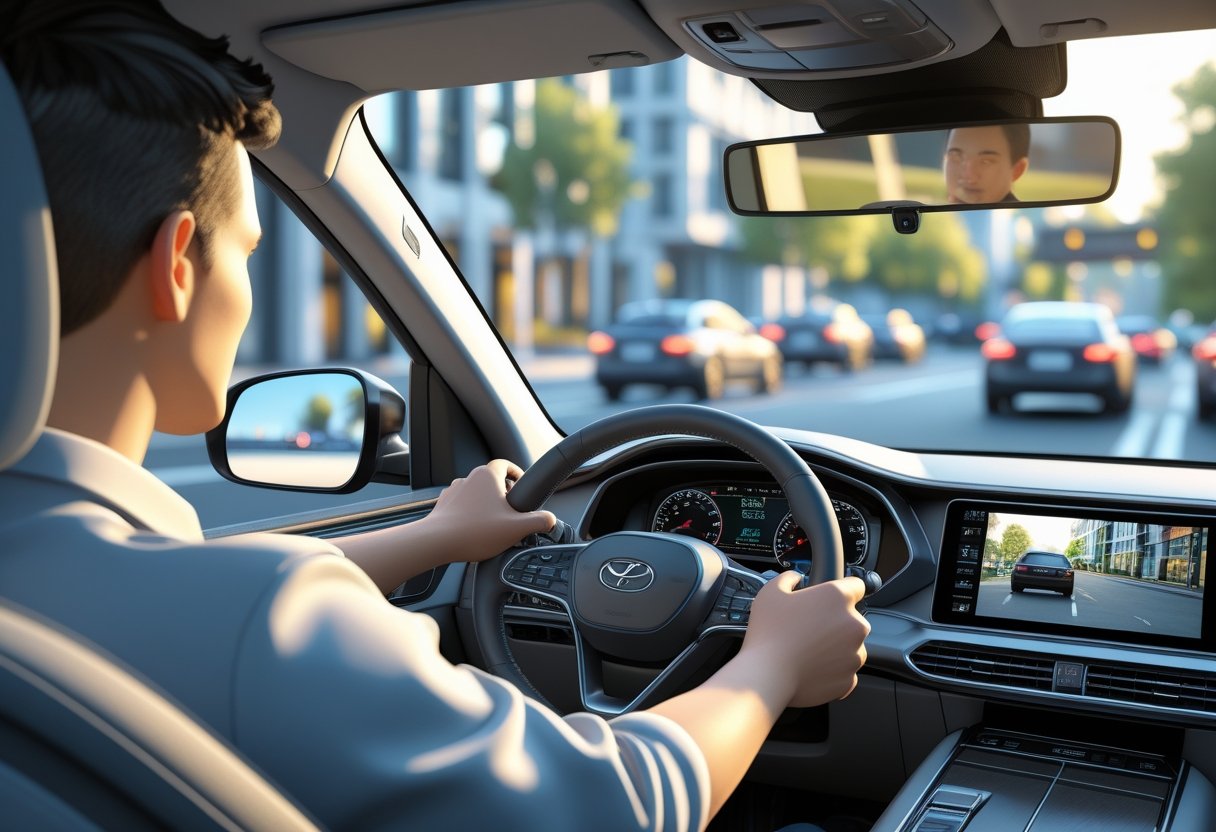
Your mirrors act as your eyes to the world behind and beside you, giving you the complete picture needed for safe driving decisions. Proper mirror technique involves knowing which mirror shows what information, checking them at exactly the right moments, and understanding where your blind spots create hidden dangers.
Types of Mirrors and Their Roles
We’ve got three main mirrors working together to keep us informed about traffic around our vehicle. Each one has a specific job, and understanding their roles helps us gather the right information at the right time.
The interior mirror (also called the centre mirror) gives us a clear view of traffic directly behind our car. We use this mirror most frequently because it shows vehicles that might be following too closely or approaching at speed.
This mirror tells us whether we need to signal earlier or brake more gently. When that white van is tailgating us, the interior mirror warns us to give extra notice before any manoeuvre.
The left mirror reveals cyclists, motorcyclists, and other road users on our nearside. This mirror becomes absolutely crucial in town centres where cyclists often filter through slow-moving traffic.
Many driving school instructors emphasise checking the left mirror before any left turn. Cyclists can appear in this mirror seemingly from nowhere, especially at traffic lights.
The right mirror shows vehicles attempting to overtake or traffic in adjacent lanes. We rely on this mirror heavily on dual carriageways and motorways where faster traffic approaches from behind.
Before changing lanes or moving right, this mirror tells us whether that BMW has been sitting in our right lane for the past minute or just arrived at 80mph.
Mastering Mirror Checks: Techniques and Timing
Effective mirror skills come down to two things: looking at the right moment and actually processing what we see. We’re not just glancing at reflective surfaces, we’re gathering vital safety information.
Start your mirror scan at least six seconds before any manoeuvre. This timing gives us enough space to spot problems and adjust our plans accordingly. Quick last-second checks often miss important details.
We recommend a systematic approach: centre mirror first, then the relevant side mirror for your intended direction. If you’re turning left, check centre then left. For right turns, scan centre then right.
Actually look, don’t just glance. Your brain needs time to register vehicle speeds, distances, and potential hazards. Are those motorcyclists catching up quickly? Is that cyclist maintaining steady speed or slowing down?
The scanning process should become automatic, but never mindless. Each check answers specific questions about traffic behaviour around us.
Practice makes these checks feel natural rather than forced. When mirror skills become second nature, we can focus our conscious attention on more complex driving decisions.
Spotting and Managing Blind Spots
Every vehicle has blind spots where mirrors can’t show us everything. These hidden areas create particular dangers when cyclists or motorcyclists travel alongside our car.
The main blind spot areas include:
- Just behind our left shoulder (where cyclists often position themselves)
- The area beside our right rear quarter (where overtaking vehicles briefly disappear)
- Directly behind the car when reversing (especially low objects or small children)
Physical shoulder checks help us see into these blind spots before changing lanes or turning. We’re not talking about dramatic head turns that take our eyes off the road ahead, just quick glances to confirm what our mirrors suggested.
Managing blind spots effectively means:
- Positioning our mirrors to minimise dead zones
- Using physical checks at crucial moments
- Being extra cautious around cyclists and motorcyclists
- Never assuming a clear mirror means a clear path
Some road users deliberately use our blind spots. Motorcyclists might sit just out of mirror view to avoid car exhaust fumes. Cyclists often position themselves where they feel safest, not necessarily where we can see them easily.
The key is developing awareness of where these danger zones exist and checking them consistently.
Perfecting Your Signalling and Communication
Clear signalling forms the backbone of safe driving communication, helping you tell other road users exactly what you plan to do next. Your indicators work alongside brake lights and road position to create a complete picture of your intentions.
When and How to Use Your Indicators
Your indicators serve as your primary communication tool with other road users. We need to signal whenever our actions might affect someone else on the road.
Signal left when:
- Turning left at junctions or roundabouts
- Moving into the left lane
- Pulling over to the kerb
- Following the road round a sharp left bend
Signal right when:
- Turning right at any junction
- Overtaking parked cars or cyclists
- Moving into the right lane
- Exiting roundabouts
The key lies in timing your signal perfectly. Start signalling early enough for others to see and react, but not so early that you confuse drivers at intermediate junctions.
We recommend the “count of three” rule. Signal, count slowly to three, then begin your manoeuvre. This gives following traffic time to process your intentions.
Don’t signal if nobody benefits from seeing it. Empty roads don’t require indicators, but remember that pedestrians and cyclists can appear quickly.
Body Language and Brake Lights: Non-Verbal Signals
Your car communicates through more than just indicators. Brake lights, road position, and even your speed send clear messages to other drivers.
Brake lights act as early warning systems. A gentle touch of the brake pedal lights them up without slowing you down much. This alerts following drivers that you’re about to reduce speed more significantly.
Road position speaks volumes about your plans. Moving slightly left signals you’re avoiding something ahead. Positioning closer to the centre line suggests a right turn is coming.
Speed changes communicate intentions too. Slowing down gradually tells other road users something is happening ahead. Sudden braking catches everyone off guard and creates dangerous situations.
We can use these signals together for maximum effect. Ease off the accelerator, touch the brake lights gently, then signal your actual intentions with indicators.
Timing Your Signals for Maximum Impact
Perfect timing transforms good signalling into excellent communication. Signal too early and you’ll confuse other road users. Too late and they won’t have time to react safely.
At roundabouts, signal left just after passing the exit before yours. This tells traffic waiting to join exactly when you’re leaving.
For lane changes, start your sequence when you spot a safe gap. Check mirrors, signal, wait three seconds, then move smoothly across.
On dual carriageways, signal much earlier due to higher speeds. Other vehicles need more time to react when everyone’s travelling faster.
We’ve found that consistent timing builds trust with other drivers. They learn to predict your movements, making the roads safer for everyone.
Watch for cyclists and motorcycles during your signal timing. They accelerate and change position much faster than cars, so your three-second rule might need extending in busy traffic.
Manoeuvres in Action: Applying MSM in Real Situations
When you begin putting MSM into practice, every driving manoeuvre becomes an opportunity to build your skills and confidence. Moving off smoothly requires coordinated mirror checks and observations, whilst changing lanes demands precise timing and clear communication with other road users.
Moving Off and Stopping Safely
Moving off is often where we first truly appreciate the value of MSM. You’ll need to check your centre mirror first, then your left mirror to spot any cyclists or pedestrians who might be passing.
Before moving off:
- Check all mirrors systematically
- Signal if other road users will benefit
- Observe blind spots by looking over your shoulder
The right mirror matters too, especially if you’re parked on the right side of a road. Traffic approaching from behind needs time to react to your movements.
When stopping, MSM works in reverse. Check your centre mirror early to see how closely someone’s following you. If they’re quite close, ease off the brakes gently rather than stopping abruptly.
Your road position whilst stopping should give other road users clear sight lines. Don’t stop too close to junctions or block cycle lanes. These considerations become second nature once you start thinking about how your actions affect everyone else on the road.
Changing Lanes with Confidence
Lane changes really showcase your MSM skills in action. We recommend starting your mirror checks at least six seconds before you plan to move.
The sequence works like this:
- Centre mirror to check following traffic
- Relevant side mirror for your intended direction
- Signal clearly and early
- Final blind spot check by looking over your shoulder
Traffic moves fast on dual carriageways, so your timing needs to be spot on. Don’t rush into gaps that feel tight. Patient drivers who wait for proper opportunities always make safer lane changes.
Your road position during the manoeuvre should be smooth and gradual. Sharp movements unsettle other drivers and can destabilise your car. Think of it as flowing from one lane to another rather than making an abrupt switch.
Remember to cancel your signal once you’ve completed the manoeuvre. Nothing confuses other road users more than indicators that stay on after you’ve finished changing direction.
Turning Left and Right: What You Need to Know
Turning manoeuvres demand your most thorough use of MSM because you’re changing direction across other traffic’s path. Left turns need extra attention to your left mirror for cyclists who might be filtering up alongside stationary traffic.
For left turns:
- Check left mirror twice during your approach
- Look for cyclists in blind spots
- Position about one metre from the kerb
- Signal early but not so early it confuses other road users
Right turns require checking your right mirror for overtaking vehicles, then observing oncoming traffic carefully. Your road position should be as close to the centre line as safely possible.
For right turns:
- Check right mirror for fast-approaching traffic
- Position near the centre line
- Assess oncoming traffic speeds and distances
- Don’t rush into small gaps
Both turning manoeuvres benefit from the final ‘look’ phase of MSM. Even if your mirrors showed clear roads moments earlier, situations change rapidly. Trust your observations, but always double-check before committing to any driving manoeuvre.
Practical Exercises to Improve Mirror Usage
Building strong mirror skills takes focused practice and the right techniques. These exercises will help you develop automatic mirror checking habits and spot potential hazards more effectively during your driving lessons.
Daily Mirror Check Routines for Learner Drivers
We recommend starting every driving lesson with a structured mirror routine. Check your interior mirror every 5-8 seconds whilst driving straight. This creates a natural rhythm that becomes second nature.
Practice the mirror sweep technique during quieter roads. Glance at your interior mirror, then left door mirror, then right door mirror in sequence. This takes about 2-3 seconds total.
Before any manoeuvre, follow this pattern:
- Interior mirror first (shows traffic directly behind)
- Relevant side mirror second (left for left turns, right for right turns)
- Quick shoulder check for blind spots
During learning to drive sessions, count your mirror checks out loud. Aim for checking mirrors at least once every 10 seconds. Your instructor can help track this habit.
Set specific mirror goals for each lesson. Start with 3 mirror checks per minute, then increase gradually. This builds consistent mirror skills without overwhelming yourself.
Simulated Hazard Spotting: Building Mirror Habits
Create hazard scenarios during quiet practice sessions. Ask your instructor to call out situations like “car approaching fast from behind” so you practice immediate mirror responses.
Use stationary practice first. Sit in the car and practice quick mirror sequences without driving. This builds muscle memory for the physical movements.
Progressive exercises work best:
- Week 1: Mirror checks every 15 seconds
- Week 2: Mirror checks every 10 seconds
- Week 3: Mirror checks every 5-8 seconds
- Week 4: Automatic checking before all signals
Practice the full mirror-signal-manoeuvre routine repeatedly. Check mirrors, signal only if safe, then complete your manoeuvre. This becomes your standard driving routine.
Role-play different scenarios. Practice spotting cyclists, motorcycles, and faster vehicles approaching from behind. These practical driving exercises prepare you for real road conditions.
Instructor-Led Feedback and Self-Assessment Tips
Work with your instructor to identify mirror blind spots in your technique. Many learners forget to check mirrors before signalling or check too briefly to gather useful information.
Record your mirror usage during lessons. Keep a simple tally of successful mirror checks versus missed opportunities. This data helps track improvement over time.
Common feedback areas include:
- Timing: Checking mirrors too late or too early
- Duration: Glances too quick to process information
- Frequency: Not checking often enough during normal driving
Ask your instructor to give immediate feedback when you miss mirror checks. Gentle reminders help reinforce the habit without breaking concentration.
Use self-assessment between lessons. Before starting the engine, remind yourself of your mirror goals. After each lesson, note which situations challenged your mirror usage most.
Advanced MSM: Dual Carriageways, Roundabouts, and Motorways
Higher speed roads and complex junctions demand more sophisticated mirror work and timing adjustments. The basic MSM principles remain the same, but you’ll need quicker reactions and more frequent checks to handle fast-moving traffic safely.
MSM on Dual Carriageways and Motorways
Speed changes everything when we’re dealing with dual carriageways and motorways. Traffic moves much faster, which means our mirror checks need to happen more often and our decision-making window shrinks dramatically.
Start your MSPSL routine earlier than you would on normal roads. We recommend beginning mirror checks at least 10 seconds before changing lanes on motorways. This gives you time to assess multiple vehicles and their speeds.
Check your mirrors in this sequence:
- Centre mirror for following traffic
- Right mirror before moving right
- Left mirror before moving left
- Blind spot checks become essential
The PSL routine becomes critical here. Position yourself in the correct part of your current lane first. Speed up or slow down gradually to match traffic flow. Look for gaps that are much larger than you’d need on town roads.
Following traffic approaches quickly on motorways. That car in your mirror might look distant, but it could be closing the gap at 70mph. Always err on the side of caution when judging distances.
Signal earlier than normal. Other drivers need more time to react at higher speeds. Keep your signal on longer too, especially during lane changes that take several seconds to complete.
Negotiating Roundabouts with Confidence
Roundabouts test your MSM skills because traffic approaches from multiple directions. You’ll need to coordinate your observations with other vehicles while maintaining smooth progress around the junction.
Approach phase mirrors: Check your centre mirror as you slow down. Following drivers need to see your brake lights early. Check the appropriate side mirror based on your intended exit.
On the roundabout itself, your mirror work continues. Glance at your left mirror frequently to spot vehicles joining from side roads. They might not see you or misjudge your speed.
Before each exit, perform quick mirror checks:
- Centre mirror for following traffic
- Left mirror for undertaking vehicles
- Right mirror if you’re moving across lanes
The hazard routine becomes particularly important on busy roundabouts. Traffic conditions change rapidly, so what looked clear five seconds ago might not be safe anymore.
Multi-lane roundabouts require extra attention. Check mirrors before changing lanes to reach your exit. Signal left as you pass the exit before yours, but mirror-check first to ensure it’s safe.
Practice the MSPSL routine until it becomes automatic. Roundabouts don’t give you thinking time once you’re committed to entering.
Staying Safe Around Cyclists, Pedestrians, and Other Road Users
Vulnerable road users create special challenges for your MSM routine. Cyclists move quickly but quietly, while pedestrians can appear suddenly from behind parked cars or in your blind spots.
Cyclist awareness demands constant left mirror monitoring in urban areas. They often filter through stationary traffic and might not be visible in your centre mirror. Before any left turn, check your left mirror twice and physically look over your shoulder.
The PSL routine helps here. Position yourself to give cyclists space. Speed adjustments should be gradual to avoid surprising them. Look includes checking cycle lanes and the kerb area where bikes might appear.
Pedestrian detection requires scanning beyond your mirrors. Look at bus stops, shops, and crossing points. People step into roads without warning, especially during busy periods or bad weather.
Motorcyclists appear and disappear quickly in your mirrors. They accelerate faster than cars and often use gaps you wouldn’t consider. Check mirrors more frequently when motorcycles are around, and give them extra space during manoeuvres.
Driving routines like MSM work best when you adapt them to conditions. School zones need more pedestrian awareness. Industrial areas often have more cyclists. Busy shopping areas combine both challenges with unpredictable parking situations.
Remember that vulnerable road users make mistakes too. Your careful MSM routine provides the safety margin that protects everyone when situations go wrong.
Planning, Anticipation, and Decision-Making for Safe Driving
Smart planning and quick decision-making transform hesitant learners into confident drivers. The driving test examiner watches how well you assess hazards, apply the PSL routine naturally, and maintain composure under pressure.
Assessing Hazards and Prioritising Mirror Use
We need to spot potential problems before they become actual dangers. This means scanning constantly and using our mirrors to build a complete picture of what’s happening around us.
Priority hazards require immediate mirror checks:
- Children playing near parked cars
- Cyclists approaching from behind
- Vehicles changing lanes suddenly
- Pedestrians waiting to cross
When we spot these situations, mirror checks become urgent. We’re not just following routine anymore, we’re gathering vital information to keep everyone safe.
The key is learning to rank hazards by risk level. A ball bouncing into the road needs instant attention and immediate mirror checks before we brake or swerve.
Mirror priorities change with conditions:
- Heavy traffic: Check mirrors more frequently
- School zones: Focus on left mirror for children
- Dual carriageways: Right mirror for faster vehicles overtaking
We must adjust our checking patterns based on what we see developing ahead. This isn’t about rigid routines, it’s about smart thinking.
Planning ahead means we’re already checking mirrors before hazards become critical. This gives us time to respond smoothly instead of making sudden moves that surprise other drivers.
Adjusting Position, Speed, and Look (PSL) in Everyday Driving
The PSL routine works best when we adapt it to real driving situations. Every junction, roundabout, and lane change needs a slightly different approach based on traffic conditions and road layout.
Position adjustments depend on circumstances:
- Narrow roads: Stay further left to avoid oncoming traffic
- Parked cars: Move out earlier to maintain safe clearance
- Cyclists ahead: Adjust position gradually, not suddenly
Our stopping distance changes with speed and conditions. Wet roads double our stopping distance, so we need earlier position changes and gentler speed adjustments.
Speed control gets easier when we plan ahead. Spotting that red light early means gradual slowing instead of hard braking. This keeps following traffic comfortable and shows the driving test examiner we’re thinking ahead.
The “look” phase adapts to different scenarios. At busy junctions, we’re checking multiple directions. On quiet roads, a quick scan might suffice.
Practical PSL timing:
- Start position changes 6-8 seconds before turning
- Reduce speed gradually over 4-5 seconds
- Take final look 2-3 seconds before committing
This timing works for most situations but needs adjusting for complex junctions or heavy traffic.
Staying Calm and Focused During the Driving Test
Test nerves can make us forget everything we’ve learned, but having a clear mental process helps us stay on track. We can use the MSM routine as an anchor when pressure builds.
Breaking down each manoeuvre into small steps prevents overwhelm. Instead of thinking “I need to turn right at this busy junction,” we think “mirrors first, then signal, then position.”
Calming techniques that work:
- Take deep breaths during mirror checks
- Talk through the routine quietly
- Focus on one step at a time
- Remember the examiner wants us to pass
When something goes wrong, the PSL routine gives us time to recover. If we miss a signal, we can adjust our position and speed while planning our next move.
The driving test examiner notices drivers who stay methodical under pressure. They’re looking for safe decision-making, not perfect execution of every single detail.
If we make a mistake:
- Keep following the routine
- Don’t panic or rush
- Make the next decision carefully
- Learn from what happened
Most test failures happen when drivers abandon their training and start guessing. Sticking to our planned approach, even when nervous, shows the examiner we’re ready for independent driving.
Frequently Asked Questions
Learning to use mirrors properly takes practice and patience. These common questions address specific techniques for building mirror habits, remembering the routine, and avoiding typical mistakes that trip up many learners.
How can I seamlessly incorporate mirror checks into my driving routine without feeling overwhelmed?
Start by picking just one mirror to focus on during each lesson. We recommend beginning with your interior rearview mirror since it’s easiest to remember.
Make mirror checks part of simple tasks first. Every time you approach a roundabout or junction, glance at your mirrors before you do anything else.
Set small goals like checking mirrors five times during a 30-minute drive. Don’t worry about perfect timing yet. Building the habit matters more than getting everything right straight away.
Practice the “mirror mantra” by saying “mirror check” out loud each time you look. This helps your brain connect the action with conscious thought until it becomes automatic.
What’s the secret to remembering to use my mirrors before signalling and executing a manoeuvre?
Link mirror checks to visual cues you already notice. When you see a junction ahead, a parked car, or lane markings, let these become your reminder to check mirrors first.
Create a physical routine by always moving your head slightly when checking mirrors. This deliberate movement helps cement the habit in your muscle memory.
Practice the alphabet technique during quiet roads. Every time you pass a road sign with a letter, check your mirrors before continuing. This builds random checking habits.
Use the “three before me” rule. Check three mirrors (interior, left, right) before making any change to speed or direction.
Are there any drills I can practice to make mirror usage second nature when driving?
The “mirror minute” drill works brilliantly for beginners. Set a timer for one minute and check different mirrors every 10 seconds whilst stationary. This builds checking rhythm.
Try the “commentary drive” exercise. Describe everything you see in each mirror as you check it. “Left mirror shows clear road, interior mirror has car 100 metres back.”
Practice the MSM sequence in car parks using cones or markers. Drive slowly between obstacles whilst maintaining proper mirror, signal, manoeuvre timing.
The “stop and check” drill helps too. At every red light or stop sign, systematically check all three mirrors and identify what’s behind you.
In what ways can I enhance my field of vision to ensure I’m using my mirrors effectively?
Adjust your mirrors properly before every drive. Your interior mirror should frame the entire rear window. Side mirrors should show a sliver of your car’s edge and mostly road.
Keep mirrors spotlessly clean. Dirty mirrors create blind spots and make it harder to judge distances accurately.
Learn to use quick glances instead of long stares. A half-second check gives you the information you need without taking attention from the road ahead.
Position your seat correctly so mirrors feel natural to check. If you’re stretching or straining to see mirrors, they need readjusting.
Practice peripheral vision exercises. Notice movement in your side vision whilst focusing straight ahead. This helps you spot when mirror checks are needed.
Could you walk me through the steps to develop a consistent mirror-signal-manoeuvre routine?
Begin every manoeuvre by checking the most relevant mirror first. For left turns, check your interior and left mirrors. For overtaking, focus on interior and right mirrors.
Wait two seconds after checking mirrors before signalling. This pause lets you process what you’ve seen and decide if it’s safe to continue.
Signal clearly and give other drivers time to react. Count “one Mississippi, two Mississippi” before starting your manoeuvre.
Check mirrors again just before moving. Traffic situations change quickly, so this final check catches any new hazards.
Complete your manoeuvre smoothly and cancel your signal promptly. Don’t rush, but don’t hesitate once you’ve started moving.
What are some common mistakes to avoid when checking mirrors during the mirror-signal-manoeuvre process?
Don’t just glance at mirrors without really seeing what’s there. Many learners look but don’t process the information properly.
Avoid checking mirrors too late in the sequence. Mirrors should be your first action, not something you remember halfway through signalling.
Never skip the second mirror check before manoeuvring. Conditions change rapidly, and that final glance often prevents accidents.
Don’t forget about blind spots. Mirrors don’t show everything, so combine mirror checks with shoulder checks when changing lanes.
Resist the urge to stare at mirrors for too long. Quick, frequent checks work better than occasional long looks that take attention from the road ahead.