

Mirror‑Signal‑Manoeuvre Routine: How Examiners Assess It for UK Learners
The Mirror-Signal-Manoeuvre routine forms the backbone of safe driving, and understanding how examiners assess this fundamental skill can make the difference between passing and failing your practical test. Every learner driver knows the MSM sequence, but knowing it and demonstrating it under exam conditions are two entirely different challenges.
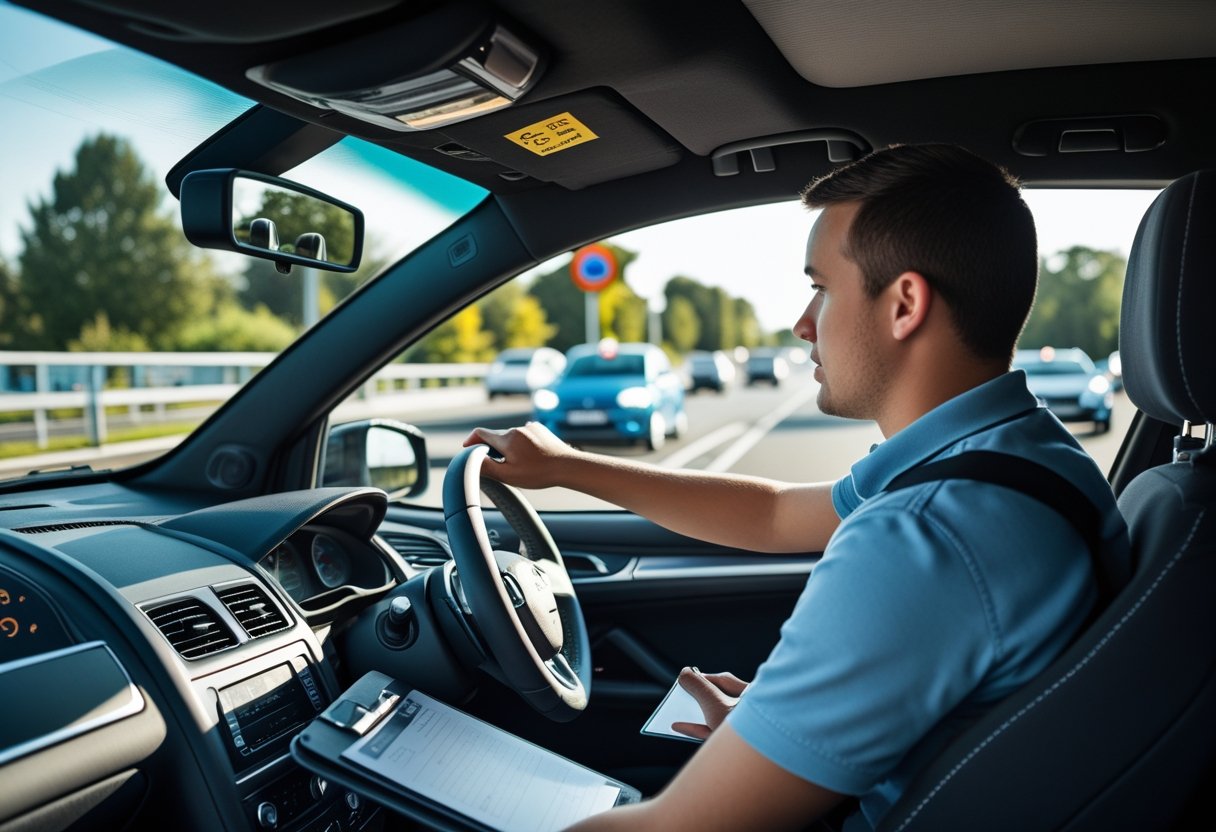
Examiners evaluate your MSM routine by observing whether you check mirrors at the right moments, signal clearly and with proper timing, and execute manoeuvres safely whilst maintaining proper positioning, speed control, and observation throughout. They’re looking for a structured approach that shows you can plan ahead and respond appropriately to changing road conditions. Rather than ticking boxes mechanically, they want to see that you genuinely understand when and why each element matters.
We’ll walk you through exactly what examiners look for during your test, breaking down each stage of the MSM routine and exploring how it connects with other driving skills. You’ll discover the common mistakes that trip up learners, learn when to apply this routine in different scenarios, and gain the confidence to demonstrate your abilities naturally on test day.
Understanding the Mirror‑Signal‑Manoeuvre (MSM) Routine
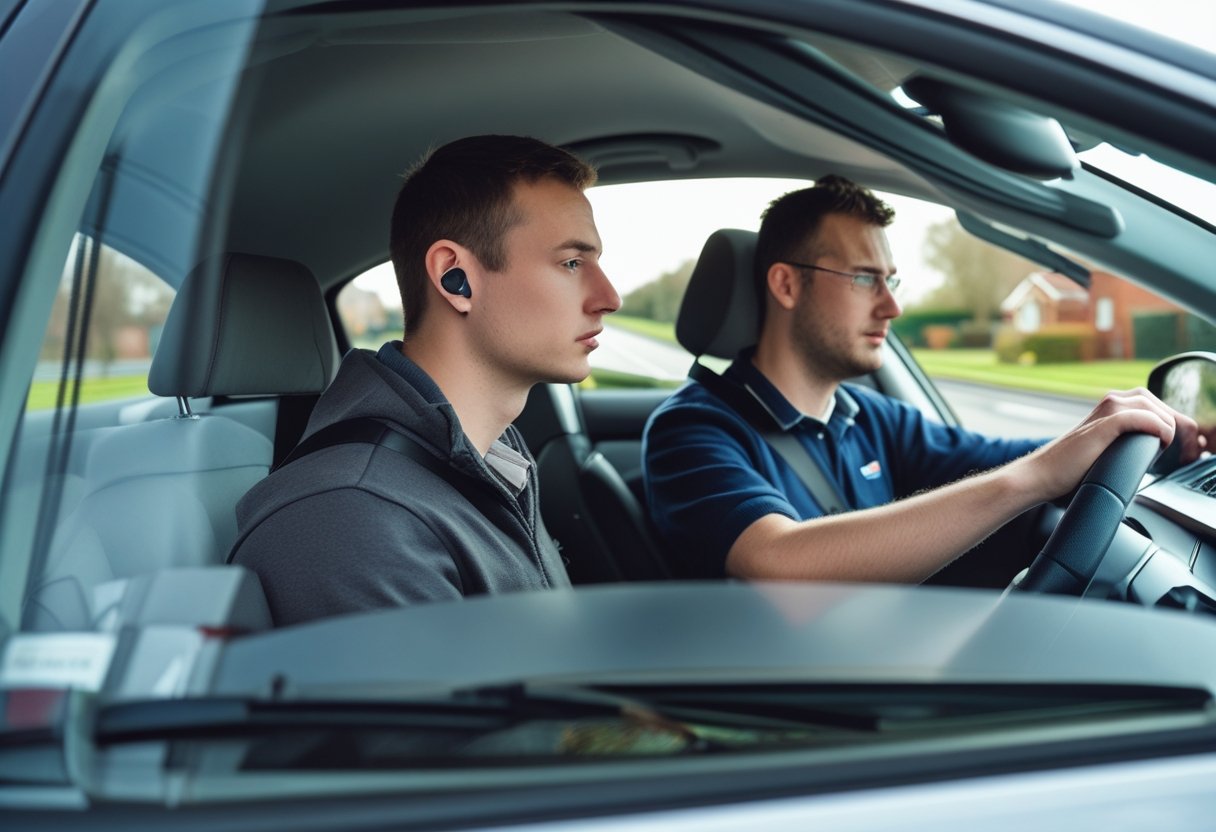
The MSM routine forms the backbone of safe driving by creating a systematic approach to every manoeuvre on the road. This essential sequence helps learner drivers develop consistent habits whilst building the situational awareness needed to navigate traffic confidently.
Why MSM Matters for Road Safety
We can’t overstate how crucial the mirror signal manoeuvre routine is for preventing accidents. Every time you check your mirrors before making a move, you’re gathering vital information about what’s happening around your vehicle.
Think of MSM as your safety net. It stops you from making dangerous decisions based on incomplete information. When you follow this routine consistently, you develop what we call “defensive driving habits.”
The statistics speak for themselves:
- Most collisions happen because drivers failed to observe properly
- Mirror checks prevent lane-changing accidents
- Proper signalling gives other road users time to react
The beauty of MSM lies in its simplicity. You’re essentially asking yourself three questions: What’s behind me? Do I need to tell others what I’m doing? Is it safe to proceed?
For learner drivers, this routine becomes second nature with practice. You’ll find yourself automatically checking mirrors without even thinking about it. This muscle memory proves invaluable when you’re dealing with complex traffic situations.
Breaking Down the MSM Steps
Let’s walk through each component of the MSM routine so you understand exactly what examiners expect to see during your test.
Mirror checks come first for good reason. You need to know what’s happening behind and beside you before making any move. Check your centre mirror first, then the relevant side mirror depending on your intended direction.
Don’t just glance at the mirrors. Actually process what you see. Is that car behind you too close? Is a cyclist approaching on your left?
Signalling happens next, but only when necessary. Your indicators tell other road users about your intentions. Remember, signals aren’t automatic. If nobody’s around to benefit from your signal, you might not need one.
Timing matters enormously here. Signal too early and you’ll confuse other drivers. Too late and they won’t have time to react safely.
The manoeuvre phase includes three sub-elements:
- Position: Move to the correct part of your lane
- Speed: Adjust your pace and select appropriate gear
- Look: Final safety check before proceeding
This final look is crucial. Even if your mirrors showed a clear path moments ago, situations change rapidly on the road.
How MSM Builds Confidence Behind the Wheel
We’ve noticed that learner drivers who master MSM early tend to feel much more confident during lessons. There’s something reassuring about having a reliable system to fall back on.
When you know you’ve checked properly, signalled clearly, and positioned correctly, decision-making becomes less stressful. You’re not second-guessing yourself or worrying about what you might have missed.
The routine also helps with test nerves. Many learners tell us that following MSM gives them something concrete to focus on during their driving test. Instead of feeling overwhelmed, they can concentrate on executing each step properly.
MSM builds confidence through:
- Creating predictable patterns in your driving
- Reducing the mental load of decision-making
- Providing clear structure during stressful moments
- Helping you communicate effectively with other road users
As you practice driving routines like MSM, you’ll notice improvements in other areas too. Your observation skills sharpen. Your awareness of other traffic increases. You start anticipating problems before they develop.
Most importantly, other drivers begin to trust your actions. When you signal clearly and position correctly, everyone knows what to expect. This mutual understanding makes the roads safer for everyone.
Mastering Each Stage: Mirror, Signal, Manoeuvre
Each element of the MSM routine requires specific techniques and timing to work effectively. Your mirror checks need to capture the complete traffic picture, your signals must communicate clearly with other drivers, and your manoeuvres should flow smoothly whilst maintaining safety.
Effective Mirror Checks and Their Importance
We can’t stress enough how crucial proper mirror checks are for safe driving. Your mirrors are your window into what’s happening behind and beside you, giving you the information needed to make smart decisions.
Centre mirror shows you vehicles directly behind. Check this first to see if someone’s following too closely. If they are, you’ll need to signal earlier to give them time to react.
Left mirror reveals cyclists or motorcycles that might be passing on your nearside. This is particularly important in slow-moving traffic where two-wheelers often filter through gaps.
Right mirror displays vehicles attempting to overtake or traffic in the right-hand lane. Always check this before moving right or changing lanes.
The key is timing your mirror checks well before you need to act. Don’t just glance quickly – really look and assess what you see. Check for vehicle speeds, distances, and any potential blind spot risks.
We recommend the “6-second rule” – start your mirror checks at least 6 seconds before your intended manoeuvre. This gives you plenty of time to spot hazards and adjust your plans if needed.
The Art of Signalling to Other Road Users
Signalling isn’t just about flicking your indicators on and off. It’s about communicating your intentions clearly to keep everyone safe on the road.
Your indicators are the most obvious signal, but timing matters enormously. Signal too early and you might confuse other drivers about your intentions. Signal too late and they won’t have time to react properly.
Brake lights can act as an early warning system. Gently touching your brake pedal (without actually slowing down much) lights up your brake lights, giving following drivers a heads-up that you’re about to slow down properly.
Don’t overlook road position as a form of signalling. When you smoothly move out early to pass a parked car, you’re effectively telling the driver behind what you’re planning to do.
Here’s what good signalling looks like:
- Clear intentions: Other drivers should never have to guess what you’re doing
- Proper timing: Early enough for others to react, but not so early it becomes confusing
- Consistent behaviour: Your actions should match your signals
Remember, if there’s nobody around to see your signal, you don’t necessarily need to use it.
Executing Safe and Smooth Manoeuvres
The manoeuvre stage is where everything comes together, and we break this down into three crucial parts that examiners watch carefully.
Position means getting your car in exactly the right spot for what you’re about to do. For left turns, stay about 1 metre from the kerb. For right turns, position yourself as close to the centre line as safely possible.
Speed control separates good drivers from great ones. Always brake to your desired speed first, then select the appropriate gear. This sequence keeps your car stable and gives you better control throughout the manoeuvre.
Look is your final safety check before acting. This isn’t just a quick glance – you’re looking, assessing your options, deciding whether it’s safe, and then acting accordingly.
The look phase includes checking for:
- Pedestrians stepping into the road
- Cyclists in your path
- Oncoming traffic
- Any last-minute changes in the traffic situation
If something doesn’t feel right during your final look, don’t be afraid to wait. Examiners love seeing drivers who prioritise safety over speed. A smooth, confident manoeuvre that flows naturally will always score better than a rushed one that puts you or others at risk.
Detailing the Manoeuvre: Position, Speed, and Look
The manoeuvre phase breaks down into three critical elements that examiners watch closely. Your road positioning must match the intended turn, your speed needs adjusting through proper braking and gear selection, and your final observations determine whether it’s safe to proceed.
Correct Road Positioning for Every Scenario
Getting your road position right shows examiners you understand what’s coming next. We’re talking about precise placement that gives you the best angle for your intended manoeuvre.
For left turns, maintain your normal driving line about one metre from the kerb. Don’t swing wide or hug the left too closely. This position keeps you clear of parked cars whilst giving cyclists room to your left.
Right turns require different positioning. Move as close to the centre line as safely possible without crossing it. This placement shortens your turning radius and makes your intentions crystal clear to other drivers.
Lane positioning on dual carriageways demands extra attention. Move smoothly into the correct lane well before your junction. Examiners notice drivers who leave lane changes too late or make sudden movements.
Your position signals your intentions even before you indicate. Smooth, early positioning tells following drivers what you’re planning. Last-minute positioning changes often catch other road users off guard.
Check your centre mirror, right mirror, and left mirror before adjusting position. Traffic behind might be closer than you think, and cyclists often appear in your left mirror when you least expect them.
Adapting Speed and Gear Selection
Speed adjustment forms the heart of safe manoeuvring, and examiners pay close attention to how smoothly you manage this transition. The key principle is simple: brake first, then change gear to match your new speed.
Braking technique matters enormously. Apply brakes progressively rather than suddenly. This gives following traffic time to react and keeps your car stable through the manoeuvre. Gentle initial pressure followed by firmer braking works best.
Gear selection follows speed reduction. Once you’ve slowed to the appropriate speed for your turn, select the gear that matches. Second gear suits most junction turns, whilst first gear handles very tight corners or uphill starts.
Speed varies with conditions. Sharp corners need slower speeds than gentle curves. Poor visibility demands extra caution. Wet roads require earlier braking and gentler inputs.
The MSM/PSL routine emphasises getting speed right before committing to your manoeuvre. Examiners fail drivers who enter junctions too quickly or brake harshly at the last moment.
Your engine should provide gentle pulling power through the turn, not labour in too high a gear or over-rev in too low a gear.
Final Observations: Look, Assess, Decide, Act
This final phase determines whether your manoeuvre succeeds safely. Examiners watch how thoroughly you observe and whether you make sensible decisions based on what you see.
Looking involves systematic observation. Check your mirrors one final time, then look in the direction you’re turning. For right turns, observe oncoming traffic and pedestrians crossing your path. Left turns require checking for cyclists and pedestrians.
Assessing means processing what you’ve observed. Is that oncoming car close enough to pose a risk? Will those pedestrians step into your path? Can you complete your turn safely without rushing?
Deciding comes from your assessment. Sometimes waiting proves wiser than proceeding. Examiners prefer cautious drivers who wait for clear gaps over those who squeeze through tight situations.
Acting follows your decision. If it’s safe, complete your manoeuvre smoothly and confidently. If doubt exists, wait for a better opportunity. There’s no shame in being patient.
The PSL routine becomes second nature with practice. Examiners notice drivers who skip the looking phase or make poor decisions based on incomplete observations.
Trust your judgement, but always err on the side of caution when assessing complex traffic situations.
When and Where to Use the MSM Routine
We need to use the MSM routine before every change of speed or position on the road. This includes changing direction, overtaking other vehicles, moving off from stationary positions, and navigating complex road features like roundabouts.
Changing Direction and Lanes
We must apply MSM every time we change direction or move between lanes. This covers turning left or right at junctions, switching lanes on dual carriageways, and moving around parked cars.
Before changing direction:
- Check mirrors to spot vehicles, cyclists, or motorbikes behind us
- Signal early enough for others to react
- Look for blind spots, especially when cyclists might be present
Lane changes require extra care:
- Use centre mirror first, then the door mirror for our intended direction
- Signal clearly before moving
- Check blind spots physically by looking over our shoulder
We should start this routine well before we need to turn. Waiting until the last moment catches other road users off guard and creates dangerous situations.
Cyclists often move up alongside stationary traffic, so we need extra mirror checks when turning left. They might be in our blind spot, making physical checks essential.
Overtaking Safely
Overtaking demands thorough use of MSM because we’re moving into oncoming traffic’s path. We need to check what’s behind us before pulling out and ensure we have enough space to complete the manoeuvre safely.
The overtaking sequence:
- Check mirrors for following traffic
- Signal right to show our intention
- Move out when safe, maintaining proper spacing
We must check mirrors again before moving back to the left lane. Vehicles behind might have closed the gap, or we could cut in front of the vehicle we’ve just overtaken.
On dual carriageways and motorways:
- Check mirrors more frequently due to higher speeds
- Look for fast-approaching vehicles in outside lanes
- Always check blind spots before changing lanes
Motorcycles pose particular risks during overtaking because they can approach quickly and hide in our blind spots. We need extra vigilance and physical checks.
Moving Off, Turning, and Stopping
Every time we move off from a parked position, we’re entering traffic flow and must use MSM. The same applies when we’re stopping, as vehicles behind need warning of our intentions.
Moving off from kerb:
- Check all mirrors for approaching traffic
- Signal right if needed
- Look over right shoulder for blind spot hazards
When stopping:
- Check mirrors to see following vehicles
- Signal left early if parking
- Be aware of vehicles that might be following too closely
We need to be particularly careful about timing our signals. Signalling too early before a junction confuses other drivers about our intentions. Too late, and we don’t give enough warning.
Turning left requires special attention:
- Extra checks for cyclists coming up our left side
- Early signalling to warn following traffic
- Final blind spot check before turning
The hazard routine becomes crucial when stopping suddenly. Quick mirror checks help us assess whether the vehicle behind can stop safely.
Navigating Roundabouts and Hazards
Roundabouts demand continuous use of MSM because we’re constantly changing position and direction. We need to signal our intentions clearly and check mirrors before each lane change.
Approaching roundabouts:
- Use MSM before entering the roundabout
- Check mirrors before changing lanes on the roundabout
- Signal left when ready to exit
The complete roundabout sequence:
- Mirrors and signal before entering
- Continuous awareness of other vehicles’ positions
- MSM again before exiting
We treat other hazards like pedestrian crossings, traffic lights, and narrow bridges the same way. Each requires assessment of following traffic, appropriate signalling, and careful positioning.
Common hazard situations:
- Slowing for pedestrian crossings
- Stopping at traffic lights
- Navigating past obstacles
- Approaching school zones
Emergency situations might require us to adapt the routine, but we should never abandon it completely. Even quick decisions benefit from rapid mirror checks and clear signalling where possible.
How Driving Examiners Assess MSM in the Practical Test
Examiners watch carefully for proper MSM execution throughout your test, assessing your timing, accuracy, and consistency. They’re particularly focused on safety decisions and your awareness of other road users during every manoeuvre.
What Examiners Are Looking For
When assessing your MSM routine, examiners want to see systematic and timely execution. They expect you to check your mirrors well before signalling, not as an afterthought.
The mirror checks need to be purposeful. Simply glancing at mirrors isn’t enough – examiners can tell when you’re actually processing the information versus just going through the motions.
Your signals must be clear and well-timed. Too early, and other drivers might get confused about your intentions. Too late, and you haven’t given them adequate warning.
For the manoeuvre portion, examiners assess your positioning, speed control, and continued observation. They want to see that you’re using the PSL routine (Position, Speed, Look) as part of your overall approach.
Consistency matters enormously. Using MSM perfectly once won’t impress examiners if you forget it at the next junction. They’re looking for evidence that safe driving habits are becoming second nature.
The examiner also watches how you adapt MSM to different situations. A simple left turn requires different considerations than overtaking a cyclist or merging onto a dual carriageway.
Common Pitfalls and How to Avoid Them
Many learner drivers rush through MSM without proper timing. We often see candidates checking mirrors and signalling almost simultaneously, which defeats the purpose of gathering information first.
Forgetting the second mirror check after signalling is another frequent mistake. Traffic situations change quickly, and that final check before manoeuvring could reveal a motorcyclist or cyclist you missed earlier.
Some candidates become so focused on the mirrors that they forget to signal altogether. Others signal correctly but fail to cancel the indicator afterwards, confusing following traffic.
Poor positioning during manoeuvres often stems from inadequate planning. If you haven’t positioned your vehicle correctly early enough, you’ll struggle with the speed and observation elements.
Speed control causes problems when candidates either maintain inappropriate speeds for the manoeuvre or make sudden, jerky adjustments. Smooth, progressive changes work much better.
The biggest pitfall is inconsistent application. Using MSM perfectly for major junctions but forgetting it when pulling over or emerging from side roads will certainly catch the examiner’s attention.
Scoring: Minor and Major Faults Explained
Understanding how faults are recorded helps you prioritise your practice efforts. Driving faults (minor faults) are recorded when you use MSM but with slight timing or execution issues.
For example, checking mirrors slightly late or signalling just a moment after you should have done will likely result in a driving fault rather than test failure.
Serious faults occur when your MSM routine has significant gaps that could potentially endanger other road users. Failing to check mirrors before changing lanes or forgetting to signal at a busy roundabout would fall into this category.
Dangerous faults happen when your poor MSM execution creates actual danger. This might involve pulling out without proper observation, causing another vehicle to brake hard or swerve.
| Fault Type | MSM Examples | Test Result |
|---|---|---|
| Driving | Late mirror checks, brief signal delays | Continue (unless 16+ total) |
| Serious | Missing mirror checks, no signal at junctions | Immediate failure |
| Dangerous | Causing others to take evasive action | Immediate failure |
Remember that repeated driving faults in the same area can escalate to a serious fault. If you consistently forget mirror checks throughout the test, the examiner may decide this represents a serious safety concern.
MSM in Context: Connecting with Other Driving Routines
MSM works alongside other driving routines to create a complete safety system behind the wheel. Understanding how different approaches complement each other helps you develop stronger driving habits and better prepare for your test.
Comparing MSM to POM, DSSSM, and Other Approaches
Different driving schools teach various routines, but they all share the same goal: keeping you safe on the road. POM (Prepare, Observe, Move) focuses more on mental preparation before physical action. You’ll prepare by thinking through your next move, observe everything around you, then move when it’s safe.
DSSSM (Doors, Seatbelt, Steering, Seat, Mirrors) is your pre-drive checklist. This routine happens before you even start the engine. MSM kicks in once you’re actually driving and need to change speed or position.
The MSPSL routine expands on traditional MSM by breaking down the manoeuvre phase. Instead of just “manoeuvre,” you get Position, Speed, Look as separate steps. This gives you more detailed guidance for complex situations.
Think of these routines as building blocks. DSSSM gets you ready to drive safely. MSM handles most driving situations. POM helps with trickier decisions where you need extra thinking time.
Your examiner won’t penalise you for using MSPSL instead of basic MSM. They’re looking for safe, systematic driving behaviour regardless of which routine you follow.
Making MSM Second Nature: Tips and Practice Strategies
The secret to mastering MSM lies in consistent practice until it becomes automatic. Start by practising the routine during quieter drives before tackling busy roads or complex junctions.
Talk yourself through each step during your first few weeks of learning. Say “mirrors” as you check them, “signal” as you indicate, and “manoeuvre” as you move. This verbal reinforcement helps cement the pattern in your mind.
Create memory hooks by linking MSM to specific driving situations. Every time you approach a roundabout, remind yourself: “MSM time.” When you see a parked car ahead, think: “MSM for overtaking.”
Practice the routine in different scenarios:
- Car parks: Perfect for low-pressure MSM practice
- Quiet residential streets: Build confidence with turns and lane changes
- Dual carriageways: Master MSM for faster-moving traffic
We recommend spending extra time on mirror checks since many learners rush this crucial first step. Count to three while scanning your mirrors, noting the position and speed of vehicles around you.
Frequently Asked Questions
Driving test candidates often have specific questions about how examiners evaluate the mirror-signal-manoeuvre routine. Understanding what examiners look for and how to execute each step properly can significantly boost your confidence on test day.
What specific aspects of the ‘Mirror-Signal-Manoeuvre’ routine will driving examiners focus on during the test?
Examiners pay close attention to your timing when checking mirrors. They want to see you looking in your mirrors well before you signal or change position.
Your mirror checks need to be obvious and deliberate. Quick glances won’t cut it during the test.
We’ve noticed examiners particularly focus on whether you check the correct mirrors for each situation. For left turns, they expect you to check your left mirror for cyclists. For right turns or overtaking, your right mirror check is crucial.
Signal timing matters enormously to examiners. They want to see you signal early enough to give other drivers time to react, but not so early that it becomes confusing.
The examiner will watch how you position your car after signalling. Your road position should match your intended manoeuvre clearly and safely.
Can you break down the steps involved in executing a flawless ‘Mirror-Signal-Manoeuvre’ routine for a driving test?
Start by checking your centre mirror to assess traffic behind you. This gives you the full picture of what’s happening.
Next, check your relevant side mirror. Left mirror for left manoeuvres, right mirror for right manoeuvres or overtaking.
Signal only if other road users need to know your intentions. No signal is needed if nobody else is around.
Position your car correctly for your planned manoeuvre. Stay about one metre from the kerb for left turns, move closer to the centre line for right turns.
Adjust your speed to suit the manoeuvre. Always brake to your desired speed before changing gear.
Take a final look to confirm it’s safe to proceed. This includes checking mirrors again and looking in your intended direction of travel.
How can I demonstrate my awareness of potential hazards while performing the ‘Mirror-Signal-Manoeuvre’ routine in my practical driving exam?
Show the examiner you’re thinking ahead by starting your routine early when you spot a hazard. This proves you’re not just reacting at the last second.
Make your mirror checks obvious and purposeful. Turn your head slightly so the examiner can clearly see you’re checking.
Use gentle brake light signals to warn following drivers when you need to slow down. A light touch on the brake pedal activates your brake lights without harsh braking.
Position yourself early when passing parked cars or obstacles. This smooth, early positioning acts as a signal to following traffic.
Demonstrate that you’re considering all road users. Check for cyclists, pedestrians, and motorcycles, not just cars.
What common mistakes should I avoid when carrying out the ‘Mirror-Signal-Manoeuvre’ routine under exam conditions?
Don’t rush through your mirror checks. Quick, cursory glances suggest you’re not properly assessing the situation.
Avoid signalling too late or at the wrong time. Late signals don’t give other drivers enough time to react safely.
Never skip checking your mirrors entirely. This is one of the quickest ways to earn a serious fault.
Don’t signal when it’s unnecessary. Signalling with no other traffic around shows poor judgement.
Avoid harsh or sudden movements. Smooth, gradual position changes and speed adjustments demonstrate better control.
Don’t forget to check mirrors again after signalling. Traffic situations can change quickly between your signal and your manoeuvre.
Could you provide tips on how to seamlessly integrate the ‘Mirror-Signal-Manoeuvre’ routine into different driving situations during the test?
Practice makes the routine feel natural rather than mechanical. The more you rehearse, the smoother it becomes during your test.
Start your routine earlier for complex situations like roundabouts or busy junctions. These scenarios need more thinking time.
Adapt your mirror sequence based on the situation. Multi-lane roundabouts require more frequent mirror checks than simple turns.
Use the routine even for minor speed adjustments. Examiners want to see consistent application throughout your test.
Link your routine to road signs and markings. When you see advance warning signs, begin your mirror checks immediately.
Remember that some manoeuvres need the routine applied multiple times. Lane changes on dual carriageways often require several cycles.
Is there a particular order or timing I should adhere to when applying the ‘Mirror-Signal-Manoeuvre’ routine for my driving examiner to note?
The sequence always starts with mirrors, never signals. Check your centre mirror first, then the relevant side mirror.
Begin the routine at least six seconds before simple manoeuvres. Complex situations like motorway exits need even more preparation time.
Signal immediately after your mirror checks, but only if needed. The timing gap should be minimal between mirrors and signal.
Position and speed adjustments happen together after signalling. Don’t separate these steps too much.
Take your final look just before executing the manoeuvre. This last check confirms everything remains safe.
Repeat mirror checks if there’s any delay between your signal and manoeuvre. Traffic conditions can shift rapidly, especially in busy areas.