

Practising Safe Lane Changes on Busy Ring Roads: Confidence & Technique
Ring roads can feel like organised chaos, with multiple lanes weaving together as traffic speeds along at motorway pace. The key to safe lane changes on busy ring roads lies in proper preparation, clear signalling for at least eight seconds, and understanding that your move should never force other drivers to brake or swerve. These circular motorways present unique challenges that test even experienced drivers, combining the complexity of junction approaches with the constant flow of vehicles entering and exiting at various points.
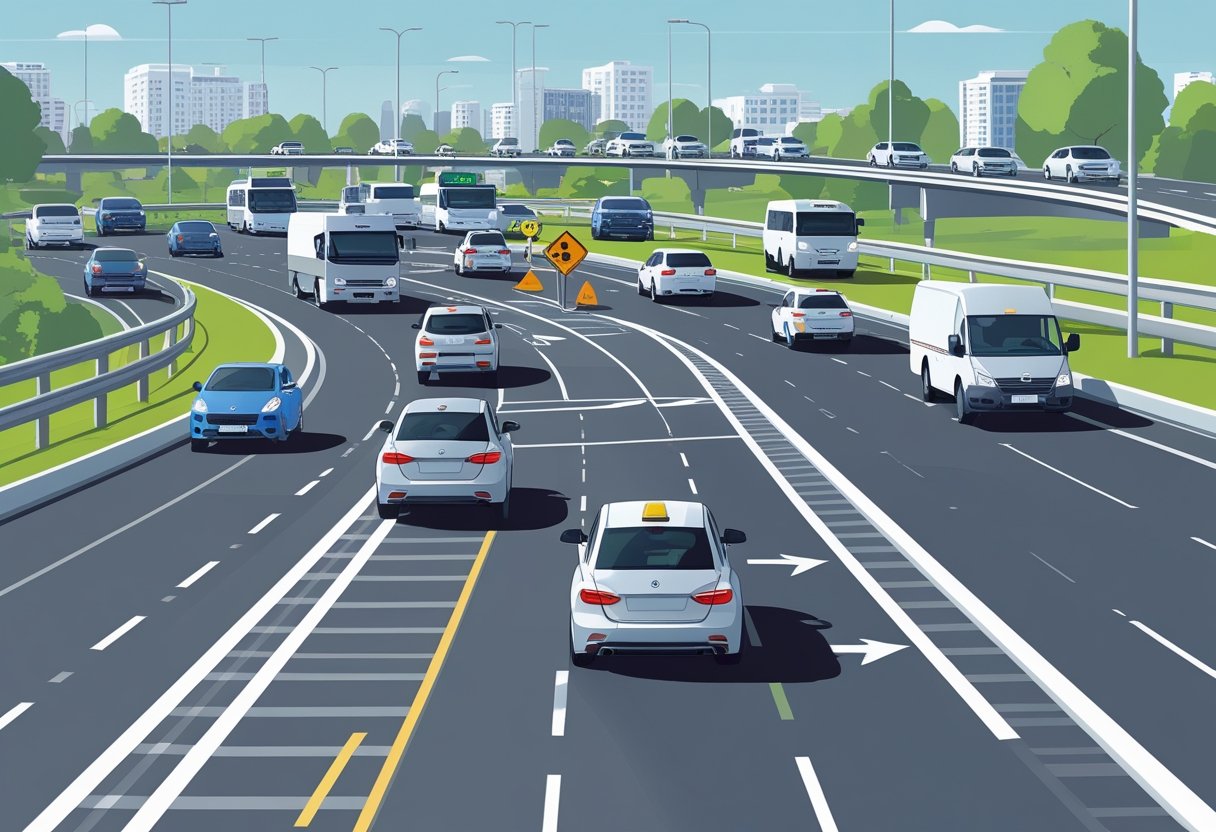
We’ve all felt that flutter of anxiety when approaching a busy ring road, watching cars dart between lanes whilst trying to reach our own exit. The difference between a smooth, confident lane change and a stressful near-miss often comes down to technique and timing. Learning to read traffic patterns, anticipate other drivers’ movements, and execute changes with precision transforms what feels like a daunting manoeuvre into a routine part of driving.
Throughout this guide, we’ll walk you through the essential skills needed to master lane changes on these demanding roads. From understanding the specific challenges ring roads present to building the confidence that comes with proper technique, you’ll discover how to navigate these busy thoroughfares safely and smoothly, turning every journey into an opportunity to strengthen your driving abilities.
Understanding the Challenges of Busy Ring Roads
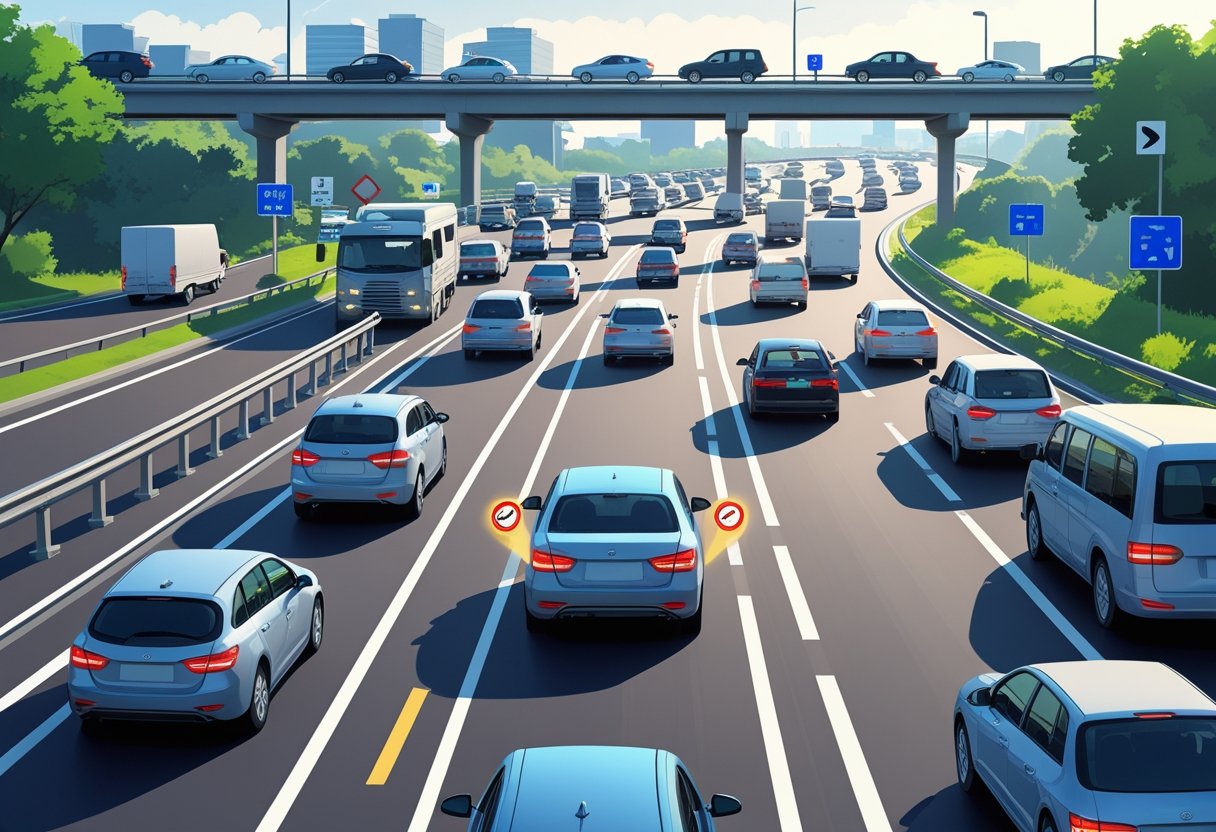
Ring roads present unique driving conditions with their constant traffic flow, multiple entry and exit points, and varying road configurations. These multi-lane roads demand heightened awareness and advanced planning skills from every driver who uses them.
Recognising High-Traffic Environments
Ring roads carry some of the heaviest traffic volumes we’ll encounter as drivers. Unlike quiet residential streets, these routes buzz with activity throughout most of the day.
Peak traffic patterns create the most challenging conditions. Morning rush hours typically run from 7:00 to 9:00 AM, whilst evening congestion builds between 4:30 and 6:30 PM. During these times, lane changing becomes significantly more complex.
We’ll notice several key indicators of high-traffic environments:
- Reduced gaps between vehicles
- Faster-moving traffic in adjacent lanes
- Frequent lane changes by other drivers
- Variable speed patterns due to congestion
Commercial vehicles add another layer of complexity. Lorries and delivery vans use ring roads heavily for bypassing city centres. These larger vehicles create blind spots and require longer stopping distances.
Traffic density varies dramatically throughout the day. What feels manageable at 2:00 PM can become overwhelming by 5:00 PM. Learning to read these patterns helps us time our journeys better and approach lane changes with appropriate caution.
Identifying Road Types and Features
Ring roads combine elements from both dual carriageways and motorways, creating unique challenges for lane changing manoeuvres.
Multi-lane configurations are standard on most ring roads. We’ll typically encounter two or three lanes in each direction, with some sections expanding to four lanes near major junctions.
Key road features include:
- Slip roads for joining and leaving traffic
- Overhead gantries displaying speed limits and lane information
- Variable message signs warning of congestion ahead
- CCTV cameras monitoring traffic flow
Lane markings on ring roads differ from residential streets. Solid white lines indicate no lane changing zones, particularly near junctions. Broken white lines show where lane changes are permitted, but timing remains crucial.
Speed limits often change along ring roads. Some sections maintain 70 mph limits like motorways, whilst others drop to 50 mph or 40 mph through built-up areas. These variations affect how we judge gaps and plan lane changes.
Junction designs vary considerably. Some feature traditional roundabouts, whilst others use grade-separated interchanges. Each type requires different lane positioning strategies.
Navigation and Route Familiarity
Getting lost on a busy ring road creates unnecessary stress and often leads to last-minute lane changes. Proper route planning makes our journeys smoother and safer.
Pre-journey preparation involves studying our route using maps or navigation apps. We should identify which junctions we’ll need and plan our lane positions accordingly.
Modern sat nav systems help enormously, but they’re not perfect. Sometimes they provide lane guidance too late, especially in heavy traffic. Building our own familiarity with frequently used routes reduces this dependency.
Landmark recognition proves invaluable on ring roads. Major shopping centres, business parks, and distinctive buildings serve as reference points. These help us anticipate upcoming junctions without relying solely on road signs.
Lane discipline becomes crucial when we know our route well. Staying in appropriate lanes reduces the need for sudden changes. The left lane suits shorter journeys with frequent exits, whilst middle lanes work better for longer stretches.
Practice runs during quieter periods help build confidence. Weekend mornings often provide ideal conditions for learning ring road layouts without peak-time pressure.
Essential Preparation for Lane Changes
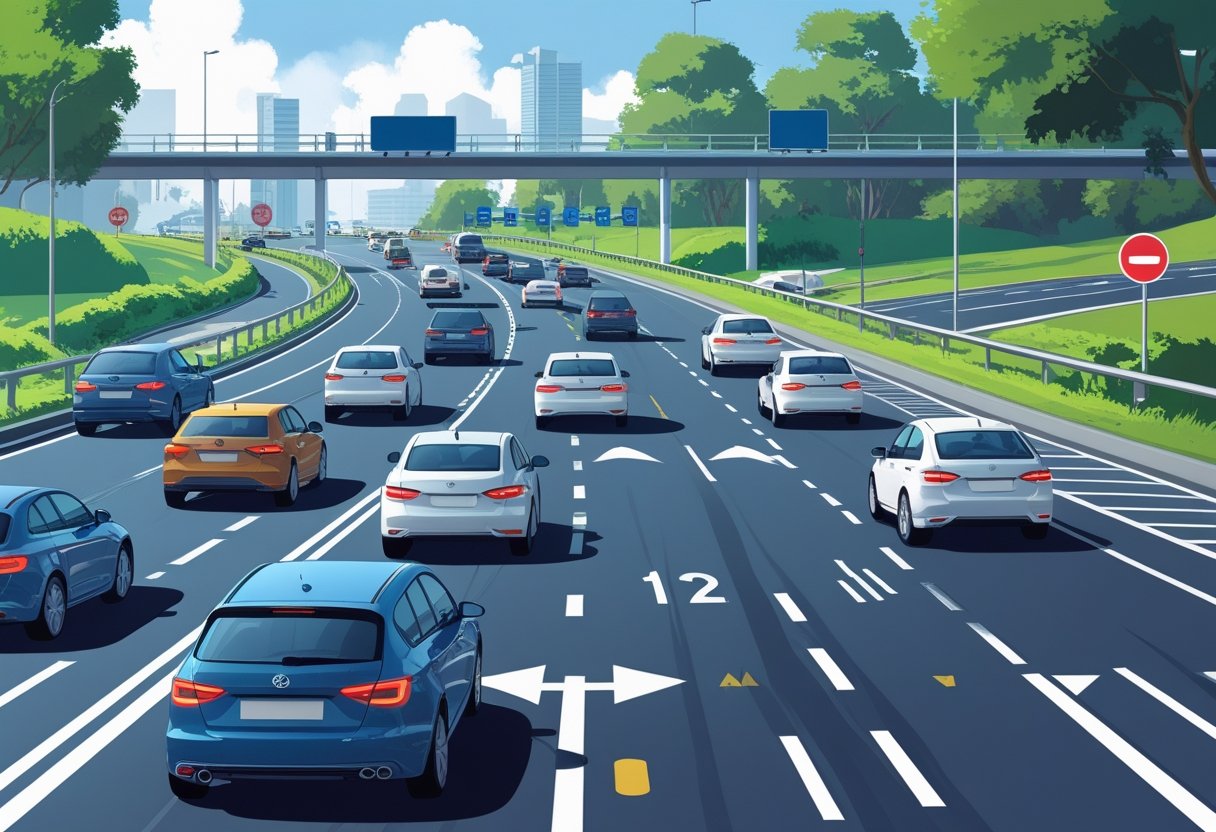
Proper preparation is your secret weapon for making smooth, confident lane changes on busy ring roads. We need to master three key skills: planning our moves well in advance, conducting thorough safety checks, and reading what other drivers might do next.
Planning Ahead and Reading the Road
The best lane changes start long before you actually move. We should scan the road ahead constantly, watching for signs that tell us which lane we need.
Look for these road markings and signs:
- Lane direction arrows painted on the tarmac
- Overhead gantry signs showing lane destinations
- Road signs positioned 500 metres before major junctions
- White lane markings that indicate upcoming lane splits
Start positioning yourself at least 200 metres before you need to change lanes. This gives you plenty of time to complete your checks safely.
Ring roads can be tricky because exits come up quickly. We recommend learning the route beforehand so you know which lanes serve your destination. This removes the pressure of last-minute decisions.
Watch the traffic flow around you. If vehicles in your target lane are moving slower, you’ll need to adjust your speed accordingly. Planning means thinking two or three moves ahead, just like playing chess.
Checking Mirrors and Blind Spots
Safe driving depends on knowing exactly what’s around your vehicle. We need to check mirrors systematically before every lane change.
Follow this checking sequence:
- Interior mirror – See vehicles directly behind
- Relevant wing mirror – Check the lane you want to enter
- Physical blind spot check – Turn your head to look over your shoulder
Your blind spots are larger than you think. They hide motorcycles, cyclists, and even small cars. A quick glance in your mirrors isn’t enough.
The blind spot check is absolutely critical. Turn your head and look through the side window. This physical movement lets you see vehicles that mirrors can’t show you.
Check twice if you’re unsure. It’s better to take an extra second than risk a collision. Other drivers will wait if they see you’re being careful and considerate.
Remember that your vehicle’s blind spots change depending on your seating position and mirror adjustment. Practice these checks until they become automatic.
Anticipating the Actions of Other Drivers
Reading other drivers’ behaviour helps us predict safe opportunities for lane changes. We can spot clues that tell us what someone might do next.
Watch for vehicles with their indicators on. They might be planning the same lane change you want to make. Look for cars positioning themselves differently in their lanes too.
Key warning signs to watch for:
- Drivers looking over their shoulders (preparing to change lanes)
- Vehicles drifting slightly towards lane markings
- Cars slowing down near junction signs
- Motorcycles filtering between lanes
Learning to read traffic patterns takes practice. Notice how drivers behave differently at various times of day. Rush hour traffic moves differently than quiet Sunday afternoon traffic.
Give other drivers space to make their moves. If someone’s clearly trying to change lanes, let them in. This courteous approach makes the roads safer for everyone.
Trust your instincts. If something feels wrong about a potential lane change, wait for a better opportunity. Confident driving comes from making decisions when conditions are right, not forcing situations that feel uncomfortable.
Step-by-Step Safe Lane Changing Techniques
Mastering safe lane changes requires following a proven three-step process and communicating clearly with other drivers. We’ll show you how to execute smooth, controlled movements that keep everyone safe on busy ring roads.
Applying the Mirrors-Signal-Manoeuvre Routine
The MSM routine forms the backbone of every safe lane change we make. This tried-and-tested method keeps us organised and reduces the risk of missing crucial safety checks.
Mirror checks come first. We start by checking our rearview mirror to see what’s happening behind us. Are vehicles approaching quickly? Is someone tailgating us?
Next, we check the relevant side mirror. If we’re moving left, we check the left mirror. Moving right means checking the right mirror.
The blind spot check is vital. Even with perfectly adjusted mirrors, vehicles can hide in our blind spots. We need a quick shoulder check to see areas our mirrors can’t cover.
Signal your intentions early. Once we’ve confirmed it’s safe to begin the manoeuvre, we signal at least three seconds before moving. This gives other drivers time to react and adjust their position.
Plan the manoeuvre carefully. We identify our target gap and ensure it’s large enough for our vehicle. The space should be at least three car lengths in normal traffic conditions.
Signalling Intentions Clearly
Clear signalling prevents confusion and helps other drivers anticipate our movements. Good communication through our indicators makes lane changes smoother for everyone.
Signal early enough to matter. We activate our indicators well before we need to move, giving other road users time to process our intentions. Three seconds minimum is our golden rule.
Choose the right moment. We avoid signalling during confusing situations, like when passing junction slip roads. Other drivers might think we’re exiting rather than changing lanes.
Keep signalling until we’ve moved. Our indicator should stay on throughout the entire lane change. We only cancel it once we’re fully established in the new lane.
Use hazard lights sparingly. On ring roads, hazard lights are for emergencies only. Using them during normal lane changes confuses other drivers about our actual intentions.
Watch for other signals. We pay attention to what other vehicles are indicating. If someone else is signalling into our target lane, we wait for them to complete their manoeuvre first.
Executing Smooth, Controlled Movements
The actual movement into the new lane requires steady hands and consistent speed. Jerky movements or sudden acceleration can catch other drivers off guard.
Keep steering inputs gentle. We turn the wheel smoothly and progressively, avoiding sharp movements that might destabilise our vehicle or alarm other road users.
Maintain consistent speed. Unless we need to match faster traffic, we keep our current speed during the lane change. Sudden acceleration or braking mid-manoeuvre creates dangerous situations.
Complete the move decisively. Once we start moving, we commit to the lane change. Hesitating halfway between lanes puts us in the most vulnerable position possible.
Check our new position. After completing the manoeuvre, we ensure we’re properly centred in our new lane with appropriate following distance from the vehicle ahead.
Cancel our signal promptly. We turn off our indicator as soon as we’re established in the new lane. Leaving it on confuses drivers behind us.
Navigating Specific Scenarios on Ring Roads
Ring roads present unique challenges that require careful planning and precise execution. Success comes from mastering overtaking techniques, positioning correctly for exits, and confidently handling complex intersections.
Overtaking Safely
Overtaking on busy ring roads demands patience and precise timing. We need to plan each move carefully, especially when traffic flows at varying speeds.
Check your mirrors thoroughly before making any move. Look for motorcycles and cyclists who might be approaching quickly in your blind spots.
Use the MSM routine: Mirrors, Signal, Manoeuvre. This tried-and-tested method keeps you safe every time.
When overtaking on dual carriageways, move into the right lane only when you can see a clear gap. Don’t rush this decision. Wait for the right moment rather than squeezing into tight spaces.
Key overtaking steps:
- Check all mirrors and blind spots
- Signal early and clearly
- Accelerate smoothly past the slower vehicle
- Return to the left lane promptly
- Cancel your indicator
Never attempt to overtake multiple vehicles at once. Take it one car at a time, returning to the left lane between each manoeuvre when safe to do so.
Remember that other drivers might also want to overtake. Stay alert to vehicles approaching from behind at higher speeds.
Approaching Junctions and Exits
Getting into the correct lane early prevents last-minute panic moves. We recommend positioning yourself at least 500 metres before your intended exit.
Read the road signs carefully as you approach junctions. Ring road signage often appears quickly, so stay focused and ready to react.
For left exits, stay in or move to the left lane well in advance. For right turns or exits, position yourself in the right lane early.
Junction positioning guide:
- Straight ahead: Usually the middle lane
- Left exit: Left lane (signal left)
- Right exit: Right lane (signal right)
- U-turns: Far right lane where permitted
If you miss your intended lane, don’t panic. Continue to the next safe exit point rather than making dangerous last-minute changes.
Watch for other vehicles changing lanes around junctions. Drivers often make sudden moves when they spot their exit, so give yourself extra space.
Keep your speed appropriate for the conditions. Busy junctions require slower, more controlled movements than clear stretches of road.
Handling Roundabouts and Multi-Lane Intersections
Roundabouts on ring roads can feel overwhelming, but breaking them down into simple steps makes them manageable. Choose your lane based on where you’re heading.
For exits in the first half (up to 180 degrees), use the left lane. This covers most standard exits and keeps traffic flowing smoothly.
For exits beyond 180 degrees, move into the right lane before entering the roundabout. This prevents you from cutting across other drivers.
Multi-lane roundabout rules:
- 1st exit: Left lane, signal left
- 2nd exit: Either lane, no signal on approach
- 3rd exit or beyond: Right lane, signal right
Signal left as you pass the exit before your intended one. This tells other drivers you’re leaving soon.
If you end up in the wrong lane, don’t force your way across. Complete the roundabout and try again. This is much safer than cutting across traffic.
Watch for vehicles changing lanes within the roundabout. Some drivers struggle with lane discipline, so stay alert and ready to adjust.
Give way to traffic already on the roundabout. Wait for a safe gap rather than pushing your way in.
Building Strong Lane Discipline
Strong lane discipline forms the foundation of safe driving on busy ring roads, requiring you to stay centred within your chosen lane whilst understanding the rules that govern lane usage. We’ll explore how proper positioning and knowledge of road markings work together to create predictable, safe driving habits.
Staying Centred and Predictable
Keeping your vehicle centred within lane markings isn’t just about following rules. It creates a buffer zone that protects you from other drivers and gives everyone more room to react safely.
Visual reference points help you maintain position. Look ahead to where the lane continues rather than staring at the lines directly beside your car. Many drivers find success using the bonnet or dashboard edges as guides.
Your steering should be smooth and deliberate. Small, gentle corrections work better than large movements that might signal uncertainty to other drivers. We recommend practising this gentle steering technique in quieter areas first.
Predictable behaviour means other drivers can anticipate your actions. When you maintain consistent lane position, you signal that you’re focused and in control. This builds trust with surrounding traffic.
Lane discipline becomes especially crucial during busy periods. Other drivers rely on your predictability to make their own safe decisions about lane changes and positioning.
Understanding Lane Markings and Road Rules
Different lane markings tell different stories about what’s allowed and what’s expected. Solid white lines mean you shouldn’t cross unless it’s an emergency. Broken lines indicate areas where lane changes are permitted.
Double white lines create absolute barriers. The Highway Code is clear about this: you must not cross them except to enter or leave premises. Understanding these markings prevents dangerous mistakes.
Ring roads often feature hatched areas marked with diagonal lines. These create safety buffers around junctions and exits. You can drive through areas with broken borders, but solid borders mean stay out completely.
Lane arrows painted on the road surface show you exactly where each lane leads. We always advise checking these early so you can position yourself correctly without last-minute lane changes.
Some lanes have time restrictions or vehicle type requirements shown on overhead signs. Learning to read these quickly helps you choose the right lane from the start, reducing the need for risky changes later.
Adapting to Advanced and Adverse Conditions
Ring roads become much trickier when conditions aren’t ideal, but we can still change lanes safely with the right techniques. Poor visibility requires us to slow down and rely more on our lights and indicators, whilst heavy traffic demands extra patience and precise timing.
Managing Lane Changes in Poor Visibility
When fog, rain, or darkness reduces our vision, we need to adjust our entire approach to lane changes. Poor visibility transforms multi-lane roads into challenging environments where standard techniques aren’t enough.
First, we’ll reduce our speed significantly below normal limits. This gives us more time to spot hazards and react safely. We can’t rush lane changes when we can barely see 30 metres ahead.
Our headlights become essential communication tools during these conditions. We’ll use dipped headlights in fog and heavy rain, never full beam, which reflects back and worsens visibility.
Indicators become even more critical when other drivers struggle to see us. We’ll signal much earlier than usual, giving everyone extra warning of our intentions. Flash the indicator twice if needed to catch attention.
We must increase our following distance dramatically. The usual two-second rule becomes four seconds minimum in poor conditions. This extra space helps us spot vehicles in adjacent lanes and gives others room to react.
Checking mirrors becomes more frequent but also more difficult. We’ll need to rely heavily on our ears too, listening for approaching vehicles we might not see clearly.
Window demisting deserves special attention. We can’t change lanes safely if our view is compromised by steamed-up glass.
Dealing with Heavy Traffic and Roadworks
Heavy traffic on busy ring roads requires a completely different mindset for safe lane changes. Patience becomes our most valuable asset here.
We’ll look for natural gaps that appear when traffic flows unevenly. These opportunities often come when lights change or when groups of vehicles create space between them. Forcing our way into tight gaps puts everyone at risk.
Roadworks add extra complexity with narrow lanes and changed traffic patterns. We must read all warning signs carefully and plan lane changes well in advance. Last-minute moves near roadworks cause accidents.
Construction zones often have solid white lines that prohibit lane changes. We’ll respect these completely, even if it means staying in a slower lane temporarily. Breaking these rules isn’t just dangerous, it’s illegal.
Speed matching becomes crucial in stop-start traffic. We’ll match the pace of our target lane before attempting to move across. This prevents the accordion effect that causes traffic jams.
Communication with other drivers matters more in heavy traffic. Eye contact through mirrors, clear signalling, and even a friendly wave can help coordinate smooth lane changes.
Temporary traffic lights at roadworks need special attention. We’ll never change lanes whilst approaching these lights, as other drivers focus on the signals rather than surrounding traffic.
Coping with Unexpected Situations
Ring roads throw curveballs at us regularly, from broken-down vehicles to emergency services racing past. Quick thinking and calm reactions keep everyone safe.
When emergency vehicles approach with sirens blazing, our priority shifts completely. We’ll move left where possible, but never change lanes suddenly or stop in traffic. Gradual, controlled movements help emergency crews pass safely.
Broken-down vehicles often appear with little warning. If we spot hazard lights ahead, we’ll signal early and check thoroughly before moving around the obstruction. Other drivers might be making the same decision.
Aggressive drivers sometimes make lane changing stressful. We won’t engage with road rage or compete for space. Instead, we’ll create extra room and let impatient drivers pass safely.
Debris on the road requires quick decisions about whether to change lanes or slow down. If we can’t change lanes immediately, we’ll reduce speed and wait for a safer opportunity rather than swerving dangerously.
Medical emergencies in our own vehicle mean finding the safest way to stop. We’ll signal left, move gradually towards the hard shoulder or nearest safe area, and never make sudden lane changes that could cause crashes.
Weather changes during our journey need immediate responses. If conditions deteriorate quickly, we’ll adjust our speed and increase following distances before attempting any lane changes.
Common Pitfalls and How to Overcome Them
Even experienced drivers can fall into bad habits when changing lanes on busy ring roads. Learning to spot these common mistakes early and developing strategies to avoid them will make your lane changes safer and more confident.
Avoiding Last-Minute Decisions
We’ve all been there: suddenly realising our exit is coming up fast whilst stuck in the wrong lane. This panic-inducing situation leads to dangerous, rushed manoeuvres that put everyone at risk.
Plan ahead by checking your route before you set off. Know which exits you’ll need and start positioning yourself in the correct lane well in advance. On busy ring roads, aim to be in your target lane at least half a mile before your junction.
Keep your eyes moving between the road ahead and your mirrors. This constant scanning helps you spot potential problems early. If you notice heavy traffic building up in your lane, start looking for safe opportunities to move over.
Signs are your friends on ring roads. They typically give you three warnings before each junction. Use the first sign as your cue to start planning your move, not as a last-minute reminder.
When you do miss your exit, don’t panic. Continue to the next junction rather than making a dangerous last-second dash across multiple lanes. Adding five minutes to your journey is far better than causing an accident.
Resisting the Urge to Weave
Ring road traffic can be frustrating, especially during peak hours. We often see drivers darting between lanes, chasing every small gap in search of faster progress.
Lane weaving is dangerous and rarely saves time. Studies show that aggressive lane changers typically arrive only 2-3 minutes earlier than steady drivers, whilst massively increasing their accident risk.
Choose your lane based on your destination, not just current speed. The fastest-moving lane right now might slow down dramatically in the next quarter-mile. Ring roads have a rhythm, and experienced drivers learn to read these patterns.
Stick to your chosen lane unless you have a genuine reason to move. Valid reasons include:
- Preparing for your upcoming exit
- Avoiding a broken-down vehicle
- Moving away from merging traffic
Each unnecessary lane change doubles your chances of having an incident. We recommend the “three-second rule” between lane changes: complete one manoeuvre, count three seconds, then consider your next move if needed.
Recovering Calmly from Mistakes
Even the most careful drivers make errors when changing lanes. How we respond to these mistakes determines whether they become learning opportunities or dangerous situations.
If you’ve moved into the wrong lane, don’t immediately try to correct it. Take a breath, assess the situation calmly, and look for the next safe opportunity to reposition yourself.
When someone doesn’t let you in, resist the temptation to force your way over or show frustration. Simply indicate off, wait for the next gap, and try again. Ring road traffic moves in waves, and another opportunity will come along shortly.
If you’ve cut someone up accidentally, a quick apologetic wave can defuse tension. Most drivers understand that mistakes happen, especially in complex traffic situations.
Learn from each experience without dwelling on it. Ask yourself what led to the error: Was it poor planning? Inadequate observation? Pressure from other drivers? This reflection helps prevent similar mistakes in future.
Remember that becoming skilled at safe lane changes takes time and practice. Every experienced driver has made their share of errors whilst learning these crucial skills.
Frequently Asked Questions
Mastering safe lane changes on busy ring roads requires understanding proper blind spot checks, accurate distance judgement, and clear communication with other drivers. These essential skills help you navigate peak traffic whilst maintaining confidence and safety.
How can I ensure my blind spots are fully checked before I venture into a different lane?
We recommend developing a systematic approach that becomes second nature. Start by checking your interior mirror, then your wing mirror on the side you’re moving towards.
The crucial step comes next: physically turn your head to look over your shoulder. This quick glance eliminates the blind spot that mirrors can’t cover.
Take particular care spotting motorcyclists and cyclists. They often move through traffic gaps quickly and can easily hide in your blind spots.
We suggest practising this mirror-shoulder check sequence during quieter driving periods first. Once it becomes automatic, you’ll execute it smoothly even in heavy ring road traffic.
What’s the best way to gauge the speed and distance of traffic in adjacent lanes when preparing for a lane shift?
Watch vehicles in your target lane for several seconds rather than taking a quick glance. This helps you judge their true speed and closing distance accurately.
Count the seconds between vehicles passing fixed points like lamp posts or road markings. A three-second gap typically provides adequate space for most lane changes.
Pay special attention to vehicles approaching from behind in the adjacent lane. Fast-moving traffic can close gaps much quicker than expected, particularly on ring roads where speeds vary dramatically.
We find it helpful to observe the relative speed difference. If cars in the next lane are moving noticeably faster or slower than you, adjust your timing accordingly.
Could you shed light on the essential indicators of a safe gap in traffic that’s ideal for a lane change?
Look for a gap that allows you to complete the manoeuvre without forcing anyone to brake or swerve. The space should accommodate your vehicle plus a comfortable buffer zone.
A safe gap typically measures at least three car lengths in normal traffic conditions. During peak hours or higher speeds, we recommend looking for even larger openings.
Consider the speed of approaching traffic behind your target position. Fast-approaching vehicles can turn a seemingly adequate gap into a dangerous situation within seconds.
We always advise against attempting lane changes into gaps that require other drivers to accommodate your move. Wait patiently for natural openings that don’t disrupt traffic flow.
What strategies can I use to stay calm and collected when switching lanes amidst bustling ring road traffic?
Plan your lane changes well in advance by reading road signs early. This eliminates the pressure of last-minute decisions that can trigger anxiety.
Take steady, controlled breaths whilst executing your mirror checks and observations. Rushing these crucial safety steps often leads to poor decisions.
Accept that sometimes the perfect gap won’t appear immediately. We encourage patience over forcing risky manoeuvres that could endanger everyone.
Practice positive self-talk during the process. Remind yourself that you have the skills and knowledge to make safe decisions, even in challenging traffic conditions.
Is there a foolproof method for signalling my intent to change lanes that communicates clearly to other drivers?
Signal early enough to give other drivers time to react, but not so early that your intentions become unclear. We recommend indicating approximately three to five seconds before moving.
Ensure your indicator is clearly visible and functioning properly before attempting any lane change. A failed indicator can leave other drivers guessing your intentions.
Cancel your signal if conditions change and you need to abort the manoeuvre. This prevents confusion and allows you to reassess the situation safely.
We suggest combining clear signalling with confident but gradual movement. Hesitant or sudden lane changes can catch other drivers off guard, even with proper indication.
Can you provide some pro tips on adjusting to the flow of traffic after slotting into a new lane, especially during peak hours?
Match the speed of your new lane smoothly rather than accelerating or decelerating abruptly. Sudden speed changes can create dangerous chain reactions in heavy traffic.
Maintain appropriate following distances once you’ve completed the lane change. Peak hour traffic often moves in tight formations, but safe spacing remains essential.
Keep your positioning centred within the lane markings. Drifting towards lane boundaries can make other drivers nervous and reduce available space for everyone.
We recommend staying alert to the traffic patterns in your new lane. Peak hour conditions often involve frequent speed variations that require constant attention and adjustment.