

Rules About Headlights and Fog Lights: A Learner Driver’s Guide
Getting your head around when to switch on headlights and fog lights isn’t just about following the rules. It’s about keeping everyone safe on the roads whilst building your confidence behind the wheel. Many learner drivers feel uncertain about these lighting decisions, especially when weather conditions change quickly or visibility drops unexpectedly.
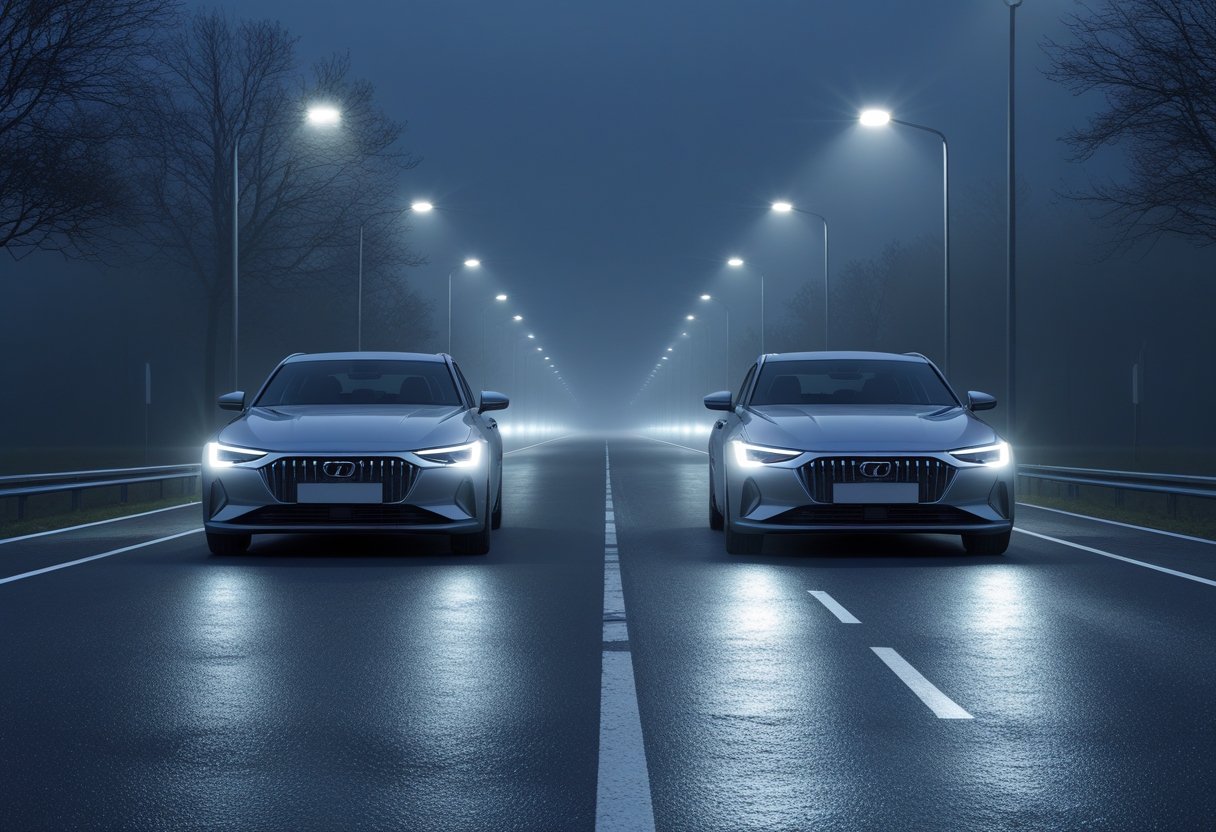
You must use headlights when visibility is seriously reduced (generally when you can’t see more than 100 metres ahead) and fog lights only in these same poor conditions, switching them off as soon as visibility improves. The Highway Code is crystal clear on this point, and understanding these requirements will help you make smart decisions in challenging driving situations.
We’ll walk you through everything from basic legal requirements to practical maintenance tips that’ll keep your lights working perfectly. Whether you’re dealing with thick fog on a country road, heavy rain during rush hour, or simply wondering about nighttime driving rules, you’ll discover how proper lighting use protects you, your passengers, and everyone else sharing the road with you.
Understanding Headlights and Fog Lights
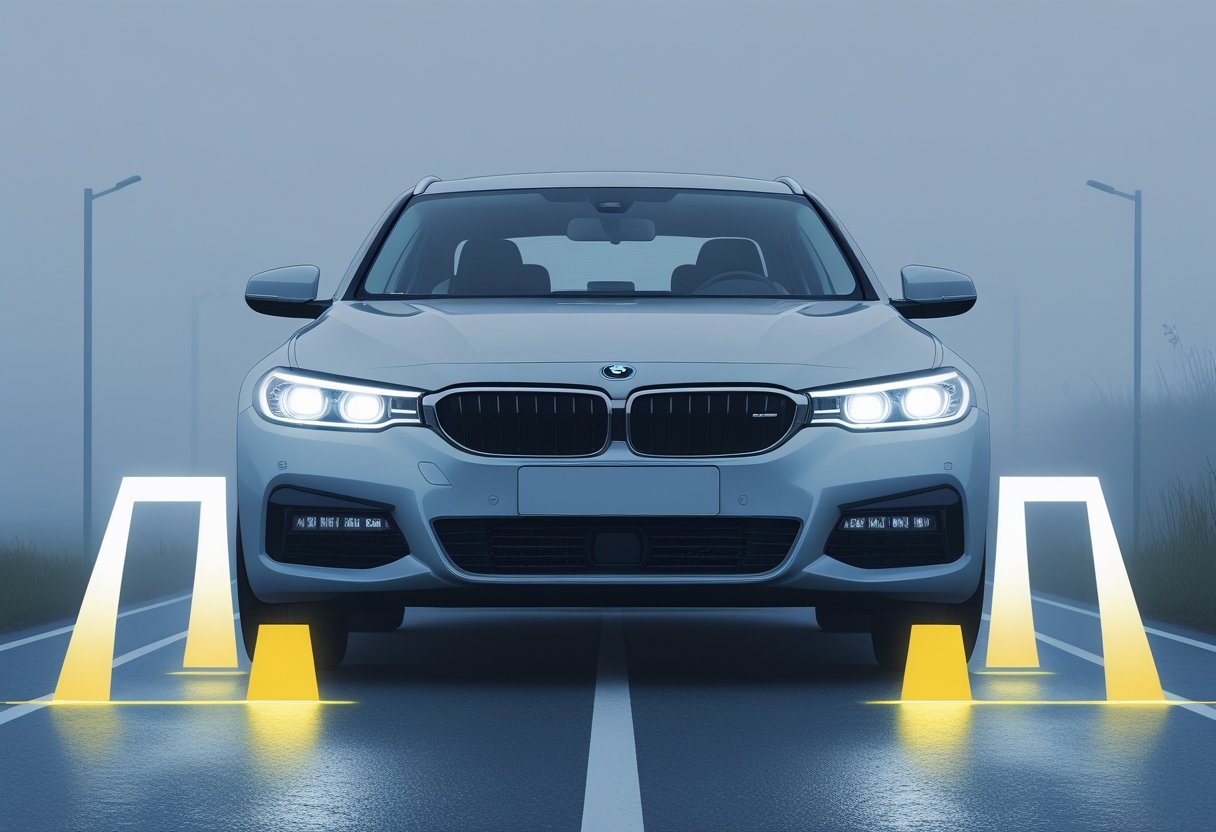
Your car’s lighting system includes different types of headlights for various driving conditions, plus specialised fog lights that work differently from standard headlights. We’ll help you understand where to find these lights on your car and how to recognise their dashboard symbols.
Types of Headlights and Their Uses
Dipped headlights are your main lights for everyday driving. You’ll use these when it gets dark, typically from half an hour after sunset until half an hour before sunrise. They’re also brilliant for overcast days when visibility drops.
We always recommend dipped headlights in built-up areas at night. They provide enough light to see clearly without blinding other drivers or pedestrians.
Full beam headlights give you maximum visibility on dark, empty roads. Switch to dipped beams when you spot oncoming traffic or when you’re following another car. The bright light can seriously dazzle other drivers.
Daytime running lights automatically come on when you start many modern cars. These help other road users see you during daylight hours, but they won’t help you see better in fog or low light.
Remember to check your brake lights weekly. Other drivers need to see when you’re slowing down, especially in poor weather conditions.
How Fog Lights Differ From Standard Headlights
Fog lights work completely differently from your regular headlights. When fog rolls in, moisture in the air reflects your standard headlight beams straight back at you, creating dangerous glare.
Front fog lights sit much lower on your car than headlights. They’re designed to shine downwards, cutting through fog to light up the road beneath the misty layer. The beam has a sharp cut-off at the top to prevent reflection.
Rear fog lights are bright red lights that help drivers behind you spot your car in thick fog. Most cars have just one rear fog light, usually on the driver’s side or in the centre.
You should only use fog lights when visibility drops below 100 metres. Switch them off as soon as conditions improve, or you could face a £50 fine for dazzling other drivers.
Don’t rely on automatic lights in foggy conditions. These sensors detect light levels, not visibility, so they might not activate when you need them most.
Locations and Symbols for Car Lights
Finding your light controls is easier once you know where to look. Most cars have light switches on the dashboard or steering column stalk. Look for the distinctive symbols we’ve outlined below.
Dashboard symbols help you identify each type of light:
- Dipped headlights: A lamp symbol with slanted lines pointing down and left
- Full beam: Similar symbol but with straight horizontal lines
- Front fog lights: Lamp with wavy line through slanted beams pointing left
- Rear fog lights: Lamp with wavy line and straight beams pointing right
Physical locations on your car are straightforward. Headlights sit at the front corners of your vehicle. Front fog lights mount lower down, often in the bumper area.
Your rear fog light appears as a single bright red light at the back. It’s usually brighter than your regular tail lights but similar to brake lights in intensity.
Check your vehicle handbook if you’re unsure about your specific car’s setup. Some modern vehicles use daytime running lights instead of separate front fog lights.
Legal Requirements and the Highway Code
Understanding the legal framework around vehicle lighting is crucial for safe driving. The Highway Code sets out mandatory rules that drivers must follow, with specific requirements for different times of day and weather conditions.
Key Rules for Headlights and Fog Lights
The most fundamental requirement we need to remember is that all sidelights and rear registration plate lights must be lit between sunset and sunrise. This isn’t optional – it’s the law.
For headlights, the rules are more nuanced. We must use headlights at night, but there’s an important exception. On roads with lit street lighting that have speed limits of 30 mph or less (20 mph in Wales), we don’t need to use headlights.
Fog lights have strict usage rules. We must not use front or rear fog lights unless visibility is seriously reduced. Using them unnecessarily can dazzle other drivers and obscure our brake lights.
When visibility improves, we must switch fog lights off immediately. Breaking this rule isn’t just inconsiderate – it’s illegal under the Road Vehicle Lighting Regulations.
The key principle is simple: lights should help us see and be seen, never blind or distract other road users.
Relevant Highway Code Regulations
Rule 113 forms the backbone of lighting requirements. It defines night as the period between half an hour after sunset and half an hour before sunrise.
Rule 114 focuses on what we must not do with our lights. We cannot use any lights in ways that would dazzle or cause discomfort to pedestrians, cyclists, horse riders, or other drivers.
The parking brake rule is often overlooked. When we’re stationary in traffic queues, we should apply the parking brake and lift our foot off the footbrake once following traffic stops. This prevents our brake lights from glaring into the eyes of drivers behind us.
Rule 115 covers additional guidance for built-up areas. We should use dipped headlights at night in towns and cities, even on well-lit roads.
Rule 116 addresses hazard warning lights, which have very specific legal uses and restrictions.
Daytime and Night-Time Lighting Laws
Daytime requirements are straightforward but important. We should use dipped headlights during dull weather conditions to ensure other road users can see us clearly.
Night-time laws are more complex. The definition of night begins 30 minutes after sunset and ends 30 minutes before sunrise. During these hours, sidelights and number plate lights become mandatory.
On unlit roads or roads with speed limits above 30 mph, headlights are required throughout the night. However, on well-lit streets with lower speed limits, sidelights alone are sufficient.
Visibility conditions override standard rules. When fog, heavy rain, or snow reduces visibility to less than 100 metres, we must use headlights regardless of the time of day.
The Road Vehicles Lighting Regulations 1989 back up these Highway Code rules with legal force. Violating these requirements can result in fines and penalty points on our licence.
When and How to Use Headlights
Using your headlights properly is one of the most important skills you’ll develop as a driver. We must use headlights when visibility drops below 100 metres, and understanding when to switch between dipped and full beams can make all the difference on busy roads like motorways and dual carriageways.
Using Headlights in Poor Visibility
When visibility becomes seriously reduced, we’re legally required to switch on our headlights. This typically means when we can’t see clearly for more than 100 metres ahead.
Poor visibility conditions include:
- Heavy rain or drizzle
- Thick fog or mist
- Snow or sleet
- Dust or smoke
- Dusk and dawn periods
We should turn our headlights on earlier rather than waiting until it’s too dark to see properly. This helps other drivers spot us from a distance and gives everyone more reaction time.
During winter months, checking our headlights becomes even more crucial. We need to ensure all bulbs work correctly and that our lights stay clean throughout the journey.
Remember that headlights aren’t just for nighttime driving. Any reduction in natural light should prompt us to switch them on immediately.
Differences Between Dipped and Full Beams
Dipped headlights are our go-to choice for most driving situations. They provide good visibility without dazzling other road users.
We use dipped headlights when:
- Driving in built-up areas
- Meeting oncoming traffic
- Following other vehicles closely
- Driving in fog (full beams reflect back)
Full beam headlights give us maximum visibility but must be used carefully. We switch to full beam on unlit roads when no other traffic is around.
We must dip our headlights when we see oncoming vehicles or catch up to slower traffic ahead. The key is being considerate to other drivers whilst maintaining our own safety.
In foggy conditions, we always stick with dipped headlights. Full beams create a wall of reflected light that actually makes visibility worse.
Safe Headlight Use on Motorways and Dual Carriageways
Motorways and dual carriageways present unique challenges because of higher speeds and heavier traffic. We need to be extra careful with our headlight choices here.
On these faster roads, we use dipped headlights during poor visibility conditions. The constant flow of traffic means full beams are rarely appropriate.
When visibility drops below 100 metres on motorways, we must:
- Switch on dipped headlights immediately
- Reduce our speed significantly
- Increase following distances
- Use windscreen wipers and demisters
We should never accelerate to escape from vehicles following too closely behind us. Instead, we check our mirrors before slowing down and use our brake lights to warn drivers behind.
At junctions with limited visibility, we stop in the correct position and listen for approaching traffic before emerging safely.
When and How to Use Fog Lights
Fog lights become essential when visibility drops below 100 metres, but knowing exactly when to switch them on and off can help keep you and other drivers safe. We’ll walk you through the key moments when fog lights are needed and show you the proper way to use both front and rear fog lights.
Deciding When Fog Lights Are Needed
The golden rule is simple: use fog lights when you can’t see more than 100 metres ahead. This applies to thick fog, heavy rain, or snow that seriously reduces your vision on the road.
Don’t wait until visibility becomes dangerous. If you spot fog warning signs on the motorway, get ready to switch your fog lights on even if the road looks clear right now.
Front fog lights work best in these conditions:
- Thick morning fog that limits visibility
- Heavy downpours that make it hard to see ahead
- Snow storms with poor visibility
- Dust clouds or smoke affecting the road
Your fog lights sit lower than regular headlights. This positioning helps them cut through fog more effectively than standard headlights can manage.
Never use fog lights in clear conditions. They’re much brighter than regular lights and will dazzle other drivers. You could face a fine of up to £50 if caught using them incorrectly.
Check your mirrors before entering foggy patches. Other drivers might not have their lights on yet, so stay extra alert.
Correct Procedure for Switching Fog Lights On and Off
Finding your fog light controls takes a bit of practice, but most cars follow similar patterns. Look for a button or switch with the fog light symbol – it usually shows wavy lines with a light beam.
Most modern cars have the fog light controls on the dashboard or indicator stalk. Some vehicles require you to turn on your dipped headlights first before the fog lights will work.
Here’s the typical switching process:
- Turn on your dipped headlights
- Locate the fog light button or switch
- Press or turn to activate front fog lights
- Press again or use a separate control for rear fog lights
Your dashboard will show warning lights when fog lights are active. The front fog light symbol typically points left, whilst the rear fog light symbol points right. These lights help remind you they’re still on.
Switch off fog lights as soon as visibility improves. Many drivers forget this crucial step, which can be dangerous and illegal. Make it a habit to check your fog lights regularly during your journey.
Rules for Rear Fog Lights
Rear fog lights are incredibly bright and designed to cut through thick fog so drivers behind can spot you. They’re much more powerful than regular tail lights, which makes them brilliant in poor visibility but potentially dangerous in normal conditions.
Use rear fog lights only when visibility drops below 100 metres. The Highway Code is crystal clear about this rule, and breaking it could result in penalty points on your licence.
You must switch off rear fog lights when visibility improves. They’re so bright they can mask your brake lights, making it harder for following drivers to tell when you’re slowing down.
Most cars have just one rear fog light, usually positioned on the driver’s side. This single light is perfectly adequate for alerting traffic behind you.
Watch out for drivers following too closely when you’re using rear fog lights. The bright red glow can create a false sense of security, making other drivers think they can follow closer than they should. Keep checking your mirrors and maintain steady speeds to help traffic flow safely.
Remember that rear fog lights can dazzle drivers behind you just as much as front fog lights can affect oncoming traffic. Being considerate with your fog light usage helps everyone stay safer on challenging driving days.
Headlights and Fog Lights in Adverse Weather
When visibility drops below 100 metres due to fog, rain, or snow, you must use your headlights according to UK law. Proper lighting techniques at junctions with limited visibility can prevent serious accidents, whilst understanding when to switch between different light settings keeps you and other road users safe.
Driving in Fog: Tips and Risks
Fog creates some of the most dangerous driving conditions you’ll encounter. Before entering fog, we recommend checking your mirrors and reducing speed immediately.
You must use headlights when you cannot see more than 100 metres ahead. This is a legal requirement, not just a suggestion. Front and rear fog lights can also help, but remember to switch them off when visibility improves.
Keep a safe distance from the vehicle ahead. Those red rear lights might make you feel secure, but they create false confidence about how close you really are.
Use your windscreen wipers and demisters actively. Even light moisture can blur your vision when combined with fog.
Watch out for other drivers who forget to use headlights. Their vehicles become nearly invisible until it’s too late.
Never speed up to escape a tailgating driver behind you. Instead, check your mirrors before slowing down gradually, using your brake lights to warn following traffic.
Essential Lighting for Wet Weather and Rainy Conditions
Wet weather doubles your stopping distance compared to dry roads. This happens because your tyres lose grip on the slippery surface.
Rain and spray from other vehicles makes it harder to see and be seen. Your headlights become crucial even during daytime downpours.
Keep well back from the vehicle in front. This extra space gives you more time to spot hazards and react safely.
If your steering feels unresponsive, water is likely preventing your tyres from gripping properly. Ease off the accelerator and slow down gradually rather than making sudden movements.
Be extra cautious around spilt diesel, which becomes incredibly slippery when mixed with rainwater. These patches often appear near petrol stations and lorry stops.
Take special care around pedestrians, cyclists, and motorcyclists. They’re harder to see in wet conditions and more vulnerable if something goes wrong.
Snowy Weather and Reduced Visibility
Check travel bulletins and variable message signs before setting off in snowy weather. These provide vital information about current road conditions and traffic conditions ahead.
You must clear all snow and ice from your windows before driving. This includes ensuring your lights are clean and number plates remain visible.
Remove any snow that might blow off your vehicle into the path of other road users. It’s not just courteous but legally required.
Keep well back from the vehicle ahead, as stopping distances can be ten times greater than on dry roads. Even treated roads remain treacherous.
Take care when overtaking snowploughs. They throw snow to either side, and you should only pass them in lanes that have been properly cleared.
Watch for sudden changes in road conditions over short distances. What feels safe one moment can become dangerous within a few hundred metres.
Staying Safe with Limited Visibility at Junctions
Approaching a junction with limited visibility requires extra patience and careful listening. Stop in the correct position and take time to assess the situation properly.
Listen actively for approaching traffic before making your move. Engine sounds, tyre noise, and other audio cues become your lifeline when sight fails.
When you’re confident it’s safe to emerge, do so positively and decisively. Don’t hesitate halfway across, as this puts you directly in the path of oncoming vehicles.
Use your lights strategically to communicate with other drivers. Your headlights and indicators become conversation tools in poor visibility.
Check variable message signs approaching major junctions. These often warn about specific hazards or suggest alternative routes during adverse weather conditions.
Remember that other drivers might be struggling with visibility too. Give everyone extra time and space to react safely.
Safety for All Road Users
When we use headlights and fog lights properly, we’re not just protecting ourselves but everyone sharing the road. Proper lighting helps pedestrians spot us from a distance, gives cyclists the visibility they need to stay safe, and ensures motorcyclists aren’t caught off guard by sudden lighting changes.
Protecting Pedestrians, Cyclists, and Horse Riders
We must take extra care around vulnerable road users, especially in poor weather conditions. When visibility drops below 100 metres, pedestrians often struggle to judge our speed and distance.
In wet weather, we should always keep our headlights on dipped beam. This helps pedestrians see us coming from much further away. Rain and spray make it incredibly difficult for people on foot to spot approaching vehicles.
Cyclists need our attention too. Their lights are much smaller than ours, so they rely on us to spot them first. When we’re driving in fog or heavy rain, cyclists become almost invisible without proper lighting.
Key actions we should take:
- Use dipped headlights during the day in poor visibility
- Never use fog lights unless visibility is seriously reduced
- Switch off fog lights immediately when conditions improve
- Keep our lights clean so they work at full brightness
Horse riders face particular challenges because horses can spook easily. Sudden bright lights or harsh fog light glare can startle them. We should dim our lights when approaching riders and maintain steady, predictable lighting.
Consideration for Motorcyclists
Motorcyclists are especially vulnerable to poor lighting decisions. Their smaller profile means they’re already harder to spot in normal conditions.
Fog lights can be particularly problematic around motorcyclists. The intense glare from rear fog lights can completely mask a motorcycle’s position behind us. When we leave fog lights on unnecessarily, we’re making it dangerous for motorcyclists to judge safe following distances.
Wind and weather affect motorcyclists more than us. When they’re battling crosswinds or turbulence from larger vehicles, the last thing they need is confusing or dazzling lights making visibility worse.
We should remember:
- Motorcyclists need consistent, clear lighting signals from us
- Our rear fog lights can completely obscure their view of our brake lights
- In windy conditions, motorcyclists need extra space and clear visual cues
When overtaking motorcyclists, we must keep our headlights dipped until we’re completely alongside them. Full beam can temporarily blind them at the worst possible moment.
The Role of Brake Lights for Warning
Our brake lights serve as the primary warning system for everyone behind us. They’re particularly crucial for motorcyclists who need maximum stopping distance in poor conditions.
In stationary traffic, we should apply our handbrake rather than holding the footbrake. Constant brake light glare tires other drivers’ eyes and makes it harder for them to react when we actually start moving again.
Fog creates unique challenges for brake light visibility. Other drivers might feel falsely secure following our rear lights, not realising how close they actually are. We need to brake earlier and more progressively in foggy conditions.
Best practices include:
- Checking mirrors before slowing down in fog
- Using brake lights to warn drivers behind us
- Avoiding sudden braking that could catch motorcyclists off guard
- Ensuring brake lights aren’t obscured by rear fog lights when unnecessary
Regular bulb checks keep our warning systems working properly. A blown brake light bulb could mean the difference between a safe stop and a collision, especially for motorcyclists who rely on every visual cue we can give them.
Visibility, Distance, and Safe Driving Practices
Poor visibility changes everything about how we drive, especially when it comes to judging distances and controlling our vehicle. We need to master safe following distances and gentle braking techniques to prevent dangerous situations.
Maintaining the Safe Distance
Following too closely becomes deadly when visibility drops. We must increase our usual safe distance significantly.
In foggy conditions, rear lights can trick us into thinking we’re at a safe distance. The red glow makes the car ahead seem closer than it actually is.
Key distances to remember:
- Normal conditions: 3-second rule minimum
- Wet roads: Double the distance
- Icy conditions: Up to 10 times the normal distance
- Heavy fog: Keep distance where you can stop within visible range
We should pick a fixed point ahead, like a lamppost. When the car in front passes it, start counting. If we reach that same point before counting to three, we’re too close.
Never rely on just seeing the car ahead. We need enough space to react if they brake suddenly or if something unexpected appears in our path.
Adapting Stopping Distances
Stopping distances change dramatically when weather conditions worsen. Understanding this helps us avoid rear-end collisions.
Wet weather doubles our stopping distance. If we normally stop in 50 metres, we’ll need 100 metres on wet roads. The tyres simply can’t grip the surface as well.
Icy roads are the most dangerous. Our stopping distance can increase by ten times. That means a normal 50-metre stop could become 500 metres on ice.
We must factor in our reaction time too. From spotting danger to actually pressing the brake pedal takes time. Poor visibility makes this reaction time even longer.
Test your grip regularly in snowy conditions. Choose a safe spot and brake gently to feel how your car responds. This gives you a real sense of the road conditions.
How to Brake Safely in Poor Conditions
Harsh braking causes loss of control in poor weather. We need smooth, progressive braking techniques instead.
Start braking earlier than normal. Apply gentle pressure at first, then gradually increase as needed. This prevents the wheels from locking up.
Brake in straight lines whenever possible. Avoid braking while turning corners, as this dramatically increases skid risk.
On icy roads, use your gears to help slow down. Select a higher gear and let engine braking do some of the work before touching the brake pedal.
Progressive braking technique:
- Ease off the accelerator first
- Apply light brake pressure
- Gradually increase pressure if needed
- Never slam on the brakes
If you feel the car starting to skid, ease off the brakes immediately. Steering control is more important than stopping quickly.
Avoiding Loss of Control
Loss of control happens quickly in poor conditions. Recognising the warning signs helps us react properly.
Watch for these danger signals:
- Steering feels unresponsive or light
- Car pulls to one side unexpectedly
- Tyres make less noise than usual
- Vehicle feels like it’s floating
When we sense loss of control starting, avoid sudden movements. Don’t jerk the steering wheel or stamp on the brakes. These reactions make things worse.
Gentle corrections work best. Ease off the accelerator gradually. Make small steering adjustments rather than dramatic ones.
If the back of the car starts sliding, steer gently in the direction you want to go. Don’t overcorrect, as this creates a dangerous pendulum effect.
Remember that modern cars have safety systems like ABS and traction control. Trust these systems to work, but don’t rely on them completely. Your smooth driving technique remains the best defence against losing control.
Car and Light Maintenance Essentials
Proper vehicle maintenance keeps your lights working when you need them most, whilst regular cleaning ensures other drivers can see you clearly on the road. Simple checks and routine care prevent dangerous situations and costly MOT failures.
Checking and Cleaning Lights
We recommend checking all your lights weekly, especially during winter months when you’ll use them more frequently. Walk around your car and test each light system systematically.
Essential weekly checks:
- Headlights (dipped and full beam)
- Rear lights and brake lights
- Indicators and hazard lights
- Fog lights (front and rear)
- Number plate lights
Ask someone to help by pressing the brake pedal whilst you check the rear lights work properly. This simple step catches problems before they become dangerous.
Clean your lights monthly with warm soapy water and a soft cloth. Dirt and grime reduce light output by up to 40%, making you less visible to other drivers.
Pay special attention to headlight lenses, which can become cloudy over time. Use a dedicated headlight restoration kit if the plastic looks yellowed or foggy.
Regular Vehicle and Light Maintenance
Replace blown bulbs immediately rather than waiting until your next service. Most car maintenance tasks become easier when you tackle them promptly.
Bulb replacement schedule:
- Halogen bulbs: Every 2-3 years
- LED bulbs: 10-15 years typically
- Check spare bulbs in your toolkit
Modern vehicles often require specific bulb types, so consult your owner’s manual before purchasing replacements. Using incorrect bulbs can cause electrical problems or MOT failures.
Professional servicing should include light alignment checks. Poorly aligned headlights dazzle oncoming drivers and reduce your visibility, creating hazardous conditions.
Keep electrical connections clean and dry. Moisture in light fittings causes corrosion, leading to intermittent faults that are frustrating and potentially dangerous.
We suggest booking an annual electrical system check with your mechanic. This preventive car maintenance step identifies wiring issues before they leave you stranded in the dark.
Frequently Asked Questions
These common questions cover everything from basic timing rules to legal requirements. You’ll learn when to switch on different lights, how to use fog lights properly, and what to do when equipment fails.
What times should I switch on my headlights for optimal visibility and safety?
We need to use headlights between sunset and sunrise on all roads. However, there’s an important exception that catches many learners off guard.
On roads with street lighting (usually 30 mph zones), we can use sidelights instead of headlights during these hours. The key word here is “can” rather than “must.”
For maximum safety, we recommend using dipped headlights even on lit streets. They make us far more visible to other road users, pedestrians, and cyclists.
Weather conditions change the rules completely. When visibility drops below 100 metres due to rain, snow, or fog, headlights become mandatory regardless of the time of day.
Can you guide me through the process of when and how to use fog lights correctly?
Fog lights should only come on when visibility seriously reduces to less than 100 metres. This typically happens during thick fog, heavy snow, or severe downpours.
We must switch them off as soon as conditions improve. Many drivers forget this crucial step, which creates dangerous glare for other road users.
Front fog lights work alongside dipped headlights, never instead of them. They’re designed with a wide, flat beam that cuts through fog close to the ground.
Rear fog lights are incredibly bright and can dazzle drivers behind us. We should use them sparingly and turn them off immediately when visibility clears.
Never use fog lights in light rain or mist. They create more problems than they solve in these conditions.
What are the legal requirements for headlight use when driving in reduced visibility conditions?
The law states we MUST use headlights when visibility seriously reduces, generally when we cannot see for more than 100 metres ahead.
This applies during daylight hours as well as at night. Weather doesn’t follow a schedule, so neither should our lighting decisions.
Failing to use proper lighting in reduced visibility can result in penalty points and fines. More importantly, it puts lives at risk.
We’re also legally required to ensure our lights are clean and working properly. Dirty or broken lights can lead to prosecution under vehicle lighting regulations.
Number plates must remain clearly visible and legible at all times. Snow, mud, or dirt covering them is a legal offence.
Could you shed some light on the differences between using full beams and dipped lights?
Dipped headlights are our go-to option for most night driving. They illuminate the road ahead without blinding oncoming traffic.
Full beams provide much greater range and brightness, perfect for unlit country roads with no other traffic around. We can see hazards, animals, and road signs much earlier.
The golden rule is simple: dip when we see another vehicle approaching or when following someone else. This includes motorcycles and cyclists.
We should switch back to full beams once we’ve passed oncoming traffic or when we’re no longer following another vehicle closely.
Some modern cars have automatic high beam systems, but we still need to understand when to override them manually.
What should I do if my headlights aren’t working properly – are there quick checks I can perform?
First, check the obvious things. Are the switches in the correct position? Sometimes we accidentally knock them without realising.
Try switching between dipped and full beam. If one works but not the other, it’s likely a bulb rather than an electrical fault.
Look for any visible damage to the headlight units. Cracks or moisture inside the housing can cause problems.
If both headlights fail completely, use hazard lights to stay visible and get off the road safely. Don’t attempt to continue your journey.
Check your fuses if you’re comfortable doing so. Many cars have spare fuses in the fuse box for emergencies.
For anything beyond basic checks, we recommend visiting a qualified mechanic promptly.
How do I ensure my light use complies with the latest road safety regulations?
Stay updated with current Highway Code requirements, as rules can change. The basic principles remain consistent, but details sometimes get refined.
Regular maintenance keeps us compliant and safe. Clean lights work more effectively and show we’re taking our responsibilities seriously.
When in doubt, err on the side of caution. Using lights when we’re not sure about conditions is better than risking safety.
Consider taking a refresher lesson or theory test practice if you’re uncertain about current requirements. Regulations exist for everyone’s protection.
Keep spare bulbs in your car if possible. Some European countries require this, and it’s good practice regardless of legal requirements.
Remember that being legal and being safe aren’t always the same thing. We should always prioritise visibility and consideration for other road users.