

Rules on Using Mobile Phones While Learning to Drive: Essential UK Guide
Learning to drive brings enough challenges without worrying about whether you’re breaking the law with your mobile phone. Many learner drivers feel confused about what they can and cannot do with their phones whilst behind the wheel, especially when their instructor needs to communicate or when they’re practising with family members.
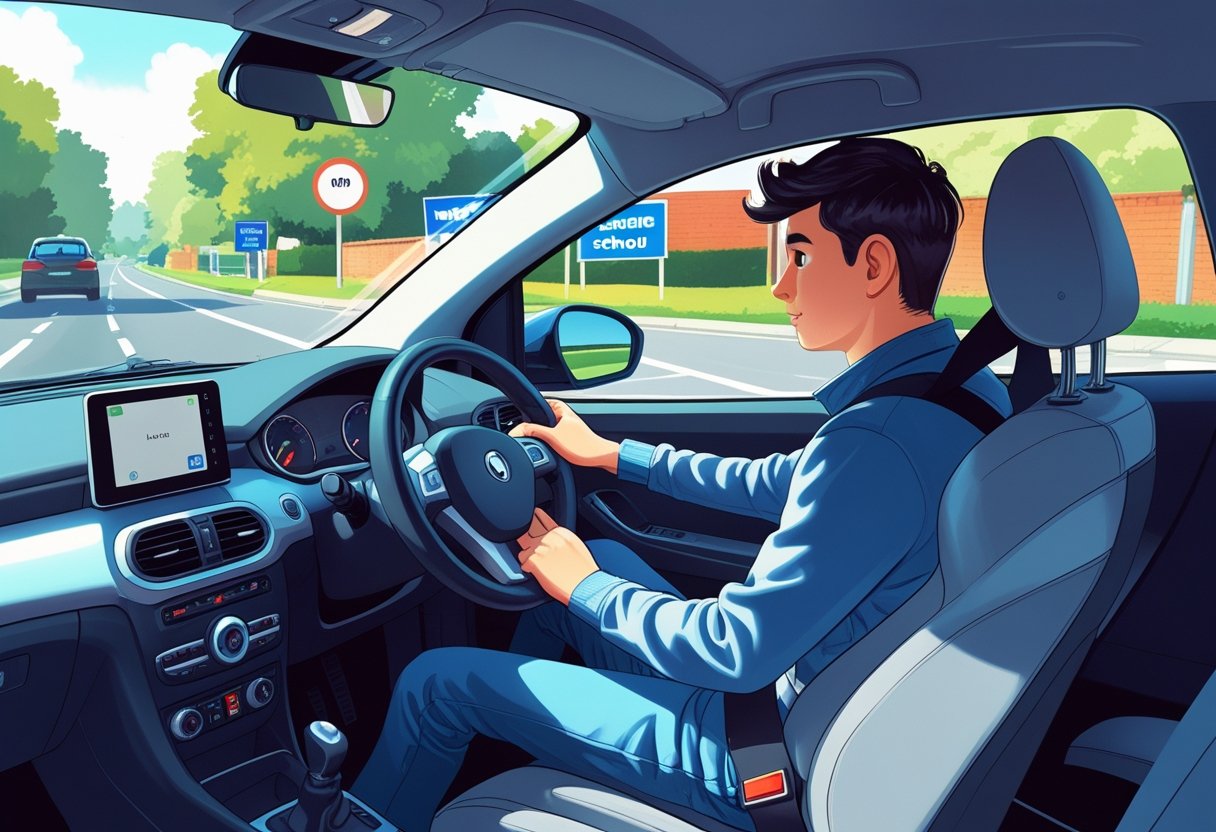
The same mobile phone laws that apply to experienced drivers apply to learner drivers, meaning you cannot hold or use any device that sends or receives data whilst driving, even when you’re stopped in traffic or at traffic lights. This rule applies whether you’re with an approved driving instructor or practising with a qualified supervisor.
We’ll walk you through exactly what the law says, which scenarios you need to watch out for, and how to stay on the right side of the rules whilst you’re learning. Understanding these regulations now will help you develop safe driving habits that’ll serve you well throughout your driving career, and you’ll avoid the hefty penalties that come with breaking these important safety laws.
Understanding the Law on Mobile Phone Use While Learning to Drive
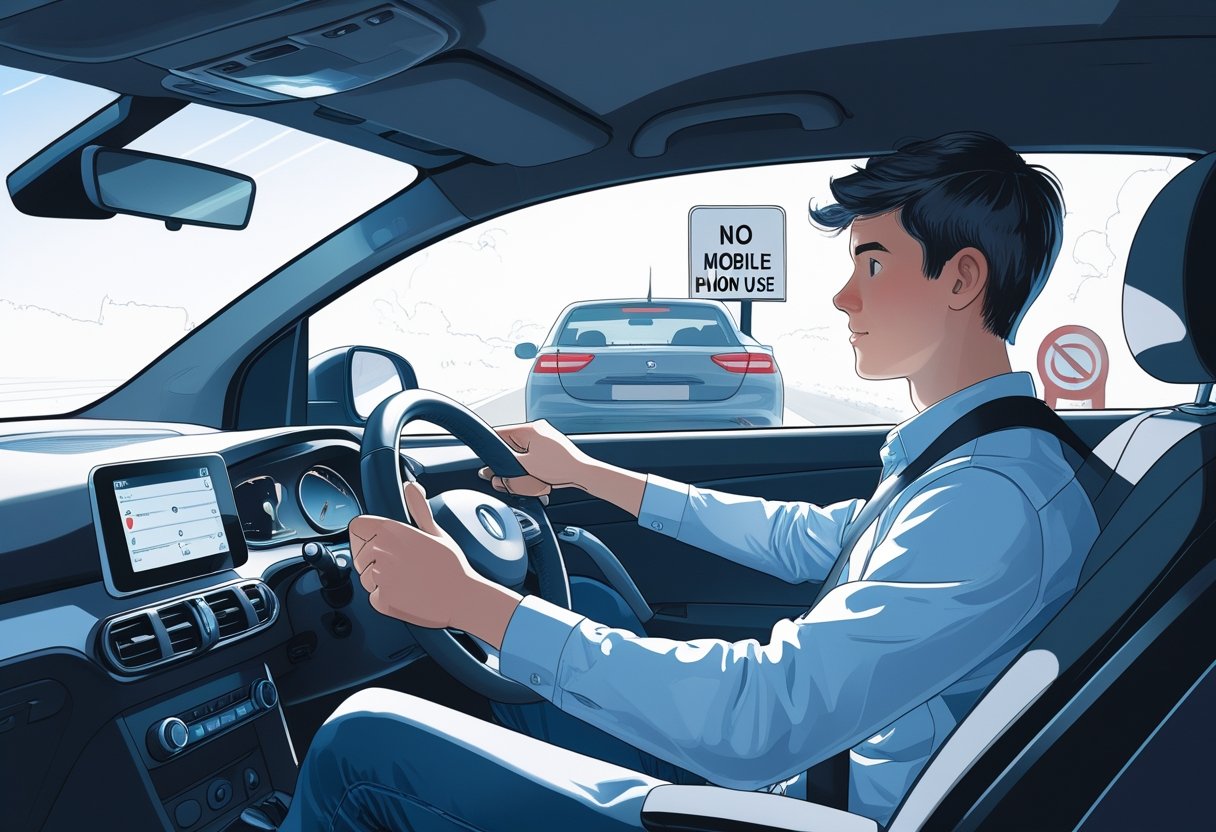
The law treats learner drivers and their supervisors equally when it comes to mobile phone restrictions. Both handheld mobile phones and similar devices are strictly prohibited whilst driving, with recent updates making the rules even clearer about what counts as illegal use.
Definition of a Handheld Mobile Phone and Hand-Held Device
We need to understand exactly what the law considers a handheld mobile phone or hand-held device. The legal definition covers smartphones, tablets, sat navs, and any device that can send or receive data.
The key factor is holding the device. It doesn’t matter if your phone is switched off, in flight mode, or completely offline. If you’re physically holding it whilst behind the wheel, you’re breaking the law.
This includes devices like:
- Mobile phones and smartphones
- Tablets and iPads
- Portable sat nav systems
- Gaming devices that connect to the internet
- Any gadget capable of sending messages or data
What makes it “hand-held”? Simply put, if you need to pick it up and hold it to use it, then it falls under these restrictions. Built-in car systems and properly mounted devices don’t count as handheld.
When the Law Applies, Including Supervisors
The mobile phone laws apply in more situations than many learner drivers realise. We’re talking about complete restrictions whenever you’re in control of a moving vehicle.
For learner drivers, the rules apply during:
- All driving lessons with an instructor
- Practice sessions with family or friends
- Any time you’re behind the wheel on public roads
Supervisors face identical restrictions. If you’re supervising a learner driver, you cannot hold and use a mobile phone either. This catches many parents and family members off guard.
The law still applies when you’re:
- Stopped at traffic lights
- Stuck in a traffic queue
- Parked but with the engine running
The only exceptions are genuine emergencies (calling 999), making contactless payments whilst stationary, or when you’re safely parked with the engine off.
Recent Legal Changes and Key Updates
March 2022 brought significant changes that affect every learner driver today. The updates closed loopholes and made the law much stricter about any handheld device use.
Previously, you had to be actively communicating (calling or texting) to break the law. Now, simply holding your phone whilst driving is illegal, regardless of what you’re doing with it.
New prohibited activities include:
- Taking photos or filming videos
- Playing games or using apps
- Scrolling through music playlists
- Checking social media feeds
- Using the calculator or other offline functions
Penalties have serious consequences. You’ll receive 6 penalty points and a £200 fine for any handheld use. If you’ve passed your test within the last two years, this means an automatic licence ban.
These changes mean we must be extra cautious about even touching our phones whilst learning to drive.
What Counts as Using a Mobile Phone Behind the Wheel?
The law defines mobile phone use quite broadly, covering any interaction with handheld devices while driving. We’ll break down exactly what actions cross the legal line and when you might face penalties.
Actions Considered Illegal Usage
Using a handheld mobile phone behind the wheel includes far more activities than many learner drivers realise. The law covers any physical interaction with your device whilst driving.
You cannot hold your phone to:
- Make or answer calls
- Send texts or emails
- Take photos or record videos
- Browse social media or websites
- Play games or use apps
- Check the time or notifications
Even briefly picking up your handheld device counts as illegal use. This applies whether you’re moving or stuck in traffic.
The rules extend beyond phones too. Hand-held devices like tablets, cameras, or music players fall under the same restrictions. If it can send or receive data and you’re holding it, you’re breaking the law.
Simply touching your phone screen whilst it’s mounted doesn’t automatically make it illegal. However, if police believe you’ve lost proper control of your vehicle, you could still face charges.
Interactive Versus Non-Interactive Use
Before March 2022, the law only banned “interactive communication” like calls and texts. This created a dangerous loophole that many drivers exploited.
The updated legislation closed this gap completely. Now it’s illegal to use your handheld mobile phone for any purpose whilst driving. This includes activities that don’t involve communicating with others.
Previously legal actions now banned:
- Scrolling through music playlists
- Using streaming services like Spotify
- Taking selfies or filming TikTok videos
- Playing mobile games
- Using the calculator or torch
The distinction between interactive and non-interactive use no longer matters. If you’re holding the device and using it, you’re breaking the law regardless of what you’re doing.
This change makes the rules much clearer for learner drivers. There’s no grey area to navigate or confusion about what’s allowed.
Operating Devices Even When Stationary
Many learners mistakenly believe they can use their phones when stopped at traffic lights or in heavy traffic. Unfortunately, this isn’t true.
The law still applies when you’re:
- Waiting at red lights
- Queuing in traffic jams
- Supervising another learner driver
- Using start-stop engine technology
Your engine being switched off temporarily doesn’t change anything. If you’re still in the driver’s seat and responsible for the vehicle, the restrictions remain in place.
The only time you can legally handle your phone is when you’re safely parked with the engine completely switched off. Being stationary in traffic doesn’t count as parked under the law.
Limited exceptions exist for:
- Making contactless payments at drive-throughs (vehicle must be stationary)
- Emergency 999 or 112 calls (only if unsafe to stop)
- Using remote parking technology
Remember, even hands-free use can lead to penalties if police believe you’ve become distracted and lost control of your vehicle.
Permitted and Prohibited Uses: Key Scenarios for Learner Drivers
As a learner driver, understanding when you can and cannot use mobile devices is crucial for staying safe and legal. The same strict rules that apply to full licence holders also apply to you, with penalties that can end your driving journey before it properly begins.
Using Devices as Sat Nav or for Navigation
We often get asked whether learner drivers can use their phones for navigation during lessons or practice sessions. The answer is yes, but only when the device is properly mounted and used hands-free.
Your handheld mobile phone becomes completely off-limits the moment you pick it up whilst driving. This includes using it as a sat nav in your hand, even if you’re just glancing at directions.
Legal ways to use navigation:
- Mount your phone in a dashboard holder
- Use a windscreen mount (ensuring it doesn’t block your view)
- Set up voice commands before starting your journey
- Use a built-in sat nav system
The key rule is simple: once you’re behind the wheel, you cannot hold any device. This applies whether you’re moving, stopped at traffic lights, or queuing in traffic.
We recommend setting your destination and route before you begin driving. Let your instructor or supervising driver handle any mid-journey changes to the navigation system.
Hands-Free Devices and Legal Positioning
Hands-free technology offers learner drivers a safer way to stay connected whilst maintaining focus on the road. However, there are specific rules about how these devices must be positioned and used.
Your hand-held device transforms into a legal driving aid when properly mounted. The device must remain completely hands-free throughout your entire journey.
Approved hands-free setups include:
- Bluetooth headsets for calls
- Voice command systems
- Dashboard mounts or mats
- Windscreen holders
The positioning matters enormously. Your device cannot obstruct your view of the road ahead or interfere with your vehicle controls. We suggest testing different positions during stationary practice sessions.
Remember, even with hands-free setup, you must maintain full control of your vehicle. If using the device distracts you from driving safely, you could still face prosecution for not being in proper control.
Emergency Calls and Legal Exceptions
Whilst the mobile phone laws are strict, there are specific situations where learner drivers can legally use a handheld device. These exceptions are limited but important to understand.
You may use a handheld mobile phone when:
- Calling 999 or 112 in genuine emergencies where stopping safely isn’t possible
- You’re safely parked with the engine off
- Making contactless payments whilst stationary (like at drive-throughs)
The emergency exception requires careful judgement. You must genuinely believe that stopping would be unsafe or impractical. Simply being in heavy traffic doesn’t qualify as an emergency situation.
When you’re safely parked, ensure your handbrake is on and engine switched off before using your device. Being stationary in traffic or at traffic lights doesn’t count as being parked.
We strongly encourage planning ahead to avoid needing your phone during driving. Pull over safely if you need to make non-emergency calls or send messages.
Penalties and Consequences for Illegal Use
Breaking mobile phone laws whilst learning to drive carries serious penalties that can derail your driving journey before it properly begins. The consequences include immediate fines, penalty points, and potential licence revocation that affects new drivers more severely than experienced ones.
Fines, Points, and Licence Revocation
Getting caught with a handheld mobile phone behind the wheel hits you with 6 penalty points and a £200 fine. This applies whether you’re texting, scrolling through music, or simply holding the device.
For learner drivers, these penalties create unique challenges. You’ll carry those 6 points forward when you pass your test, putting you dangerously close to losing your licence.
New drivers face the harshest consequences. If you pass your test and already have penalty points, then get caught using your phone within your first two years, you’ll lose your licence entirely.
The points system doesn’t distinguish between experienced drivers and newcomers. Six points represent half the total allowed before losing your licence, making every future driving decision critical.
Additional penalties can stack up quickly:
- 3 penalty points for not having proper vehicle control
- Court fines reaching £1,000 (or £2,500 for commercial vehicles)
- Driving ban at the court’s discretion
What Happens if You’re Caught Twice?
Multiple offences create a domino effect that can end your driving privileges permanently. We’ve seen learners accumulate points during lessons, then face devastating consequences after passing their test.
The maths works against you harshly. Two mobile phone offences equal 12 penalty points, triggering an automatic driving ban under totting-up procedures.
For new drivers, the situation becomes even more precarious. Your first offence during the learning phase carries forward, and any subsequent violation within two years of passing means immediate licence revocation.
Repeat offenders often face:
- Extended driving bans lasting 6 months or longer
- Requirement to retake both theory and practical tests
- Significantly higher insurance premiums
- Potential criminal charges for dangerous driving
Courts take a dim view of persistent mobile phone use, often imposing harsher sentences than the standard penalties suggest.
Court Outcomes and Potential Driving Bans
Serious cases involving hand-held device use can escalate beyond simple fixed penalties. Police may choose to prosecute through the courts, especially if your phone use contributed to an accident or dangerous driving incident.
Court proceedings open the door to severe punishments. Magistrates can impose driving bans regardless of your penalty point total, particularly when public safety concerns arise.
We’ve witnessed cases where learner drivers faced complete driving bans before even taking their test. Courts consider the educational aspect important, viewing repeated violations during instruction as particularly concerning.
Potential court outcomes include:
- Discretionary driving bans lasting months or years
- Community service orders
- Mandatory driver awareness courses
- Criminal records for serious offences
The financial impact extends beyond fines. Legal representation, increased insurance costs, and retaking tests can cost thousands of pounds, making that quick text message extraordinarily expensive.
Staying Safe: Best Practices for Learner Drivers
Learning to drive safely means mastering more than just the steering wheel and pedals. It’s about creating habits that keep you focused and following the rules that protect everyone on the road, especially when it comes to mobile phones and other devices.
Practical Tips to Avoid Distractions
Put your phone completely out of reach before you start the engine. We recommend placing it in the glove box or back seat where you can’t grab it during a moment of weakness. Even having a handheld mobile phone within arm’s reach can be tempting when you hear notifications.
Switch your phone to “Do Not Disturb” mode or aeroplane mode before each lesson. This stops calls, texts, and app notifications from breaking your concentration. Your friends can wait, but your safety cannot.
Create a pre-drive routine that becomes second nature. Check mirrors, adjust your seat, secure loose items, and ensure all devices are stored away. This habit will serve you well throughout your driving career.
Tell passengers they’re your extra eyes and ears, not your phone handlers. If you need to make an emergency call, pull over safely and stop completely. Never ask passengers to hold devices for you whilst you’re driving, as this still counts as using a hand-held device.
Setting Up Devices Legally Before Driving
Install a proper mounting system if you need sat nav during lessons. Dashboard holders, windscreen mounts, or built-in systems are perfectly legal as long as they don’t block your view of the road ahead.
Programme your destination before you move the car even an inch. Once you’re driving, touching the screen becomes illegal, even when stopped at traffic lights or in queues.
Set up hands-free calling through Bluetooth if your car supports it. Voice commands and steering wheel controls let you stay connected for emergencies without breaking the law. Remember, you must never hold the device whilst using these features.
Test your setup during stationary practice sessions so you know exactly how everything works. Fumbling with unfamiliar technology whilst learning to drive adds unnecessary stress and danger.
Advice for Learners and Supervising Drivers
Both learners and supervisors face the same penalties for mobile phone offences. If you’re supervising and use a handheld mobile phone, you’ll receive 6 penalty points and a £200 fine, just like any other driver.
Supervising drivers should model excellent behaviour by keeping their phones away too. Learners pick up habits quickly, and seeing you check messages sends the wrong signal about priorities.
Focus on building confidence first before worrying about technology. Master the basics of car control, observation, and decision-making before adding any extra complexity to your learning process.
Remember that losing your licence within two years of passing means starting over completely. New drivers who get 6 points face an automatic ban, making those few seconds of phone use incredibly costly.
Plan your lessons around communication needs rather than trying to multitask. Let people know when you’ll be driving and check messages only during official breaks.
Common Myths and Misunderstandings About Mobile Phone Laws
Many learner drivers believe they understand mobile phone laws, but several persistent myths can lead to serious penalties. The biggest misconceptions involve hands-free technology, the difference between stopped and parked, and supposed legal loopholes that simply don’t exist.
Misconceptions About Hands-Free Use
We often hear learners say “hands-free means risk-free,” but that’s not quite right. While you can legally use Bluetooth headsets or dashboard mounts, you still need full control of your vehicle at all times.
The reality is straightforward:
- Your device cannot block your view of the road
- Voice commands are fine, but touching the screen isn’t
- Built-in sat navs are safer than phone apps
Here’s where many get caught out. Police can still prosecute you for dangerous driving if they believe hands-free use distracted you. We’ve seen cases where drivers using voice commands caused accidents and faced serious charges.
The key isn’t just staying legal. It’s staying safe and in complete control.
Myths About Being ‘Stopped’ Versus ‘Parked’
This confusion trips up countless drivers every year. Being stopped at traffic lights doesn’t mean you’re parked, and the phone laws still apply completely.
You’re still considered driving when:
- Waiting at traffic lights
- Stuck in a traffic jam
- Supervising a learner (even as a passenger)
- In a car with stop-start technology that’s temporarily switched off
You’re only legally parked when:
- Engine is off and handbrake is on
- You’re in a proper parking space
- You’ve completely finished your journey
Many drivers think red lights create a safe window for quick texts. They’re wrong, and that mistake costs £200 plus six penalty points.
Beliefs About Legal Loopholes
We need to bust some dangerous myths that could cost you your licence. There are virtually no loopholes in current mobile phone laws.
These supposed “exceptions” will still get you prosecuted:
- Holding your phone whilst using voice commands
- Using flight mode (the law covers offline devices too)
- Claiming you were “just checking the time”
- Arguing the phone wasn’t connected to networks
The 2022 law changes closed most gaps. Now, simply holding any device that can send or receive data breaks the law.
The genuine exceptions are extremely limited:
- Emergency 999 calls when stopping isn’t safe
- Contactless payments in stationary drive-throughs
- Remote parking applications
Don’t gamble with clever interpretations. The penalties are severe, and new drivers lose their licences immediately after just one offence.
Frequently Asked Questions
Mobile phone laws apply equally to supervising instructors and learner drivers, with strict penalties for handheld device use. Emergency situations and hands-free options have specific rules that every driving instructor and learner should understand.
What are the legal requirements for using a mobile phone while supervising a learner driver?
When we’re supervising learner drivers, the same mobile phone laws apply to us as they would during regular driving. We cannot hold or use any device that sends or receives data whilst supervising.
This means we’re legally prohibited from texting, making calls, taking photos, or browsing the internet with a handheld device. The law doesn’t make exceptions simply because we’re instructors rather than primary drivers.
If we’re caught using a handheld mobile phone whilst supervising, we face 6 penalty points and a £200 fine. New drivers who passed their test within the last 2 years will lose their licence entirely.
Can I take hands-free calls when I’m teaching someone to drive?
We can legally use hands-free devices whilst supervising learner drivers, but we must exercise extreme caution. The device cannot be held at any time during the call.
Acceptable hands-free options include Bluetooth headsets, voice commands, dashboard mounts, or built-in car systems. However, we must maintain full control of our supervisory duties and not become distracted.
Police can still prosecute us if they believe the hands-free call prevented us from properly supervising or maintaining vehicle control. During driving lessons, it’s often best to avoid calls altogether.
Is it okay for a learner driver to use a mobile phone as a navigation aid during lessons?
Learner drivers can use mobile phones for navigation, but only when the device is properly mounted and operated hands-free. The phone must be secured in a dashboard holder, windscreen mount, or similar device.
The learner cannot hold the phone to input destinations or adjust settings whilst driving. All setup must happen before starting the engine or whilst safely parked.
We should encourage learners to use voice commands or ask us to make adjustments. This builds good habits and ensures they understand proper mobile phone etiquette from the beginning.
What should I do if I need to make an emergency call while instructing a learner driver?
Emergency calls to 999 or 112 are permitted whilst driving, but only when stopping would be unsafe or impractical. This exception applies to both instructors and learner drivers.
In most situations, we should direct the learner to pull over safely before making any emergency call. This ensures everyone’s safety and demonstrates proper procedure.
If stopping isn’t possible due to immediate danger, we can legally use a handheld device to call emergency services. However, we should still prioritise finding a safe place to stop as quickly as possible.
How can using a mobile phone impact a learner driver’s concentration and ability to learn?
Mobile phone use creates significant mental distraction that severely impacts learning effectiveness. Research shows that even hands-free calls divide attention between conversation and driving tasks.
For learners who are still developing basic driving skills, any additional distraction can be overwhelming. They need to focus entirely on building muscle memory, hazard awareness, and decision-making abilities.
We should encourage learners to switch phones to silent mode during lessons. This creates a distraction-free environment where they can concentrate on developing safe driving habits.
Are there any exceptions to mobile phone restrictions for learner drivers?
The same exceptions that apply to full licence holders also apply to learner drivers. They can use handheld devices when safely parked, making contactless payments in stationary vehicles, or during genuine emergencies.
Learners can also use devices for remote parking functions, though this feature is rarely relevant during typical driving lessons. All other handheld use remains strictly prohibited.
It’s worth noting that even legal mobile phone use can become problematic if it affects the learner’s control or concentration. We should always prioritise safety over convenience during the learning process.