

Safe Overtaking Techniques on Single‑Lane Roads: Mastering Every Manoeuvre
Overtaking on single-lane roads can feel intimidating, especially when you’re starting out as a driver. The thought of pulling into oncoming traffic whilst trying to pass a slower vehicle naturally makes many drivers nervous. Yet mastering this skill safely is essential for confident driving on Britain’s roads.
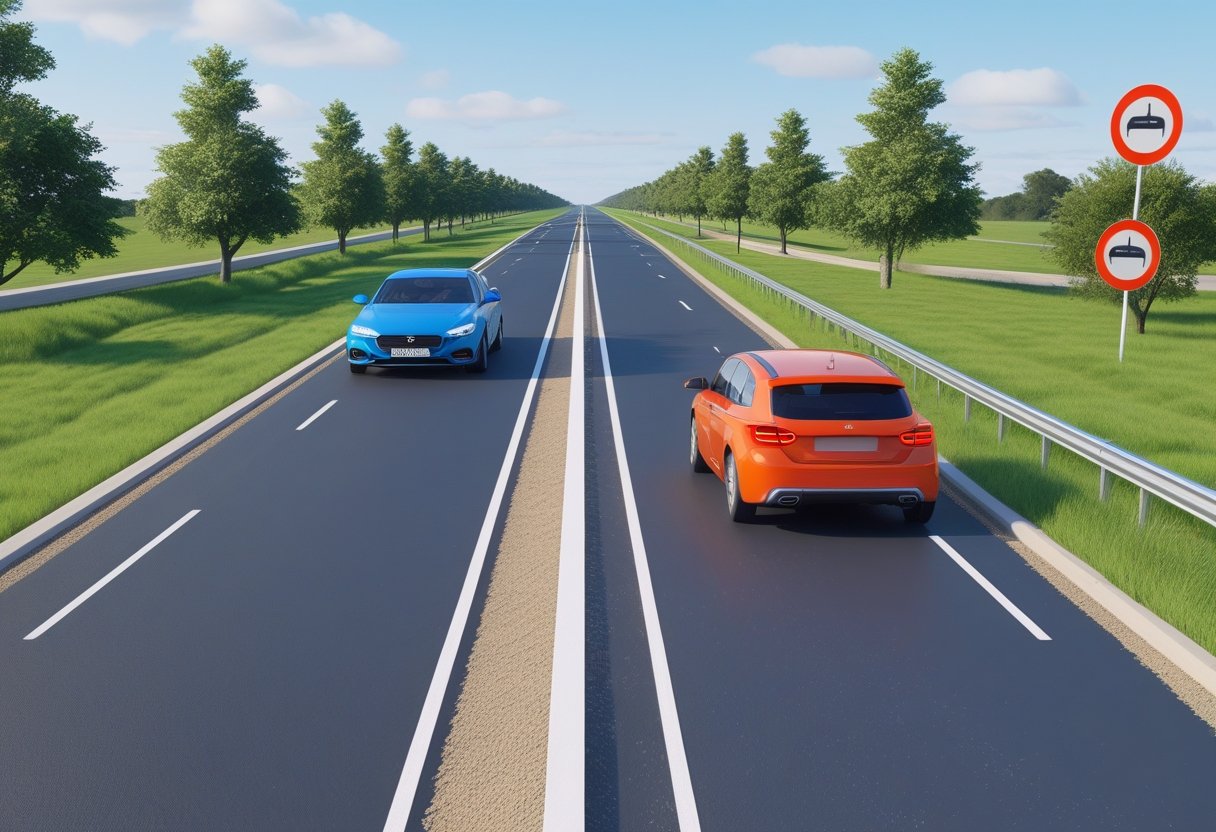
Learning proper overtaking techniques means you’ll drive with greater confidence whilst keeping yourself and other road users safe. The good news is that overtaking isn’t as daunting as it might seem once you understand the key principles. With the right preparation, clear judgement, and proper execution, you can overtake safely and legally on single-lane roads.
We’ll guide you through everything you need to know about safe overtaking, from the essential checks you must make before even considering a manoeuvre to building your confidence on real roads. Whether you’re a newly qualified driver or someone who wants to polish their skills, understanding these techniques will transform how you approach overtaking situations.
Key Takeaways
- Always ensure the road ahead is completely clear and you have enough space to complete the entire manoeuvre safely before starting to overtake
- Never attempt to overtake near junctions, bends, hills, or where road markings prohibit it, and always give vulnerable road users extra space and time
- Build your overtaking confidence gradually by practising good observation skills and never rushing into situations where you feel uncertain
Understanding Safe Overtaking on Single-Lane Roads
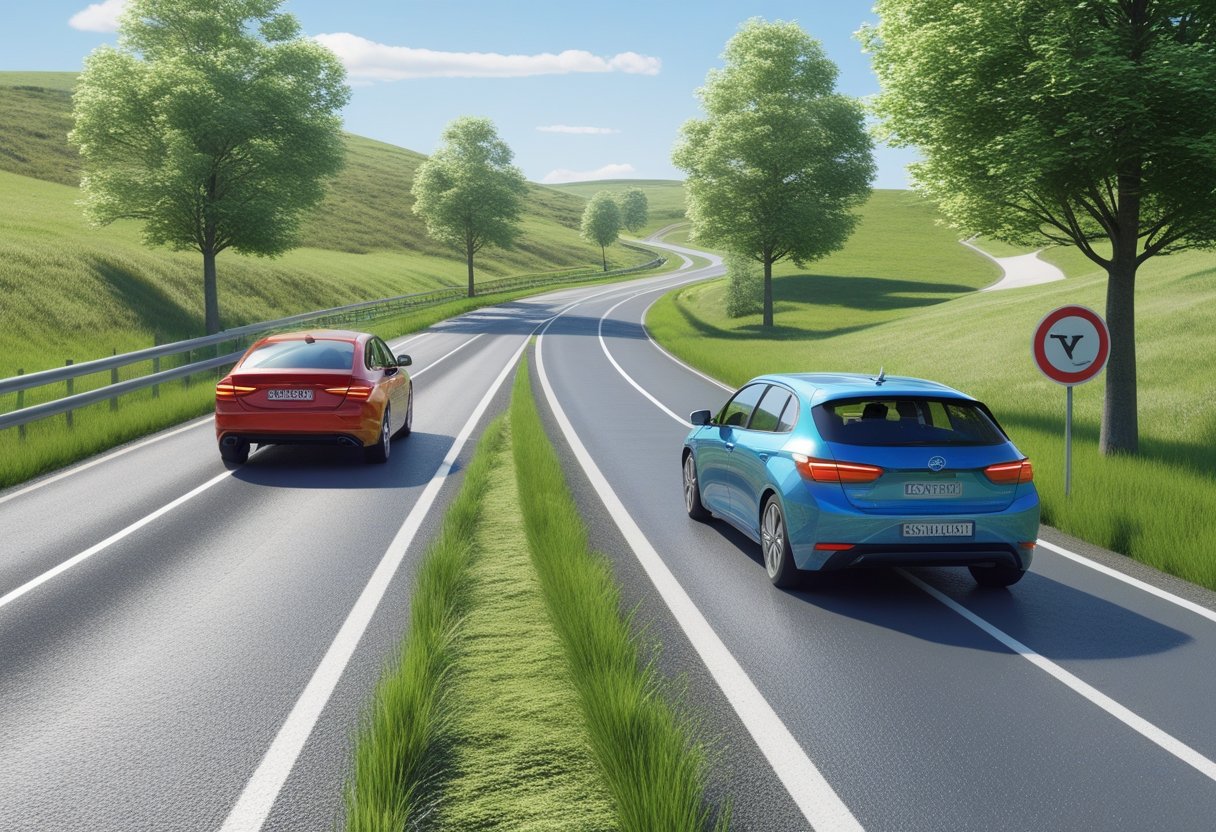
Overtaking on single-lane roads demands careful judgement and proper technique to keep everyone safe. We’ll explore what overtaking means for your driving, the unique challenges you’ll face, and when it’s both legal and sensible to make your move.
What Is Overtaking and Why It Matters
Overtaking is when we pass another road user travelling in the same direction. This could be a slow-moving tractor, a cautious Sunday driver, or even a cyclist taking their time up a hill.
The overtaking manoeuvre involves three key stages. First, we move into the opposite lane or road space. Then we pass the slower vehicle safely. Finally, we return to our original lane position.
Why does this matter so much? Poor overtaking causes serious accidents every year. One moment of bad judgement can turn a simple manoeuvre into a collision with oncoming traffic.
For new drivers especially, mastering overtaking safely builds confidence. It helps us maintain good traffic flow whilst keeping everyone protected. The skill becomes essential when we encounter agricultural vehicles, delivery lorries, or anyone driving below the speed limit.
Remember, overtaking isn’t about showing off or saving a few seconds. It’s about reading the road conditions properly and making smart decisions that benefit all road users.
Risks Unique to Single-Lane Roads
Single-lane roads present challenges we don’t face on dual carriageways or motorways. The biggest risk is oncoming traffic. We’re borrowing space from vehicles travelling towards us, which requires perfect timing.
Visibility becomes critical on these roads. Hills, bends, and hedgerows can hide approaching cars until it’s too late. Unlike motorways where we can see for miles, country roads often limit our view to just 100 metres ahead.
Road width creates another challenge. Many single-lane roads barely accommodate two cars passing normally. When we overtake, we need extra space for three vehicles, plus safety margins.
Weather conditions affect overtaking more severely on narrow roads. Rain reduces visibility and grip. Ice makes acceleration unpredictable. Snow can hide road markings that indicate safe overtaking zones.
The variety of road users adds complexity. We might encounter horse riders, cyclists, farm machinery, or pedestrians. Each requires different overtaking techniques and safety distances.
When Is Overtaking Legal and Safe
The Highway Code allows overtaking on single-lane roads when certain conditions are met. We must have clear visibility of the road ahead for at least 100 metres. This gives us enough space to complete the manoeuvre safely.
Road markings tell us when overtaking is forbidden:
- Solid white line nearest to us: No overtaking except for stationary vehicles or cyclists travelling under 10 mph
- Double solid white lines: Absolutely no overtaking allowed
- Broken white line nearest to us: Overtaking permitted if safe
Legal doesn’t always mean sensible. We should avoid overtaking near:
- Junctions and side roads
- Pedestrian crossings
- School zones
- Bends or hill crests
- Areas with “No Overtaking” signs
Before attempting any overtaking manoeuvre, we need adequate acceleration distance behind the vehicle we’re passing. Our car needs enough power to complete the move quickly and decisively.
The key is patience. If there’s any doubt about safety, we wait for a better opportunity. Arriving a few minutes later is infinitely better than not arriving at all.
Essential Preparation Before Overtaking
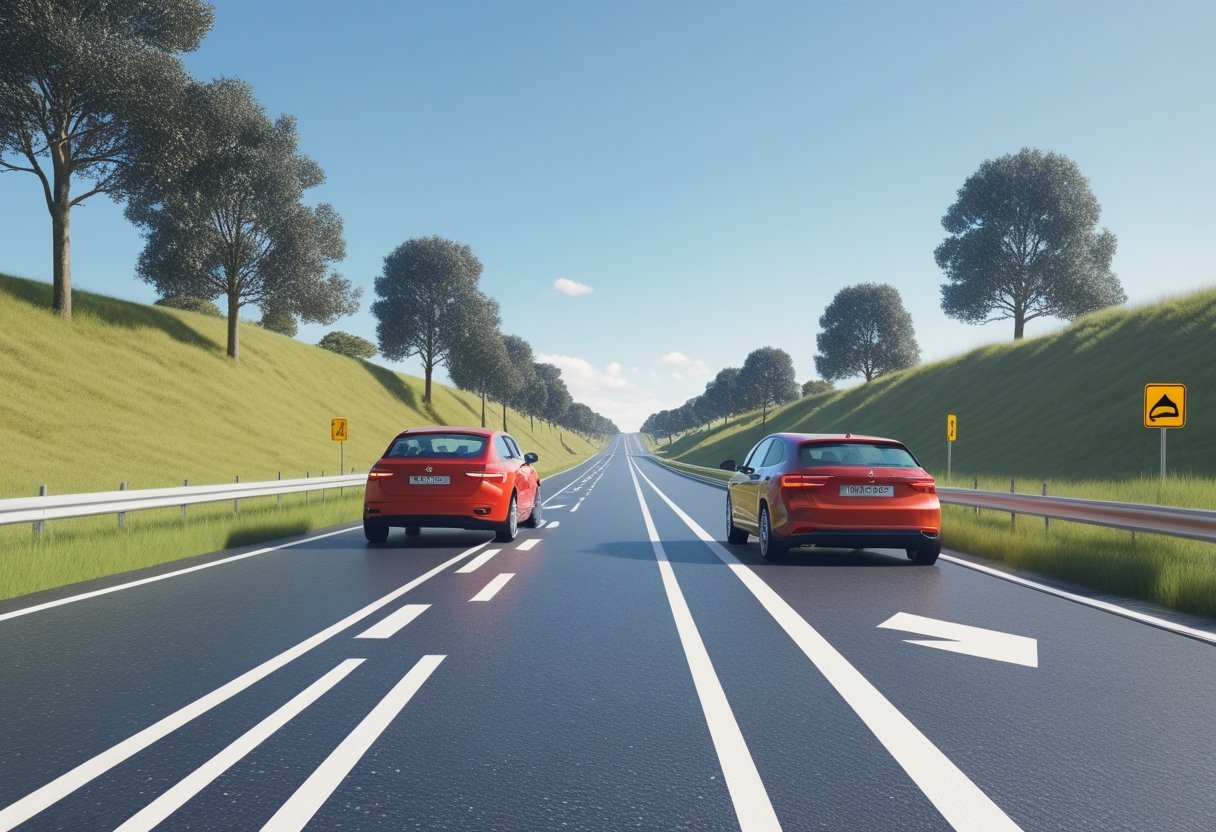
Proper preparation forms the foundation of every safe overtaking manoeuvre. We need to assess whether overtaking is truly necessary, perform thorough safety checks, and understand what road markings and signs are telling us about the legality of our intended move.
Assessing Necessity and Timing
Before we even consider pulling out, we must honestly ask ourselves: do we really need to overtake this vehicle? Sometimes patience serves us better than speed.
Key factors to evaluate:
- Speed difference: If the vehicle ahead is only slightly slower than our intended speed, the risk may outweigh the benefit
- Journey impact: Will overtaking actually save meaningful time, or are we just feeling frustrated?
- Traffic conditions: In heavy traffic, we’ll likely catch up at the next junction anyway
The timing of our overtake matters enormously. We should never feel pressured to overtake immediately when the opportunity first appears.
Watch for vehicles approaching from behind that might be planning the same manoeuvre. If another road user is already preparing to overtake, we need to wait our turn.
Consider upcoming road features too. There’s no point starting an overtake if we’ll need to slow down for a roundabout, traffic lights, or junction within the next few hundred metres.
Vital Checks: Mirrors, Blind Spots, and Signals
The Highway Code emphasises the mirror-signal-manoeuvre sequence for good reason. These checks can mean the difference between a safe overtake and a dangerous collision.
Our checking sequence should be:
- Rear-view mirror: Check for vehicles approaching from behind
- Right-side mirror: Look for traffic in the overtaking lane
- Blind spot check: A quick glance over our right shoulder catches anything mirrors might miss
- Signal right: Give clear indication of our intentions
We must never assume our mirrors show everything. Modern cars have significant blind spots, especially around the rear pillars. That quick shoulder check is absolutely crucial.
Motorcyclists are particularly vulnerable here. They can easily hide in our blind spots and approach much faster than we expect.
Timing our signal correctly:
- Too early confuses other road users
- Too late doesn’t give adequate warning
- Signal only when we’re certain the overtake is safe and legal
Reading Road Markings and Traffic Signs
Road markings and signs aren’t just suggestions, they’re legal requirements that keep us safe and on the right side of the law.
Solid white lines are our clearest warning. We must never cross or straddle double white lines when the solid line is nearest to us. This rule protects us from oncoming traffic where visibility is limited.
Broken white lines indicate we can overtake if it’s safe, but we still need to exercise proper judgment.
“No Overtaking” signs create legally binding restrictions. These typically appear before:
- Sharp bends where visibility is poor
- Hill crests and blind summits
- Areas with high pedestrian activity
- Accident blackspots
Hatched road markings surrounded by solid lines create no-go areas. We cannot enter these sections during an overtaking manoeuvre, even if they look empty.
Bus lanes, cycle lanes, and tram tracks often have specific operating hours. Even outside these times, we should check whether overtaking through them is permitted.
Understanding these markings helps us plan better overtakes and avoid dangerous situations where we might find ourselves committed to an illegal or unsafe manoeuvre.
Executing a Safe Overtaking Manoeuvre
Successfully completing an overtaking manoeuvre requires precise timing, clear judgement, and a systematic approach. We need to assess gaps carefully, follow proper steps from signalling through to returning to our lane, and account for how our vehicle’s performance might affect the manoeuvre.
Judging Gaps and Oncoming Traffic
Getting this right is absolutely crucial for overtaking safely on single-lane roads. We need at least 100 metres of clear road ahead after completing our overtake.
Here’s what we must check before starting:
Distance assessment:
- Can we see far enough ahead?
- Is there enough space to accelerate, pass, and pull back in?
- Will we have room to spare if the other vehicle speeds up slightly?
Oncoming traffic evaluation:
- Are there any vehicles approaching in the distance?
- Can we judge their speed accurately?
- Will they reach us before we complete the manoeuvre?
We should never attempt an overtaking manoeuvre if we have any doubts about the gap. It’s better to wait for a clearer opportunity than risk a head-on collision.
Poor weather makes judging distances much harder. Rain, fog, or failing light all reduce our ability to see oncoming traffic clearly.
Overtaking Steps: From Signal to Return
Following the right sequence keeps everyone safe during the overtaking manoeuvre. We use the mirror-signal-manoeuvre approach, but with extra checks.
Before we start:
- Check mirrors thoroughly
- Look for vehicles that might be overtaking us
- Drop back slightly from the vehicle ahead
- Check our blind spot
During the manoeuvre:
- Signal our intention to pull out
- Check mirrors one final time
- Accelerate firmly and decisively
- Keep a safe distance from the vehicle we’re passing
Completing the overtake:
- Don’t pull back in too early
- Wait until we can see the entire overtaken vehicle in our rear-view mirror
- Signal our return to the left lane
- Pull in smoothly without cutting up the other driver
We must maintain our speed until we’re safely back in position. Slowing down immediately after overtaking can force the other driver to brake suddenly.
Adjusting for Vehicle Performance and Load
Our car’s performance affects how quickly we can complete an overtaking manoeuvre. We need to account for these factors before attempting to pass another vehicle.
Factors that slow acceleration:
- Heavy loads in the boot or passengers
- Driving uphill
- Older or less powerful engines
- Towing a trailer or caravan
Adjusting our approach:
- Allow extra distance for acceleration
- Choose longer, clearer stretches of road
- Be more selective about when we overtake
- Consider whether the manoeuvre is actually necessary
If our vehicle feels sluggish or unresponsive, we should wait for an even better opportunity. A struggling engine needs more time and space to build up the speed required for overtaking safely.
We should also consider the vehicle we’re overtaking. Large lorries or tractors create bigger blind spots and take longer to pass completely.
Navigating Legal Restrictions and Dangerous Situations
Understanding road markings and legal boundaries will keep you safe and help you avoid costly penalty points. We’ll explore the specific rules around double white lines, speed limits during overtaking, and the dangers near pedestrian crossings.
Double White Lines and Prohibited Areas
Double white lines are your clearest warning system on single-lane roads. These road markings come in three different variations, each with specific rules you need to follow.
When the line nearest to you is broken, you can cross to overtake if it’s safe. You must complete your manoeuvre before reaching any solid white line on your side though.
Solid line nearest to you means no overtaking in most situations. The Highway Code allows only one exception: you can pass stationary vehicles or slow-moving cyclists, horses, or road maintenance vehicles travelling at 10 mph or less.
Double solid lines create an absolute no-go zone. You cannot cross or straddle these lines for any overtaking manoeuvre. These markings typically appear where visibility is severely restricted, such as:
- Sharp bends or corners
- Blind summits or hill crests
- Areas with known accident histories
- Narrow bridges or road sections
Breaking these rules isn’t just dangerous, it’s illegal. Police can issue fixed penalty notices for crossing prohibited road markings, even if no accident occurs.
Speed Limits and Penalty Points
Here’s something many drivers get wrong: you cannot exceed the speed limit to overtake. The Highway Code’s Rule 125 makes this crystal clear – speed limits are absolute maximums, not suggestions.
We often feel pressure to overtake quickly, but speeding during this manoeuvre can result in serious consequences. If caught by police or speed cameras whilst overtaking, you could face:
- Fines up to £2,500
- Six penalty points on your licence
- Potential driving ban for serious speeding
The key is planning your overtaking move properly. If you need to exceed the speed limit to complete the manoeuvre safely, then the gap simply isn’t big enough. Wait for a better opportunity instead.
Remember that your vehicle’s performance affects overtaking ability. Heavy loads, passengers, or uphill sections will slow your acceleration. Factor these conditions into your decision-making process.
Overtaking Near Pedestrian Crossings
Pedestrian crossings create some of the most dangerous overtaking scenarios you’ll encounter. The risks multiply quickly when people are crossing or might cross the road ahead.
Never attempt overtaking when approaching any type of pedestrian crossing. This includes zebra crossings, pelican crossings, and school crossing patrol areas. Even if the crossing appears clear, pedestrians can appear suddenly from behind parked cars or other obstacles.
The same rule applies to junctions and side roads. Vehicles ahead might be slowing down or preparing to turn, not just driving slowly. If you see a car indicating right, don’t overtake – even if their road position suggests otherwise.
School zones deserve extra caution. Children move unpredictably and might not see your approaching vehicle. Always assume someone might step into the road, especially during school hours or near playgrounds.
Traffic calming measures like speed bumps or chicanes also create overtaking restrictions. These areas are designed to slow traffic down, making overtaking both difficult and potentially illegal depending on local signage.
Sharing the Road with Vulnerable Users
When we’re overtaking on single-lane roads, we’ll encounter cyclists, pedestrians, horses, and large vehicles that need extra care and attention. Each type of road user requires a different approach, with specific distances, speeds, and safety considerations to keep everyone protected.
How to Overtake Cyclists Safely
Overtaking cyclists demands our complete attention and patience. We must treat them as we would any other vehicle on the road.
Give plenty of space. When overtaking cyclists, we need to leave at least 1.5 metres of clearance. This distance protects them from our vehicle’s wind displacement and gives us a safety buffer if they wobble or swerve unexpectedly.
We should only overtake when we have a completely clear view ahead. Never squeeze past a cyclist if there’s oncoming traffic. It’s better to wait for a safe opportunity than risk everyone’s safety.
Check for multiple cyclists. Sometimes cyclists travel in groups or pairs. We need to ensure we can overtake the entire group safely before starting our manoeuvre.
Before pulling back in, we should see the cyclist clearly in our rear-view mirror. Cutting in too early can force them to brake suddenly or lose control.
Key overtaking steps:
- Signal early to show our intentions
- Move out decisively when safe
- Maintain steady speed during the overtake
- Return to our lane smoothly with plenty of clearance
Approaching Horses and Pedestrians
Horse riders and pedestrians are the most vulnerable road users we’ll encounter. They require extra caution and slower speeds when we’re overtaking.
Slow right down for horses. We should reduce our speed significantly, ideally to 15 mph or less when passing horses. These animals can spook easily from loud noises or sudden movements.
Turn down our radio and avoid revving the engine. Don’t use the horn unless the rider signals for us to do so. Some horses are trained to expect horn signals, whilst others might panic.
Watch for rider signals. Horse riders might raise their hand to ask us to slow down or stop completely. Always follow their guidance, as they know their animal best.
Pedestrians need space too. When overtaking pedestrians on narrow roads, we should slow down and give them as much room as possible. Be especially careful around children, who can be unpredictable.
Remember these points:
- Patience is key with all vulnerable road users
- Slow speeds prevent accidents
- Wide clearance protects everyone involved
Tackling Large or Slow-Moving Vehicles
Overtaking tractors, lorries, and other large vehicles on single-lane roads requires careful planning and execution.
Plan well ahead. Large vehicles are longer to overtake, so we need more time and distance. We should drop back to get a better view of the road ahead before attempting our manoeuvre.
Consider the vehicle’s limitations. Tractors and heavy lorries accelerate slowly and might not be able to help us by slowing down. We need to account for their reduced manoeuvrability.
Check for turning signals. Large vehicles often need extra road space to turn, even when going left. Never overtake if the vehicle is signalling to turn right, regardless of its road position.
Use extra acceleration. Because these vehicles are longer, we need to maintain higher speeds for longer periods during our overtake. Make sure our car has enough power, especially on hills or when carrying passengers.
We should never follow another car that’s overtaking a large vehicle. They might have judged there’s space for one car, but not two. Make our own assessment of the road conditions and available space.
Building Confidence: Practical Tips for Newly Qualified Drivers
Newly qualified drivers often struggle with overtaking decisions because they lack real-world experience beyond their test preparation. We’ll explore the most frequent errors that catch new drivers off-guard and share proven strategies to build your skills through careful practice and patience.
Common Mistakes and How to Avoid Them
Misjudging speed and distance tops our list of dangerous habits we see in newly qualified drivers. Many new drivers underestimate how quickly oncoming traffic approaches or overestimate their own vehicle’s acceleration.
The solution? Start by practising overtaking judgement without actually overtaking. Follow slower vehicles and ask yourself: “Could I safely pass right now?” Check your mirrors, assess the gap, and note oncoming traffic speed.
Poor observation skills cause serious problems too. New drivers often forget to check their blind spots or rely too heavily on mirrors alone.
We recommend the MSM routine (Mirror, Signal, Manoeuvre) but add an extra step: physical shoulder checks. Turn your head to check blind spots every single time. It feels awkward at first, but becomes natural with practice.
Hesitation mid-manoeuvre creates dangerous situations. Once you’ve committed to overtaking, you must follow through decisively. Hesitating puts you in the worst possible position: alongside another vehicle with limited escape routes.
Build confidence by choosing easy overtaking opportunities first. Start with very slow-moving vehicles on quiet roads with excellent visibility. Gradually work up to more challenging scenarios as your skills develop.
Learning from Real-World Scenarios
Accompanied drives with experienced drivers provide invaluable learning opportunities. Ask a trusted friend or family member to explain their decision-making process during different road situations.
Pay attention to how they position their vehicle before overtaking. Notice when they choose not to overtake, despite having legal opportunities to do so.
Different road types require different approaches. Country lanes with hedgerows limit visibility compared to open dual carriageways. Urban roads present unique challenges with parked cars and pedestrian crossings.
We suggest focusing on one road type at a time. Master overtaking on familiar routes before tackling unfamiliar territory. This builds your confidence systematically rather than overwhelming you with too many variables.
Weather conditions dramatically affect overtaking safety. Wet roads reduce grip and increase stopping distances. Strong crosswinds can push your vehicle sideways during the manoeuvre.
Start practising in perfect conditions: dry roads, good visibility, and calm weather. Once you’re comfortable, gradually introduce more challenging conditions under supervision.
Traffic patterns vary throughout the day. Morning rush hour presents different challenges compared to quiet Sunday afternoons. Learn to read traffic flow and identify the safest opportunities.
Growing Skills with Practice and Patience
Progressive skill building works better than jumping into difficult situations too quickly. Begin with overtaking cyclists and very slow agricultural vehicles before attempting to pass faster-moving cars.
Each successful overtaking manoeuvre builds your confidence for the next one. Keep a mental note of what went well and what felt uncomfortable.
Regular practice sessions help maintain and improve your skills. We recommend dedicating specific driving time to practising overtaking techniques, rather than hoping opportunities arise during normal journeys.
Choose quiet roads with good visibility for practice sessions. Focus on smooth execution rather than speed. Quality repetition builds muscle memory and decision-making confidence.
Reflection and adjustment accelerate your learning process. After each driving session, think about the overtaking opportunities you encountered. Did you make good decisions? What would you do differently?
Consider keeping a brief driving diary. Note challenging situations and how you handled them. This helps identify patterns and areas needing improvement.
Professional refresher lessons provide expert feedback on your developing skills. An experienced instructor can spot habits you might not notice and offer targeted advice for improvement.
Many newly qualified drivers benefit from additional lessons focusing specifically on advanced manoeuvres like overtaking. This investment in your skills pays dividends in long-term driving confidence and safety.
Frequently Asked Questions
These common questions address the essential safety checks, communication methods, and situational awareness you need for confident overtaking on single-lane roads.
What are the key indicators I should look for before initiating an overtake on a single-lane road?
Before we even think about pulling out, we need to check several crucial factors. The road ahead must be completely clear for a sufficient distance.
We should ensure no vehicle behind us is already starting to overtake. There needs to be a proper gap in front of the vehicle we’re planning to pass.
Look out for oncoming traffic, even if it appears distant. Fast-moving vehicles can close gaps surprisingly quickly.
Check for road signs indicating ‘No Overtaking’ zones. These restrictions exist for good safety reasons and we must respect them.
We should also scan for potential hazards like approaching junctions, pedestrian crossings, or areas where visibility becomes limited.
How can I assess if I have sufficient distance to safely overtake another vehicle ahead?
Distance assessment requires considering both the space needed to complete our manoeuvre and a safety margin. We need enough road to pull out, pass the vehicle, and return to our lane safely.
A good rule involves the ‘three-second rule’ multiplied by the time needed for the entire overtake. This typically means we need clear road for at least 10-15 seconds ahead.
Consider the speed difference between us and the vehicle we’re overtaking. Slower speed differences mean longer overtaking distances.
Large vehicles like lorries or tractors require significantly more space and time to pass safely. We shouldn’t attempt these overtakes unless we have excellent visibility and ample clear road.
If there’s any doubt about distance, we should wait for a better opportunity. Patience keeps everyone safer.
Could you guide me through the step-by-step procedure for overtaking safely on a country lane?
The process starts with positioning ourselves safely behind the vehicle ahead. We shouldn’t get too close, as this limits our view of the road ahead.
First, we check our mirrors to see what’s happening behind us. Then we indicate our intention to overtake when it’s safe to do so.
Take a quick glance into our blind spot area. This ensures no vehicle is already alongside us or approaching rapidly.
Once we’re certain it’s safe, we move out smoothly and accelerate past the other vehicle. We need to complete this manoeuvre decisively but not aggressively.
After passing, we maintain our speed until there’s sufficient gap between us and the overtaken vehicle. Only then do we indicate left and return to our lane safely.
Remember the sequence: mirrors, signal, manoeuvre. This systematic approach helps us stay safe and legal.
In what ways can I effectively communicate my intention to overtake to other road users?
Clear communication starts with proper use of our indicators. We signal our intention to move out when it’s safe to do so, not too early or too late.
Our road position also communicates our intentions. Moving slightly towards the centre line (whilst staying in our lane) can indicate we’re considering an overtake.
During the manoeuvre, we maintain our indicator until we’ve completed the overtake and are ready to return to the left lane.
Eye contact with other drivers can be helpful when possible. This ensures they’ve seen us and understand our intentions.
We should avoid sudden movements or aggressive acceleration. Smooth, predictable driving helps other road users anticipate our actions and respond appropriately.
After completing the overtake, a brief acknowledgement wave (if safe) shows courtesy to drivers who may have slowed to help us pass safely.
What should I do if I find myself being overtaken by another vehicle on a single-lane road?
When someone overtakes us, our role is to make their manoeuvre as safe as possible. We maintain a steady course and consistent speed throughout their overtake.
If necessary, we can slow down slightly to help them complete the manoeuvre more quickly. This reduces the time they spend on the wrong side of the road.
We must never speed up or drive unpredictably whilst being overtaken. Such behaviour is dangerous and potentially illegal.
After they’ve passed and pulled back in, we should drop back to maintain a proper following distance. The two-second rule applies here.
If we’re driving a large or slow-moving vehicle and notice a queue building behind us, we should look for safe places to pull in and let traffic pass.
Courtesy and patience make country lane driving safer for everyone involved.
Are there specific weather conditions or times of day when I should avoid overtaking on a single-lane road?
Poor weather conditions significantly increase overtaking risks and we should exercise extra caution. Rain, fog, or snow reduce visibility and extend stopping distances.
During night-time driving, judging speeds and distances becomes much more challenging. Headlight glare can also impair our vision temporarily.
High winds affect vehicle stability, particularly when passing larger vehicles like lorries or coaches. The turbulence created can be dangerous for both vehicles.
In icy conditions, we should avoid overtaking entirely unless absolutely necessary. The risk of losing control increases dramatically.
Dawn and dusk present particular challenges due to changing light conditions. Low sun can create dangerous blind spots and glare.
Heavy rain or spray from other vehicles can suddenly reduce visibility to almost zero. We need to be extremely cautious in these conditions and often it’s better to wait for clearer weather before attempting any overtakes.