

Tips for Reversing Into a Parking Bay: Confident Skills for Learner Drivers
Reversing into a parking bay can feel overwhelming, especially when you’re still building confidence behind the wheel. Many drivers find this manoeuvre challenging, and it’s completely normal to feel nervous about it at first. The good news is that reverse bay parking becomes much easier once you understand the technique and practice it regularly.
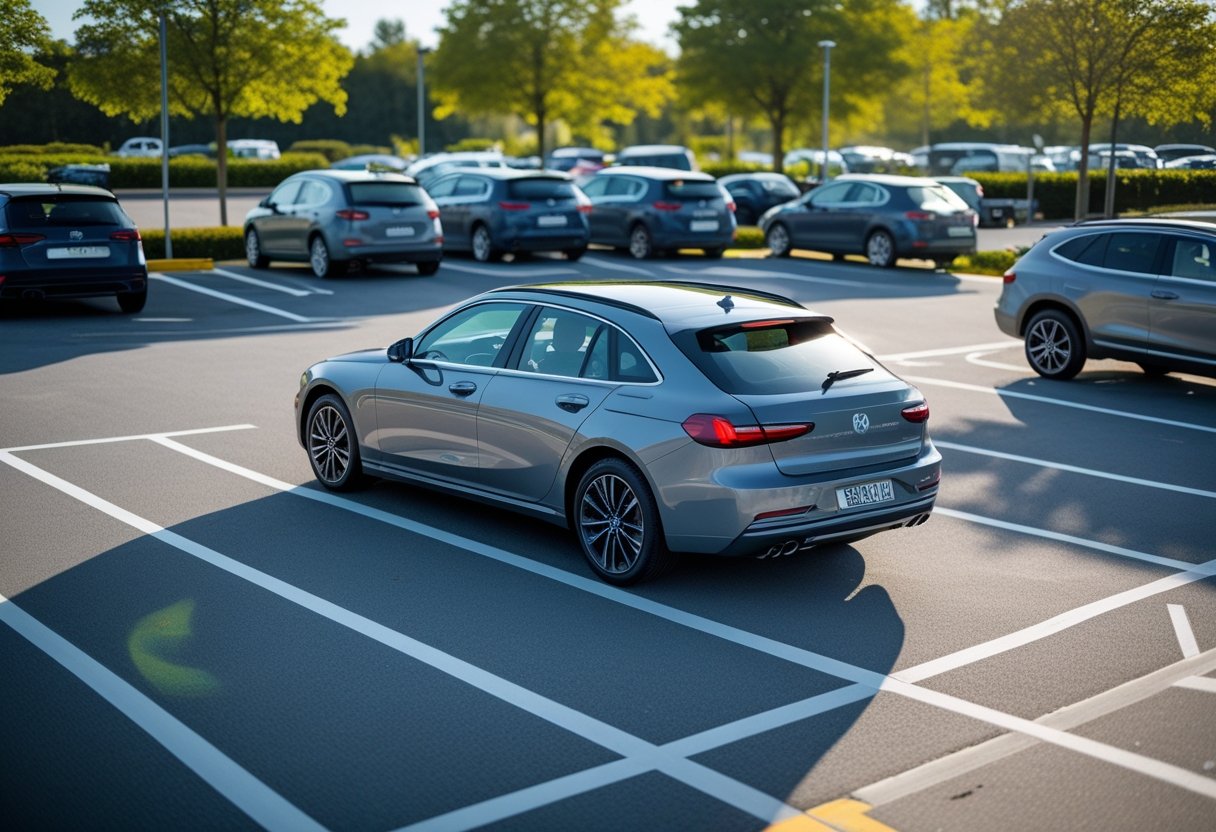
The key to successful reverse bay parking lies in using reference points, maintaining proper observations, and moving at a controlled speed throughout the manoeuvre. When you know exactly what to look for in your mirrors and when to turn the steering wheel, the whole process becomes far less intimidating. We’ve helped thousands of learners master this skill, and we’re confident you can too.
Whether you’re preparing for your practical driving test or simply want to park with more confidence in busy car parks, we’ll guide you through everything you need to know. From understanding why reverse parking is often safer than driving forward into a space, to mastering the step-by-step technique and handling the inevitable adjustments, we’ll cover all the essential skills that will transform you into a confident reverse parker.
Why Reverse Bay Parking Matters
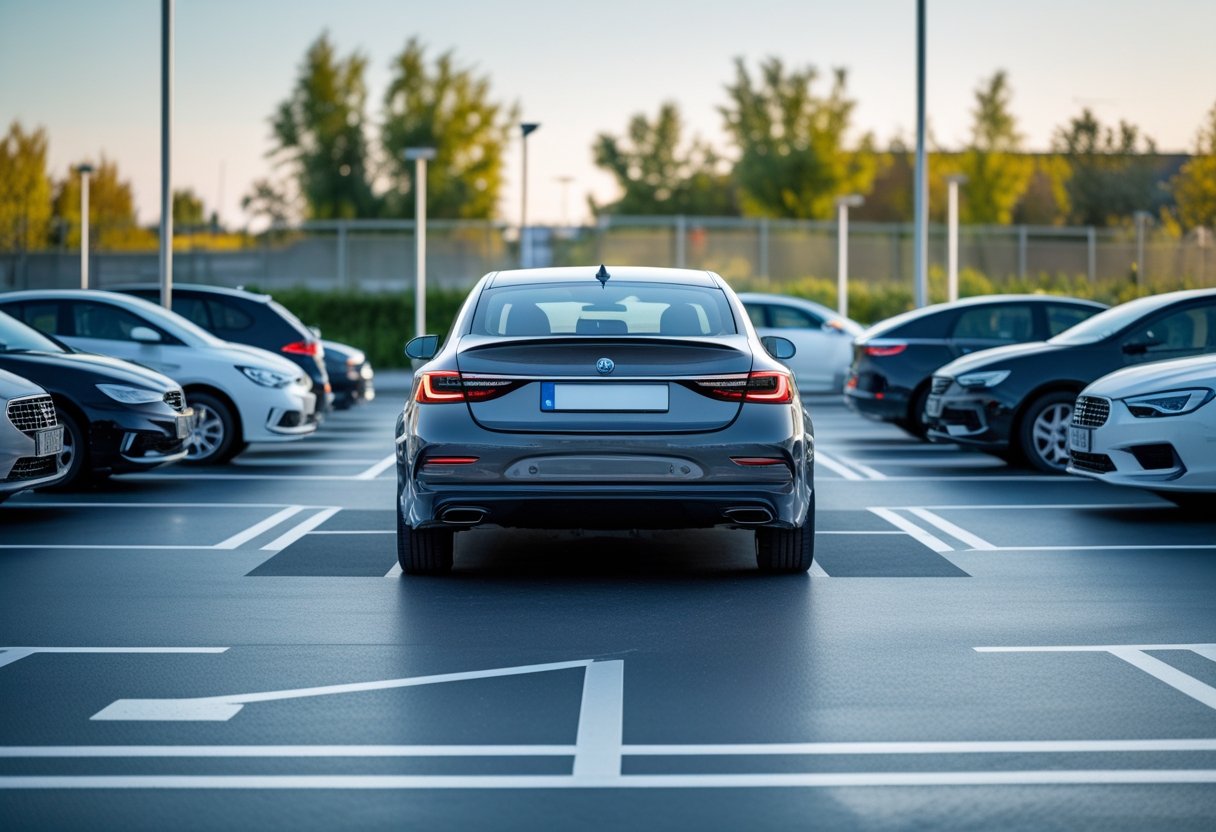
Learning to reverse into a parking bay transforms your driving confidence and keeps you safer on the road. This essential skill offers clear advantages over driving straight into spaces, from improved visibility when leaving to better control during the parking process.
Benefits of Reversing Into a Bay
Enhanced control stands out as the biggest advantage when we reverse into a parking bay. Your car’s rear wheels handle the steering, giving you tighter turning control compared to the front wheels during forward parking.
We can position our vehicle more precisely within the bay lines. The steering geometry works in our favour, allowing smaller adjustments that help us centre the car perfectly.
Better spatial awareness develops naturally through reverse bay parking. We must use our mirrors effectively and develop a keen sense of distances. This heightened awareness improves our overall driving skills.
Easier departure becomes second nature once parked. We simply drive straight out with full visibility ahead. No more awkward reversing out of tight spaces whilst trying to spot oncoming traffic or pedestrians.
Time efficiency often surprises new drivers. Although the initial parking might take slightly longer, the quick and safe exit more than compensates. We spend less time overall, especially in busy car parks.
Safety Advantages Compared to Forward Bay Parking
Superior visibility when leaving makes reverse bay parking the safer choice. We drive out facing forward with complete view of the road, other vehicles, and pedestrians. Forward bay parking forces us to reverse blind into potential hazards.
Reduced accident risk comes from eliminating dangerous reversing manoeuvres in active traffic areas. Statistics show most car park accidents happen when drivers reverse out of spaces into moving traffic.
Better hazard detection helps us spot problems early. When we leave a parking space facing forward, we can see children running, cars approaching, or shopping trolleys in our path.
Improved reaction time results from clear forward vision. We can brake or steer away from dangers immediately, rather than trying to judge distances through mirrors whilst reversing.
Engine positioning offers an additional safety benefit. Most car engines sit at the front, providing extra protection for passengers if we accidentally bump something whilst parking.
Importance for Everyday Driving
Essential life skill describes reverse bay parking perfectly. Whether we’re visiting the supermarket, attending appointments, or parking at work, this technique proves invaluable daily.
Driving test requirement makes mastering this skill non-negotiable. Since December 2017, bay parking forms one of three possible manoeuvres in UK practical driving tests. We might face either forward or reverse bay parking during our examination.
Confidence building extends beyond parking itself. Successfully mastering reverse bay parking boosts our overall driving confidence. We feel more capable tackling other challenging manoeuvres.
Professional necessity applies to many careers. Delivery drivers, sales representatives, and countless other professionals rely on efficient parking skills. Employers value drivers who can park safely and quickly.
Stress reduction improves our driving experience significantly. Confident reverse bay parking eliminates the anxiety many drivers feel in busy car parks. We approach parking with calm assurance rather than dread.
Space maximisation becomes crucial in crowded areas. Reverse bay parking often allows us to fit into tighter spaces that would be impossible with forward parking, especially when neighbouring cars park poorly.
Understanding the Manoeuvre
Learning to reverse into parking bays opens up better parking options and makes leaving spaces much safer. The key difference between reverse and forward bay parking lies in which direction you enter the space, and each technique suits different situations perfectly.
What Is Reverse Bay Parking?
Reverse bay parking means backing your car into a designated parking space rather than driving straight in. We guide our vehicle backwards between the white lines that mark each bay in car parks.
This technique requires us to position our car parallel to the parking bays first. Then we reverse whilst turning the steering wheel at the right moment to slot neatly into the chosen space.
Most car parks use perpendicular bays that sit at 90 degrees to the driving lane. Some locations feature angled bays that make the manoeuvre slightly easier for beginners.
The beauty of reverse bay parking lies in what happens when we leave. We can drive straight out with full visibility of pedestrians, trolleys, and other cars moving around us.
How Reverse and Forward Bay Parking Differ
The main difference between these techniques is simple: reverse bay parking means backing into the space, whilst forward bay parking involves driving straight in.
When we reverse into a bay, we get better control over positioning our car between the lines. Our rear wheels steer the car, giving us more precise movements in tight spaces.
Forward bay parking feels more natural at first. We can see exactly where we’re going as we enter the space. However, reversing out later creates bigger challenges.
Here’s how they compare:
| Reverse Bay Parking | Forward Bay Parking |
|---|---|
| Harder to get in | Easier to get in |
| Safer to exit | Harder to exit safely |
| Better car positioning | Less precise positioning |
| Clearer view when leaving | Limited view when reversing out |
The steering dynamics work differently too. When reversing, small steering adjustments create bigger changes in our car’s position.
When Should You Use Each Technique?
Reverse bay parking works best in busy car parks where safety matters most. Shopping centres, supermarkets, and town centre parking all benefit from this approach.
We recommend reversing into bays when:
- Other cars and pedestrians move around frequently
- We need to load shopping or heavy items into our boot
- The parking area has limited visibility
- We’re parking for longer periods
Forward bay parking suits quieter locations with fewer hazards. Empty car parks, residential areas, or spaces with excellent visibility work well for driving straight in.
Choose forward parking when:
- The car park feels quiet and safe
- We’re making a quick stop
- The bay offers plenty of space around it
- Reversing feels too challenging in that moment
Both techniques appear on driving tests, so we need confidence with each method. Practising in different car parks helps us judge which approach suits each situation best.
Step-by-Step Guide to Reversing Into a Parking Bay
Success with reverse bay park manoeuvres comes down to proper positioning, using reliable reference points, and taking your time with each movement. We’ll break down the entire process into manageable steps that build your confidence in any car park situation.
Choosing the Best Bay
Not all parking bays are created equal, and picking the right one makes your reverse parking journey much smoother. We always recommend choosing a bay that’s clearly marked with visible white lines on both sides.
Look for these ideal conditions:
- Wide enough space for your vehicle plus extra room
- Good visibility from your approach angle
- Level ground without steep slopes
- Clear of trolleys, pillars, or other obstacles
Avoid bays next to large vehicles like vans or 4x4s when you’re still learning. These create blind spots that make the manoeuvre trickier than it needs to be.
End bays often work brilliantly for beginners. You’ll have extra space on one side, giving you more room for error whilst you’re mastering the technique.
Lining Up and Positioning Your Car
Getting your starting position spot on is absolutely crucial for a successful reverse bay park. We position ourselves roughly one car’s width away from the parking bay, creating enough space to turn into it smoothly.
Drive slowly past your chosen bay until you’re about two car lengths beyond it. This gives you the perfect angle to begin reversing.
Key positioning tips:
- Keep parallel to the parking bay lines
- Maintain a steady, slow speed throughout
- Check your mirrors are properly adjusted
- Ensure you can see the bay clearly in your mirrors
The middle of your passenger door should line up with the white line that’s two bays along from your target space. This reference point helps you judge the perfect starting position every time.
Select reverse gear and prepare for the next phase. Take a moment to check all around your vehicle before you begin moving backwards.
Executing the Reverse Manoeuvre
Now comes the main event. Start by applying full left lock on your steering wheel (assuming you’re reversing into a left-hand bay) and begin moving backwards very slowly.
Watch your left wing mirror carefully. The left-hand line of your parking bay will appear in this mirror as you begin the turn. This is your first major reference point.
Follow this sequence:
- Full lock left whilst reversing slowly
- Left bay line appears in left wing mirror
- Right bay line appears in right wing mirror
- Both lines visible means you’re entering straight
Keep your speed incredibly slow throughout this process. Think “walking pace” rather than anything faster. This gives you time to react and make adjustments.
Your right wing mirror will then show the right-hand line of your parking bay. When both bay lines are visible in your respective wing mirrors, you’re perfectly positioned to straighten up.
Straightening Up and Finishing Neatly
Once both white lines appear clearly in your wing mirrors, it’s time to straighten your steering wheel completely. This ensures you’ll slide neatly into the space without hitting either side.
Continue reversing slowly whilst keeping the steering wheel straight. Use your mirrors to check you’re staying centred between the white lines.
Final positioning checks:
- Equal space on both sides of your car
- Straight alignment with the bay lines
- Adequate distance from the kerb or back wall
- Room to open doors comfortably
Stop when you’ve reversed far enough back but before hitting any kerb, wall, or vehicle behind you. Most car parks give you plenty of depth, so don’t feel pressured to reverse all the way back.
Apply your handbrake and put the car in neutral. You’ve successfully completed your reverse bay park! Take a moment to feel proud of your achievement before getting out to check your positioning if needed.
Essential Observation and Safety Checks
Before you even start your reverse bay parking manoeuvre, thorough observation and safety checks are absolutely critical for protecting yourself and others around you. We’ll show you how to master mirror work, spot potential hazards, and communicate your intentions clearly to other road users.
Checking Mirrors and Blind Spots
Your mirrors are brilliant tools, but they don’t show you everything around your vehicle. Before starting any reverse bay parking, we need to adjust all three mirrors to maximise our view of the surrounding area.
Start with your interior mirror to check for vehicles or pedestrians approaching from behind. Your wing mirrors should be angled to show the sides of your car and the parking bay lines clearly.
The real game-changer is checking your blind spots properly. Turn your head and look over both shoulders before you begin moving. These areas aren’t covered by your mirrors and can hide cyclists, small children, or shopping trolleys.
During the manoeuvre, keep checking these blind spots regularly. Don’t just rely on quick glances in your mirrors. Physical head checks catch movement that mirrors might miss.
Remember that other drivers might not expect you to reverse. Keep scanning all around your vehicle as you move. This habit will serve you well throughout your driving journey.
Spotting Hazards: Pedestrians and Other Vehicles
Car parks are busy places with constant movement from all directions. We need to watch for pedestrians who might walk behind your car without realising you’re about to reverse.
Children are particularly unpredictable and might dart out from between parked cars. Elderly shoppers pushing trolleys can also appear suddenly from your blind spots.
Other drivers present their own challenges. Someone might be reversing out of a nearby bay at the same time as you. Look for reversing lights on nearby vehicles and listen for engine sounds.
Shopping trolleys are surprisingly common hazards. They roll silently and can scratch your paintwork or dent panels. Check for any loose trolleys in your path before you start moving.
If visibility is poor due to large vehicles parked nearby, take extra time with your observations. Move slowly and be ready to stop immediately if anything unexpected appears.
Keep your handbrake engaged until you’re absolutely certain the area is clear. This prevents any unwanted rolling while you complete your safety checks.
Signalling Your Intentions
Clear communication with other road users makes reverse bay parking much safer for everyone. Your indicators tell other drivers exactly what you’re planning to do.
Signal left or right depending on which direction you’re turning into the bay. Put your indicator on early, ideally before you stop to position your car for the manoeuvre.
Keep your signal on throughout the entire parking process. This warns approaching drivers that you’re still manoeuvring and haven’t finished parking yet.
Your reversing lights automatically illuminate when you select reverse gear, but don’t assume everyone notices them. Combined with your indicators, they create a clear message about your movements.
If another driver seems impatient or too close, don’t rush your manoeuvre. Take your time and maintain your signals. Most drivers will wait patiently when they understand what you’re doing.
Hazard lights aren’t necessary for normal reverse bay parking, but they can be helpful in very busy car parks where you need extra visibility.
Adjusting and Correcting Your Position
Getting your car perfectly centred in a parking space rarely happens on the first try, and that’s completely normal. The key is knowing how to make quick adjustments whilst you’re still moving and handling tricky situations when space gets tight.
Making Small Corrections
When we’re reverse bay parking, small steering adjustments can make all the difference between a perfect park and starting over. Keep your speed nice and slow so you’ve got plenty of time to react to what you see in your mirrors.
If you notice you’re drifting too close to one of the parking space lines, gently steer away from that side. Remember, your steering movements will feel opposite when reversing, so it takes a bit of getting used to.
Watch your door mirrors closely for these warning signs:
- White lines getting closer on one side
- Uneven gaps between your car and neighbouring vehicles
- Your car heading towards the back of the bay at an angle
Don’t panic if you spot these issues early. A gentle quarter-turn of the steering wheel is usually enough to get back on track. If you’re practising for your driving test, examiners actually prefer to see you making smooth corrections rather than pretending everything’s perfect when it’s not.
The brilliant thing about reverse bay parking is that you can keep adjusting right up until you’re fully in the space. Take your time, and trust what you see in your mirrors.
Dealing with Obstacles and Tight Spaces
Sometimes you’ll encounter parking spaces that feel impossibly narrow or have obstacles nearby. Don’t let this put you off, we’ve all got strategies to handle these challenging situations.
Check for these common obstacles before you start:
- Trolleys or bins near the parking space
- Cars parked slightly over the line
- Low walls or bollards at the back of the bay
- Puddles or debris on the ground
If the space looks genuinely too tight for your vehicle, there’s no shame in finding another spot. However, if you’re confident it’ll fit, take extra care with your observations.
Use your 360-degree checks more frequently in tight spaces. This means looking over your shoulder, checking both mirrors, and being aware of pedestrians who might walk behind you.
When dealing with very narrow spaces, we recommend stopping completely if you’re unsure about clearance. Put the car in park, get out if it’s safe, and have a proper look at how much room you’ve got. This technique isn’t allowed during your driving test, but it’s perfectly sensible in real-world situations.
Remember, parking sensors and cameras are helpful tools, but they shouldn’t replace your own observations and judgement.
Reverse Bay Parking on the UK Practical Driving Test
Since December 2017, reverse bay parking has become one of three possible manoeuvres you might face on your UK driving test. Examiners focus on your control and safety awareness rather than perfect positioning, though common errors like poor observations can quickly lead to test failure.
What Examiners Look For
Your driving examiner isn’t expecting you to slot into that bay like a seasoned pro. What we really want to see is control, awareness, and safety throughout the entire manoeuvre.
Smooth vehicle control tops the list. This means gentle steering movements and steady speed using clutch control. Jerky movements or stalling will catch the examiner’s attention for all the wrong reasons.
Effective observations are absolutely crucial. We need to see you checking mirrors, looking over your shoulder, and scanning for pedestrians. Many test failures happen because candidates forget to look around properly.
The examiner watches for appropriate positioning too. You don’t need to be millimetre perfect, but you should end up reasonably straight within the bay lines.
Following instructions matters as well. Listen carefully when the examiner explains which bay to use and any specific requirements.
Your reaction to problems also gets assessed. If something goes wrong, staying calm and asking for guidance shows good judgement rather than panic.
Common Mistakes and How to Avoid Them
Poor observations cause more test failures than wonky parking positions. Many learners get so focused on the bay that they forget to check for hazards.
Keep checking mirrors and blind spots throughout the manoeuvre. Look for pedestrians walking behind your car and other vehicles moving nearby.
Speed control problems often trip up nervous candidates. Going too fast makes steering corrections difficult and appears unsafe to examiners.
Practice your clutch control until you can crawl backwards at walking pace. This gives you time to react and make adjustments.
Getting flustered when things don’t go perfectly leads to more errors. If you’re not happy with your position, ask the examiner if you can have another go.
Forgetting the handbrake at the end might seem minor, but it shows you haven’t completed the manoeuvre properly. Always secure your car once you’ve finished reversing.
Hitting the kerb or going outside the bay lines suggests poor control. Take your time and use your mirrors to stay aware of your position throughout.
Exiting the Bay Safely
Getting out of your parking bay requires just as much care as getting in. Whether you’re driving straight out or need to reverse, proper observation and controlled movements will keep everyone safe.
Driving Forward Out of a Bay
This is where reverse parking really shows its value. When we’ve reversed into a bay, driving forward to exit gives us excellent visibility of the car park around us.
Start with thorough checks before moving. Look in all your mirrors and scan for pedestrians, shopping trolleys, and other vehicles. Car parks can be unpredictable places where children might dart out or shoppers emerge from between parked cars.
Check your blind spots carefully. Turn your head to look over both shoulders, even though you’re going forward. Other drivers might be manoeuvring nearby or waiting for your space.
Move slowly at first. Edge forward gradually until you can see clearly in both directions along the car park lane. This cautious approach gives you time to spot any hazards and allows others to see your intentions.
Signal your direction early. Once you’re ready to turn into the main car park route, indicate which way you’re going. This helps other drivers anticipate your movements and creates a safer environment for everyone.
The beauty of driving forward out is that you maintain control and visibility throughout the entire exit process.
Reversing Out: Key Steps and Considerations
Sometimes we need to reverse out of a parking bay, particularly if we drove forward in. This requires extra caution because our view is more limited when moving backwards.
Prepare thoroughly before starting your engine. Walk around your car to check for obstacles, shopping trolleys, or small children playing nearby. Car parks are busy places and situations change quickly.
Use all available aids. Your mirrors become crucial tools, but don’t rely on them alone. Modern cars often have reversing cameras or parking sensors, but these are supplements to careful observation, not replacements.
Reverse very slowly whilst checking constantly. Keep your speed minimal and pause frequently to reassess your surroundings. Look for pedestrians approaching from either side and vehicles that might be moving through the car park.
Stop if your view becomes compromised. If a large vehicle parks nearby whilst you’re preparing to leave, don’t hesitate to pull forward again and restart your exit when visibility improves.
Be patient with the process. Reversing out safely takes time, especially in busy car parks. Other drivers will understand and appreciate your cautious approach rather than a rushed manoeuvre that could cause problems.
Developing Confidence and Mastery
Mastering reverse bay parking takes dedicated practice and the right mindset to overcome natural nerves. Regular practice sessions combined with proven strategies for managing anxiety will transform this challenging manoeuvre into second nature.
Building Your Skills with Practice
Consistent practice is the cornerstone of mastering reverse bay parking for your practical driving test. We recommend starting in quiet car parks during off-peak hours when there’s less pressure and fewer distractions around you.
Begin with wider bays before progressing to tighter spaces. This gradual approach builds your spatial awareness naturally without overwhelming your developing skills.
Set up practice sessions using traffic cones or plastic bottles to mark bay boundaries. This gives you a safe environment to make mistakes and learn from them. You’ll develop muscle memory for steering inputs and timing without worrying about scratching other vehicles.
Focus on one element at a time during each session. Spend one practice focusing purely on your approach angle. The next session might concentrate on when to begin your turn.
Track your progress by noting how many attempts you need to park successfully. Most learners see significant improvement after 10-15 dedicated practice sessions.
Remember that different car parks present unique challenges. Practice in various locations to experience different bay sizes, lighting conditions, and surface types before your driving test.
Tips for Nervous Drivers
Nervousness about reverse bay parking is completely normal and affects most learner drivers. The key is transforming that anxiety into focused concentration rather than letting it paralyse your decision-making.
Start by slowing everything down. Nervous drivers often rush their manoeuvres, leading to mistakes and increased stress. Take your time with each step, especially during your practical driving test.
Breathing techniques work wonders for managing nerves. Take three deep breaths before beginning the manoeuvre. This simple action calms your mind and steadies your hands on the steering wheel.
Visualisation can boost your confidence significantly. Before starting, picture yourself completing the manoeuvre successfully. See your car positioned perfectly within the bay lines.
If you make an error, don’t panic. Minor adjustments are perfectly acceptable and show good judgement. Pull forward slightly and try again rather than attempting to force an awkward position.
Remember that examiners expect minor corrections during reverse bay parking. They’re looking for safe, controlled driving rather than perfection on the first attempt.
Advanced Parking Techniques and Tips
Once you’ve mastered basic reverse bay parking, tackling different parking scenarios and understanding when to use specific techniques will make you a more versatile driver. We’ll explore how parallel parking compares to bay parking and share practical strategies for navigating various car park environments.
Parallel Parking Versus Bay Parking
Parallel parking and bay parking require different approaches, though both use similar reversing principles. Understanding when and why to use each technique helps you choose the best method for any situation.
Parallel parking involves squeezing your car between two vehicles along a kerb. You’ll need to judge the space carefully, typically requiring at least 1.5 times your car’s length.
The steering sequence differs significantly. For parallel parking, you reverse straight back first, then turn sharply when your car aligns with the rear vehicle. Bay parking requires immediate steering as soon as you begin reversing.
Speed control matters more with parallel parking. The tighter space means slower movements and more frequent adjustments. You’ll often need to pull forward and reverse again to perfect your position.
Bay parking offers more room for error. The wider parking space gives you better visibility and easier exit routes. However, parallel parking teaches you precision skills that transfer beautifully to all parking situations.
Handling Different Car Parks and Spaces
Different car park environments present unique challenges that require adapted techniques. Shopping centre car parks often have wider bays but heavy traffic flow. Multi-storey car parks feature tighter spaces with low ceilings and poor lighting.
Outdoor car parks give you more natural light but weather conditions can affect visibility. Rain on your mirrors or bright sun creating glare requires extra caution and slower movements.
Underground car parks demand different skills entirely. The artificial lighting creates shadows that can hide parking space boundaries. Your depth perception changes, making reference points harder to judge.
Busy car parks with pedestrians and trolleys need constant awareness. Check your mirrors more frequently and be ready to stop if someone walks behind your car. Weekend shopping times mean more distractions and tighter spaces.
Angled parking bays appear in some car parks, typically at 45 or 60 degrees to the driving lane. These spaces are actually easier to reverse into because the angle reduces the steering precision needed compared to perpendicular bays.
Frequently Asked Questions
These questions cover everything from getting your initial positioning spot-on to managing those tricky moments when the car park feels like a Formula One paddock during rush hour.
What’s the best approach for aligning my car correctly before reversing into a parking bay?
We find that positioning is absolutely everything when it comes to nailing this manoeuvre. Drive past your chosen bay at a steady pace, keeping about half a car’s width away from the parked vehicles.
The magic happens when you align the middle of your passenger door with the white line that’s two spaces along from where you want to park. This gives you the perfect turning angle.
Don’t rush this bit. Take your time to get the positioning right, and you’ll save yourself loads of hassle later on.
Could you share some pointers on how to judge the distance when backing into a parking space?
Your mirrors become your best mates during this process. Watch for the white lines of your parking bay to appear in both wing mirrors as you reverse.
The left-hand line should show up in your passenger mirror first, followed by the right-hand line in your driver’s mirror. These visual cues tell you exactly where your car sits within the space.
We always tell our learners to move slowly and use these reference points rather than guessing. Your mirrors don’t lie, but your spatial instincts might!
How do I ensure I don’t overshoot my parking bay when reversing?
Steady does it every single time. The slower you move, the more control you maintain over the entire manoeuvre.
Keep glancing between your mirrors and checking that both white lines remain visible. If one line starts disappearing, you know you’re drifting too far in that direction.
Most car parks have some kind of barrier or kerb at the back of parking bays. Listen for your parking sensors if you have them, or watch for these physical markers through your rear window.
Are there any foolproof techniques for smoothly steering into a parking bay in reverse?
Start with full lock as soon as you begin reversing, then gradually reduce the steering input as your car enters the bay. Think of it like drawing a smooth curve rather than making sharp, jerky movements.
The key is coordinating your steering with your speed. Quick steering movements paired with slow reversing gives you maximum control.
We recommend practising the timing in an empty car park first. Once you’ve got the rhythm down, busy car parks won’t feel nearly as intimidating.
What are the common mistakes to avoid while reversing into a parking spot?
Rushing the manoeuvre tops our list every time. Panic leads to poor decisions and usually means you’ll need several attempts to get parked properly.
Many drivers also start turning too early or too late. Wait until you reach that sweet spot where your passenger door aligns with the reference point we mentioned earlier.
Forgetting to check for pedestrians and other vehicles is another biggie. Always do a proper scan before you start reversing, and keep checking throughout the manoeuvre.
Can you provide advice for staying calm and collected when parking in a busy car park?
Take a deep breath and remind yourself that everyone started somewhere. Even the most confident drivers had wobbly moments when they were learning.
If someone’s waiting behind you, don’t let their impatience rush your technique. A few extra seconds spent parking properly beats the stress of having to start over.
Choose your battles wisely too. If a space looks particularly tight or awkward, there’s no shame in finding an easier option. Building your confidence gradually works much better than throwing yourself in the deep end.