

Understanding Bus-Lane Signs and Rules During Your Test: A Confident Guide for Learner Drivers
Bus lanes can feel like a mystery when you’re learning to drive, but they don’t have to be. These dedicated sections of road play a crucial role in keeping traffic flowing smoothly, and understanding how they work is essential for passing your driving test and becoming a confident driver.
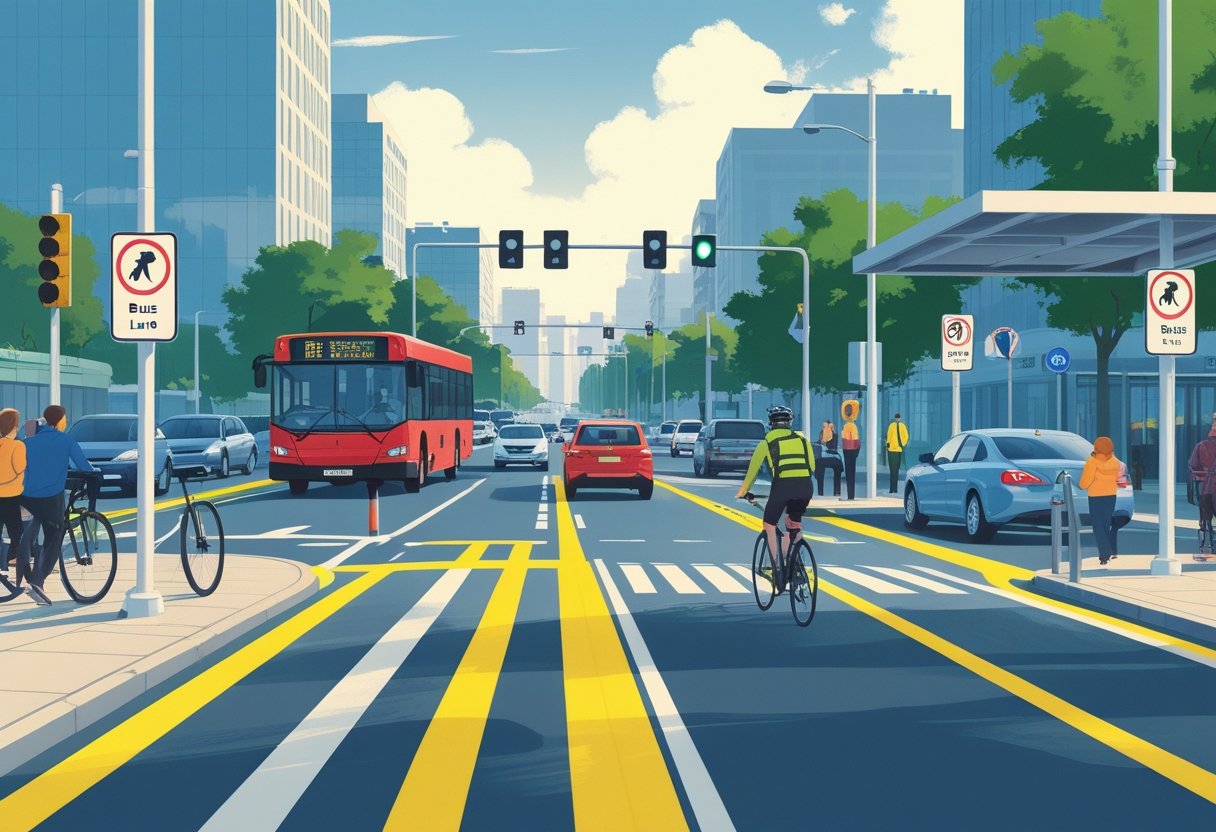
Getting bus-lane rules wrong during your test can result in a serious fault that leads to an automatic fail, so knowing when you can and cannot use these lanes is absolutely vital. The good news is that once you understand the signs and markings, navigating bus lanes becomes straightforward. We’ll guide you through everything you need to know, from decoding those blue signs to understanding when the rules apply.
Throughout this guide, we’ll explore why these lanes matter for learner drivers, break down the various signs and road markings you’ll encounter, and share practical tips to help you master bus lanes with confidence. By the end, you’ll have all the knowledge you need to handle any bus-lane situation during your test and beyond.
Why Bus Lanes Matter for Learner Drivers

Bus lanes play a vital role in managing traffic flow and reducing congestion, making them essential knowledge for anyone learning to drive. Understanding these lanes helps you navigate busy roads safely whilst building confidence for your driving test and beyond.
Benefits of Bus Lanes in Modern Traffic
Bus lanes transform how traffic moves through our busiest areas. They keep public transport flowing smoothly whilst reducing the number of vehicles competing for road space during peak hours.
Key advantages include:
- Reduced congestion: By separating buses from general traffic, these lanes prevent hold-ups that affect everyone
- Improved public transport efficiency: Buses can maintain schedules more reliably, encouraging people to use public transport
- Safer roads: Clear lane separation reduces confusion and potential conflicts between different vehicle types
For learner drivers, this means more predictable traffic patterns. You’ll find it easier to anticipate where buses will be travelling, making your journeys less stressful.
Many city centres now rely heavily on bus lanes to function properly. Without them, traffic would grind to a halt during busy periods. This system helps create the orderly traffic flow that makes learning to drive more manageable.
The Impact of Bus Lanes on Driving Tests
Your driving examiner will expect you to handle bus lanes confidently and correctly. Getting this wrong can result in serious faults that could cost you your test.
Common test scenarios involving bus lanes:
- Reading and following bus lane signs correctly
- Navigating around bus stops safely
- Understanding when you can and cannot use certain lanes
- Dealing with contraflow bus lanes that run against normal traffic
The good news is that understanding bus lanes actually makes you a better driver. You’ll develop sharper observation skills and learn to read road signs more carefully.
Most test routes include at least one bus lane situation. Examiners use these to assess your ability to follow traffic regulations under pressure. They’re looking for drivers who can make quick, safe decisions whilst staying within the law.
Practice in areas with bus lanes before your test. This builds familiarity and confidence, turning potential stress points into routine manoeuvres.
Common Misconceptions About Bus Lanes
Many learner drivers hold incorrect beliefs about bus lanes that can lead to fines or test failures. Let’s clear up the most widespread myths.
Myth 1: All bus lanes operate 24/7
Most bus lanes only restrict general traffic during specific hours. Always check the signs for operating times.
Myth 2: You can never drive in a bus lane
Some bus lanes allow taxis, motorcycles, or cyclists. Others permit general traffic outside restricted hours.
Myth 3: Bus lane cameras always flash
Unlike speed cameras, bus lane cameras use silent automatic number plate recognition technology.
Understanding these facts prevents costly mistakes. A typical bus lane fine ranges from £60 to £180, money better spent on more driving lessons.
The key is reading every bus lane sign carefully. Don’t assume all bus lanes work the same way, as rules vary significantly between different roads and local authorities.
Decoding Bus-Lane Signs and Road Markings
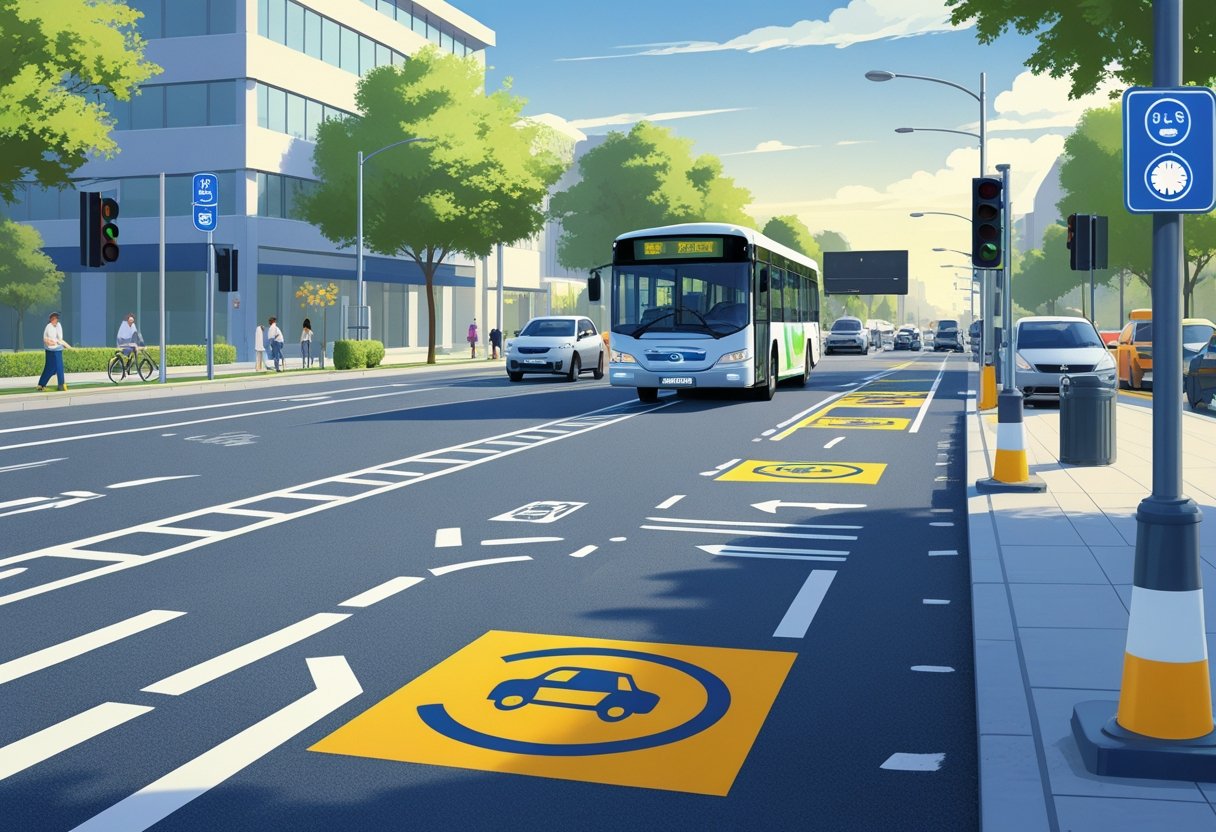
Bus-lane signs tell us exactly which vehicles can use these special lanes and when they operate. Road markings help us spot lane boundaries and understand whether we can cross into bus lanes safely.
Recognising Key Bus-Lane Signs
Bus-lane signs come in several forms, and we need to know what each symbol means. The most common sign shows a bus symbol with “BUS LANE” written underneath.
When we see “local” on the bus symbol, only buses running local services can use that lane. Without the word “local”, the lane allows local buses plus any vehicle designed to carry 10 or more people including the driver.
Signs showing buses and bicycles together mean both buses and bicycles can use the lane. Taxis are often permitted too, shown by a taxi symbol on the sign.
Some signs display contra-flow bus lanes. These show traffic moving in the opposite direction to normal traffic flow. We’ll see arrows pointing towards us, which means buses and bicycles may approach from the right.
Exemption plates appear with other road signs. These circular signs tell us that buses, taxis, and bicycles don’t have to follow certain restrictions like “no left turn” rules.
Understanding Operational Hours on Signs
Many bus lanes only operate during specific times, and the signs tell us exactly when. We’ll see times displayed clearly below the bus lane symbol, such as “Mon-Fri 7am-7pm” or “24 hours”.
When no times appear on the sign, the bus lane operates all the time. This means we cannot use it unless we’re in a permitted vehicle.
During operational hours, only authorised vehicles can use the lane. Outside these hours, all traffic can use the lane normally.
Bank holidays follow the same rules as regular days. If restrictions normally apply on a Monday and a bank holiday falls on Monday, the bus lane rules still operate as usual.
Times are strictly enforced through cameras and parking officers. Getting the hours wrong can result in penalty fines.
Spotting Road Markings and Lane Boundaries
Bus lanes use specific road markings to separate them from regular traffic lanes. A solid white line combined with a broken white line marks most bus lane boundaries.
The broken line means we can cross into the bus lane when safe and legal to do so. This usually applies for loading, unloading, or turning left.
Yellow road surfaces often mark bus lanes, making them easy to spot. However, not all bus lanes use coloured surfacing.
A broad continuous yellow line at the carriageway edge means other vehicles cannot stop there at all. This appears alongside many bus lanes to keep them clear.
“BUS LANE” appears painted on the road surface inside the lane. We’ll also see bus symbols painted at regular intervals along the lane length.
Core Bus-Lane Rules You Must Know
Bus-lane regulations protect specific road spaces for public transport, with clear rules about who can use them and when. Most bus lanes operate during set hours and allow certain vehicles like buses, taxis, and bicycles, though exceptions exist for loading and emergency situations.
Who Can Use Bus Lanes and When
Buses are always the primary users of bus lanes. Local buses can use any bus lane, whilst coaches and vehicles carrying 10 or more people (including the driver) can use lanes without “local” markings.
Taxis often get permission to use bus lanes, but this varies by location. Look for signs showing taxi symbols alongside bus markings.
Bicycles frequently share bus lanes with buses. Many councils allow cyclists to use these lanes as they provide safer routes through busy traffic.
Operating hours matter enormously. Blue signs display the exact times when restrictions apply. Outside these hours, all vehicles can typically use the lane.
Some bus lanes operate 24 hours a day. Others might restrict access only during rush hours like 7-9 AM and 5-7 PM on weekdays.
Emergency vehicles can use bus lanes when responding to incidents, regardless of operating times.
Types of Bus Lanes: Permanent vs. Time-Restricted
Time-restricted bus lanes are the most common type you’ll encounter. These lanes have specific operating hours shown on blue signs.
During active hours, only permitted vehicles can use the lane. Outside these times, any vehicle can drive there normally.
24-hour bus lanes operate continuously without time restrictions. These permanent lanes always reserve space for buses and other permitted vehicles.
You’ll typically find permanent bus lanes on major arterial roads where consistent bus priority improves public transport flow.
Contraflow bus lanes allow buses to travel against the normal traffic direction. These create efficient routes whilst other traffic follows different paths.
With-flow lanes run in the same direction as regular traffic but provide dedicated space for buses and permitted vehicles.
Road markings help identify lane types. Solid white lines often indicate permanent restrictions, whilst dashed lines might suggest time-limited access.
Exceptions and Special Cases
Loading and unloading creates the most common exception to bus-lane rules. You can briefly enter bus lanes to deliver goods or drop off passengers unless signs specifically prohibit this.
Keep loading times short and watch for “no stopping” markings. Yellow lines at the kerb edge indicate where stopping is completely forbidden.
Bank holidays follow normal restrictions. If a bus lane operates on Mondays, it still applies on bank holiday Mondays unless signs state otherwise.
Turning movements sometimes require entering bus lanes. You can cross or briefly use bus lanes when turning left or right, provided you exit quickly.
Broken-down vehicles in adjacent lanes might force you into bus lanes temporarily. This usually counts as reasonable necessity, but move out as soon as safely possible.
Medical emergencies creating urgent hospital trips might provide defence against penalties, though you’ll need strong evidence to support any appeal.
School transport and community buses sometimes get special permissions in certain areas, particularly during school hours.
What to Do if You Miss a Bus Lane Sign
Stay calm and don’t panic if you accidentally enter a bus lane. Sudden lane changes or stops create more danger than briefly continuing in the wrong lane.
Exit safely at the next opportunity. Look for gaps in traffic and signal clearly before moving back to the correct lane.
Don’t reverse or make sudden movements to get out quickly. This endangers other road users and could result in more serious penalties.
Check your mirrors frequently during the test to spot bus lane signs early. Examiners want to see you’re aware of road markings and signage.
If you receive a penalty notice later, examine the evidence carefully. Poor signage or faded road markings sometimes make penalties unenforceable.
Learn from the mistake by revisiting that route with your instructor. Understanding why you missed the sign helps prevent future errors.
Appeals are possible if signs were unclear, damaged, or incorrectly positioned. Keep photographic evidence and note the exact time and location.
Legal Framework Behind Bus Lanes
Bus lanes operate under specific legal powers granted to local councils through the Traffic Management Act 2004. These powers allow authorities to create Traffic Regulation Orders that formally establish bus lanes and give them the legal backing to enforce fines when drivers break the rules.
Traffic Management Act 2004 Explained
The Traffic Management Act 2004 gave local councils the power to enforce bus lane violations themselves. Before this act, only the police could issue penalties for driving in bus lanes.
This change made enforcement much more effective. Councils can now use cameras and traffic wardens to catch drivers who break bus lane rules. The act also set out how much councils can charge for fines.
Key powers under the act include:
- Authority to issue Penalty Charge Notices (PCNs)
- Use of automatic number plate recognition cameras
- Setting fine amounts between £60 and £180
- Keeping fine revenue to improve transport systems
The act requires councils to follow strict procedures when issuing fines. They must send notices within 14 days and give drivers the right to appeal. This protects drivers from unfair penalties whilst keeping enforcement strong.
How Traffic Regulation Orders Work
Traffic Regulation Orders (TROs) are the legal documents that create bus lanes. Without a proper TRO, a bus lane cannot be legally enforced.
Each TRO must specify exactly which vehicles can use the lane and when. It also sets out the operating hours and any special conditions. The order becomes the legal foundation for that specific bus lane.
A valid TRO must include:
- Precise location and length of the bus lane
- Operating times and days
- Which vehicles are permitted
- Penalty amounts for violations
Councils must follow a consultation process before creating new TROs. This gives residents and businesses a chance to comment. Once approved, the TRO gives councils full legal authority to enforce the bus lane rules through fines and other penalties.
Avoiding Penalties: Fines, Enforcement and Appeals
Bus lane violations typically result in penalty charge notices ranging from £60 to £180, issued through automated camera systems that monitor compliance around the clock. If you receive a fine, you have the right to appeal if you believe the penalty was issued incorrectly or unfairly.
Penalty Charge Notices and Fines
When you drive in a bus lane during restricted hours, you’ll receive a penalty charge notice (PCN) through the post within 14 days. Unlike speeding tickets, bus lane violations don’t add points to your licence.
Fine amounts vary by location:
- Standard fine: £60-£130
- London and major cities: £130-£180
- Early payment discount: 50% off if paid within 14 days
The good news is that most councils offer significant discounts for prompt payment. This means a £130 fine could drop to just £65 if you pay quickly.
What happens if you ignore the fine?
- Fine increases after 28 days
- Debt recovery agencies may get involved
- Court action becomes possible
- Additional charges pile up
We always recommend addressing any PCN immediately, even if you plan to appeal it.
How Bus Lane Enforcement Operates
Most bus lanes use Intelligent Transport Systems (ITS) with automatic number plate recognition cameras. These sophisticated systems work silently, capturing your vehicle’s details without any flash or obvious indication.
Camera locations are typically found:
- Entry and exit points of bus lanes
- Along lengthy stretches in city centres
- Areas with high traffic congestion
- Near transport hubs and shopping districts
The cameras operate 24/7, even when bus lanes aren’t restricted. They’re programmed to issue fines only during active enforcement hours.
How the system works:
- Camera captures your number plate
- System checks if your vehicle type is permitted
- Automated review confirms the violation
- PCN gets generated and posted to registered keeper
Traffic wardens also patrol some areas, particularly where contraflow systems operate or signage might be confusing for drivers.
Appealing a Bus Lane Violation
You have 28 days to appeal a PCN through your local council’s online portal. Appeals are free, and you won’t need to pay the fine while your case is under review.
Common successful appeal grounds:
- Unclear or missing signage
- Faulty road markings
- Emergency situation (medical emergency, avoiding accident)
- Vehicle breakdown in the lane
- Following police directions
What you’ll need for your appeal:
- Photos of unclear signs or road markings
- Evidence supporting your circumstances
- Witness statements if applicable
- Timestamp evidence showing when you left the lane
We’ve seen many successful appeals where drivers provided clear photographic evidence of poor signage or legitimate emergency situations.
If your initial appeal fails, you can request an independent review by the Traffic Penalty Tribunal. This service remains free, and their decisions are final. The tribunal often takes a more sympathetic view of genuine mistakes, especially for new drivers unfamiliar with local road layouts.
Practical Tips for Mastering Bus Lanes in Your Driving Test
Successfully handling bus lanes during your test requires careful observation of signs, proper positioning, and smart planning. We’ll help you stay calm when encountering contraflow systems and avoid the most common mistakes that catch out learner drivers.
Approaching and Navigating Bus Lanes Safely
When you spot a bus lane ahead, your first job is reading the signs quickly and accurately. Look for the blue rectangular sign that shows exactly when the lane operates and which vehicles can use it.
Check the times carefully. Some lanes run 24/7, whilst others only restrict traffic during peak hours like 7am-10am and 4pm-7pm.
Key vehicles that might share bus lanes:
- Buses (obviously!)
- Licensed taxis
- Motorcycles
- Cyclists
- Emergency vehicles
Position yourself in the correct lane well before you reach the bus lane. Don’t leave it until the last second to move over, as this looks uncertain to your examiner.
Watch your mirrors constantly for buses approaching from behind. They have schedules to keep, so give them plenty of space when they need to merge back into regular traffic.
If you’re allowed to use a bus lane during your test, use it confidently. Failing to use an available bus lane when it’s legal can actually result in a serious fault.
Plan Ahead for Contraflow and Shared Lanes
Contraflow bus lanes can feel intimidating because buses travel towards you in what looks like “your” lane. The secret is understanding the road markings and staying calm.
Look for the directional arrows painted on the road surface. These show you exactly where each type of vehicle should position themselves.
Watch for these contraflow warning signs:
- White arrows pointing towards you
- “Bus lane” signs with directional information
- Solid white lines separating opposing traffic flows
Keep well to your left when passing contraflow sections. Buses are much larger than cars, and you need to give them adequate clearance.
Don’t panic if you see a bus approaching in the contraflow lane. This is completely normal and legal. Maintain your speed and position unless you need to slow for other traffic conditions.
In shared bus lanes where you’re permitted during certain hours, be extra aware of cyclists. They often use these lanes and can be harder to spot than larger vehicles.
Common Errors and How to Avoid Them
Misreading operating times is the biggest trap for learner drivers. If there’s no time displayed, assume the bus lane operates 24 hours a day. When in doubt, stay out.
Straddling lane markings between bus lanes and regular traffic looks messy and uncertain. Pick your lane decisively and stick to it.
Many learner drivers accidentally drift into bus lanes when concentrating on other tasks. Keep checking your position, especially at traffic lights or when following sat nav directions.
Don’t make these critical mistakes:
- Stopping or parking in bus lanes (even briefly)
- Using bus lanes to overtake slower traffic
- Entering contraflow lanes going the wrong direction
- Ignoring “Local buses only” restrictions
If you accidentally enter a restricted bus lane during your test, exit safely as soon as possible. Don’t slam on the brakes or make sudden movements that could cause an accident.
Remember that your examiner understands that bus lanes can be confusing. Show them you can read signs accurately, position your car correctly, and make safe decisions under pressure.
Frequently Asked Questions
Bus lane signs can seem tricky at first, but once you know what to look for, they become your helpful road companions. Understanding timing restrictions, vehicle permissions, and colour codes will boost your confidence during both your theory and practical tests.
What delightful moments await when you correctly interpret different bus-lane signs?
Reading bus lane signs correctly gives us that brilliant “aha!” moment during our driving test. We’ll spot the blue rectangular signs with white text that tell us exactly who can use the lane and when.
These signs show symbols for buses, taxis, cycles, and sometimes motorcycles. When we see these symbols, we know which vehicles belong in that lane.
The most satisfying part? Recognising contraflow bus lane signs that show buses travelling in the opposite direction. These signs have arrows pointing towards us, warning that buses might be coming our way.
Getting these signs right during our test shows our examiner we’re paying proper attention to road safety. It’s one of those skills that makes us feel like proper drivers.
Ready for a challenge? Let’s discover exactly when you can share the road with our friends on the bus!
Bus lanes aren’t always off-limits to us regular drivers. Many bus lanes allow other traffic during certain hours, usually evenings and weekends.
The key is reading those time restrictions carefully. If we see “Mon-Fri 7am-10am, 4pm-7pm” on the sign, we can use the lane outside those hours.
Some bus lanes show “At any time” or have no time restrictions listed. These lanes are for buses and authorised vehicles only, all day and all night.
During our driving test, we might encounter bus lanes we can legally use. Our examiner will be impressed if we confidently enter when permitted and stay clear when restricted.
Weekend driving often gives us more bus lane access. Many restrictions only apply during weekday rush hours when public transport needs priority.
How can we ensure we’re using bus lanes correctly without getting our knickers in a twist?
The secret lies in taking our time to read every sign properly. We should never assume a bus lane has the same rules as the last one we passed.
Check for cameras mounted on poles near bus lanes. These automatic number plate recognition systems catch violations, but they don’t flash like speed cameras do.
If we accidentally enter a bus lane, we should exit safely at the next opportunity. Don’t panic or make sudden lane changes that could cause accidents.
Practice identifying bus lane markings during our lessons. Look for the dashed white lines or solid white lines that mark the lane boundaries.
Remember that emergency vehicles, taxis, and motorcycles often share bus lane permissions with buses. The signs will show us exactly which vehicles are welcome.
Isn’t it just thrilling to think about passing your test? How can bus lane rules help us achieve that?
Understanding bus lanes shows our examiner we’re aware of traffic management systems. This awareness is crucial for safe, confident driving.
During our practical test, we might need to navigate around bus lanes or use them when permitted. Getting this right demonstrates excellent road sense.
Our theory test will definitely include questions about bus lane signs and rules. Knowing the difference between with-flow and contraflow lanes gives us easy marks.
Bus lane knowledge also helps us plan better routes during our test. We’ll know which lanes to avoid and which ones might actually help our progress.
The examiner watches how we respond to bus lane signs because it shows we’re thinking ahead and following the Highway Code properly.
Can you feel the excitement of mastering the timings of bus lanes for your big day?
Timing is everything with bus lanes, and getting it right feels fantastic. We need to spot those operational hours quickly and make confident decisions.
Most bus lanes operate during rush hours when public transport needs priority. These typically run from 7am to 10am and 4pm to 7pm on weekdays.
Some city centre bus lanes run 24/7, especially in busy shopping areas or near transport hubs. These permanent restrictions help keep buses moving smoothly.
Weekend restrictions are usually lighter, with many bus lanes opening to general traffic on Saturdays and Sundays.
During our test, demonstrating we understand these timing patterns shows mature driving judgement. Our examiner will notice this attention to detail.
What secrets do the colours and markings in bus lanes hold for us eager drivers in the making?
Blue signs with white symbols are the universal language of bus lanes. These colours make the signs stand out clearly against any background.
Red route markings sometimes accompany bus lanes in London and other major cities. These double red lines mean no stopping at any time.
White road markings define bus lane boundaries. Dashed lines usually mean we can cross when safe and legal, whilst solid lines mean stay out.
Yellow road markings might appear at bus stops within bus lanes. These show where buses need extra space to pull in and let passengers board safely.
The word “BUS” painted in large white letters on the road surface confirms we’re looking at a bus lane. This marking appears regularly along the lane’s length.