

Understanding Codes and Markings on Your Driving Test Report: Your Friendly Guide
Getting your driving test results can feel like trying to crack a secret code. Those boxes, symbols, and markings on your DL25 report form might look confusing at first glance, but they’re actually telling you a clear story about your performance behind the wheel.
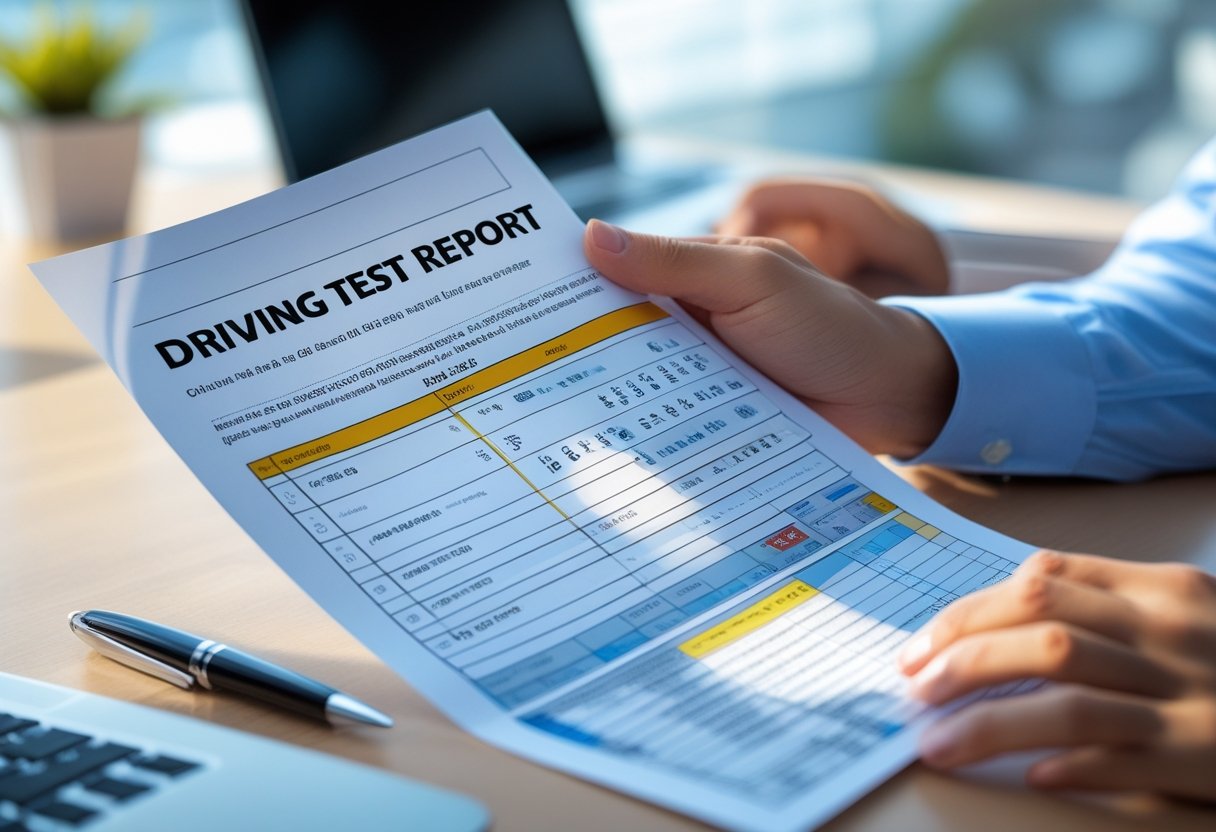
Every mark on your driving test report has a specific meaning, and understanding these codes helps you see exactly where you excelled and what areas need more practice. Whether you’ve just passed your test or need to prepare for a retake, knowing how to read these assessments gives you valuable insight into your driving skills. The examiner wasn’t just randomly ticking boxes during your test.
We’ll walk you through each section of the report, from the eyesight test at the top to the detailed assessments of your manoeuvres and road awareness. You’ll discover what those different fault categories really mean, how specific driving situations are evaluated, and most importantly, how to use this information to become a better, more confident driver on Britain’s roads.
What Is the Driving Test Report?

The driving test report serves as your official record of performance during the practical driving test, documenting every aspect of your assessment on the DL25 marking sheet through systematic evaluation methods.
Purpose and Importance of the Report
Your driving test report isn’t just paperwork. It’s a detailed roadmap that shows exactly how you performed during your practical test.
The report serves multiple crucial functions for pupils taking their driving test. First, it provides transparent feedback about your driving abilities across all assessed areas. Whether you pass or need to retake the test, this document becomes your personal guide for improvement.
The report helps you understand:
- Which skills you’ve mastered completely
- Areas where you made minor mistakes
- Serious faults that need immediate attention
- Your overall readiness for independent driving
For driving instructors, the report becomes an invaluable teaching tool. They can pinpoint exactly where you need extra practice and tailor future lessons accordingly.
If you don’t pass on your first attempt, don’t worry. The report transforms disappointment into opportunity by showing you precisely what to work on before your next test.
Overview of the DL25 Marking Sheet
The DL25 marking sheet is the official form that driving examiners use to assess your performance. This standardised document ensures every candidate receives fair and consistent evaluation.
The sheet contains multiple sections covering every aspect of driving. These include vehicle safety checks, car control, observation skills, and responses to traffic situations.
Key sections on the DL25 include:
- Eyesight test – Reading number plates at the required distance
- Vehicle checks – Show me, tell me questions about car safety
- Manoeuvres – Parking, reversing, and turning exercises
- General driving – Everything from moving off to motorway driving
Each section allows examiners to mark three types of faults. Minor faults show areas for improvement, whilst serious and dangerous faults indicate safety concerns that prevent you from passing.
The layout might look overwhelming at first glance, but it’s actually quite logical. Everything follows the natural flow of a driving test from start to finish.
Digital and Paper Recording Methods
Modern driving tests use both traditional paper methods and digital recording systems. Your examiner will complete the DL25 marking sheet during your test, noting any faults as they occur.
Many test centres now use tablet devices alongside paper forms. This digital approach helps ensure accuracy and makes the marking process more efficient for examiners.
Recording happens in real-time:
- Faults are marked immediately when they occur
- Examiners use standardised codes and symbols
- Your final result gets calculated at the test’s end
After your test, you’ll receive a copy of your report regardless of the recording method used. This document belongs to you and provides the detailed feedback you need.
The examiner explains your result using the completed marking sheet. They’ll highlight your strengths and discuss any areas where faults were recorded, giving you clear direction for future development.
Decoding Marking Codes and Symbols
Your driving examiner uses specific codes and symbols to record your performance during the test. The marking sheet contains different columns for driving faults (minors), serious faults, and dangerous faults, with clear symbols that determine whether you pass or fail.
Types of Faults: Driving, Serious, and Dangerous
The marking sheet categorises your performance into three distinct fault types. Understanding these categories helps you interpret your results properly.
Driving faults (also called minor faults) won’t automatically fail you. We mark these with a tick or slash in the driving fault column. You can accumulate up to 15 driving faults and still pass your test.
However, if you receive more than four driving faults in the same category, this typically becomes a serious fault. For example, four separate mirror-checking mistakes would likely result in a serious fault for mirror use.
Serious faults mean an instant test failure. These occur when your driving could potentially cause danger to yourself, the examiner, other road users, or property. We mark serious faults with an ‘S’ in the appropriate box.
Dangerous faults also result in immediate failure. These happen when your actions create actual danger or require the examiner to take physical or verbal action to prevent an incident. We record dangerous faults with a ‘D’ marking.
Understanding Marking Columns and Boxes
The marking sheet contains multiple columns that correspond to different driving skills. Each row represents a specific driving competency that we assess throughout your test.
The leftmost column lists the driving skill being evaluated. Examples include ‘Use of mirrors’, ‘Signals’, ‘Junctions’, and ‘Progress’.
Column layout typically includes:
- Driving fault column (for minor mistakes)
- Serious fault box marked ‘S’
- Dangerous fault box marked ‘D’
We use tally marks or ticks to record multiple driving faults in the same category. If you make the same mistake repeatedly, you’ll see several marks in that driving fault column.
The boxes remain empty if you perform that skill correctly. A mark in the ‘S’ or ‘D’ box means immediate test failure, regardless of how well you performed in other areas.
Common Codes Found on the Sheet
Several standard codes and abbreviations appear regularly on driving test reports. Familiarising yourself with these helps you understand your assessment quickly.
Most frequent codes include:
- ETA: Explain, teach, and analyse (additional feedback section)
- ECO: Environmentally conscious driving assessment
- DF: Driving fault (minor)
- SF: Serious fault
- DNF: Dangerous fault
We also use numerical codes for specific manoeuvres. The reverse parking manoeuvre might be coded as ‘RP’, whilst the forward park appears as ‘FP’.
Your examiner records the eyesight test result at the top of the sheet. A tick indicates you passed this essential requirement. No mark in this section would mean test termination.
The ‘Show me, tell me’ questions section uses simple tick or cross markings. Getting both questions wrong results in one driving fault, not automatic failure.
Some examiners add brief written comments in margins or designated feedback areas. These explanatory notes help pupils understand specific situations where faults occurred during their assessment.
Key Sections of the Report Explained
Your driving test report contains several crucial sections that start before you even get behind the wheel. These initial assessments cover your basic vision requirements, essential safety knowledge, and understanding of road rules.
Eyesight Test and Health Declaration
Before we can begin your practical test, you’ll need to pass a simple eyesight check and complete your health declaration. This happens right at the start, usually whilst walking to your car.
Reading the vehicle registration number is straightforward but absolutely vital. You’ll need to read a number plate from 20 metres away (or 20.5 metres for older plates). If you wear glasses or contact lenses to pass this test, you must wear them every single time you drive.
The health declaration appears at the top of your DL25 form. You’ll sign this in the waiting room before your test begins. This declaration confirms your insurance details and that you meet the 185-day residency requirement for GB provisional licence holders.
Don’t panic if you need your specs for the eyesight test. Loads of drivers wear glasses, and examiners see this every day. Just make sure you’ve got them with you and that your prescription is up to date.
Safety and Vehicle Checks
We’ll ask you two important safety questions during your test: one “show me” question and one “tell me” question. These aren’t designed to trip you up, but to make sure you understand basic vehicle maintenance.
Vehicle checks cover essential safety items like lights, brakes, tyres, and fluid levels. The “tell me” question happens before you start driving. The “show me” question comes whilst you’re driving, so you’ll need to demonstrate something like operating the rear windscreen demister.
Common areas include checking tyre tread depth, testing brake lights, and operating windscreen washers. You might also be asked about oil levels, brake fluid, or how to check if your power steering is working properly.
Remember, these aren’t trick questions. We want to see that you’d spot basic problems before they become dangerous. Think about the checks a responsible driver does regularly.
Highway Code and Road Signs
Your understanding of traffic signs and road rules gets assessed throughout your entire test, not just in a separate section. We’re watching how you respond to speed limit changes, road markings, and traffic signals.
Highway Code knowledge shows up in how you handle real driving situations. This includes following give way rules at roundabouts, understanding lane markings, and responding correctly to pedestrian crossings.
Traffic signs assessment covers everything from mandatory speed limits to warning triangles and directional arrows. You’ll encounter these naturally during your test route, so we can see how well you read and react to them in real time.
Some specialist vehicle tests include specific Highway Code questions at the end. LGV and PCV tests also feature additional safety questions about vehicle-specific equipment like fire extinguishers and emergency exits.
The key is showing you understand what signs mean and can act on them quickly. Hesitating at a clear road sign or missing a speed limit change will get marked down.
How Manoeuvres and Controls Are Assessed
The examiner carefully watches three key areas during your driving test: how well you control the car and its various systems, your ability to perform specific manoeuvres like parking and reversing, and whether you check mirrors and blind spots properly.
Vehicle Control and Ancillary Controls
Your examiner pays close attention to how smoothly you handle the basic controls throughout your test. This includes your clutch control, steering, and how you use the accelerator and brake pedals.
Ancillary controls cover all the extra bits that help you drive safely. We’re talking about indicators, windscreen wipers, headlights, and the handbrake. Your examiner wants to see that you can use these without fumbling around or taking your eyes off the road for too long.
The parking brake (or handbrake) is particularly important during hill starts and when you stop for longer periods. You’ll need to show you know when to use it and when to release it properly.
Here’s what the examiner looks for:
- Smooth gear changes without grinding
- Proper clutch control, especially in slow-moving traffic
- Using the handbrake appropriately
- Operating indicators, wipers, and lights without hesitation
- Maintaining good steering control
Small mistakes won’t fail you, but repeated problems with basic controls will raise concerns about your overall driving ability.
Manoeuvres: Forward Park, Reverse, and Controlled Stop
During your test, you’ll need to demonstrate one reversing manoeuvre and possibly an emergency stop. The forward park (bay parking) is one option, along with parallel parking or reversing round a corner.
For a forward park, drive into a parking bay and show good control. Use your mirrors, check around the car, and position yourself accurately. Don’t worry if you need to straighten up once or twice.
Reversing manoeuvres test your car control at low speeds. Take your time, use effective observations, and don’t rush. The examiner wants to see you’re in full control of the vehicle.
A controlled stop (emergency stop) might be included in your test. When the examiner gives the signal, stop as quickly and safely as possible. Keep both hands on the steering wheel and apply the handbrake once you’ve stopped.
Normal stops happen throughout your test when you pull up on the left. Show good control by stopping reasonably close to the kerb without mounting it.
Use of Mirrors and Observations
Effective mirror use separates good drivers from average ones. Your examiner watches to see if you check mirrors regularly and act on what you see.
Check your mirrors before signalling, changing direction, or changing speed. This includes the interior mirror and both wing mirrors. But don’t just look at them, show that you’re processing the information.
Blind spots are areas your mirrors can’t cover. You’ll need to look over your shoulder before moving off, changing lanes, or during manoeuvres. This physical check shows the examiner you understand the limitations of mirrors.
The key mirror checks include:
- Before moving off
- When changing lanes or overtaking
- Before turning left or right
- During all manoeuvres
- When slowing down or stopping
Your observations should feel natural, not like you’re putting on a show. Regular, purposeful checks demonstrate that checking mirrors has become second nature to you.
Remember, it’s not just about looking in mirrors but responding appropriately to what you see there.
Traffic Situations and Hazard Handling
Your driving examiner watches how you handle real-world traffic situations and respond to potential hazards. They’ll assess your use of signals and lights, speed management, junction navigation, and how well you protect vulnerable road users.
Signals, Indicators, and Lights
Your examiner marks how effectively you communicate with other road users through proper signalling. We need to signal clearly and at the right time to show our intentions.
Common faults include:
- Forgetting to cancel indicators after turning
- Signalling too late or too early
- Not using hazard lights when appropriate
- Failing to signal when changing lanes
The key is timing your signals properly. Signal early enough to give others time to react, but not so early that it confuses them about your intentions.
Practice using your indicators smoothly without taking your eyes off the road. Your examiner wants to see that signalling becomes second nature to you.
Don’t forget about your brake lights either. They automatically signal to drivers behind you when you’re slowing down, so smooth braking helps communicate your intentions clearly.
Speed Limits and Use of Speed
Speed management isn’t just about staying under the limit. Your examiner assesses whether you choose appropriate speeds for different conditions and situations.
You’ll be marked on:
- Maintaining safe speeds in built-up areas
- Adjusting speed for weather conditions
- Slowing appropriately for hazards
- Not driving unnecessarily slowly
We should match our speed to the conditions, not just the speed limit. A 30mph limit doesn’t mean we should always drive at 30mph if conditions are poor.
Your examiner looks for smooth acceleration and deceleration. Sudden speed changes can unsettle other road users and show poor planning.
Remember that driving too slowly can be just as dangerous as speeding. If you’re holding up traffic unnecessarily, that’s a fault too.
Junctions, Roundabouts, and Following Distance
Junction handling is one of the most challenging aspects of your test. Your examiner watches your approach speed, observations, and positioning at all types of junctions.
Key areas include:
- Approach speed: Slow down enough to observe properly
- Observations: Check all directions multiple times
- Positioning: Get in the correct lane early
- Following distance: Maintain safe gaps
At roundabouts, we need to signal correctly and give way to traffic from the right. Position yourself in the appropriate lane before entering.
Following distance is crucial for road safety. Use the two-second rule in dry conditions and increase this gap in wet weather.
Your examiner wants to see confident decision-making at junctions. Don’t hesitate unnecessarily, but never rush into unsafe situations either.
Pedestrian Crossings and Vulnerable Road Users
Protecting vulnerable road users shows your examiner that you’re a responsible driver who prioritises safety. This includes pedestrians, cyclists, motorcyclists, and horse riders.
Watch for:
- Pedestrians waiting to cross at any location
- Cyclists filtering through traffic
- Motorcyclists in your blind spots
- Children near schools or parks
At pedestrian crossings, we must stop if someone is waiting to cross. Don’t wave pedestrians across, but make eye contact to acknowledge them.
Give cyclists plenty of space when overtaking. Allow at least one metre clearance when possible, and never squeeze past in narrow spaces.
Your examiner particularly notices how you handle school zones and residential areas where children might be present. Reduce speed and stay extra alert in these locations.
Remember that vulnerable road users can be unpredictable. Always expect the unexpected and plan your responses accordingly.
Special Assessments for Different Vehicles
Certain vehicles require unique skills that go beyond standard driving abilities. Taxi drivers must master wheelchair accessibility equipment, whilst those handling trailers need expertise in coupling procedures.
Taxi Manoeuvres and Wheelchair Ramps
When we take our taxi driving test, we’ll encounter specific assessments that regular car drivers never face. The examiner watches how we handle taxi manoeuvre situations and operate accessibility equipment.
Wheelchair ramp operation forms a crucial part of our assessment. We must demonstrate smooth, confident handling of the ramp mechanism. This includes proper positioning of the vehicle and safe deployment of the equipment.
The examiner checks our understanding of taxi wheelchair procedures. We need to show we can secure wheelchairs properly and communicate clearly with passengers throughout the process.
Key areas assessed include:
- Correct ramp positioning and deployment
- Safe loading and unloading procedures
- Proper wheelchair securing techniques
- Clear passenger communication
Common faults occur when we rush the process or fail to check equipment properly. Taking our time and following each step methodically helps us avoid these pitfalls.
Uncoupling and Recoupling: Vehicle and Trailer Combinations
Vehicle and trailer combinations require specialised skills that we must demonstrate during our test. The examiner assesses our ability to safely separate and reconnect these units.
Uncoupling and recoupling procedures follow strict safety protocols. We must complete each step in the correct order whilst maintaining awareness of our surroundings.
The assessment covers electrical connections, brake lines, and coupling mechanisms. We need to show we understand how each component works together safely.
Essential skills include:
- Proper positioning for coupling operations
- Correct sequence for connecting/disconnecting
- Safety checks before and after procedures
- Understanding of different coupling types
Practice makes these complex procedures feel natural. We should rehearse each step until it becomes second nature before our test day arrives.
Tips for Interpreting and Learning from Your Results
Your driving test report contains valuable insights that can transform your approach to driving and boost your confidence for future attempts. We’ll show you how to identify specific areas where you excel and pinpoint the skills that need attention.
Identifying Your Strengths and Weaknesses
Start with the positive bits first. Look through your report and highlight every area where you received no faults. These represent your strongest driving skills and show you’re already competent in important areas.
Next, examine your minor faults carefully. If you accumulated several minors in one category, this signals a pattern worth addressing. For example, multiple faults in “junctions” might indicate you need more practice with approach speeds or observation techniques.
Pay attention to fault clusters on your marking sheet. Three minors for “following distance” tells a different story than one minor each across three separate categories.
Major or serious faults deserve immediate attention. These represent safety-critical issues that require focused practice before your next attempt. Note the specific circumstances where these occurred.
Review the examiner’s comments section. Many examiners provide brief explanations that offer crucial context. A fault marked as “observation” might specifically relate to checking blind spots during lane changes.
Don’t dismiss areas with just one minor fault. Sometimes pupils make small errors in skills they generally handle well, but patterns can emerge across multiple test attempts.
Preparing for Your Next Attempt with Confidence
Book additional lessons targeting your specific weak areas. Share your detailed results with your instructor so they can design focused practice sessions. Generic lessons won’t address the particular skills highlighted in your assessment.
Practice in similar conditions to your test. If you struggled with junctions, spend time practising at the actual test centre area where you’ll likely encounter similar road layouts and traffic patterns.
Work on building muscle memory for problem areas. If clutch control caused issues, dedicate time to slow-speed manoeuvres until smooth operation becomes automatic. Repetition builds the confidence that reduces test-day nerves.
Set realistic timescales for improvement. Complex skills like hazard perception or junction assessment typically need several weeks of regular practice. Rushing into another test too quickly often leads to repeating the same mistakes.
Track your progress systematically. Keep notes during practice drives about improvements in your previously weak areas. This builds genuine confidence based on measurable skill development rather than wishful thinking.
Frequently Asked Questions
The driving test report can feel overwhelming when you first look at it, especially if you’ve received fault markings or unfamiliar codes. We’ll answer the most common questions about fault categories, examiner markings, specific codes like ‘S’ and ‘D’, and how to use your feedback effectively.
What do the different categories on the driving test report signify for my performance?
The DL25 driving test report breaks down your driving into specific skill areas. Each category represents a crucial aspect of safe driving that examiners assess throughout your test.
Categories like ‘Control’ evaluate how smoothly you handle the car’s basic functions. ‘Use of mirrors’ focuses on your observation skills and awareness of other road users.
‘Move off’ examines your ability to start your journey safely from various positions. ‘Signals’ assesses whether you communicate your intentions clearly to other drivers and pedestrians.
The ‘Response to signs/signals’ category checks if you follow traffic rules properly. ‘Use of speed’ measures whether you drive at appropriate speeds for different conditions.
Each category can receive different types of fault markings. Understanding these areas helps you identify exactly where to focus your improvement efforts.
How can I interpret the tick marks and comments from my examiner in the DL25 driving test document?
Tick marks in boxes indicate where faults occurred during your test. A single tick represents a driving fault (minor error), whilst multiple ticks in the same category suggest repeated mistakes.
Comments written by your examiner provide specific details about what went wrong. These notes help you understand the exact circumstances that led to each fault marking.
Some boxes might contain letters or symbols alongside ticks. These reference specific incidents or locations where problems occurred during your test route.
Your examiner’s handwriting might be challenging to read, but their comments are valuable feedback. They often include helpful suggestions for improvement or note particular areas of concern.
Empty boxes with no markings indicate areas where you performed well. These sections show your strengths and skills you’ve already mastered effectively.
Could you explain the meaning behind the various fault codes I might see on my driving test report?
Fault codes use a simple system to categorise different types of errors. The most important distinction is between minor faults and serious or dangerous faults.
Minor faults appear as single tick marks in category boxes. You can accumulate up to 15 minor faults and still pass your driving test successfully.
Serious faults are marked with an ‘S’ and result in immediate test failure. These indicate errors that could potentially cause danger to yourself or other road users.
Dangerous faults receive a ‘D’ marking and also mean automatic failure. These represent actions that put you, your examiner, or others in immediate danger.
Some reports include numerical codes or abbreviations that reference specific manoeuvres or test elements. These help examiners track which parts of the test generated particular faults.
Why is it important to review the driving test report thoroughly, and how does it help me become a better driver?
Your driving test report serves as a detailed roadmap for improvement. It pinpoints exactly where your driving skills need development before your next test attempt.
Reviewing the report helps you understand patterns in your mistakes. You might notice several faults clustered in observation or vehicle control areas.
The feedback shows both weaknesses and strengths in your driving ability. Recognising what you did well builds confidence alongside identifying improvement areas.
Your driving instructor can use the report to tailor future lessons specifically. This targeted approach makes your practice time more efficient and effective.
Understanding your report prevents you from repeating the same mistakes. It transforms a failed test into valuable learning that increases your chances of future success.
What steps should I take if I’m unclear about the feedback provided on my driving test report?
Contact your driving instructor first to discuss any confusing markings or comments. They have experience interpreting test reports and can explain technical terms clearly.
Visit your local driving test centre if you need clarification about specific fault codes. The staff can often provide additional context about examiner markings.
Consider requesting a formal explanation if you believe there’s been an error. The DVSA has procedures for addressing concerns about test marking or examiner decisions.
Take photos of unclear handwriting or markings before the ink fades. This preserves the information for later discussion with instructors or test centre staff.
Don’t let confusion discourage you from using the feedback. Even partially understood guidance is better than ignoring the report completely.
Can you guide me through understanding the ‘S’ and ‘D’ codes that appear on my driving test paperwork?
The ‘S’ code stands for ‘Serious fault’ and indicates a significant error in judgement or control. These faults could potentially result in danger but didn’t create immediate risk.
Examples of serious faults include emerging at junctions without adequate observation or failing to respond appropriately to traffic signals. Poor positioning that forces other drivers to brake might also receive an ‘S’ marking.
The ‘D’ code represents ‘Dangerous fault’ and marks the most severe category of error. These actions create immediate danger requiring examiner intervention.
Dangerous faults might include pulling out in front of oncoming traffic or mounting pavements where pedestrians are walking. Any action requiring the examiner to use dual controls typically results in a ‘D’ marking.
Both ‘S’ and ‘D’ codes result in automatic test failure regardless of how well you performed in other areas. Understanding these serious categories helps you prioritise safety above all other considerations.