

Understanding UK Speed Limits: Built‑Up, Single & Dual Carriageways Made Easy
Driving on UK roads means understanding the speed limits that keep everyone safe. For cars, the basic rules are 30mph in built-up areas, 60mph on single carriageways, and 70mph on dual carriageways and motorways. These limits change based on your vehicle type, the road conditions, and local restrictions that councils put in place.
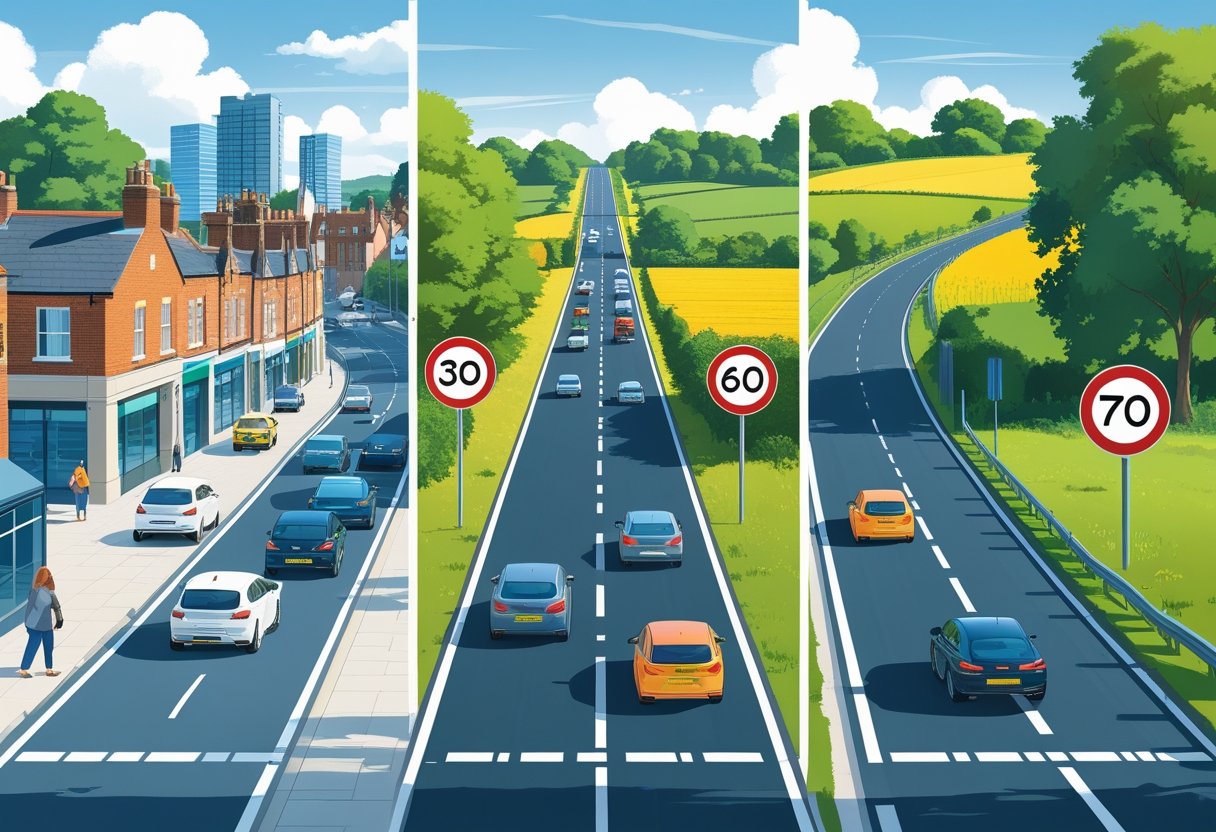
We know that speed limits can feel confusing when you’re learning to drive. Different roads have different rules, and some vehicles follow completely different limits than others. Add in temporary restrictions, variable speed zones, and the various signs you’ll encounter, and it’s easy to see why many learners feel overwhelmed.
That’s exactly why we’ve put together this complete guide to UK speed limits. We’ll walk you through everything from recognising the signs to understanding enforcement methods, plus cover the penalties you’ll face if you get it wrong. By the end, you’ll feel confident about staying within the limits on any road you encounter.
The Core Principles of UK Speed Limits
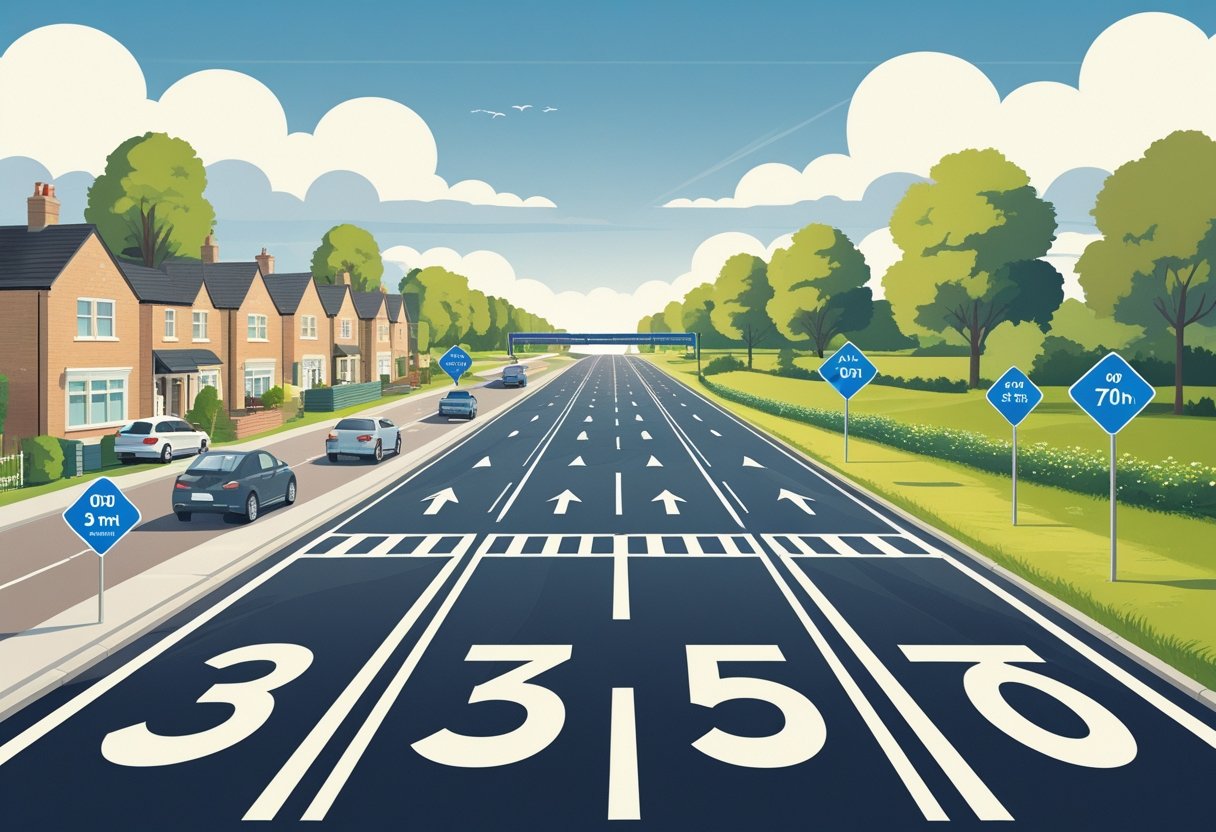
Speed limits in the UK follow a clear structure based on road types and safety considerations. These limits are set by national guidelines but can be adjusted locally, and they represent maximum speeds rather than driving targets.
How Speed Limits Are Set and Why They Matter
Speed limits aren’t random numbers chosen by officials. The Department for Transport sets national guidelines based on extensive research into road safety, traffic flow, and accident data.
National guidelines provide the foundation:
- 30mph in built-up areas across England, Scotland, and Northern Ireland
- 20mph in built-up areas throughout Wales
- 60mph on single carriageways
- 70mph on dual carriageways and motorways
Road safety drives every decision. Engineers study factors like road width, visibility, pedestrian activity, and accident history. Areas with schools, shops, or heavy foot traffic get lower limits to protect vulnerable road users.
Traffic engineers also consider the 85th percentile rule. This means they look at the speed that 85% of drivers naturally choose on a road. If most drivers feel safe at 35mph on a particular stretch, the limit might stay at 30mph rather than being reduced.
The process involves local councils, police, and transport authorities working together. They review accident statistics, conduct speed surveys, and consider public feedback before making changes.
The Difference Between National and Local Limits
We have two types of speed limits: national defaults and locally set limits. Understanding this distinction helps you navigate UK roads with confidence.
National speed limits apply automatically to roads that meet certain criteria. You’ll see the white circular sign with a diagonal black stripe indicating these areas. These limits depend on your vehicle type and the road classification.
Local authorities can override national limits when safety demands it. You’ll spot these through clearly posted speed limit signs showing specific numbers like 20, 40, or 50mph.
Common local variations include:
- 20mph zones near schools and hospitals
- 40mph limits on roads that would normally be 60mph
- 50mph restrictions on challenging sections of dual carriageways
Local councils must follow strict guidelines when setting these limits. They need evidence that lower speeds will improve safety or reduce environmental impact. Every local speed limit requires proper signage and regular reviews.
Some areas use variable speed limits that change based on conditions. Motorway overhead gantries display different limits during rush hour, poor weather, or after accidents.
Speed Limits: Maximums, Not Targets
This principle transforms how we think about driving speeds. Speed limits show the absolute maximum allowed, not the speed you should aim for in all conditions.
Weather changes everything. Rain reduces visibility and increases stopping distances. Snow and ice make roads treacherous. Fog can appear suddenly, cutting visibility to mere metres. We adjust our speed to match conditions, often driving well below the posted limit.
Road conditions matter just as much. Temporary traffic lights, roadworks, or heavy pedestrian activity all require slower speeds. A 30mph limit doesn’t mean 30mph is safe when children are walking to school.
Your vehicle affects safe speeds too. Larger vehicles need more time to stop. Vehicles towing trailers have different speed limits precisely because they handle differently. Even your car’s condition plays a role – worn tyres or poor brakes demand extra caution.
Time of day influences appropriate speeds. Quiet rural roads at 3am feel very different from the same roads during morning rush hour. We drive according to what we can see and how quickly we can react.
Think of speed limits as the ceiling, not the floor. Professional driving instructors teach this from day one because it builds the judgement skills that keep everyone safe on our roads.
Speed Limits in Built-Up Areas
Built-up areas typically have 30mph speed limits in England, Scotland, and Northern Ireland, whilst Wales has adopted 20mph as the default. Local councils can introduce 20mph zones in specific areas where pedestrian safety is a priority.
Default Built-Up Area Limits Across the UK
The standard speed limit in built-up areas is 30mph across England, Scotland, and Northern Ireland. This applies to all vehicles, from cars and motorcycles to buses and goods vehicles.
Wales stands apart with its 20mph default limit in built-up areas. This change came into effect to improve road safety and reduce accidents involving pedestrians and cyclists.
These limits apply unless road signs indicate otherwise. You’ll find these default speeds on most residential streets, shopping areas, and town centres where street lighting is present.
The lower speeds in built-up areas protect vulnerable road users. Pedestrians, cyclists, and children are more likely to survive accidents when vehicles travel at these reduced speeds.
Understanding 20mph Zones
Many councils across the UK have introduced 20mph zones in specific areas, even where the default limit remains 30mph. These zones target areas with high pedestrian activity or particular safety concerns.
You’ll commonly find 20mph zones near schools, hospitals, shopping centres, and residential areas with narrow streets. Speed limit signs clearly mark the start and end of these zones.
Traffic calming measures often accompany 20mph zones. These include speed bumps, narrowed roads, and raised crossings that naturally encourage slower driving.
Fixed speed cameras and mobile enforcement help ensure compliance with these lower limits. The penalties for exceeding 20mph limits are the same as for other speed limit breaches.
Identifying Built-Up Areas While Driving
Built-up areas are defined as roads with street lighting placed no more than 200 yards apart. This system of lighting indicates where the lower speed limits apply.
Look for regular lamp posts along the roadside. When you see this consistent street lighting, you’re entering an area where built-up speed limits apply, even without specific signs.
The presence of pavements, houses, shops, and regular junctions also indicates you’re in a built-up area. These visual cues help you recognise when to reduce your speed.
Speed limit signs at area boundaries confirm the applicable limit. Pay attention to repeater signs that remind you of the current speed restriction as you drive through these areas.
School Zones and Other Special Restrictions
School zones often feature enhanced speed restrictions, typically 20mph during school hours. These local speed limits help protect children arriving at and leaving school.
Variable speed limit signs may show different limits at different times. Some display 20mph during school hours (usually 8am-4pm on weekdays) and revert to 30mph outside these times.
Traffic calming around schools includes zebra crossings, speed bumps, and flashing warning lights. These measures work alongside lower speed limits to create safer environments for children.
Hospital zones, care homes, and busy shopping areas may also have special speed restrictions. Speed cameras often monitor these sensitive locations to ensure driver compliance with reduced limits.
Single Carriageway Speed Limits
Single carriageways form the backbone of Britain’s road network, connecting towns and villages across the country. The national speed limit is 60mph for cars, though different vehicle types have varying restrictions, and these rural roads present unique challenges that drivers must navigate safely.
National Limit for Cars on Single Carriageways
The national speed limit for cars on single carriageways is 60mph. This applies to motorcycles, car-derived vans, and dual-purpose vehicles too.
You’ll recognise these roads by the distinctive white circular sign with a black diagonal stripe. This national speed limit sign tells you the maximum legal speed when no other signs are present.
However, reaching 60mph isn’t always safe or practical. Single carriageways often have sharp bends, hills, or narrow sections where you’ll need to drive much slower.
When towing a caravan or trailer, your speed limit drops to 50mph. This lower limit helps account for the extra weight and reduced manoeuvrability.
Local councils can set their own speed limits on single carriageways. You might encounter 50mph or 40mph zones through villages or on particularly challenging stretches of road.
Speed cameras are increasingly common on single carriageways, especially in accident hotspots. We recommend staying well within the limit to account for varying road conditions.
Speed Limits for Other Vehicles
Different vehicles face stricter speed limits on single carriageways compared to cars:
Goods vehicles and vans:
- Under 7.5 tonnes: 50mph
- Over 7.5 tonnes: 50mph (40mph in Scotland)
Buses and coaches:
- All sizes: 50mph maximum
Motorhomes:
- Under 3.05 tonnes: 60mph (same as cars)
- Over 3.05 tonnes: 50mph
These lower limits reflect the additional stopping distances and handling challenges that larger vehicles face. The physics simply demands more time and space to stop safely.
In Scotland, heavy goods vehicles over 7.5 tonnes are restricted to just 40mph on single carriageways. This recognises the particular challenges of Scotland’s winding Highland roads.
Remember that car-derived vans under 2 tonnes may qualify for car speed limits if they meet specific criteria.
Typical Features and Hazards of Rural Roads
Single carriageways present unique challenges that make speed management crucial for safety. These roads often wind through countryside with limited visibility around corners and over hills.
Common hazards include:
- Farm vehicles entering from field gates
- Cyclists and horse riders sharing the road
- Pedestrians in villages with no pavements
- Wildlife crossing, especially at dawn and dusk
The narrow width of many single carriageways means oncoming traffic passes very close. Stopping distances become critical when you can’t see what’s around the next bend.
Weather conditions affect single carriageways more severely than major roads. Rain, ice, or fallen leaves can make surfaces treacherous quickly.
Many rural single carriageways lack street lighting, making night driving particularly challenging. Your headlights become your primary tool for judging safe speeds.
We always recommend driving to the conditions rather than the speed limit. A 60mph limit doesn’t mean 60mph is safe in fog, rain, or through a narrow village section.
Dual Carriageway and Motorway Speed Limits
Cars can travel at 70 mph on both dual carriageways and motorways, while different rules apply for larger vehicles, those towing trailers, and when variable speed limits are active.
Dual Carriageway Rules and National Limits
The national speed limit on dual carriageways is 70 mph for cars, motorcycles, and car-derived vans. This matches the motorway limit, making dual carriageways some of our fastest roads.
You’ll recognise dual carriageways by their central reservation separating opposing traffic lanes. Unlike motorways, they often have roundabouts, traffic lights, and right turns.
Key dual carriageway limits:
- Cars and motorcycles: 70 mph
- Vans under 7.5 tonnes: 60 mph
- Heavy goods vehicles: 60 mph (50 mph in Scotland)
- Vehicles towing: 60 mph
Speed cameras and average speed cameras monitor these roads closely. Many dual carriageways use variable speed limits during peak hours or adverse weather.
The white circular sign with a diagonal black stripe indicates the national speed limit applies.
Motorway Speed Limits Explained
Motorways maintain the same 70 mph national speed limit for cars, but smart motorways have changed how we manage traffic flow. Variable speed limits appear on overhead gantries, adjusting speeds based on traffic conditions.
Smart motorways use technology to optimise traffic movement. When signs show 50 or 60 mph, these become the legal speed limits, not suggestions.
Motorway features affecting speeds:
- Variable speed limits on overhead signs
- All-lane running sections
- Speed cameras positioned regularly
- National speed limit when no signs display
Speed limiters are mandatory on coaches and heavy goods vehicles over 3.5 tonnes. These devices prevent vehicles from exceeding safe speeds regardless of posted limits.
Variations for Different Vehicle Types and Towing
Vehicle type dramatically affects your maximum permitted speed on dual carriageways and motorways. We’ve outlined the main categories below:
Standard vehicle limits:
- Cars and motorcycles: 70 mph
- Car-derived vans under 2 tonnes: 70 mph
- Light vans (2-7.5 tonnes): 60 mph
- Motorhomes under 3.05 tonnes: 70 mph
Towing restrictions apply universally:
Cars towing caravans or trailers drop to 60 mph on both dual carriageways and motorways. This reduced limit helps maintain stability and stopping distances.
Heavy motorhomes over 3.05 tonnes follow goods vehicle rules: 60 mph on dual carriageways and motorways. Buses and coaches stick to 60 mph limits on dual carriageways, rising to 70 mph on motorways if under 12 metres long.
Scotland enforces stricter limits for heavy goods vehicles, reducing speeds to 50 mph on dual carriageways.
Variable and Local Speed Limits
Not all speed limits in the UK remain fixed at the standard national limits. Local councils can adjust limits to match road conditions, whilst smart motorways actively change speeds based on real-time traffic.
What Are Variable Speed Limits?
Variable speed limits change automatically based on traffic conditions, weather, or safety concerns. You’ll spot them on overhead electronic signs that display different speeds throughout the day.
These limits aren’t suggestions. They carry the same legal weight as fixed speed limit signs. When the electronic display shows 50mph, that becomes your maximum speed, even if the road normally allows 70mph.
Common scenarios for variable limits include:
- Heavy traffic congestion
- Poor weather conditions like fog or heavy rain
- Accidents or roadworks ahead
- Rush hour traffic management
The brilliant thing about variable limits is they help keep traffic flowing smoothly. Rather than sudden stops and starts, we all travel at steady speeds that prevent dangerous bottlenecks.
Speed cameras actively monitor these zones. If you exceed the displayed limit, you’ll face the same penalties as breaking any other speed restriction.
How Smart Motorways Use Variable Limits
Smart motorways represent the cutting edge of UK traffic management. These high-tech roads use sensors and cameras to monitor conditions every few hundred metres.
The system detects when traffic starts building up. It then reduces speed limits in stages to prevent complete standstill situations. You might see limits drop from 70mph to 60mph, then 50mph as you approach busier sections.
Smart motorway features include:
- Overhead gantries with electronic speed displays
- Red X signals that close lanes
- CCTV monitoring for breakdowns
- Variable message signs warning of hazards
We love how these systems communicate with drivers. The electronic signs don’t just show speed limits. They explain why limits have changed with messages like “Queue ahead” or “Fog”.
The hard shoulder often becomes a running lane during busy periods. Speed cameras watch these areas closely, so stick to displayed limits religiously.
Understanding Local Adjustments and Temporary Limits
Local councils possess powerful tools for setting their own speed limits. They regularly create 20mph zones around schools, hospitals, and residential areas where pedestrian safety takes priority.
You’ll find these local adjustments clearly marked with traditional speed limit signs. The circular signs with red borders show exactly what limit applies to that specific stretch of road.
Typical local speed limit adjustments:
- 20mph zones in town centres and near schools
- 50mph limits on dangerous rural roads
- 40mph restrictions through villages
- Temporary limits during roadworks
Temporary speed limits pop up during construction work or special events. These often use portable signs or temporary barriers. Even though they’re not permanent, breaking these limits still results in fines and penalty points.
We always recommend paying extra attention in areas with local speed limits. These zones usually have good reasons for reduced speeds, whether it’s protecting children walking to school or managing traffic through narrow village streets.
Recognising and Responding to Speed Limit Signs
Speed limit signs come in different shapes and styles, each telling you exactly what speed you need to follow. The most common signs show specific numbers in red circles, while the national speed limit uses a distinctive white circle with a black diagonal line.
Standard and National Speed Limit Signs
Standard speed limit signs are your most frequent companions on UK roads. You’ll spot them as white circles with red borders and black numbers inside. These signs are crystal clear about what they want from you.
The numbers tell you the maximum speed in miles per hour. When you see a sign showing 30, that means 30 mph is your limit. Simple as that.
Larger signs mark the start of a new speed limit zone. Keep your eyes peeled for these because they signal a change is coming. Once you pass one, that speed limit stays in effect until you see another sign.
Smaller repeater signs pop up along the route as gentle reminders. Think of them as helpful nudges to keep you on track. You’ll see these more often on roads without street lighting for 30 mph limits.
The national speed limit sign looks completely different from numbered signs. It’s a white circle with a thick black diagonal stripe running through it. This sign means you can drive at the maximum speed allowed for that type of road.
On single carriageways, this means 60 mph. On dual carriageways and motorways, it means 70 mph. The sign doesn’t tell you the number because it expects you to know what’s appropriate for the road you’re on.
Minimum Speed Limits and Their Signs
Minimum speed limit signs are much rarer on UK roads, but they do exist in specific locations. These signs look like blue circles with white numbers inside, quite different from the red-bordered maximum speed signs.
You’ll typically find minimum speed limits on motorways or major dual carriageways where maintaining traffic flow is crucial. The sign tells you the slowest speed you’re allowed to travel, not the fastest.
Blue circular signs with white numbers indicate you must drive at least that speed, unless conditions make it unsafe to do so. If you see a blue sign showing 30, you need to maintain at least 30 mph when it’s safe.
These signs exist to prevent dangerously slow driving that could disrupt traffic flow or create hazards. However, you’re still expected to use common sense during bad weather, heavy traffic, or emergency situations.
Emergency vehicles, tractors, and some other specialist vehicles may be exempt from minimum speed limits. As a regular driver, you need to respect both the minimum and maximum limits that apply to your vehicle.
How Speed Limits Are Enforced in the UK
Speed limit enforcement in the UK relies on a combination of fixed cameras, average speed systems, and mobile units positioned strategically across our road network. Understanding where these cameras operate and how they work can help you stay within legal limits and avoid penalties.
Types of Speed Cameras and Their Locations
Fixed speed cameras are the most common type you’ll encounter on UK roads. These bright yellow boxes sit alongside carriageways, particularly in accident hotspots and high-risk areas.
You’ll find them frequently on dual carriageways approaching built-up areas. They’re also common near schools, hospitals, and busy junctions where pedestrian safety is crucial.
Mobile speed camera units operate from marked vans or handheld devices. Police officers position these in various locations, often rotating between known speeding hotspots.
SPECS cameras create average speed zones using multiple camera points. These white cameras mounted on tall poles track your journey time between two points to calculate average speed.
Red light cameras at traffic lights also capture speeding violations. These dual-purpose systems photograph vehicles that exceed speed limits whilst approaching or passing through intersections.
Average and Fixed Speed Cameras: What to Expect
Average speed cameras monitor your speed over a distance rather than at a single point. The system calculates how long your journey takes between camera points.
If your average speed exceeds the limit, you’ll receive a fixed penalty notice. This arrives by post within 14 days, typically including three penalty points and a £100 fine.
Fixed cameras capture your speed at one specific location. Modern digital cameras can operate in various weather conditions and capture multiple vehicles simultaneously.
These cameras have specific trigger thresholds, usually activating when you exceed the speed limit plus a small tolerance. The exact tolerance isn’t published, so staying within posted limits is essential.
NDORS courses (National Driver Offender Retraining Scheme) may be offered as an alternative to penalty points for first-time minor speeding offences.
What to Know About Variable Enforcement
Smart motorway cameras adjust enforcement based on variable speed limits displayed on electronic signs. These limits change according to traffic conditions, weather, and incidents.
You must observe the displayed limit, even if it seems lower than normal motorway speeds. Cameras actively monitor compliance with these variable limits.
Mobile enforcement patterns change regularly to maintain effectiveness. Police target different locations based on collision data, complaints, and seasonal factors.
School zones often have enhanced enforcement during term time. Cameras and mobile units increase monitoring during drop-off and pick-up periods when children are present.
Temporary speed limits in roadworks are actively enforced through average speed cameras. These remain operational throughout construction periods, including nights and weekends when work isn’t taking place.
Penalties, Points, and Education: Consequences of Speeding
Getting caught speeding in the UK triggers a range of consequences that can affect your wallet, your licence, and your insurance premiums. The minimum penalty starts at £100 with three penalty points, though some drivers may qualify for educational courses instead.
Fines, Penalty Points and Licence Suspensions
When we receive a fixed penalty notice for speeding, the standard punishment includes a £100 fine and three penalty points on our driving licence. These driving licence points stay active for three years from the date of the offence.
The penalty structure works like this:
- Minor speeding: £100 fine + 3 penalty points
- Moderate speeding: £100-£300 fine + 3-6 penalty points
- Serious speeding: Court summons with fines up to £2,500 (motorways) or £1,000 (other roads)
The severity depends on how much we’ve exceeded the speed limit. Courts can impose fines ranging from 50% to 150% of our weekly income for serious cases.
We face automatic disqualification if we accumulate 12 or more penalty points within three years. This is called “totting up” and results in a minimum six-month driving ban.
New drivers face extra risks. If we receive six or more penalty points within two years of passing our test, we’ll lose our licence completely and must retake both theory and practical tests.
Understanding Speed Awareness Courses
Speed awareness courses offer an alternative to penalty points for many first-time speeding offences. We can only attend one course every three years, and it’s not available for all speeds.
Course eligibility criteria:
- First speeding offence (or no course in past 3 years)
- Speed within acceptable limits above the posted limit
- Offered at police discretion
The course costs between £80-£100, similar to the standard fine. However, we avoid penalty points entirely, which keeps our driving record cleaner and often prevents insurance premium increases.
These educational sessions last around four hours and cover stopping distances, hazard awareness, and the real impact of speed on road safety. Many drivers find them genuinely helpful for improving their driving habits.
We must complete the course within a specified timeframe, usually 28 days from accepting the offer. Missing the course means we’ll receive the original penalty points and fine instead.
History and Future of UK Speed Limits
UK speed limits have evolved dramatically since Victorian times, shaped by technological advances and changing attitudes towards road safety. Today’s system continues adapting through smart technology and evidence-based policy making.
A Brief History: From the Locomotives on Highways Act to Now
The story of British speed limits begins in 1861 with the Locomotives on Highways Act, which first introduced speed restrictions for motor vehicles. This early legislation set a walking pace limit of just 4mph, reflecting society’s cautious approach to these newfangled machines.
The famous “Red Flag Act” followed in 1865, requiring a person to walk ahead of vehicles carrying a red flag. This seems absurd now, but it shows how dramatically our relationship with speed has changed over the centuries.
Modern speed limits took shape much later. The 30mph limit in built-up areas emerged gradually during the early 20th century. However, our current national speed limit system didn’t arrive until the 1960s and 1970s.
The 70mph motorway limit was first introduced as a temporary measure in 1965, following a series of serious accidents during foggy conditions. What started as an emergency response became permanent legislation.
By 1977, we had established the speed limit framework we recognise today: 30mph in built-up areas, 60mph on single carriageways, and 70mph on dual carriageways and motorways. This system has remained remarkably stable for nearly five decades.
The Role of Speed Limiters and Modern Technology
Speed limiters are revolutionising how we approach road safety in the UK. These systems automatically prevent vehicles from exceeding set speeds, moving us beyond traditional enforcement methods.
The Department for Transport has been exploring mandatory speed limiting technology for new vehicles. From 2022, all new cars sold in Britain must include Intelligent Speed Assistance (ISA) systems that can detect speed limits and warn drivers.
These systems use GPS data and road sign recognition to identify current speed limits. When you exceed the limit, the system provides audio or visual warnings, though drivers can currently override the technology.
Smart motorways represent another technological leap forward. Variable speed limits respond to traffic conditions, weather, and incidents in real-time. These systems have proven effective at reducing accidents and managing traffic flow.
Advanced camera technology now enables average speed enforcement across long stretches of road. This makes consistent speed compliance essential rather than just slowing down for individual cameras.
Emerging Trends in Road Safety and Regulation
The 20mph revolution is transforming British towns and cities. Wales has led this movement, with extensive residential areas now covered by reduced speed limits. Scotland and many English councils are following suit.
Research consistently shows that 20mph limits save lives. The difference between a 30mph and 20mph impact can mean the difference between life and death for pedestrians, particularly children and elderly people.
Autonomous vehicle technology will fundamentally change speed limit enforcement. Self-driving cars will automatically comply with speed limits, potentially eliminating speed-related accidents entirely.
The Department for Transport is also investigating dynamic speed limits that adjust based on weather conditions, pedestrian activity, and air quality concerns. These intelligent systems could make our roads safer while maintaining traffic flow.
Environmental considerations are increasingly influencing speed policy. Lower speeds reduce emissions and noise pollution, supporting broader sustainability goals across UK transport networks.
We’re witnessing a shift towards evidence-based speed limit setting, where limits reflect actual road conditions rather than historical precedents. This approach promises more rational and effective speed management in future years.
Frequently Asked Questions
Speed limits can feel confusing at first, but once you understand the basic rules for different road types, you’ll navigate with confidence. Let’s tackle the most common questions about built-up areas, single carriageways, and dual carriageways.
What’s the scoop on speed limits within towns and cities for eager learners like myself?
In most built-up areas across England, Scotland, and Northern Ireland, we stick to 30mph as our maximum speed. You’ll spot these areas by their street lights and residential feel.
Wales has taken a different approach. Since 2023, their default built-up area limit dropped to 20mph. This means quieter, safer streets in Welsh towns and cities.
Remember, these are maximum limits, not targets. If the road feels busy or narrow, slow down accordingly. Your safety matters more than hitting the speed limit.
Could you shine a light on the typical speed limit for single carriageways when venturing outside urban streets?
Single carriageways outside built-up areas typically allow 60mph for cars and motorcycles. These roads have one lane in each direction, often without a central barrier.
If you’re towing a caravan or trailer, your limit drops to 50mph. The extra weight and length mean you need more time to stop and manoeuvre safely.
Vans and larger vehicles face different restrictions. Most commercial vehicles stick to 50mph on single carriageways, regardless of their exact weight.
I’m curious, at what pace should one cruise on a dual carriageway to stay within the law’s good books?
Dual carriageways welcome cars and motorcycles at up to 70mph. These roads feature a central reservation separating opposing traffic flows, making them safer for higher speeds.
Towing changes everything though. Cars pulling caravans or trailers must keep to 60mph maximum. This gives you better control and shorter stopping distances.
Heavy goods vehicles over 7.5 tonnes face a 60mph limit in England and Wales. In Scotland, they’re restricted to just 50mph on dual carriageways.
How does the speed limit change when approaching residential zones, and what’s the best way to navigate these shifts?
Residential areas almost always drop to 30mph (or 20mph in Wales). Watch for repeater signs, street lighting, and houses appearing alongside the road.
The transition usually happens gradually. You’ll notice more buildings, pedestrian crossings, and side roads joining the main route. These are your cues to ease off the accelerator.
Don’t wait for a speed limit sign to slow down. Start reducing your speed as soon as the environment changes from rural to residential.
Are there any tell-tale signs that the speed limit’s about to change that I should keep my eyes peeled for?
Round signs with red borders show specific speed limits. The national speed limit sign is white and circular with a black diagonal stripe.
Watch the road environment itself. Street lights usually mean 30mph limits unless signs say otherwise. Motorway-style barriers suggest higher speed zones ahead.
Variable message signs on motorways and major routes display temporary limits. These electronic signs respond to traffic conditions, weather, or roadworks in real time.
What’s the best approach to deal with variable speed limits when I’m on the motorway, especially during peak hours?
Electronic signs above each lane display the current limit. These change based on traffic flow, accidents, or weather conditions. Stick to whatever speed they’re showing.
During busy periods, variable limits help prevent congestion building up. They might show 50mph or 60mph instead of the usual 70mph to keep traffic moving smoothly.
Cameras monitor these zones closely, so don’t be tempted to ignore them. The limits exist for good reasons, and following them keeps everyone safer.