

Using Commentary Driving to Improve Hazard Awareness: Unlocking Safer Roads
When you’re learning to drive, spotting dangers on the road can feel overwhelming. Cars pull out unexpectedly, pedestrians step into the street, and traffic lights change just as you approach. Commentary driving teaches you to speak your thoughts aloud whilst driving, which dramatically improves your ability to spot and respond to hazards before they become dangerous situations.
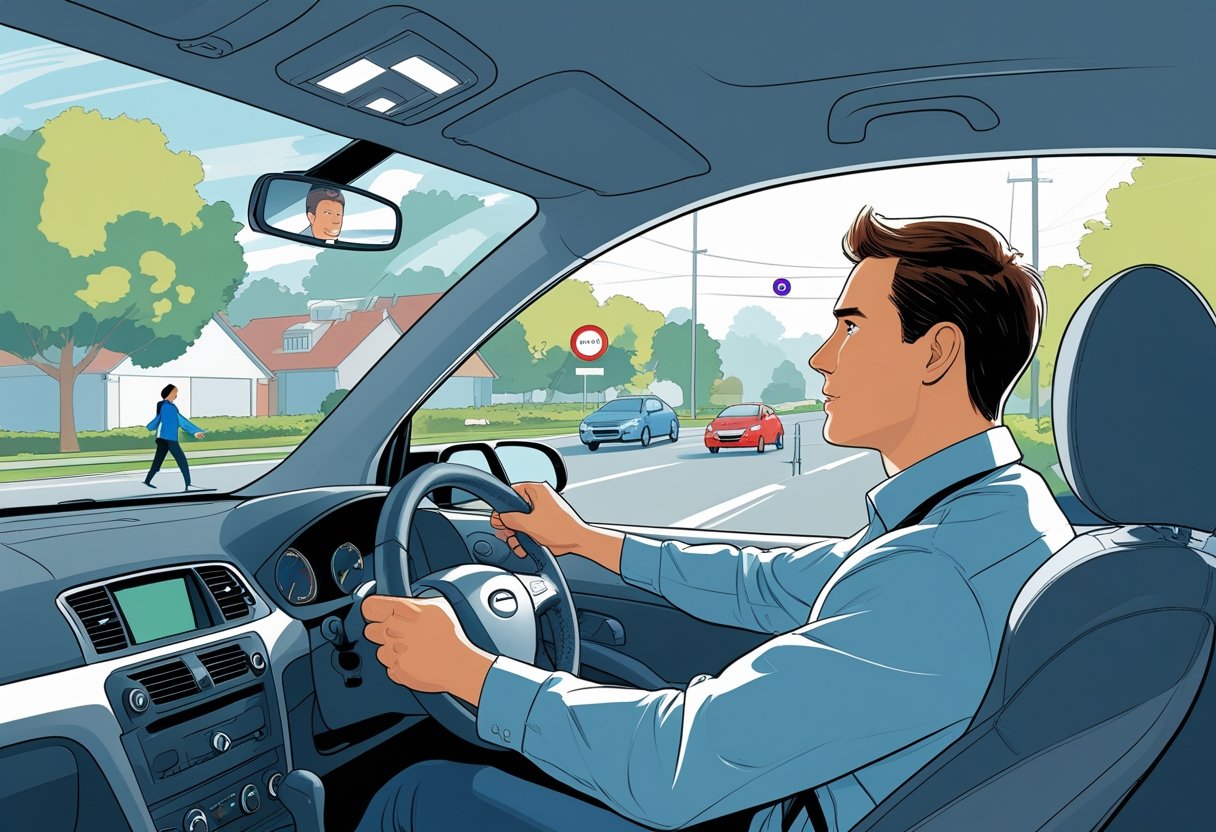
This technique might sound a bit odd at first, but it’s actually used by police drivers and advanced driving instructors to sharpen their skills. By putting your observations into words, you’re training your brain to stay actively engaged with everything happening around you. Instead of just reacting to problems, you start anticipating them.
We’ll explore how this simple practice transforms the way you see the road ahead, helping you develop the sharp awareness that separates confident drivers from nervous ones. Whether you’re just starting your driving journey or looking to improve your existing skills, commentary driving offers a practical path to becoming a safer, more alert driver who feels truly in control behind the wheel.
What Is Commentary Driving?
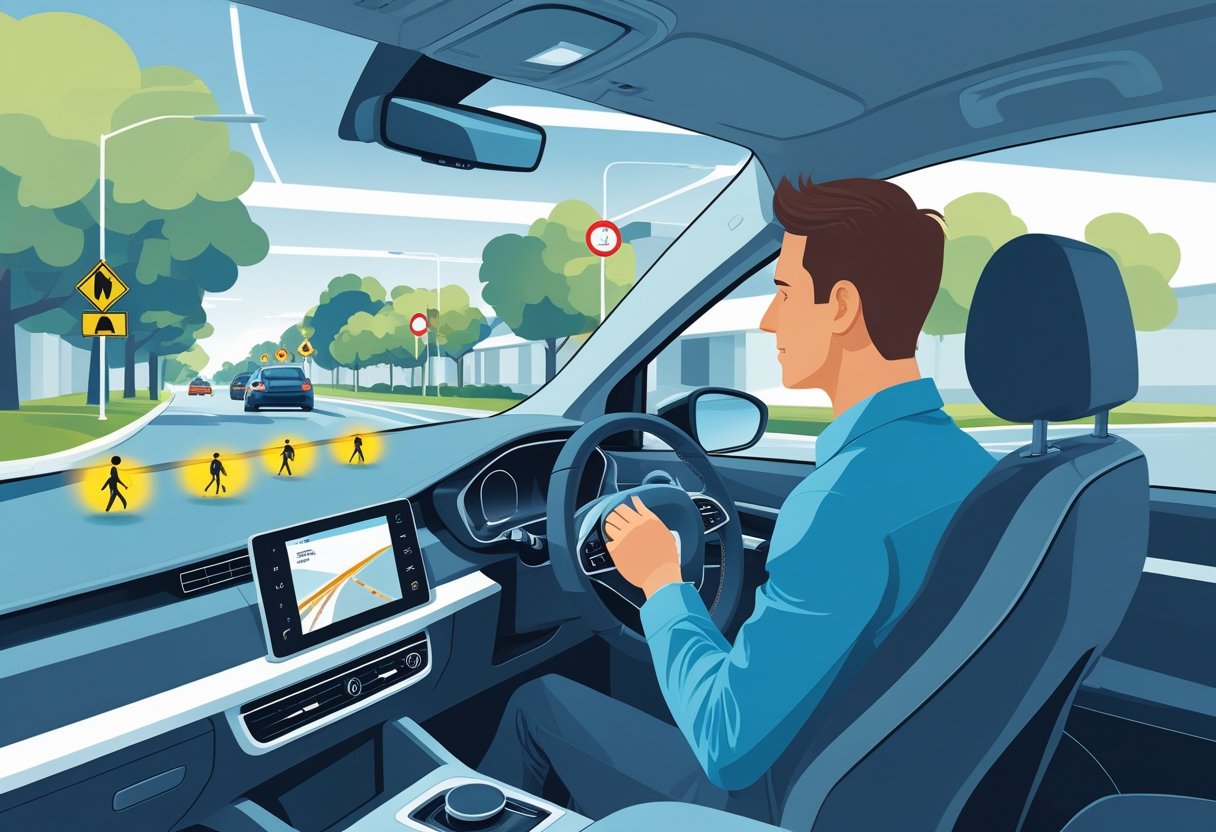
Commentary driving transforms the quiet concentration of normal driving into a spoken dialogue with yourself. This technique turns your internal thought process into words, helping you stay alert and make better decisions on the road.
Definition and Core Principles
Commentary driving means speaking aloud everything you see, think, and do whilst behind the wheel. You describe potential hazards, explain your actions, and voice your plans as you drive.
The technique follows three main principles. First, you observe everything around you with heightened awareness. Second, you predict what might happen next in any situation. Third, you explain the actions you’re taking to stay safe.
When practising commentary driving, you might say:
- “White van approaching from the left at the junction”
- “Slowing down for the pedestrian who’s looking towards the road”
- “Checking mirrors before changing lanes”
This isn’t just random chatter. Commentary training teaches you to engage your brain actively with every detail your eyes pick up. Your observations become more systematic and thorough.
The process helps bridge the gap between seeing something and understanding its importance. Many drivers notice hazards but don’t fully process their significance until it’s too late.
How Commentary Driving Differs from Ordinary Driving
Most driving happens quietly in our heads. We process information internally and make split-second decisions without speaking.
Regular driving often becomes automatic. We can drive familiar routes whilst thinking about work, family, or weekend plans. This mental autopilot works fine on quiet roads but becomes dangerous in complex situations.
Commentary driving keeps your brain fully engaged. Speaking your thoughts aloud prevents your mind from wandering. You can’t drift into autopilot when you’re actively describing what you see.
The technique also slows down your decision-making process in a helpful way. Taking time to voice your observations gives you extra moments to spot potential problems.
Key differences include:
| Ordinary Driving | Commentary Driving |
|---|---|
| Silent observation | Spoken analysis |
| Internal processing | External dialogue |
| Reactive responses | Proactive planning |
| Autopilot tendency | Constant engagement |
This active approach transforms you from a passive observer into an engaged analyst of every driving situation.
Origins in Advanced and Police Driver Training
Commentary driving started in police and emergency services training programmes. Officers needed techniques to maintain peak awareness during high-stress situations.
Police driving instructors developed running commentary methods to assess trainee officers’ hazard perception skills. The technique helped instructors understand exactly what trainees were seeing and thinking.
Advanced driving organisations adopted these methods for civilian training. They recognised that speaking observations aloud improved both awareness and decision-making for all drivers, not just emergency personnel.
The technique proved particularly valuable for new drivers. Research showed that learner drivers who received commentary training had fewer crashes and responded better to hazards than untrained groups.
Today, many driving instructors use commentary methods to build confidence in nervous students. The technique helps learners stay focused and reduces anxiety by giving them a structured way to process complex road situations.
Military and commercial driving programmes also adopted these principles. Professional drivers in high-risk environments found that commentary techniques significantly improved their safety records.
The Connection Between Commentary Driving and Hazard Perception

When we talk whilst driving, we’re actually strengthening our ability to spot danger before it develops. Commentary training creates a direct link between what we see, what we think, and how quickly we can respond to potential hazards on the road.
How Verbalising Helps Predict Hazards
Speaking our thoughts aloud transforms how we process the driving environment. When we describe what’s happening around us, we’re forced to notice details that might otherwise slip by undetected.
Commentary driving works by making us actively engage with every element of our surroundings. Instead of passively watching the road, we’re constantly scanning for pedestrians, checking mirrors, and noting changes in traffic flow.
This verbal process helps our brains form clearer predictions about what might happen next. When we say “that cyclist ahead might swerve around the parked car,” we’re already preparing for that possibility.
The act of putting observations into words creates stronger mental connections. We start recognising patterns faster and developing what experienced drivers call “road sense.”
Research shows that when we verbalise potential hazards, we’re essentially training our minds to spot similar situations more quickly in future drives.
Strengthening Hazard Perception Skills
Regular commentary practice builds crucial hazard perception skills that serve us throughout our driving lives. These skills become second nature with consistent verbal rehearsal.
Our brains get better at prioritising important information when we practice describing what matters most. We learn to focus on the pedestrian stepping towards the kerb rather than the interesting shop display behind them.
Commentary training teaches us to think several steps ahead. We start noticing early warning signs like brake lights in the distance or children playing near the roadside.
The technique helps develop what experts call “anticipatory driving.” This means we’re already planning our response before a hazard fully develops.
Key benefits include:
- Faster recognition of dangerous situations
- Better scanning of mirrors and blind spots
- Improved awareness of vulnerable road users
- Stronger decision-making under pressure
These enhanced hazard perception skills reduce accident risk and create more confident, capable drivers.
Scientific Evidence Supporting Commentary Driving
Studies consistently demonstrate that commentary training produces measurable improvements in driving safety and hazard awareness.
Research involving learner drivers found that those who practiced verbal commentary showed significantly better responses to unexpected hazards compared to traditionally trained drivers.
Video-based commentary exposure has proven effective in multiple studies. Participants who watched expert commentary videos performed better on subsequent hazard perception tests than control groups.
One particularly striking finding showed benefits appearing after just eight minutes of commentary video exposure. This suggests the technique creates rapid improvements in hazard awareness.
Laboratory studies reveal that commentary training:
- Reduces reaction times to developing hazards
- Improves visual scanning patterns
- Increases detection of peripheral dangers
- Enhances overall situational awareness
However, researchers also discovered that producing commentary while simultaneously responding to hazards can initially slow reaction times. This highlights why proper instruction and practice matter enormously for developing effective commentary techniques.
Key Skills Developed Through Commentary Driving
Commentary driving builds three core abilities that transform how we process information behind the wheel. We develop sharper visual scanning techniques, become more aware of changing road conditions, and learn to predict what pedestrians and other drivers might do next.
Sharpening Visual Scanning
When we practice commentary driving, our eyes start moving more systematically around the road environment. We stop staring straight ahead and begin checking mirrors every few seconds.
Active scanning patterns emerge naturally:
- Side roads and junctions get regular attention
- Parked cars become checkpoints for potential hazards
- Our peripheral vision picks up movement we might have missed
The technique forces us to look further ahead than usual. Instead of focusing just 50 metres down the road, we start scanning 200-300 metres ahead. This extended view gives us precious extra seconds to react.
We also develop what researchers call “flexible search strategies.” Our eyes learn to jump between different areas based on the driving situation. In busy town centres, we focus more on shop fronts and pavements. On dual carriageways, we spend more time checking our mirrors and scanning the horizon.
This improved visual scanning directly reduces our crash risk. Studies show that trained drivers spot potential hazards much sooner than untrained ones.
Spotting Road Conditions and Changing Environments
Commentary driving makes us weather detectives and road surface experts. We start noticing details that other drivers miss completely.
Road surface awareness develops quickly:
- Wet patches under bridges become obvious
- Oil spills near petrol stations catch our attention
- Loose gravel on bends influences our speed choices
Weather changes get our immediate attention too. We notice when the temperature drops near freezing or when rain starts affecting visibility. These observations help us adjust our driving before conditions become dangerous.
Construction zones and temporary traffic lights become easier to spot early. We start reading the road signs that warn of upcoming changes, rather than reacting at the last second.
The technique also improves our understanding of how different environments create different risks. School zones during home time require different scanning than industrial areas during shift changes.
Recognising the Actions of Pedestrians and Other Road Users
Commentary training turns us into behaviour prediction specialists. We learn to read body language and anticipate what pedestrians and other drivers might do next.
Pedestrian behaviour patterns become clearer:
- Someone looking at their phone whilst walking near the kerb needs watching
- Children playing near the road require extra caution
- Elderly pedestrians might take longer to cross
We also become better at reading other drivers’ intentions. A car positioned slightly left in its lane might be preparing to turn. A driver checking their mirrors repeatedly could be planning to change lanes.
The commentary process teaches us to spot the early warning signs before someone does something unpredictable. We notice when a pedestrian steps closer to the kerb or when another driver starts edging into our lane.
This skill proves especially valuable with what researchers call “hidden hazards.” We learn to slow down when passing parked cars because someone might step out. Bus stops become areas of heightened awareness because passengers might cross suddenly.
Practical Steps for Introducing Commentary Driving
Starting your commentary driving journey doesn’t need to feel overwhelming. We’ll walk you through building your confidence gradually, show you exactly what to say whilst driving, and help you tackle the hurdles that most learners face when beginning this powerful training technique.
Getting Started: Building Comfort and Confidence
Start with stationary practice before you even turn the engine on. Sit in your car and describe what you can see around you. This helps you get comfortable with talking aloud without the pressure of actually driving.
Practice makes perfect, so begin with familiar routes where you feel most confident. Your usual trip to the shops or a quiet residential street works brilliantly for your first attempts.
Keep your initial sessions short – just 10 to 15 minutes at first. Commentary driving can feel quite mentally demanding when you’re starting out. Building up gradually prevents you from feeling overwhelmed.
Don’t worry if you forget to speak or stumble over words initially. Every driver goes through this awkward phase. Your instructor or supervising driver should encourage you rather than correct every small mistake.
Try the “think aloud” approach first. Simply say whatever comes to mind about what you’re seeing or doing. As you become more comfortable, you can develop a more structured commentary style.
Remember that feeling self-conscious is completely normal. Most learners feel a bit silly talking to themselves at first, but this feeling fades quickly with practice.
What to Verbalise: Examples of Everyday Commentary
Focus on four main areas when developing your commentary: what you can see, what might happen, what you’re doing, and why you’re doing it.
Observations form the foundation of good commentary:
- “Pedestrian on the pavement ahead, looks like they might cross”
- “Car approaching from the right at the junction”
- “Road surface looks wet and slippery”
- “Cyclist in my mirrors, staying well back”
Predictions help you prepare for potential hazards:
- “That child might run into the road”
- “The van ahead might pull out without indicating”
- “Traffic lights have been green for a while, could change soon”
Actions and reasoning complete your commentary:
- “Slowing down because of the school zone”
- “Checking mirrors before changing lanes”
- “Increasing following distance due to the wet conditions”
Keep your language simple and natural. You’re not giving a driving test performance, just describing your thought process as you navigate the road.
Common Challenges and How to Overcome Them
Talking too fast is one of the most frequent issues we see. When nervous, many learners rush their words or try to comment on everything at once. Take your time and focus on the most important observations first.
Some learners go completely silent when faced with complex situations. If this happens to you, don’t panic. It’s better to concentrate on driving safely than force yourself to speak when overwhelmed.
Forgetting to look ahead whilst talking is another common pitfall. Your commentary should enhance your observation skills, not distract from them. If you find yourself looking down or losing focus, take a brief pause.
Many beginners worry about saying the “wrong” thing. There’s no perfect commentary script. What matters is developing your hazard awareness and decision-making skills through regular practice.
Running out of things to say often concerns new commentators. Remember, commentary driving isn’t about constant chatter. Periods of quiet are perfectly acceptable, especially on familiar, low-risk stretches of road.
If you feel your commentary becoming repetitive or mechanical, mix up your observations. Look further ahead, check your mirrors more frequently, or focus on different types of hazards to keep your commentary fresh and meaningful.
Using Commentary Driving for Learner and Experienced Drivers
Commentary driving works brilliantly for drivers at every stage of their journey. New drivers build confidence and awareness through regular verbal practice, whilst experienced motorists use commentary to break bad habits and stay sharp behind the wheel.
Benefits for Novice Drivers
New drivers often struggle with the mental workload of driving. Your brain is processing road signs, checking mirrors, judging distances, and managing the controls all at once.
Commentary driving helps by engaging your mind in every detail you observe. When you speak aloud about what you’re seeing, your brain stays focused instead of wandering.
Key benefits for learners include:
- Improved concentration during lessons and practice sessions
- Better hazard recognition through verbal prediction of risks
- Enhanced confidence by talking through decisions out loud
- Stronger instructor feedback as they hear your thought process
The technique forces you to actively scan the road environment. You might say “Pedestrian on the left pavement, checking if they’re approaching the kerb” or “Car ahead braking, I’ll ease off the accelerator and check my mirrors.”
This verbal practice builds crucial driver training foundations. Your observations become more systematic and thorough.
Many learners find commentary particularly helpful during challenging situations like roundabouts or busy junctions. Speaking through each step prevents panic and helps maintain control.
Supporting Experienced Drivers in Refining Skills
Seasoned drivers often develop autopilot habits that reduce their awareness. You might drive familiar routes without truly observing your surroundings.
Commentary driving acts as a wake-up call for your brain. It forces you to notice details you’ve been missing for years.
Experienced drivers benefit through:
- Refreshed alertness on routine journeys
- Breaking complacent habits that creep in over time
- Sharpened hazard perception skills
- Improved decision-making under pressure
Try commentary on a route you know well. You’ll be surprised how much you haven’t been noticing.
Advanced commentary training helps professional drivers and enthusiasts reach expert levels. Emergency service drivers use these techniques to maintain peak performance during high-stress responses.
Regular commentary practice keeps your skills sharp and your mind engaged. It’s like a mental workout for your driving abilities.
Applying Commentary to Real-World Scenarios
Commentary works best when practised in genuine driving situations rather than just theory.
Start with quiet roads during off-peak hours. Build your confidence before attempting commentary in heavy traffic or complex road layouts.
Practical application methods:
- Supervised practice with an instructor or experienced driver
- Solo sessions on familiar routes
- Video-based training at home before road practice
- Regular refresher sessions to maintain skills
Focus on describing what you see, what might happen, and what you plan to do. For example: “School zone ahead, children might run into the road, I’m reducing speed and moving slightly left.”
Don’t worry about perfect commentary initially. The goal is building awareness, not delivering flawless narration.
Advanced drivers can use commentary to demonstrate their skills to others or during assessment situations. It shows your thought processes and observation techniques clearly.
Remember that commentary takes practice to feel natural. Stick with it, and you’ll notice significant improvements in your overall driving awareness and safety.
Long-Term Advantages and Tips for Continual Improvement
Mastering commentary driving creates confidence that grows stronger with every journey, whilst developing practical ways to weave this technique into your daily driving routine ensures lasting benefits for years to come.
Building Lasting Confidence on the Road
Commentary driving transforms nervous learners into confident drivers by creating a structured approach to hazard perception. When we consistently verbalise our observations, our minds develop automatic scanning patterns that spot potential dangers before they become emergencies.
The confidence boost comes from knowing we’re actively engaged with the driving task rather than simply reacting to situations. Each time we successfully identify and navigate a hazard through commentary, our self-assurance grows stronger.
Key confidence builders include:
- Recognising warning signs earlier than other drivers
- Making smoother, more deliberate decisions
- Feeling prepared for unexpected situations
- Understanding road conditions at a deeper level
This heightened awareness reduces driving anxiety significantly. We stop worrying about what might happen because we’re already prepared for various scenarios through our ongoing commentary practice.
The skill becomes particularly valuable during challenging conditions like heavy rain or busy motorways. Our practised commentary keeps us focused and alert when other drivers might feel overwhelmed.
Integrating Commentary Driving Into Everyday Journeys
Making commentary driving a natural part of regular journeys requires gradual integration rather than forcing it into every trip. Start with familiar routes where concentration can focus on the technique rather than navigation.
Practical integration strategies:
- Begin with short local journeys
- Use quiet periods to practise without pressure
- Focus on one element at a time (signs, then markings, then hazards)
- Record yourself occasionally to track improvement
We recommend choosing specific journey types for practice. School runs work well for consistent route familiarity, whilst weekend drives offer relaxed environments for developing skills.
Commentary driving shouldn’t feel like hard work forever. After several months of regular practice, the technique becomes second nature. We find ourselves automatically noting hazards and planning responses without conscious effort.
The technique proves especially valuable during stressful driving situations. When faced with aggressive drivers or complex junctions, commentary keeps our minds focused on safe decision-making rather than emotional reactions.
Regular practice sessions, even just 10 minutes during routine trips, maintain and strengthen these essential hazard perception skills throughout our driving careers.
Frequently Asked Questions
Commentary driving raises many questions for new drivers who want to master this powerful skill. These answers address common concerns about spotting hazards earlier, learning proper techniques, and building confidence behind the wheel.
How can practising commentary driving enhance my ability to spot potential hazards early on?
When we speak aloud what we’re seeing, our brains become much more active in processing the road ahead. This verbal technique forces us to scan constantly rather than letting our minds wander.
Commentary driving slows down our thinking process. We start noticing small details that might signal danger, like a pedestrian stepping towards the kerb or a car with its bonnet slightly open.
Research shows trained drivers spot hazards sooner and brake earlier than those who drive silently. We begin to read the road like a story, predicting what might happen next based on visual clues.
The key is describing not just what we see, but what it might mean. Instead of saying “there’s a cyclist,” we might say “cyclist ahead, checking if they’ll signal or move out around that parked car.”
What are the best techniques for a new driver to adopt when learning commentary driving?
Start with simple observations before building up to predictions. Begin by narrating obvious things: “red traffic light ahead, pedestrian crossing on the left, parked cars lining the right side.”
Focus on the MSPSL routine: mirrors, signal, position, speed, look. Speak through each step as we perform it. This creates a mental checklist that becomes second nature.
Use specific language rather than vague terms. Say “elderly gentleman with walking stick approaching zebra crossing” instead of just “pedestrian there.” The detail matters for our brain’s processing.
Practice the “what if” game whilst commenting. Ask ourselves what could go wrong in each situation and voice our escape plans. This builds our defensive driving mindset naturally.
In what ways does commentary driving benefit my overall situational awareness on the road?
Our peripheral vision improves dramatically when we’re actively describing our surroundings. We start picking up movement and changes that we’d normally miss during quiet driving.
Commentary driving creates what experts call a “predictive mindset.” We begin thinking three or four moves ahead, like chess players anticipating their opponent’s strategy.
The technique helps us maintain concentration during long journeys. Instead of switching to autopilot, we stay mentally engaged with every mile we cover.
We develop better timing for our actions. Our gear changes become smoother, our parking more precise, and our overtaking decisions much safer because we’re constantly evaluating conditions.
Could you suggest some practical commentary driving exercises I can try while on familiar routes?
Try the “colour commentary” exercise on routes you know well. Describe everything you see as if you’re narrating for someone who can’t see the road. This builds your observation muscles.
Practice hazard spotting games. Count potential dangers on each journey and voice them aloud. Look for children playing near roads, dogs off leads, or drivers using mobile phones.
Use car park sessions for basic commentary skills. Practise describing your mirror checks, steering inputs, and speed adjustments in slow, controlled environments first.
Challenge yourself with junction commentary. Approach each roundabout or T-junction describing what you see, what you plan to do, and what other road users might do.
How can I incorporate commentary driving into my daily commute to become a more proactive driver?
Start with just five minutes of commentary at the beginning of each journey. Gradually extend this time as the habit becomes more natural and comfortable.
Focus on different themes each day. Monday might be pedestrian awareness, Tuesday could be vehicle positioning, Wednesday weather conditions and road surface changes.
Create mental checkpoints along your regular route. At each landmark, begin a fresh commentary burst. This prevents the technique from feeling overwhelming or exhausting.
Use traffic jams as perfect commentary practice opportunities. Slow-moving traffic gives us time to observe details and develop our verbal skills without pressure.
Are there specific challenges I may face when starting commentary driving, and how can I overcome them?
Many new drivers feel self-conscious talking aloud, especially with passengers present. Remember that this skill impresses driving instructors and family members who care about our safety.
We might struggle to find the right words initially. Start simple and build vocabulary gradually. There’s no shame in repeating basic phrases whilst we develop fluency.
Commentary can feel overwhelming in busy traffic conditions. Begin practising on quiet roads and gradually work up to more challenging environments as confidence grows.
Some drivers worry about sounding repetitive or boring. The goal isn’t entertainment but safety. Effective commentary often involves repeating key observations that keep us alert and prepared.