

What Happens If the Test Car Breaks Down? A Complete Learner’s Guide
Picture this: you’re minutes into your driving test, feeling confident and ready to earn that coveted licence, when suddenly the car sputters to a halt. Your heart might skip a beat, but take a deep breath because this situation, whilst stressful, is entirely manageable.
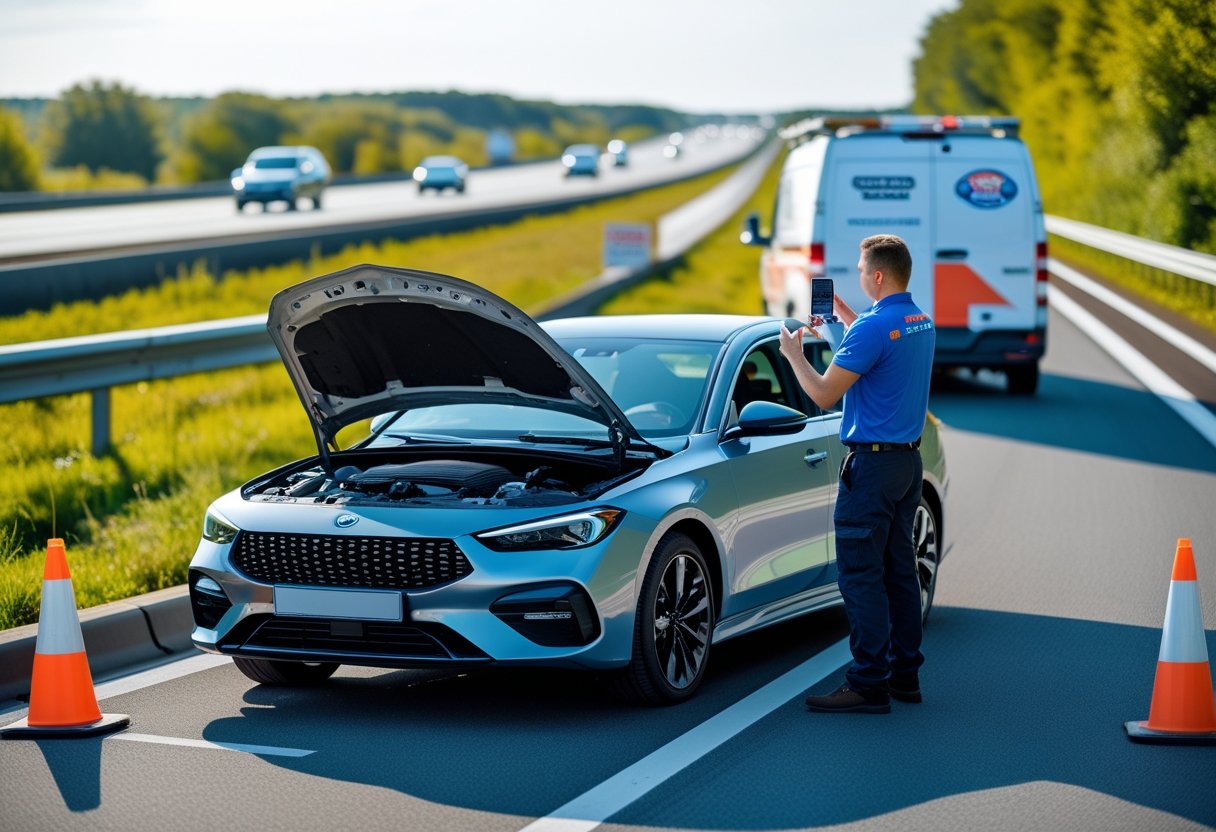
If your test car breaks down during your driving test, you’ll need to book and pay for a completely new test, as the DVSA cannot continue or reschedule the interrupted examination. This might feel frustrating, but remember that mechanical failures happen to even the most experienced drivers, and it’s certainly not a reflection of your driving abilities.
The good news is that knowing what to do in this scenario can help you stay calm and handle the situation properly. We’ll walk you through the immediate steps to take, how to stay safe on the roadside, who to contact for help, and most importantly, how to prevent breakdowns from happening in the first place. With the right preparation and mindset, you can avoid this stressful situation altogether and keep your test day running smoothly.
Immediate Steps If Your Test Car Breaks Down
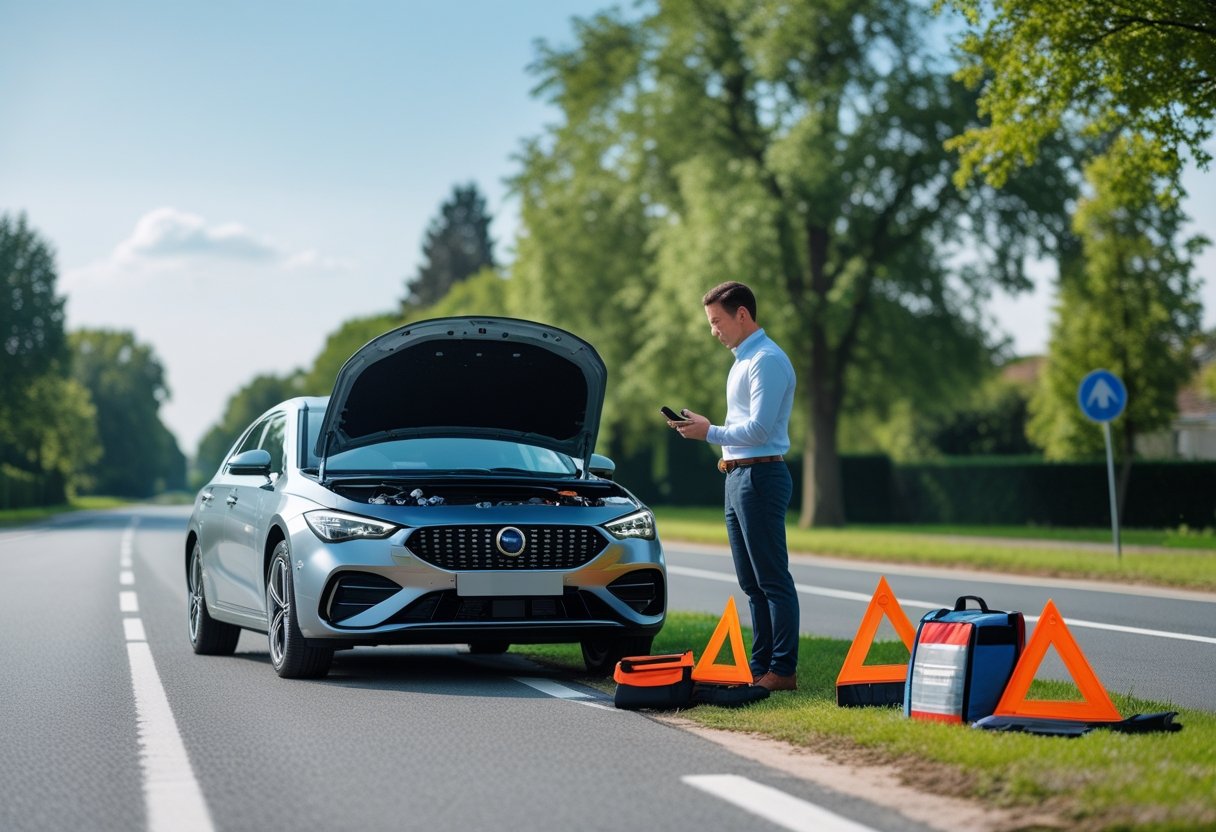
If your test car breaks down, you need to act quickly to keep everyone safe and handle the situation properly. The key is staying calm, making yourself visible to other drivers, and positioning yourself away from traffic.
Staying Calm and Prioritising Safety
When your test car suddenly stops working, we know your heart will probably start racing. This is completely normal, but taking a deep breath is your first priority. Panic leads to poor decisions, and you need to think clearly right now.
Your driving examiner is trained to handle these situations. They’ll guide you through what needs to happen next. Remember, this isn’t your fault, and it won’t count against your test performance.
The most important thing is getting to safety. If the car is still moving, try to reach the nearest safe spot. This might be a lay-by, car park, or quiet side road. Even the hard shoulder of a dual carriageway is better than staying in moving traffic.
If the engine dies completely and you can’t move, don’t worry. We’ll work with what we have. The key is making sure other drivers can see you clearly.
Using Hazard Lights and Exiting Safely
Switch on your hazard lights immediately. These flashing amber lights tell other drivers you’re having problems. They’re your first line of defence against someone driving into the back of you.
Most cars have the hazard light button on the dashboard. It usually looks like a red triangle. If you can’t find it quickly, ask your examiner to help.
Once the hazards are on, you need to get out of the car safely. Always use the left-hand door if possible. This keeps you away from traffic and reduces the risk of getting hit by passing vehicles.
Look carefully before opening the door. Check your mirrors and glance over your shoulder. Even with hazard lights on, some drivers might not notice you straight away.
If you’re on a busy road and can’t use the left-hand door safely, stay in the car with your seatbelt on. Your examiner will advise you on the best course of action for your specific situation.
Positioning and Use of Warning Triangles
After exiting safely, we need to make you even more visible to approaching traffic. If you have a warning triangle in the car, this becomes your next priority. Most test cars should have one, but not all do.
Place the warning triangle about 45 metres behind your car (roughly 50 large steps). This gives other drivers enough time to see the warning and slow down safely.
Hi-vis jackets are brilliant if they’re available. Put one on before walking to place the triangle. The bright yellow or orange material makes you much easier to spot, especially in poor weather or fading light.
Never place a warning triangle on motorways or smart motorways. The risk of getting hit by fast-moving traffic is too high. On these roads, get behind the barrier and call for help immediately.
Stand well clear of your car and the road once everything is set up. Wait on the grass verge, behind a barrier, or in another safe spot away from traffic.
What Happens to Your Driving Test When the Car Breaks Down
When your test vehicle breaks down during your driving test, the examination will be stopped immediately and you’ll need to reschedule. Unfortunately, you’ll have to pay for a new test booking and won’t receive any refund from the DVSA since the breakdown wasn’t their fault.
Will the Examination Be Cancelled or Rescheduled?
Your driving test stops the moment your car breaks down. There’s simply no way to continue once the vehicle becomes unsafe or inoperable.
The examiner will end the test immediately for safety reasons. We’ve seen cases where cars stall during manoeuvres like three-point turns and won’t restart, leaving candidates stranded mid-test.
You cannot complete your test in a broken vehicle. Even if the problem seems minor, examiners must follow strict safety protocols.
The test doesn’t get automatically rescheduled by the DVSA. Instead, you’ll need to book a completely new appointment through the usual channels.
This means going back online or calling to find your next available slot. During busy periods, this could mean waiting several weeks for another opportunity.
Potential Impacts on Test Fees and Bookings
Here’s the tough news: you’ll pay the full test fee again. The DVSA doesn’t offer refunds when your car breaks down because it’s not considered their responsibility.
Your original test fee is lost entirely. There’s no partial credit or discount applied to your next booking.
New booking requirements:
- Full payment of current test fees
- Finding an available test slot
- Ensuring your new vehicle meets all requirements
- Valid MOT certificate for the replacement car
- Proper insurance coverage
We recommend having a backup vehicle arranged beforehand. Many driving instructors keep spare cars available, though this might cost extra.
Some driving schools offer guarantees about vehicle reliability. It’s worth asking about their policy on breakdowns before booking your test.
How the DVSA Handles Unforeseen Vehicle Issues
The DVSA takes a clear stance on vehicle breakdowns during tests. They’re not liable for mechanical failures that aren’t under their control.
However, they do handle the situation professionally. Your examiner will help coordinate recovery if needed and ensure everyone stays safe.
The DVSA distinguishes between different breakdown causes:
Your responsibility:
- Mechanical failures
- Running out of fuel
- Battery problems
- Any car-related issues
DVSA responsibility:
- Examiner illness
- Test centre problems
- Administrative errors
When the breakdown isn’t your fault (like examiner issues), they’ll automatically rebook you at no extra cost. You’ll receive new test details within three working days.
We always suggest choosing reliable, well-maintained vehicles for your driving test. A valid MOT doesn’t guarantee against breakdowns, but it shows the car meets basic safety standards.
Roadside Safety During a Breakdown on Test Day
If your test car breaks down, your safety becomes the absolute priority. We’ll guide you through staying secure on motorway hard shoulders, using emergency refuge areas properly, and getting professional help quickly.
How to Stay Safe on the Hard Shoulder
The hard shoulder offers limited protection from fast-moving traffic, so we need to act swiftly and smartly. Your first move should be pulling as far left as possible whilst keeping your wheels turned towards the verge.
Exit your vehicle carefully on the side furthest from traffic. This usually means getting out through the passenger door or rear doors. Help any passengers do the same thing.
Once you’re out, move well away from both your car and the carriageway. The biggest danger isn’t just vehicles hitting your car, but your car being pushed into you by the impact. Stand behind the safety barrier if there’s one available.
Never attempt any repairs on the hard shoulder, no matter how simple they might seem. Don’t place warning triangles either, as retrieving them puts you at serious risk from passing traffic.
Keep everyone together and stay alert. Watch for approaching vehicles or debris that could pose additional dangers. If it’s raining or cold, resist the urge to return to your car for shelter.
Emergency Refuge Areas and Smart Motorways
Emergency refuge areas are your safest bet on smart motorways. These specially designed spaces provide much better protection than traditional hard shoulders, giving you breathing room from live traffic lanes.
Look for the orange emergency telephone in each refuge area. These connect directly to traffic control centres, and operators can arrange lane closures to help you rejoin traffic safely when you’re ready.
If you spot an emergency refuge area ahead, try to reach it rather than stopping elsewhere. The extra distance travelled could save lives, especially on busy smart motorway sections.
Getting back onto the motorway from an emergency refuge area requires permission from the control centre. The operator will coordinate with traffic management to ensure you can merge safely, sometimes closing lanes temporarily.
On smart motorways without hard shoulders, don’t stop in live lanes unless you absolutely cannot move. If you’re stuck there, keep your seatbelt on, hazard lights flashing, and call 999 immediately.
Contacting Help: Emergency Telephones and Phone Services
Free emergency telephones are positioned roughly every mile along motorways. These orange phones connect you directly to trained operators who know your exact location automatically. Face the traffic whilst speaking to stay aware of approaching vehicles.
Your mobile phone works too, but you’ll need to provide your location details. Look for marker posts with numbers and letters, or use your phone’s mapping app to pinpoint where you are.
Press your car’s SOS button if it has one. Modern vehicles often include this feature, which automatically contacts emergency services and transmits your precise location.
When calling for help, mention if you’re a vulnerable motorist. This includes being disabled, elderly, or travelling alone, as operators can prioritise your assistance accordingly.
If you’re deaf or have hearing difficulties, consider registering for the 999 text service at emergencySMS.net before your test day. This preparation could prove invaluable if you need emergency help during your driving test.
Calling for Assistance: Who to Contact and What to Expect
When your test car breaks down, knowing exactly who to ring and what they’ll do can make all the difference. You’ve got several options, from breakdown cover providers to local garages, and each offers different benefits depending on your situation.
Breakdown Cover Providers and Recovery Services
Most breakdown cover providers offer 24/7 roadside assistance that can get you back on the road quickly. These services typically cost between £50-150 per year and include roadside repairs, recovery to a garage, and sometimes onward travel.
The main providers like RAC, AA, and Green Flag all work similarly. When you call their emergency number, they’ll ask for your location, membership details, and a description of the problem.
What to expect when you call:
- Average wait time of 45-60 minutes for roadside assistance
- Initial phone diagnosis to determine the issue
- Arrival of a qualified technician with common repair parts
- Recovery to a local garage if repairs can’t be completed roadside
Most breakdown services fix about 4 out of 5 problems on the spot. Common fixes include jump-starting batteries, changing tyres, and topping up fluids.
If you don’t have breakdown cover, you can still get help. Many providers offer instant cover, though you’ll pay a premium rate that’s significantly higher than standard membership.
When to Use Providers Like the RAC
The RAC is particularly useful when you need reliable, professional help quickly. Their patrols are trained to handle most common car problems and carry diagnostic equipment that can identify issues fast.
Best situations for RAC assistance:
- Engine won’t start or cuts out completely
- Flat tyre when you don’t have a spare or can’t change it safely
- Overheating or unusual noises from the engine
- Electrical problems affecting lights or ignition
RAC members can report breakdowns through their app, website, or by calling 0333 2000 999. The app includes GPS tracking so they know exactly where you are.
Their service includes up to one hour of roadside repairs. If they can’t fix your car there and then, they’ll tow it to an approved garage within 15 miles.
For driving test candidates, RAC can often provide temporary solutions that get you mobile again quickly, which might save your test appointment.
Using a Mobile Mechanic or Local Garage
Sometimes a mobile mechanic offers better value, especially for straightforward repairs. These independent professionals come to your location and often charge less than breakdown services for non-members.
Mobile mechanics work well for:
- Battery replacement or charging issues
- Minor electrical faults
- Fluid leaks that aren’t immediately dangerous
- Diagnostic checks when warning lights appear
Most mobile mechanics charge £40-80 for a callout, plus parts and labour. They’re particularly handy if your car breaks down at home or in a safe location where you can wait comfortably.
Local garages can also arrange collection if you’re stuck somewhere inconvenient. Many offer recovery services and will collect your car within a few hours during business hours.
The downside is that mobile mechanics and local garages typically only work during normal hours. For evening or weekend breakdowns, breakdown cover providers are usually your best bet for quick assistance.
Preparing for Your Test: Ensuring Vehicle Readiness
Getting your car ready for test day means checking everything from tyre tread to insurance documents. Whether you’re using your own vehicle or your instructor’s, proper preparation prevents last-minute cancellations and gives you the best chance of success.
Checklist for Car Condition on Test Day
Your car needs to be in perfect working order when the examiner arrives. We can’t stress this enough: any warning lights on your dashboard will result in an immediate test cancellation.
Essential Safety Checks:
- No warning lights showing (including airbag, engine, or brake lights)
- All tyres have legal tread depth with no visible damage
- No space-saver spare tyre fitted
- All lights working properly
- Windscreen wipers functioning correctly
Interior Requirements:
Your car must have an extra interior rear-view mirror for the examiner. The passenger seat needs a proper seatbelt and head restraint. Slip-on head restraints won’t be accepted.
Performance Standards:
The vehicle must reach at least 62mph and have an mph speedometer. It needs four wheels and can’t exceed 3,500kg maximum authorised mass.
Cleanliness Matters:
Clear out all rubbish from the dashboard, footwells, door pockets, and seats. Your car must be completely smoke-free before and during the test. This creates a professional environment that shows respect for the examiner.
MOT, Insurance, and Legal Requirements
Getting the legal paperwork sorted is just as important as the mechanical checks. Missing any of these documents means your test gets cancelled and you lose your fee.
Tax and MOT:
Your car must have current road tax. If it’s over three years old, you need a valid MOT certificate. Check the expiry dates well before your test day.
Insurance Coverage:
Standard insurance policies don’t always cover driving tests. Ring your insurance company to confirm you’re covered for a practical driving test. Some insurers require advance notice or charge an additional fee.
Recall Safety Issues:
Certain Citroën models from recent years have airbag recalls. If you’re using one of these cars, bring proof that the recall work has been completed or that your vehicle wasn’t affected. The examiner will check this online before starting your test.
Documentation to Bring:
- Driving licence (provisional)
- Insurance certificate or cover note
- MOT certificate (if applicable)
- Recall safety documentation (if required)
Using Your Own Car Versus Instructor’s Car
Choosing between your own car and your instructor’s vehicle can significantly impact your test experience. Both options have distinct advantages worth considering carefully.
Benefits of Using Your Own Car:
You’ll feel more confident in familiar surroundings. The pedal positions, steering feel, and mirror angles are exactly what you’re used to. This comfort factor often helps reduce test day nerves considerably.
Instructor’s Car Advantages:
Driving school vehicles are maintained specifically for tests. They have dual controls, which can provide peace of mind. Your instructor handles all the paperwork and vehicle preparation, removing stress from your shoulders.
Cost Considerations:
Using your own car might save money on instructor fees. However, you’ll need test insurance and must ensure everything meets DVSA requirements. Factor in the risk of cancellation fees if something goes wrong.
Making Your Decision:
Consider how comfortable you feel in each vehicle. If you’ve done most of your practice in your instructor’s car, switching to your own car on test day might feel strange. Choose the option that gives you the most confidence.
Breakdown Essentials and Preventative Measures
Being prepared for a breakdown makes all the difference between a minor inconvenience and a genuinely stressful situation. Having the right kit and knowing what to wear can keep you safe whilst help arrives.
What to Pack in a Breakdown Kit
Your breakdown kit should live in your boot permanently, ready for any unexpected moments. Start with a warning triangle – you’ll need to place this 45 metres behind your car on most roads to alert other drivers.
Pack a torch with spare batteries because breakdowns don’t wait for daylight. A fully charged power bank keeps your phone working when you need to call for help.
Warm blankets and waterproof clothing are absolute lifesavers during winter breakdowns or when it’s pouring with rain. You might be waiting outside your car for quite some time.
Don’t forget emergency food and water. Energy bars and bottled water can make a long wait much more bearable, especially if you have passengers or children with you.
Include basic tools like jump leads, though never attempt repairs on busy roads. A first aid kit covers any minor injuries, whilst reflective road flares provide extra visibility in poor weather conditions.
Emergency contact numbers should be written down separately from your phone. Include your breakdown service, insurance company, and a trusted friend or family member who can help coordinate assistance.
Understanding the Role of Hi-Vis Clothing
Hi-vis jackets aren’t just bright clothing – they’re genuinely life-saving pieces of safety equipment that make you visible to drivers travelling at high speeds. You should keep hi-vis jackets for every passenger in your car, not just the driver.
The reflective strips work by bouncing light back to its source. This means approaching headlights illuminate you from much greater distances, giving drivers precious extra seconds to react and move safely around you.
Wear your hi-vis jacket before stepping out of your vehicle, especially on motorways or busy roads. The few seconds it takes to put it on could prevent a serious accident.
Light-coloured clothing helps during daylight hours, but hi-vis jackets with reflective strips are essential during dawn, dusk, night time, or poor weather conditions. Keep them easily accessible in your door pockets or under seats rather than buried in the boot.
Remember that hi-vis clothing works best when it’s clean. Dirty or damaged reflective strips lose their effectiveness, so check your jackets regularly and replace them when needed.
Final Tips for Minimising Stress and Staying Positive
Breathe deeply and remind yourself that breakdowns happen to everyone – you’re not alone in this experience. Most breakdown situations resolve within a couple of hours, and help is always available.
Stay with other people whenever possible. If you’re travelling with passengers, support each other and keep spirits up with conversation or games whilst you wait for assistance.
Keep your phone charged by investing in a car charger that works even when your engine isn’t running. Download your breakdown service’s app beforehand so you can request help quickly without searching for phone numbers.
Practice positive self-talk during the wait. Remind yourself that you’ve handled the situation correctly by staying safe and calling for professional help rather than attempting dangerous roadside repairs.
Plan alternative arrangements whilst waiting. Text family or friends about potential delays, and don’t hesitate to ask for support if you need someone to collect children or handle urgent commitments.
Remember that breakdown services are experienced professionals who deal with these situations every day. They want to help you get back on the road safely and will guide you through any steps you need to take.
Frequently Asked Questions
When your test car suddenly stops working, you’ll naturally have many questions about what happens next. Here’s what driving examiners typically do in these situations, plus the practical steps you’ll need to take.
Who should I contact immediately if my driving test car encounters a hiccup during the test?
Your driving examiner will take charge of the situation straight away. They’re trained to handle car breakdowns and will contact the test centre for you.
You don’t need to ring anyone yourself during the breakdown. The examiner will sort out the immediate safety concerns first.
If you’re using your instructor’s car, they might need to contact their breakdown cover. However, this usually happens after the test has been officially stopped.
What steps do I take to ensure safety if my vehicle halts unexpectedly during the exam?
Stay calm and follow your examiner’s instructions immediately. They’ll guide you through the safety steps.
If possible, try to move the car to a safe location. This might mean pulling onto the hard shoulder or finding a safe parking spot.
Put your hazard lights on straight away. Your examiner will help assess whether you need to get out of the car.
Never attempt to fix the car yourself during the test. Your safety comes first, and the examiner will handle the next steps.
Can you walk me through the process of what occurs after a vehicle malfunction on the test day?
Your examiner will first ensure everyone’s safety and stop the test officially. They’ll make notes about what happened and when.
You’ll need to wait whilst the examiner contacts the test centre. They’ll explain the breakdown wasn’t your fault.
The examiner will arrange for you to get back to the test centre safely. This might involve waiting for recovery or getting alternative transport.
Once back at the centre, you’ll receive information about rebooking. The staff will explain your options for the next available test slot.
How does a car breakdown impact my driving test result, and what are the next steps?
A genuine car breakdown won’t count as a test failure on your record. The test gets marked as incomplete rather than failed.
You’ll be entitled to another test without it counting against your pass rate. Most test centres will fast-track your rebooking.
Your driving performance up to the breakdown point gets noted. If you were driving well, this might be mentioned in your feedback.
The next steps involve choosing a new test date and ensuring you have reliable transport sorted.
Could you tell me if there’s a contingency plan in place for vehicle troubles during the practical driving assessment?
Yes, driving test centres have clear procedures for car breakdowns during tests. Examiners receive specific training on handling these situations.
The DVSA recognises that mechanical failures aren’t the candidate’s responsibility. They have systems to fast-track rebookings in these cases.
Test centres keep records of breakdown incidents. This helps them process your new booking quickly and fairly.
Your examiner will complete a special report form. This documents that the test couldn’t continue due to mechanical problems.
In the unlikely event of a test car failure, what are the protocols for rescheduling?
You’ll typically get priority booking for the next available slot. Most centres try to fit you in within a few weeks rather than months.
The rebooking usually doesn’t cost extra money. The test centre treats it as continuing your original appointment.
You might need to provide the same documentation again. Bring your provisional licence and theory test certificate to the new appointment.
Some test centres offer cancellation lists for emergency rebookings. You could get an earlier slot if someone else cancels their test.