

What Is ‘Coasting’ and Why Examiners Mark It Down: Driving Test Essentials
Many learner drivers have heard the term “coasting” thrown around during lessons, often followed by a stern warning from their instructor. But what exactly does it mean, and why do driving examiners take it so seriously during your test?

Coasting happens when you drive with the clutch pedal pressed down or the gear lever in neutral, which disconnects the engine from the wheels and reduces your control over the vehicle. This might seem harmless enough, but examiners view excessive coasting as a sign that you haven’t fully grasped how to manage your car safely. It’s one of those driving habits that can quietly creep into your technique without you realising it.
We’ll explore everything you need to know about coasting, from understanding why it affects your braking power and vehicle control to learning when it might actually be necessary. You’ll discover what modern driving examiners really look for during tests, debunk some common myths about fuel economy, and most importantly, develop the confidence to handle your clutch control like a pro.
Understanding Coasting in Driving
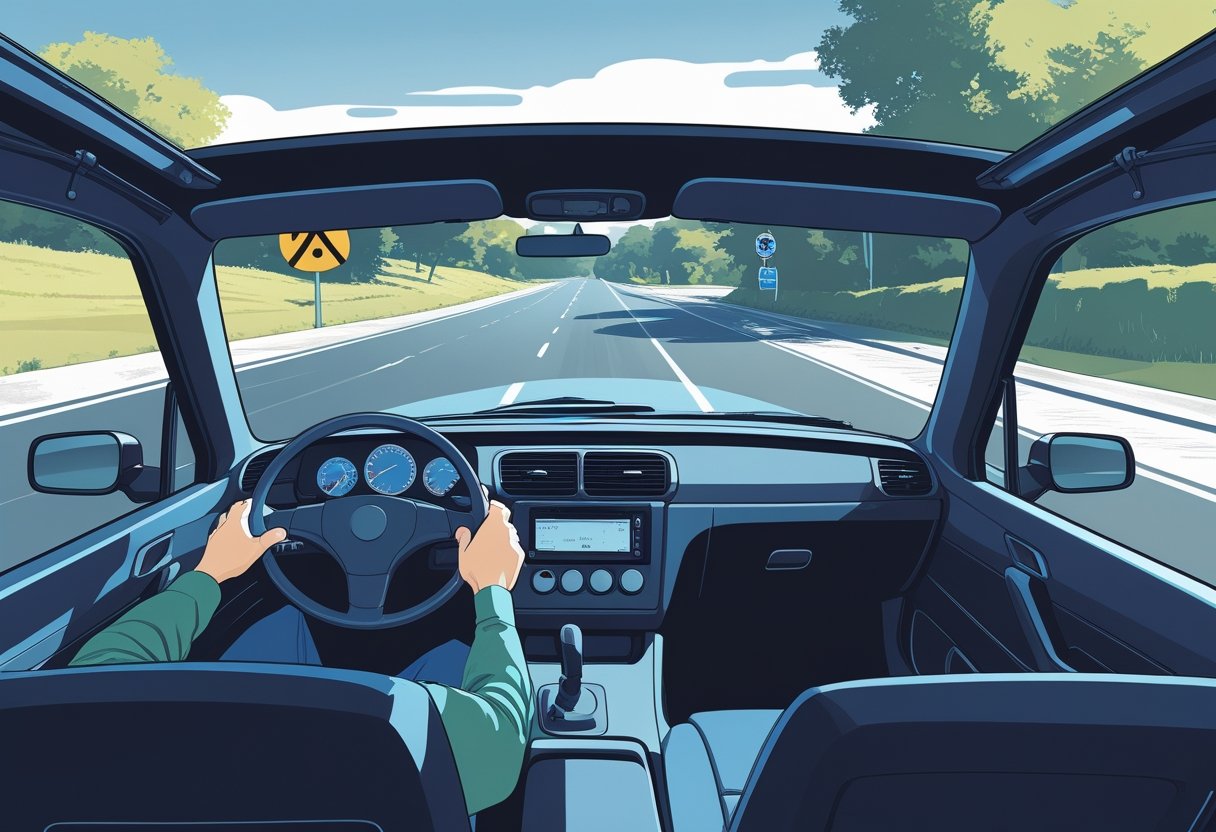
Coasting happens when your car moves forward without engine power, typically when you press the clutch pedal or shift into neutral. This reduces your control over the vehicle and can lead to dangerous situations on the road.
Definition of Coasting
Coasting occurs when your vehicle travels without any power from the engine driving the wheels. We sometimes call this freewheeling, and it’s something many learner drivers do without realising the risks involved.
When you’re coasting, your engine isn’t connected to the wheels. This means you lose the natural braking effect that comes from engine compression. Your car essentially becomes a heavy object rolling freely down the road.
Many drivers think coasting saves fuel, but modern cars actually use less petrol when you stay in gear. When you lift off the accelerator whilst in gear, the fuel injectors often stop supplying fuel completely. This makes coasting less efficient than you might expect.
The key point: coasting removes your ability to respond quickly to hazards. Without engine power readily available, you can’t accelerate out of danger or use engine braking to slow down smoothly.
How Coasting Happens During Driving
Coasting typically occurs in several common driving scenarios. We often see learners coast when approaching junctions, roundabouts, or traffic lights without realising they’re doing it.
Common coasting situations include:
- Pressing the clutch too early when slowing down
- Putting the car in neutral whilst moving
- Keeping the clutch down for extended periods
- Rolling down hills without engine engagement
New drivers frequently coast when they feel nervous about stalling. They might press the clutch down far too early when approaching a junction, thinking it’s safer. Unfortunately, this creates the opposite effect by reducing vehicle control.
Speed and gradient matter enormously. Coasting downhill builds up dangerous momentum that requires much harder braking to control. Your brake pads and discs work overtime, potentially leading to overheating and reduced stopping power when you need it most.
Clutch Pressed Down and Freewheeling Explained
When you press the clutch pedal down, you disconnect the engine from the gearbox. This breaks the connection between your engine’s power and the wheels, creating the freewheeling effect that examiners watch for carefully.
Freewheeling means your car rolls freely without engine assistance. Think of it like a bicycle coasting down a hill with your feet off the pedals. You’re moving, but you’ve lost the power connection that gives you proper control.
The clutch should only be pressed down when you’re actually changing gear or coming to a complete stop. Keeping it pressed unnecessarily removes your ability to use engine braking, which is your car’s natural way of slowing down smoothly.
Vehicle control suffers dramatically when you’re freewheeling. You can’t accelerate quickly if needed, you lose engine braking, and your steering might feel less responsive at lower speeds. This combination makes emergency situations much more dangerous to handle effectively.
Why Coasting Is a Bad Driving Technique
Coasting might seem harmless, but it’s actually one of the most dangerous habits we can develop behind the wheel. When we coast, we lose essential control systems that keep us safe and put ourselves at serious risk.
Loss of Vehicle Control
When we coast, we’re essentially disconnecting ourselves from one of our most important safety systems: engine braking. This happens because we’ve either pressed the clutch down or shifted into neutral.
Think about it this way. In normal driving, our engine helps slow the car down naturally when we lift off the accelerator. This is called engine braking, and it’s brilliant for maintaining smooth, predictable control.
But when we coast, we lose this vital connection. The engine can’t help us manage our speed anymore. We’re now relying entirely on our brakes to do all the work.
This becomes particularly dangerous in emergencies. If we need to accelerate quickly to avoid a hazard, we’ll have to engage a gear first. Those precious seconds could make the difference between safety and disaster.
Driver control becomes much harder to maintain when coasting. We can’t make quick adjustments to our speed using the accelerator. Our responses become slower and less precise.
Impact on Braking Power and Steering
Coasting forces our braking system to work much harder than it should. Without engine braking to help, our brake pads and discs take on the full burden of slowing the vehicle.
This extra strain causes several problems. Our brakes heat up more quickly, which can lead to brake fade. In extreme cases, overheated brakes might fail completely.
We’ll also find ourselves replacing brake components more frequently. Brake pads, discs, and even brake fluid will need changing sooner than normal. This costs us money we could easily save.
Control of the vehicle becomes trickier when we’re coasting, especially around corners. Modern cars are designed to work with engine braking for optimal stability.
Power steering can also feel different when coasting. Some cars reduce power assistance when the engine isn’t driving the wheels, making steering feel heavier or less responsive.
Increased Speed on Downhill Roads
Downhill sections are where coasting becomes particularly risky. Without engine braking, gravity takes over completely, and our speed builds up quickly.
We might think we’re saving fuel by coasting downhill, but we’re actually creating a dangerous situation. Our car accelerates faster than it would if we stayed in gear.
This means we need to brake harder and more frequently to maintain a safe speed. Our brakes get hotter, and we lose the smooth, controlled descent that engine braking provides.
Many drivers don’t realise how much speed they’re gaining while coasting downhill. By the time they notice, they’re going much faster than intended.
Staying in gear gives us much better control on slopes. The engine naturally limits our speed, and we can make fine adjustments using the accelerator. This bad driving technique of coasting removes these options and puts us at unnecessary risk.
Coasting and the Driving Test: What Examiners Look For
Driving examiners watch for coasting because it reduces your control over the vehicle, though the reality of how it’s marked is more nuanced than many learners expect. Most driving instructors emphasise coasting heavily during lessons, but the actual impact on your driving test depends on when and how much you coast.
How Coasting Is Marked Down in Driving Tests
We need to be honest about what really happens during driving tests. Many learners worry that any coasting will result in automatic failure, but this isn’t accurate.
Examiners don’t typically fail candidates for brief moments of coasting. They’re looking at the bigger picture of your driving safety and control.
What examiners actually mark:
- Excessive coasting that affects vehicle control
- Coasting in situations where you need maximum braking power
- Loss of control due to coasting on hills or bends
- Dangerous speed increases from coasting downhill
The key word here is “excessive.” Brief coasting during gear changes or slow manoeuvres is normal and expected.
Examiners understand that some coasting is necessary for safe driving. You can’t change gears without using the clutch, and you need to coast when parking or moving very slowly in traffic.
What matters most is whether your coasting creates a safety issue. If you coast briefly but maintain good control and awareness, this rarely becomes a test fault.
Examples of Coasting That Can Cause Test Faults
Certain coasting situations are more likely to catch an examiner’s attention during your driving test. Understanding these helps you avoid potential problems.
Downhill coasting is probably the biggest concern. When you coast down steep hills, your speed can increase quickly without engine braking to help slow you down.
This becomes dangerous if you’re approaching pedestrian crossings, traffic lights, or busy junctions. Your braking distance increases, and you have less control over your speed.
Coasting through corners can affect your steering response. The engine helps stabilise the car through bends, so coasting can make the vehicle feel less stable.
Extended coasting periods during normal driving show poor clutch control. If you’re holding the clutch down for long stretches while driving at normal speeds, this suggests you haven’t mastered smooth gear changes.
Coasting when approaching hazards reduces your ability to react quickly. You need engine braking available when approaching roundabouts, pedestrian areas, or changing traffic conditions.
The common thread in all these examples is reduced control. Examiners mark down coasting when it genuinely affects your driving safety, not when it’s brief or necessary.
What Driving Instructors Teach About Coasting
Most driving instructors take coasting very seriously during driving lessons, sometimes more seriously than necessary. This creates anxiety among learners who worry about every tiny moment of clutch depression.
We understand why instructors emphasise this point. They want to develop good habits and ensure you have maximum control over your vehicle at all times.
Standard instructor advice includes:
- Keep the clutch up whenever possible
- Use engine braking to help slow down
- Only coast when absolutely necessary
- Practice smooth gear changes to minimise coasting time
Some instructors may be overly strict about coasting rules. They might suggest that any coasting will fail your driving test, but this isn’t supported by actual test experiences.
The reality is more balanced. Good driving instructors teach you when coasting is acceptable and when it isn’t.
During your driving lessons, focus on developing smooth clutch control rather than avoiding coasting entirely. This approach builds confidence and creates more natural driving habits.
Your instructor should explain the difference between necessary coasting and excessive coasting. This understanding helps you make better decisions during your actual driving test.
Modern Cars, ECUs, and Fuel Economy Myths
Modern vehicles work very differently from older cars when it comes to fuel management. Electronic systems now control when engines use petrol, making many traditional driving beliefs outdated and sometimes dangerous.
Does Coasting Save Fuel?
Does coasting save fuel? The short answer might surprise you: not in modern cars.
Today’s vehicles use something called “fuel cut-off” when you’re coasting in gear. This means the engine stops using petrol completely when you’re not pressing the accelerator and the car is still in gear.
When you shift into neutral, the engine has to keep running at idle speed. This actually uses more fuel than staying in gear because the engine needs petrol to maintain that idle.
Here’s how it works in practice:
| Coasting Method | Fuel Usage | Control Level |
|---|---|---|
| In gear | Zero fuel (cut-off active) | Full control |
| In neutral | Uses fuel to idle | Reduced control |
Modern fuel injection systems are incredibly precise. They can instantly stop and start fuel flow based on what you’re doing with the car.
This is completely opposite to what many drivers learned years ago. Older cars with carburettors worked differently, which is where these myths started.
Role of Electronic Control Units (ECUs)
The Electronic Control Unit is like the brain of your car’s engine. This small computer monitors everything happening with your engine and makes instant decisions about fuel usage.
ECUs control when fuel gets injected into the engine. They can cut off fuel completely during coasting, manage idle speed, and optimise performance based on driving conditions.
When you’re coasting in gear, the ECU recognises that you’re not accelerating. It immediately stops sending fuel to the engine while using the car’s momentum to keep everything turning.
This system only works when the engine stays connected to the wheels through the gearbox. Put the car in neutral, and the ECU has to keep the engine running normally.
Engine Control Units have made cars much more efficient than they used to be. They react faster than any human driver could, making thousands of adjustments every minute.
Engine Power Versus Idling in Neutral
Engine power management has become incredibly sophisticated in modern vehicles. The difference between active driving and neutral coasting shows just how smart these systems have become.
When you’re in gear and coasting, the engine doesn’t need to produce any power. The wheels actually help turn the engine through the transmission, and no fuel is required.
Switch to neutral, and suddenly the engine has to work again. It needs to maintain idle speed, which requires a steady supply of petrol. This can use between a quarter and half gallon per hour, depending on your engine size.
The ECU constantly monitors engine power requirements. It knows when the engine needs fuel and when it doesn’t.
Idling in neutral during coasting forces the engine to consume fuel unnecessarily. You’re essentially making the engine work harder while reducing your control over the vehicle.
This is why driving examiners mark down coasting. It’s not just about safety, it’s about understanding how modern cars actually work.
When Coasting Might Be Acceptable
While driving instructors generally discourage coasting, there are specific situations where holding the clutch down becomes necessary for safe vehicle control. Understanding when coasting is acceptable helps you make better decisions behind the wheel.
Coasting at Very Low Speeds
In heavy traffic or car parks, coasting becomes essential for smooth vehicle control. When we’re crawling along at 2mph in a traffic jam, keeping the clutch up would send us straight into the car ahead.
At these low speeds, we don’t need the extra braking power that comes from engine braking. The risks associated with coasting simply don’t apply when we’re barely moving.
Safe low-speed scenarios include:
- Slow-moving traffic queues
- Car park manoeuvring
- Approaching parking spaces
- Moving in stop-start conditions
The key is recognising when our speed is low enough that coasting won’t compromise safety. Most driving instructors accept that coasting under 5mph is often necessary and appropriate.
Approaching Traffic Lights and Stopping
Coming to a complete stop requires the clutch pedal to be pressed down. We can’t avoid this basic mechanical requirement of driving a manual car.
When approaching traffic lights, the timing of when we press the clutch becomes important. Pressing it too early means we’re coasting for longer than necessary, which examiners might mark down.
The best approach involves using engine braking first, then pressing the clutch as we slow to around 10mph. This gives us the benefits of engine braking while allowing a smooth stop.
Proper stopping technique:
- Ease off the accelerator
- Apply gentle brake pressure
- Press clutch around 10mph
- Continue braking to a stop
This method satisfies safety requirements whilst showing good clutch control to any examining instructor.
Gear Changes and Maneuvering
Every gear change requires the clutch pedal to be pressed down. We simply cannot change gears without disconnecting the engine from the wheels.
During manoeuvres like parallel parking or three-point turns, we need precise speed control. Keeping the clutch up during these slow movements would make the car jerky and difficult to control.
Acceptable maneuvering situations:
- Parallel parking approaches
- Three-point turn execution
- Bay parking positioning
- Hill start preparations
The clutch also needs to be down when we’re positioning the car close to the kerb. Engine power would pull us forward when we need gentle, controlled movement.
Specific Situations Where Coasting Is Safe
Certain driving scenarios make coasting not just acceptable, but necessary for safety. Understanding these situations helps us drive more confidently.
Emergency stopping requires the clutch down to prevent the engine stalling. In an emergency, our priority is stopping quickly and safely, not perfect clutch technique.
Steep hill descents sometimes benefit from brief coasting periods, especially when changing to a lower gear for better control. The key is keeping these moments short.
Junction approaches may require coasting if we need to stop suddenly for emerging traffic. Safety always takes priority over perfect driving technique.
Most driving instructors understand that these situations exist. They’re looking for appropriate judgement rather than rigid adherence to rules that don’t always apply.
The secret lies in minimising unnecessary coasting whilst recognising when it becomes the safer option.
Building Good Driving Habits for Test Success
Good driving habits start with proper clutch control and understanding how your engine helps with braking. Most learner drivers can overcome coasting by practising specific techniques during driving lessons.
Developing Proper Clutch and Gear Use
Your clutch pedal should only go down when you genuinely need it. We often see learners pushing the clutch too early when approaching junctions or roundabouts.
Keep the clutch up until your engine starts to struggle or you need to change gear. This keeps you connected to the wheels and maintains full control.
Practice these clutch techniques:
- Hold the clutch at the biting point for slow manoeuvres
- Release the clutch fully once you’re moving in the correct gear
- Only press the clutch when stopping completely or changing gear
Your driving instructor will help you recognise when the clutch goes down unnecessarily. Many learners don’t realise they’re doing it until someone points it out.
Try counting “one Mississippi” before pressing the clutch when slowing down. This small delay often prevents unnecessary coasting.
The key is feeling confident with your gears. When you know your car well, you won’t panic and grab the clutch too early.
Practising Engine Braking and Vehicle Control
Engine braking happens when you lift off the accelerator with the clutch up. Your engine naturally slows the car down, giving you better control of the vehicle.
This technique works brilliantly on hills and when approaching traffic lights. You get smoother, more controlled stopping.
Here’s how to use engine braking effectively:
- Lift off the accelerator first
- Let the engine slow you down
- Apply foot brake gently if needed
- Only use clutch when you’re nearly stopped
Engine braking gives you about 15% more stopping power than braking with the clutch down. That extra control can make the difference between a smooth stop and an emergency situation.
Practice this technique during every driving lesson. Start on quiet roads where you can focus on the feeling of engine braking without pressure.
Your car will feel more stable and predictable when you use engine braking properly.
Overcoming Common Bad Habits
Most coasting happens because learners feel nervous about stalling or losing control. We understand that fear, but pushing the clutch down actually reduces your safety.
Common coasting situations to avoid:
- Approaching roundabouts in neutral
- Coasting down hills to “save fuel”
- Holding the clutch down in traffic queues
- Using clutch instead of proper gear changes
Start by identifying when you coast most often. Many learners do it approaching junctions because they’re thinking about what comes next.
Focus on one situation at a time during practice. If you always coast at roundabouts, spend several driving lessons working just on that.
Your driving instructor might ask you to narrate what you’re doing with your feet. This helps you become aware of unconscious habits.
Remember that modern cars are designed to handle proper clutch and gear use. You won’t damage anything by keeping the engine connected to the wheels when it should be.
Frequently Asked Questions
Coasting raises many questions for learner drivers, from understanding its impact on vehicle control to knowing how examiners assess this driving technique. These common concerns help clarify why proper clutch and gear management matters for your driving test success.
How can coasting affect my ability to control the vehicle during the driving test?
When you coast, you lose engine braking power completely. This means your car won’t slow down naturally when you lift off the accelerator, making it harder to manage your speed smoothly.
Your braking power drops by 10% to 20% when the clutch is down. This reduction forces you to rely entirely on your foot brake, which can lead to jerky stops that examiners notice.
Steering response becomes less predictable during coasting, especially on corners and bends. The car feels floatier and less connected to the road.
Going downhill whilst coasting can cause your speed to increase unexpectedly. This makes it difficult to maintain appropriate speeds in residential areas or approaching junctions.
What are the consequences of engaging the clutch for too long during my driving test?
Extended clutch engagement creates unnecessary periods where you’re not fully in control of the vehicle. Examiners watch for this because it shows you’re not managing the car’s systems properly.
You’ll struggle to respond quickly if you need to accelerate out of a dangerous situation. With the clutch down, there’s a delay before power reaches the wheels.
Your vehicle positioning can become less accurate when coasting into parking spaces or alongside kerbs. The engine’s gentle pulling power helps with precise manoeuvres.
Excessive clutch use during the test suggests you haven’t developed proper gear selection skills. This pattern often indicates a lack of confidence with clutch control.
Why might coasting lead to points deduction in a driving exam, and how can I avoid it?
Coasting demonstrates reduced vehicle control, which examiners classify as a driving fault. They’re looking for smooth, controlled driving that shows you understand how all the car’s systems work together.
To avoid this fault, keep your clutch up whenever you’re moving forward normally. Only press it down when changing gears, stopping completely, or crawling in heavy traffic.
Practice using engine braking by lifting off the accelerator whilst keeping the clutch up. This technique helps you slow down naturally without relying solely on the foot brake.
Learn to judge when you actually need the clutch down. Many learners press it too early when approaching junctions or roundabouts.
In what situations might a driving examiner consider coasting as a negative action?
Examiners watch for coasting when you’re approaching traffic lights or junctions. They want to see you maintaining control and using engine braking to slow down gradually.
Coasting down hills is particularly problematic because your speed can increase rapidly. This shows poor anticipation and planning.
Rolling towards parking spaces with the clutch down looks uncontrolled. Examiners prefer to see you use gentle acceleration and engine braking for precise positioning.
However, brief coasting during gear changes or when stopping completely is perfectly acceptable. The key is not overdoing it or using it inappropriately.
Could you explain how the habit of coasting reflects on my overall driving skills?
Frequent coasting suggests you’re not fully comfortable with clutch control and gear selection. It often indicates anxiety about stalling the engine.
This habit shows you might not understand how different gears help control speed in various situations. Skilled drivers use appropriate gears to maintain smooth progress.
Coasting can reveal poor planning and observation skills. Good drivers anticipate what’s ahead and select the right gear accordingly.
Breaking this habit demonstrates growing confidence and mechanical sympathy with your vehicle. It shows you’re developing into a more complete driver.
What steps can I take to prevent the habit of coasting while I’m learning to drive?
Start by practising clutch control in quiet car parks. Get comfortable with the feel of engaging and disengaging the clutch smoothly.
Work on your gear selection timing with your instructor. Learn to recognise when you actually need to change gear or use the clutch.
Practise engine braking by lifting off the accelerator whilst keeping the clutch up. Feel how the car slows down naturally in different gears.
Build confidence with hill starts and slow-speed manoeuvres. Many learners coast because they’re worried about stalling.
Ask your instructor to point out when you’re coasting unnecessarily. Sometimes we don’t realise we’re doing it until someone highlights the habit.