

What Is the Legal Tread Depth for Tyres? Essential UK Guide
Your tyres are the only thing connecting your car to the road, yet many drivers don’t think about tyre tread depth until their MOT comes around. In the UK, the legal minimum tyre tread depth is 1.6mm across the central three quarters of the tyre. This isn’t just a number pulled from thin air, it’s there to keep you safe on our unpredictable British roads.
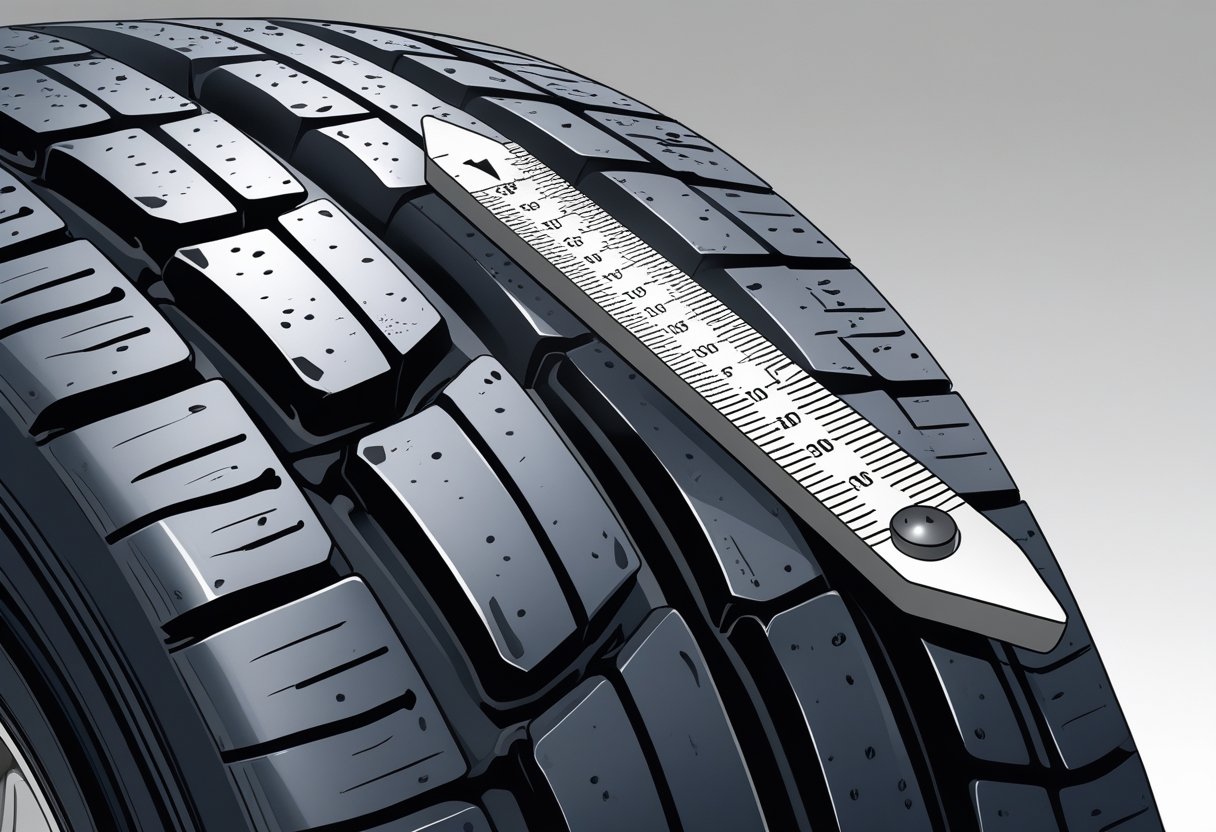
We’ve all been there, standing in the rain wondering if our tyres are up to the job when the heavens open. The truth is, worn tyres can turn a routine journey into a dangerous situation faster than you might imagine. Understanding tyre tread depth isn’t just about avoiding fines or passing your MOT, it’s about protecting yourself and everyone else on the road.
Throughout this guide, we’ll walk you through everything you need to know about tyre tread depth, from simple checks you can do at home to understanding why this seemingly small measurement makes such a massive difference to your driving safety. Whether you’re a new driver getting to grips with car maintenance or someone who wants to brush up on their knowledge, we’ve got you covered.
What Is the Legal Tread Depth for Tyres in the UK?
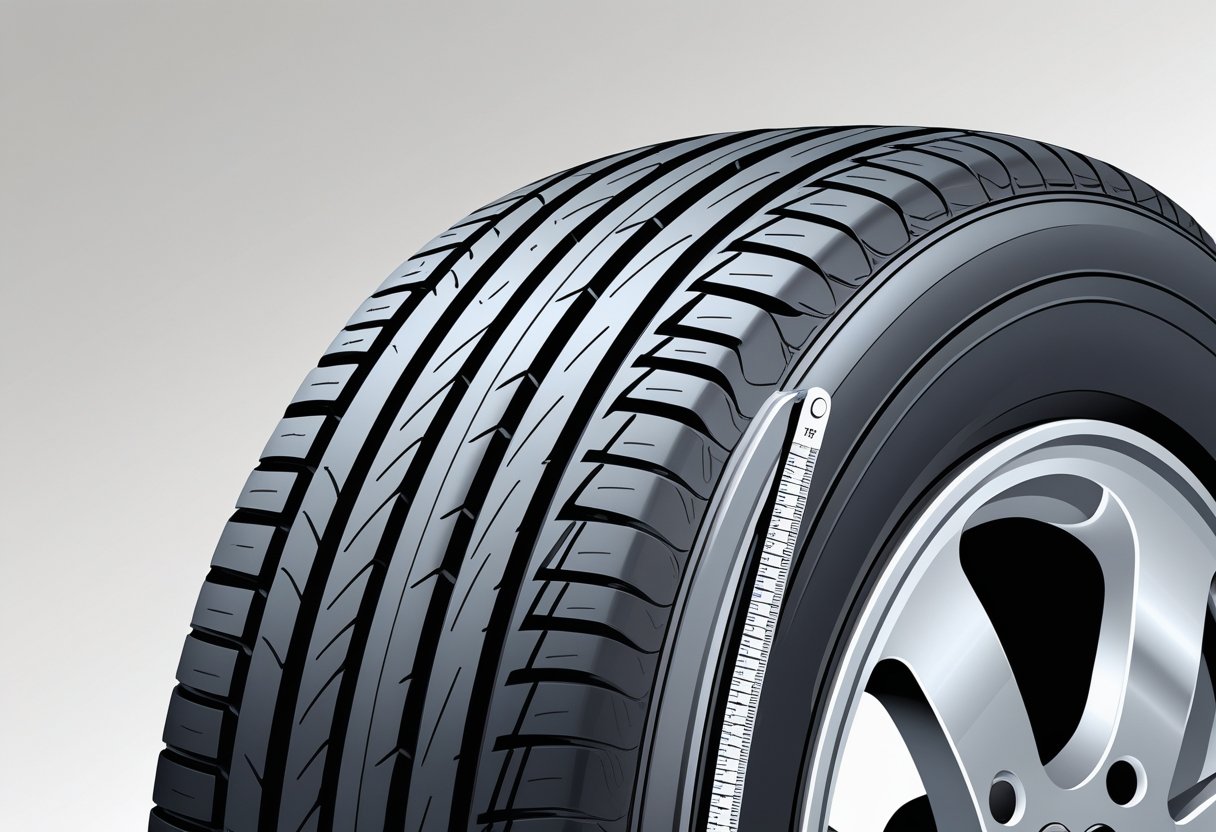
UK law sets specific minimum tread depth requirements at 1.6mm for cars, with different rules applying to motorcycles and larger vehicles. These measurements must be taken across the central three-quarters of the tyre width around the entire circumference.
Minimum Tread Depth Requirements by Law
The legal minimum tread depth for car tyres in the UK stands at 1.6mm. This isn’t just a suggestion – it’s the law, and falling below this limit can land you with serious penalties.
We need to measure this depth across the central three-quarters of your tyre’s width. The measurement must be consistent around the entire circumference of the tyre, not just in one spot.
New tyres typically start with around 8mm of tread depth. Once your tyres wear down to 3mm, it’s wise to start checking them monthly. Many experts recommend replacing tyres at 3mm rather than waiting for the legal limit.
Penalties for illegal tyres are harsh:
- Up to £2,500 fine per tyre
- 3 penalty points per tyre
- Potential £10,000 fine and 12 points for all four tyres
Your insurance could also be invalidated if you’re involved in an accident with illegal tyres.
Rules for Different Types of Vehicles
Different vehicle types have varying tread depth requirements under UK law. We’ve broken these down to help you understand what applies to your vehicle.
Cars and light vehicles (under 3,500kg) need at least 1.6mm tread depth. This includes most family cars, small vans, trailers, and caravans under 3,500kg.
Motorcycles over 50cc require a minimum of 1mm tread depth across three-quarters of the tyre width. The original tread pattern must remain visible in the remaining quarter.
Larger vehicles including lorries and buses also need 1mm minimum depth across three-quarters of the tread width, with the original pattern visible elsewhere.
Mopeds and motorcycles under 50cc simply need the original tread pattern to remain visible across the tyre surface.
Where to Measure Tread Depth on the Tyre
Knowing where to measure tread depth correctly ensures you stay within the law. We’ll guide you through the proper measurement locations and techniques.
Measure across the central three-quarters of the tyre’s width, avoiding the outer edges. The law specifically requires this central band to maintain the minimum depth.
Check multiple points around the entire circumference of each tyre. Uneven wear patterns can mean some areas fall below the legal limit whilst others appear fine.
Focus on the main tread grooves rather than the shoulder areas. These grooves channel water away and provide the grip you need for safe driving.
Use proper tools for accuracy:
- Calibrated tyre depth gauge (most reliable)
- 20p coin test (outer rim is just under 3mm)
- Built-in tread wear indicators (small bars in the grooves)
When the tyre tread becomes level with wear indicator bars, you’ve reached the 1.6mm legal limit and need immediate replacement.
Why Correct Tyre Tread Depth Matters
Having proper tread depth on your tyres directly affects your safety, vehicle performance, and running costs. When your tyres have adequate tread, you’ll experience better grip on wet roads, shorter braking distances, and improved fuel economy.
Impact on Road Safety and Braking
Your tyres are the only part of your car that touches the road. When tread depth drops below safe levels, your ability to stop quickly becomes seriously compromised.
Braking distances increase dramatically with worn tyres. A car travelling at 30mph needs an extra 8 metres to stop when tyres have just 1.6mm of tread compared to 3mm. That’s roughly two car lengths.
The stopping distance gets worse in wet conditions. At 50mph, worn tyres can add up to 14 metres to your braking distance. This could mean the difference between a close call and a serious accident.
Your grip around corners also suffers with shallow tread. We’ve all felt that unsettling moment when tyres lose their hold on the road surface. With proper tread depth, your car maintains better contact with the tarmac during turns and emergency manoeuvres.
Different weather conditions reveal the importance of good tread even more clearly:
- Dry roads: Even worn tyres perform reasonably well
- Wet roads: Tread depth becomes critical for water clearance
- Icy conditions: Every millimetre of tread helps with traction
Aquaplaning and Wet Weather Performance
Water on the road creates one of the most dangerous driving conditions. Your tyre tread acts like tiny channels that push water away from the contact patch between your tyre and the road.
When tread depth falls below 3mm, these channels become too shallow to clear water effectively. The result is aquaplaning, where your tyres literally surf on top of the water rather than gripping the road.
Aquaplaning feels terrifying because you suddenly lose all steering control. The car can drift sideways or continue straight ahead regardless of where you’re pointing the steering wheel.
Research shows that tyres with 1.6mm of tread start to lose grip at much lower speeds than those with deeper tread. While new tyres might handle water at 50mph, worn tyres could start aquaplaning at just 30mph.
The groove patterns in your tyre tread are specifically designed to handle different amounts of water. Summer tyres typically have four main grooves running around the circumference. These become less effective as they get shallower.
Wet weather stopping performance drops significantly once tread reaches the legal minimum. We recommend replacing tyres well before they hit 1.6mm if you do lots of motorway driving or live in an area with frequent rainfall.
Effects on Fuel Efficiency
Your tyre tread depth has a direct impact on how much fuel your car uses. This might surprise you, but worn tyres actually create more rolling resistance, not less.
Rolling resistance increases with worn tyres because the contact patch becomes larger and less efficient. The tyre has to work harder to maintain its shape as it rolls, which means your engine uses more fuel to maintain speed.
Studies show that replacing tyres at 1.6mm with new ones can improve fuel economy by up to 4%. Over a year of driving, this can add up to real savings at the petrol station.
Proper tyre pressure works alongside tread depth for maximum efficiency. Under-inflated tyres with worn tread create a double penalty for fuel consumption. We always recommend checking both tread depth and pressure regularly.
The tread pattern also affects how smoothly your car rolls down the road. Worn, uneven tread creates vibrations and irregular contact with the road surface. Your engine has to work harder to overcome this inconsistent resistance.
Heat generation increases with worn tyres too. As the tyre works harder, it generates more heat, which further reduces efficiency and can lead to premature failure of other tyre components.
How to Check Your Tyre Tread Depth
You can check your tyre tread depth using several reliable methods. The 20p coin test offers a quick roadside solution, whilst proper tread depth gauges give precise measurements, and built-in wear indicators provide clear visual warnings.
Simple Home Methods (20p Test and Others)
The 20p coin test remains one of the most popular ways we can check tyre tread at home. Simply place a 20p coin into the main tread grooves of your tyre. The outer rim of a 20p coin measures just under 3mm wide.
If the outer rim disappears completely when you insert the coin, your tyre sits comfortably above the legal minimum. However, if you can see part of the rim, it’s time to measure more carefully using a proper gauge.
Remember to check multiple points across each tyre. Test at least three different grooves on each tyre, including the inner, centre, and outer sections. Tyres often wear unevenly, so one area might be legal whilst another falls below the limit.
You can also use other coins for rough estimates. A 2p coin measures about 2mm around its edge, giving you another reference point. Some drivers use matchsticks or small rulers, though these methods prove less reliable than proper tools.
Check all four tyres regularly, including your spare if you carry one. Don’t forget to examine the sidewalls for cuts, bulges, or other damage whilst you’re measuring tread depth.
Using Dedicated Tread Depth Gauges
Professional tread depth gauges give you the most accurate readings possible. These tools come in several forms, from simple mechanical gauges to digital versions with LED displays.
Digital gauges offer the easiest readings. Simply place the probe into the tread groove and press down until it touches the base. The display shows your exact measurement in millimetres. Many digital gauges also feature colour-coded warnings.
Mechanical gauges work similarly but use a sliding scale instead of a digital readout. Push the probe down into the groove, then read the measurement where the slider meets the scale. These cost less than digital versions but prove just as accurate.
Laminated cards with graduated measurements provide another option. These pocket-sized tools feature different coloured sections that correspond to various tread depths. Insert the card into your tyre groove and check which colour section remains visible.
We recommend checking your tyres monthly using a proper gauge. Always measure at the deepest part of the main grooves for the most accurate reading. Keep records of your measurements to track wear patterns over time.
Looking for Built-In Wear Indicators
Most modern tyres include built-in tread wear indicators that make checking simple. These small raised bars sit at the bottom of the main tread grooves, positioned at exactly 1.6mm height.
Tread wear indicators typically appear as small bars running perpendicular to the tread pattern. They’re usually about 5mm wide and blend into the tyre’s black rubber. Look for them in the main grooves around your tyre’s circumference.
When your tread wears down to the same level as these indicators, you’ve reached the legal minimum depth. At this point, the tread surface sits flush with the indicator bars, creating a clear visual warning.
Some premium tyre brands include multiple wear indicators at different depths. You might find indicators at 3mm and 1.6mm, helping you plan replacements before reaching the legal limit. These additional markers often appear in different shapes or positions.
Check these indicators regularly during your monthly tyre inspections. If you spot any area where the tread sits level with the wear bars, replace that tyre immediately. Don’t wait until the entire tyre reaches this point, as uneven wear patterns can create dangerous situations.
Common Mistakes and Myths About Tyre Tread
Many drivers make costly errors when checking their tyres, often relying on outdated methods or misunderstanding what the legal requirements actually mean. We’ve seen countless motorists get caught out by assuming their tyres look fine when they’re actually below the legal limit.
Misjudging Visual Wear
Looking at tyres from a distance won’t tell you the real story. Many of us think we can spot worn tyres just by glancing at them, but this approach leads to trouble.
Tyres can appear perfectly fine yet still fail the legal requirement of 1.6mm across the central three-quarters. The edges might look decent whilst the middle section sits dangerously low.
Uneven wear patterns fool even experienced drivers. Your tyres might wear more on one side due to alignment issues or incorrect pressure. This means part of the tyre could be legal whilst another section fails completely.
Weather and lighting conditions make visual checks unreliable too. What looks acceptable in bright sunlight might reveal serious wear under proper inspection.
We always recommend using the 20p coin test or a proper tread depth gauge rather than trusting your eyes alone.
Confusing Legal Limits with Safe Limits
Here’s where many drivers get it wrong: the 1.6mm legal limit isn’t the same as the safe limit. This mistake costs people dearly in wet weather accidents.
Safety experts recommend replacing tyres at 3mm tread depth, not 1.6mm. Tests show that stopping distances in wet conditions increase by up to 44% between 3mm and 1.6mm depths.
Your insurance company might not cover accidents if your tyres are below 3mm, even though they’re technically legal. Many policies include clauses about maintaining tyres in safe condition.
The legal minimum exists to prevent prosecution, not to guarantee your safety. Think of 1.6mm as the absolute danger zone rather than a comfortable target.
Winter driving demands even more caution. We’d suggest 4mm minimum tread depth before the colder months arrive.
What Happens If Your Tyre Tread Is Below the Legal Limit?
Driving with tyres below the legal limit brings serious consequences that affect your wallet, safety, and legal standing. You’ll face hefty fines, penalty points, insurance complications, and significantly increased accident risks.
Legal Penalties and MOT Failure
We can’t stress this enough: the penalties for illegal tyres are severe and stack up quickly. You’ll face a fine of up to £2,500 and three penalty points per tyre.
This means if all four tyres fall below the 1.6mm legal limit, you’re looking at a potential £10,000 fine and 12 penalty points. That’s enough points to lose your licence entirely.
Your MOT will fail automatically if any tyre drops below 1.6mm. Even tyres under 3mm might earn you an advisory notice, warning that replacement is needed soon.
The courts take tyre offences seriously. In extreme cases, you could face a driving ban, especially if combined with other motoring offences. We’ve seen cases where drivers have been summoned to court for multiple illegal tyres.
Key penalty breakdown:
- Per illegal tyre: Up to £2,500 fine + 3 penalty points
- Four illegal tyres: Up to £10,000 fine + 12 penalty points
- MOT result: Automatic failure
Insurance Risks
Here’s where things get really worrying for your finances. If you have an accident whilst driving on illegal tyres, your insurance company might refuse to pay out.
This means you could be personally liable for all repair costs, replacement vehicles, and any third-party claims. We’re talking potentially tens of thousands of pounds coming straight from your pocket.
Insurance companies view driving on bald or illegal tyres as negligence. They argue you’ve knowingly put yourself and others at risk by ignoring basic safety requirements.
Even if your insurer doesn’t completely void your policy, they might reduce any payout significantly. You could find yourself fighting lengthy legal battles to recover costs that should have been covered.
The message is clear: maintaining legal tyre tread isn’t just about avoiding fines. It’s about protecting yourself from financial ruin if the worst happens.
Potential Safety Consequences
The safety risks of worn tyres are genuinely frightening, particularly in wet conditions. Once your tread drops below 3mm, stopping distances increase dramatically.
Research shows that braking distances can increase by up to 44% between tyres at 3mm and those at the legal limit of 1.6mm. In an emergency, those extra metres could mean the difference between a close call and a serious accident.
Wet weather becomes especially dangerous because:
- Reduced tread can’t clear water effectively
- Aquaplaning risk increases significantly
- Grip levels drop to dangerous levels
- Steering response becomes unpredictable
We often forget that tyres are your only contact point with the road. When that connection fails, physics takes over and control becomes impossible.
The sobering reality is that each tyre shifts about one gallon of water per second in heavy rain. Without adequate tread depth, this water has nowhere to go, creating a dangerous film between tyre and tarmac.
Pro Tips for Tyre Care and Longevity
Taking care of your tyres properly means rotating them regularly, keeping them at the right pressure, and knowing when to replace them before they become unsafe. These simple habits will save you money and keep you safer on the roads.
Rotating Tyres Regularly
We recommend rotating your tyres every 6,000 to 8,000 miles to ensure even wear across all four tyres. This simple practice can extend your tyre life by up to 30%.
Front tyres typically wear faster because they handle steering, braking, and (in front-wheel drive cars) acceleration. Without rotation, you might find yourself replacing just two tyres at a time, which can affect your car’s balance.
The most common rotation pattern moves front tyres straight back and rear tyres diagonally forward. However, directional tyres can only be swapped front to back on the same side.
Keep a record of when you last rotated your tyres. Many garages will do this during a service, or you can ask when getting your tyres checked. It’s one of those small jobs that makes a big difference to your wallet and safety.
Maintaining Correct Tyre Pressure
Check your tyre pressure monthly using a reliable pressure gauge. Under-inflated tyres wear out faster on the edges, whilst over-inflated tyres wear in the centre.
You’ll find the correct pressure for your car in three places: the owner’s manual, a sticker inside the driver’s door frame, or sometimes on the fuel filler cap. Pressures are usually different for front and rear tyres.
Check pressures when tyres are cold, ideally before driving or at least three hours after your last journey. Hot tyres give falsely high readings.
Cold weather drops tyre pressure by about 1-2 psi for every 10°C temperature drop. This means winter months need extra attention to pressure checks.
Properly inflated tyres improve fuel economy by up to 3% and provide better grip in wet conditions.
When to Replace Tyres: Beyond the Minimum
Whilst 1.6mm is the legal limit, we strongly recommend replacing tyres at 3mm for better safety margins. At this depth, you’ll still have decent grip in wet weather and emergency braking situations.
Winter driving demands more tread depth. If you regularly drive in challenging conditions, consider replacement at 4mm. The difference in stopping distance between 3mm and 1.6mm can be several car lengths in wet weather.
Watch for these warning signs:
- Uneven wear patterns (indicates alignment issues)
- Cracks or bulges in the sidewall
- Vibration whilst driving
- Age (tyres over six years old need careful monitoring)
Replace tyres in pairs on the same axle, or better yet, all four at once. This maintains balanced handling and prevents your car pulling to one side during braking or cornering.
Frequently Asked Questions
Understanding tyre tread depth requirements can feel overwhelming, but we’ve got you covered. Here are the most common questions drivers ask about measuring tread depth, staying compliant with UK law, and maintaining safe tyres.
How do I measure the tread depth on my tyres to ensure they’re roadworthy?
The 20p coin test is our favourite quick method for checking tyre tread. Simply pop a 20p coin into the tyre’s groove.
If you can’t see the outer band on the coin, your tyres are above the legal limit. When the band remains visible, it’s time for a professional inspection.
For more accurate readings, we recommend using a tyre tread depth gauge. These handy tools give you precise measurements in millimetres, making it dead easy to check compliance.
Many tyres also feature built-in wear indicators. These small raised bars sit in the grooves and become flush with the tread when tyres reach 1.6mm depth.
Could you explain the importance of maintaining proper tyre tread depth?
Your tyres are the only connection between your car and the road surface. Adequate tread depth ensures you maintain proper grip in all weather conditions.
Tread grooves channel water away from the contact patch. Without sufficient depth, your risk of aquaplaning increases dramatically, particularly during heavy rain.
In wet conditions, each tyre can shift one gallon of water every second. That’s incredible when you think about it, but only possible with decent tread depth.
Stopping distances increase significantly as tread wears down. Research shows braking distances can be 44% longer when tyres drop from 3mm to 1.6mm depth.
What are the potential risks of driving with tyres that have inadequate tread depth?
Driving with bald or illegal tyres puts everyone on the road at risk. You could face a fine of £2,500 and three penalty points per tyre.
If all four tyres are below the legal limit, you’re looking at a potential £10,000 fine and 12 penalty points. That could mean losing your licence entirely.
Your insurance company might refuse to pay out if you’re involved in an accident with illegal tyres. This leaves you potentially facing enormous repair bills and compensation claims.
Beyond the legal consequences, worn tyres dramatically reduce your ability to stop, steer, and maintain control. The safety risks simply aren’t worth it.
Can you tell me the steps to follow when checking tyre tread for safety compliance?
Start by checking all four tyres, including your spare if you have one. Don’t forget to examine the tread across the central three-quarters of each tyre.
Use the 20p coin test at multiple points around each tyre’s circumference. Uneven wear patterns can indicate alignment issues or incorrect tyre pressures.
Check for any cuts, bulges, or embedded objects whilst you’re examining the tread. These issues can be just as dangerous as worn tread.
Make these checks every couple of weeks and before any long journeys. Regular monitoring helps you spot problems before they become dangerous or costly.
What should I do if my tyre tread depth falls below the legal limit?
Stop driving immediately if your tyres are below 1.6mm depth. Continuing to drive is illegal and dangerous.
Book an appointment with a tyre specialist or garage as soon as possible. Don’t put this off, as the penalties for driving with illegal tyres are severe.
If you’re stranded, call for breakdown assistance rather than driving on illegal tyres. Most breakdown services can arrange mobile tyre fitting.
Consider replacing tyres before they reach the legal minimum. Many experts recommend changing tyres at 3mm depth for optimal safety and performance.
How often should tyre tread depth be assessed to maintain vehicle safety?
We recommend checking your tyre tread depth every two weeks as part of your regular vehicle maintenance routine. It only takes a few minutes but could save your life.
Always perform tread depth checks before long journeys or motorway driving. Higher speeds increase the importance of having adequate tread depth.
If you notice your tyres wearing quickly, check them more frequently. Rapid wear could indicate problems with wheel alignment or tyre pressures.
Keep an eye on tread depth once it drops below 4mm. At this point, performance starts to decline, and you should start planning for replacement tyres.