

What to Practise When Your Test Includes a Dual Carriageway Section: Key Skills for UK Learners
Many learner drivers feel their pulse quicken when they hear their driving test will include dual carriageways. We understand that anxiety completely because these faster roads present unique challenges that simply don’t exist on quieter residential streets. The combination of higher speeds, multiple lanes, and merging traffic can feel overwhelming, especially when you’re already managing test nerves.
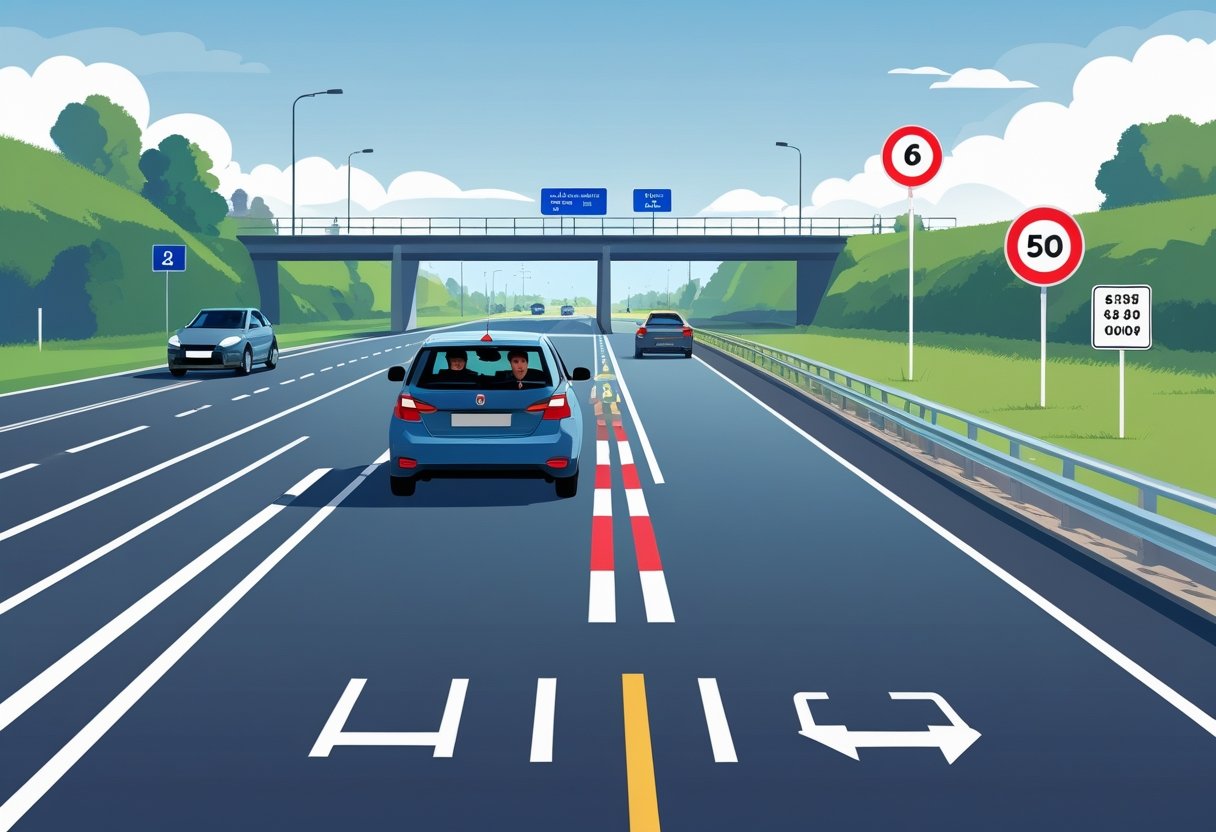
The key to success lies in mastering specific skills that build your confidence and competence on these faster roads: smooth joining techniques, proper lane discipline, controlled speed management, and safe overtaking decisions. Most driving tests include dual carriageway sections, making these abilities essential rather than optional. Your examiner wants to see that you can handle the jump from 30mph town driving to 70mph dual carriageway speeds with composure and control.
We’ll walk you through everything from developing the right mindset and understanding what examiners look for, to practising the practical skills that matter most. You’ll discover how to join confidently using slip roads, maintain proper positioning across multiple lanes, handle junctions and roundabouts at speed, and navigate the rules that keep everyone safe. By focusing your practice on these specific areas, you’ll transform dual carriageways from a source of worry into an opportunity to demonstrate your growing driving abilities.
Understanding Dual Carriageways in the Driving Test
Most UK driving tests include time on dual carriageways, where we need to demonstrate skills like joining traffic safely, maintaining proper lane discipline, and handling higher speeds with confidence. These sections test abilities that differ from both regular roads and motorways, making them a unique part of our assessment.
How Dual Carriageways Fit Into the UK Driving Test
The dual carriageway section typically takes up 5-10 minutes of our 40-minute driving test. This gives us enough time to show we can handle faster traffic without feeling rushed.
Most test centres position themselves near dual carriageways. This makes these roads a standard part of driving test routes across the country. Our examiner wants to see how we manage the jump from 30mph town driving to speeds up to 70mph.
Key skills we need to demonstrate:
- Safe joining via slip roads
- Staying in the left lane unless overtaking
- Proper speed control for conditions
- Smooth lane changes with good observations
We won’t necessarily need to overtake during our test. If traffic conditions don’t require it, simply maintaining good lane discipline and speed control satisfies the examiner’s requirements.
The examiner provides clear instructions well before dual carriageway manoeuvres. They’ll tell us about upcoming exits or lane changes with plenty of time to prepare and position ourselves correctly.
Why Examiners Include Dual Carriageway Sections
Dual carriageways test essential skills that we can’t properly assess on slower roads. These include gap judgment when joining fast-moving traffic and confidence at higher speeds.
Main areas under assessment:
- Building up speed on acceleration lanes
- Merging smoothly with the main carriageway
- Maintaining safe following distances at speed
- Reading road signs quickly and accurately
The examiner understands that higher speeds can feel intimidating. They won’t penalise us for being cautious or ask us to make dangerous overtakes.
These roads represent a significant portion of UK driving. Proving we can handle them safely shows we’re ready for independent driving beyond our test.
Traffic moves predictably on dual carriageways compared to busy town centres. This actually makes them safer environments for testing our higher-speed driving abilities.
Differences Between Dual Carriageways and Motorways
Many of us confuse dual carriageways with motorways, but important differences affect how we approach our driving test preparation.
| Feature | Dual Carriageway | Motorway |
|---|---|---|
| Right turns | Permitted | Prohibited |
| Traffic lights | Common | Never present |
| Pedestrians | Sometimes allowed | Always prohibited |
| Cyclists | Usually permitted | Always prohibited |
Junction types vary dramatically. Motorways only use slip roads and service areas. Dual carriageways include roundabouts, traffic lights, and standard T-junctions.
Right turns present the biggest difference. We might need to cross the central reservation when turning right onto or off a dual carriageway during our test.
Speed limits match at 70mph for cars. However, dual carriageways often have lower limits through built-up areas that we need to spot and follow.
The hard shoulder isn’t guaranteed on dual carriageways. Many have grass verges or barriers right next to the left lane instead of the refuge area we’d expect on motorways.
Developing the Right Mindset and Boosting Confidence
Dual carriageways can feel intimidating, but the right mental approach makes all the difference. We’ll explore specific fears that worry learners, practical techniques to stay calm during your test, and ways to build genuine confidence through targeted practice.
Common Nerves for Learners on Dual Carriageways
Speed anxiety tops the list for most learner drivers. The jump from 30mph residential streets to 70mph dual carriageways feels massive. Many learners worry they’ll hold up traffic or struggle to match the pace of other vehicles.
Merging fears come in second. The thought of joining fast-moving traffic whilst accelerating up a slip road makes hearts race. Learners often picture worst-case scenarios where gaps disappear or lorries bear down on them.
Lane discipline worries affect confidence too. Questions swirl: “Am I in the right lane? Should I move over? What if I need to overtake?” The pressure to make split-second decisions whilst maintaining speed creates genuine stress.
Distance judgment becomes trickier at higher speeds. Following distances that felt comfortable at 30mph suddenly seem inadequate. Learners question whether they’re too close or too far from the vehicle ahead.
Your ADI understands these concerns completely. During driving lessons, we’ve seen countless learners transform from nervous to confident once they grasp the fundamentals.
Strategies for Calming Test Day Anxiety
Breathing techniques work wonders when nerves kick in. Try the 4-7-8 method: breathe in for 4 counts, hold for 7, exhale for 8. This activates your body’s relaxation response and slows your heart rate.
Positive self-talk replaces doubt with confidence. Instead of “I can’t handle this speed,” try “I’ve practised this with my ADI and I know what to do.” Your driving lessons have prepared you for exactly these moments.
Physical preparation matters enormously. Arrive early, adjust your mirrors properly, and settle into your seat. Familiar routines create comfort and control.
Focus on technique rather than outcomes. Concentrate on smooth acceleration, proper mirror checks, and maintaining safe distances. When your mind fixates on the process, anxiety often melts away.
Remember your training during challenging moments. Every dual carriageway skill you’ll need has been covered in your driving lessons. Trust the preparation you’ve put in with your ADI.
Building Real-World Confidence Before Test Day
Gradual exposure builds genuine confidence. Start with quieter dual carriageways during off-peak hours. As comfort grows, progress to busier routes and different times of day.
Repeat familiar routes until they become second nature. When you know where lanes merge and where exits appear, mental bandwidth frees up for other driving tasks.
Practice specific scenarios that worry you most:
- Joining dual carriageways from various slip roads
- Overtaking slower vehicles safely
- Leaving at different junction types
- Driving in varying weather conditions
Master the fundamentals through repetition. Confident dual carriageway driving relies on smooth gear changes, accurate speed control, and decisive lane positioning.
Build up gradually with your ADI’s guidance. Professional driving lessons provide structured progression that matches your developing skills. We never throw learner drivers into situations they’re not ready to handle.
Celebrate small wins along the way. Successfully joining a dual carriageway or completing your first overtake deserves recognition. These moments build the foundation for lasting confidence.
Mastering Joining Dual Carriageways Safely
Getting onto a dual carriageway smoothly comes down to building speed on the slip road whilst watching for safe gaps in traffic. We’ll focus on using the full acceleration lane effectively, handling tricky short slip roads, reading traffic patterns, and making proper safety checks before merging.
Using Slip Roads for Smooth Acceleration
Slip roads are your runway for building up speed before joining faster traffic. We need to think of them as preparation zones where we gradually match the pace of vehicles already on the dual carriageway.
Start accelerating as soon as you enter the slip road. Don’t wait until the last moment to pick up speed. Your engine needs time to build momentum, especially in smaller cars.
Use the entire length of the acceleration lane. Many learners try to merge too early when they still have plenty of road left. This creates unnecessary pressure and limits your options.
Signal early to show other drivers your intentions. This gives traffic in the left lane time to adjust their position or create space if needed.
Aim for around 50-60 mph by the time you’re ready to merge, depending on traffic conditions. We want to slot in seamlessly rather than forcing other vehicles to brake or swerve around us.
Keep your foot down steadily as you progress along the slip road. Hesitant acceleration makes joining much harder and more dangerous.
Dealing with Short Slip Roads and Limited Gaps
Short slip roads demand quick thinking and decisive action. Some feel criminally brief, giving you barely enough space to reach dual carriageway speeds safely.
Get your speed up immediately on these challenging entrances. We need more aggressive acceleration than usual, but staying calm prevents poor decisions.
Look for gaps much earlier in the process. With limited slip road length, we can’t afford to be picky about finding the perfect space. Sometimes a reasonable gap beats waiting for an ideal one.
Be prepared to yield if no safe opportunity appears. It’s better to slow down or even stop at the end of a slip road than force a dangerous merge into traffic.
Consider signalling before you start accelerating on very short slip roads. Early indication gives other drivers maximum warning about your plans to join.
Watch for patterns in traffic flow. Gaps often appear suddenly as vehicles change lanes or adjust their speeds.
Assessing and Responding to Traffic Flow
Reading traffic patterns helps you time your merge perfectly. We need to understand how vehicles move and create opportunities for safe joining.
Look ahead to gauge the speed of traffic in the left lane. If cars are moving at 65 mph, that becomes your target speed. Slower traffic due to congestion means adjusting accordingly.
Watch for clusters and gaps in the traffic flow. Vehicles often travel in groups with clear spaces between them. These natural breaks provide the best merging opportunities.
Notice if traffic is bunching up behind slower vehicles. This creates good joining opportunities as cars spread out to overtake.
Don’t be the slowest or fastest vehicle trying to merge. Both extremes create dangerous situations for everyone involved.
Be patient with heavy goods vehicles. They need extra space and time to adjust their speed or position when you’re joining.
Essential Mirror and Blind Spot Checks
Proper observations are crucial for safe merging at dual carriageway speeds. We need to know exactly what’s happening around us before making any moves.
Check your interior mirror first to see what’s following behind you on the slip road. This helps you understand your options if you need to slow down or speed up.
Use your left wing mirror constantly to assess gaps in the left lane. We’re looking for spaces that give comfortable room both in front and behind.
Perform a blind spot check before moving into the carriageway. Turn your head briefly to look over your left shoulder. Motorcycles and smaller cars can hide in these areas.
Time your mirror checks with your acceleration. As you build speed, continuously update your picture of surrounding traffic.
Don’t fixate on one potential gap. Keep scanning for better opportunities that might develop further ahead or behind your original target space.
Make your final safety check just before committing to the merge. Traffic conditions change rapidly, and a last-second look can prevent accidents.
Lane Discipline and Positioning
Good lane discipline keeps you safe on dual carriageways and helps you pass your test. We’ll focus on staying left when possible, making smooth lane changes, and reading the road markings that guide your positioning on the main carriageway.
Staying Left Unless Overtaking
The left-hand lane is your home on dual carriageways. We should spend most of our time here, treating it as the default position for normal driving.
Think of the left lane as the main traffic flow. The right lane exists for overtaking slower vehicles, not for cruising at your preferred speed. This rule keeps traffic moving smoothly and prevents dangerous situations.
When to use each lane:
- Left lane: Normal driving and maintaining steady speeds
- Right lane: Active overtaking only
Once you’ve passed another vehicle, move back to the left lane promptly. Don’t wait until you can see their entire car in your rear-view mirror. When their headlights appear in your wing mirror, it’s safe to return.
Many learners worry about constantly changing lanes, but this is completely normal. The key is making these moves smoothly and deliberately, not staying in the right lane because it feels easier.
If slower traffic joins from a slip road ahead, we can briefly move to the right lane to help them merge safely. This shows good awareness and consideration for other drivers.
Changing Lanes Safely and Effectively
Lane changes need careful planning and smooth execution. We use the mirror-signal-manoeuvre routine every single time, without exception.
Start your checks early. Look in your interior mirror first, then your right wing mirror to see approaching traffic. Signal clearly to give other drivers plenty of warning about your intentions.
The safe lane change sequence:
- Check mirrors thoroughly
- Signal early and clearly
- Check your blind spot with a shoulder glance
- Move gradually into the new lane
- Cancel your indicator
Never rush lane changes or squeeze into small gaps. If you miss your intended exit, continue to the next junction rather than making last-minute dangerous moves.
The blind spot check is crucial on dual carriageways. That quick look over your shoulder catches motorcycles or fast-approaching cars that your mirrors might miss. It takes half a second but could prevent a serious accident.
Build up your speed gradually while still in the left lane before overtaking. This makes the actual lane change smoother and reduces the time spent alongside other vehicles.
Understanding Road Markings and Lane Signs
Road markings and signs guide your positioning on the main carriageway. Learning to read these early helps you prepare for lane changes well in advance.
White dashed lines separate lanes and show where you can change position safely. Solid white lines mean you shouldn’t cross, though you can do so if necessary to avoid an accident or obstruction.
Look for overhead signs that show which lanes lead to different exits. These appear well before junctions, giving you time to position yourself correctly without rushing.
Key road markings to watch for:
- Lane arrows: Show which direction each lane leads
- Exit numbers: Help you identify the correct lane early
- Speed limit signs: May vary between different sections
The central reservation separates opposing traffic flows. Stay well clear of this barrier, especially in windy conditions or when passing large vehicles that create air turbulence.
Road signs often show lane restrictions too. Some dual carriageways have lanes reserved for buses or high-occupancy vehicles during peak hours. Check the signs carefully to avoid using restricted lanes.
We should position ourselves slightly right within the left lane when passing slip roads. This gives joining traffic more space and shows we’re aware of the merging area ahead.
Driving at Higher Speeds with Control
Dual carriageways demand precise speed management and heightened awareness as you navigate 70 mph traffic. We’ll focus on maintaining proper speeds, calculating safe following distances, adapting to weather changes, and reading traffic patterns effectively.
Maintaining Appropriate Speed Limits
The speed limit on dual carriageways is 70 mph unless signs indicate otherwise. However, reaching this maximum isn’t always necessary or safe.
We recommend building up to higher speeds gradually during practice sessions. Start at 50-60 mph until you feel comfortable with the road positioning and traffic flow.
Key speed considerations:
- Match the flow of traffic when safe to do so
- Stay in the left lane unless overtaking
- Reduce speed when approaching slip roads or junctions
- Watch for vehicles with lower speed limits (lorries at 60 mph, heavy goods vehicles at 50 mph)
Your examiner will expect smooth acceleration through the gears. Avoid sudden speed changes that could unsettle your vehicle or concern other drivers.
Remember that different vehicle types have varying speed limits. When you spot a lorry ahead, start planning your overtake early rather than getting stuck behind slower-moving traffic.
Applying the Two-Second Rule and Safe Stopping Distances
The two-second rule becomes absolutely critical at dual carriageway speeds. At 70 mph, your stopping distance reaches 96 metres in good conditions.
We suggest practising this calculation: pick a fixed point ahead like a bridge or sign. When the car in front passes it, count “one thousand and one, one thousand and two.”
Distance management tips:
- Increase your following distance in poor weather
- Check mirrors before adjusting your gap
- Don’t let other drivers pressure you into closing the gap
- Use the “only a fool breaks the two-second rule” memory aid
Double your following distance in wet conditions. Triple it when visibility drops or road surfaces become icy.
Watch for brake lights far ahead in the traffic queue. This early warning system helps you ease off the accelerator smoothly rather than braking harshly.
Adjusting Driving for Weather Conditions
Weather conditions dramatically affect your stopping ability and vehicle control at higher speeds. We always emphasise adapting your driving style before problems arise.
In wet weather, reduce your speed by at least 10 mph below the limit. Your tyres need extra grip for steering and stopping safely.
Weather-specific adjustments:
- Rain: Increase following distance, test brakes gently, avoid sudden movements
- Wind: Grip steering wheel firmly, anticipate gusts when passing large vehicles
- Fog: Use appropriate lights, reduce speed significantly, increase gap
Strong crosswinds can push your car sideways, especially when overtaking high-sided vehicles. Maintain a firm but relaxed grip on the steering wheel.
Watch for standing water or spray from other vehicles that reduces visibility. Your examiner will expect you to demonstrate mature judgement about appropriate speeds for conditions.
Responding to Changing Traffic Situations
Dual carriageway traffic situations change rapidly, requiring constant scanning and quick decision-making. We encourage looking beyond the immediate vehicle ahead.
Monitor traffic joining from slip roads. Move to the right lane when safe, or slow slightly to create merging space for joining vehicles.
Traffic awareness checklist:
- Scan mirrors every 8-10 seconds
- Watch for vehicles changing lanes
- Anticipate slower traffic ahead
- Plan overtaking moves well in advance
Look for early warning signs like brake lights in the distance or traffic bunching together. These signals help you respond smoothly rather than reacting suddenly.
Keep checking what’s happening behind you, especially before changing lanes or adjusting speed. Other drivers might be planning overtaking manoeuvres that affect your decisions.
Overtaking and Handling Other Road Users
When you’re on dual carriageways during your test, you’ll need to make smart decisions about when to overtake and how to handle different types of road users safely. The key is building confidence in your judgement whilst always prioritising safety over speed.
Making Confident Overtaking Decisions
Good overtaking starts long before you actually change lanes. We need to plan ahead and read the traffic patterns around us.
Check your mirrors regularly to know what’s happening behind you. Other drivers might be planning to overtake you at the same time.
Look for a suitable gap that’s at least three car lengths ahead of the vehicle you want to pass. This gives you space to pull back in safely.
Before you move out:
- Signal early to show your intentions
- Check your blind spots with a quick shoulder check
- Make sure no one else is already overtaking you
- Ensure the road ahead is clear for at least 100 metres
Once you start overtaking, commit to it. Hesitant overtaking creates dangerous situations for everyone.
Accelerate smoothly past the other vehicle, but stay within speed limits. Many learners make the mistake of overtaking too slowly.
Don’t cut back in too quickly. Wait until you can see the entire front of the overtaken vehicle in your rear-view mirror before indicating left and moving back.
Dealing with Cyclists and Pedestrians
Cyclists and pedestrians need extra care and space on dual carriageways, even though they’re less common than on regular roads.
When you spot cyclists ahead, give them plenty of room. The Highway Code says you should leave at least 1.5 metres when overtaking cyclists.
Watch out for turbulence from your vehicle. Large vehicles create air currents that can push cyclists off balance, so gentle acceleration helps.
Pedestrians might appear near slip roads or service areas. They’re often confused about traffic flow and might step into your path unexpectedly.
Near junctions and service stations:
- Slow down slightly
- Be ready to brake
- Watch for people crossing between lanes
If you see maintenance workers or emergency service personnel, treat them like any vulnerable road user. Give them space and reduce your speed.
Remember that cyclists might need to move out suddenly to avoid drains, potholes, or debris. Stay patient and don’t rush your overtaking decision.
What to Do Around Slow Vehicles and Roadworks
Slow-moving vehicles and roadworks are common challenges on dual carriageways during driving tests.
When approaching roadworks, look for warning signs early. Speed limits often drop from 70mph to 50mph or lower.
Lane closures mean you’ll need to merge safely. Don’t rush to get ahead of other traffic. Use the zip merge technique where both lanes flow together smoothly.
Heavy vehicles like lorries and buses accelerate slowly and might pull out to overtake unexpectedly. Give them extra space and time.
Construction vehicles entering or leaving roadworks can create sudden hazards. They might have mud on their tyres or be moving slowly.
Key roadworks rules:
- Stick to temporary speed limits
- Keep a safe following distance
- Don’t change lanes unnecessarily
- Be patient with lane closures
Agricultural vehicles and breakdown recovery trucks also use dual carriageways regularly. These often travel well below the speed limit.
Plan your overtakes carefully around slow vehicles. Sometimes it’s better to stay behind and wait for a clearer opportunity rather than risk accidents by squeezing through tight gaps.
Exiting and Turning on Dual Carriageways
Getting off dual carriageways safely requires planning ahead and understanding how different types of exits work. You’ll need to master using deceleration lanes properly and handle right turns through central reservations with confidence.
Planning Your Exit Using Deceleration Lanes
We recommend starting your exit preparations well before you reach your turning. Look for road signs about half a mile before your exit point.
Check your mirrors and signal left early. This gives other drivers plenty of warning about your intentions.
Move into the deceleration lane smoothly. Don’t brake hard on the main carriageway. The deceleration lane is designed to let you slow down safely without affecting traffic behind you.
Keep your speed up initially when you enter the deceleration lane. Only start braking once you’re fully in the lane.
Some exits have long deceleration lanes that curve away from the main road. Use the full length available to you. This makes your exit much smoother and safer.
Watch out for exits that don’t have proper deceleration lanes. These require extra caution because you’ll need to slow down more gradually while still on the main carriageway.
Managing Right Turns and Central Reservations
Right turns on dual carriageways need careful planning because of the high traffic speeds. Start checking your mirrors and signal early, just like with any other manoeuvre.
The central reservation is your safe waiting area. If it’s wide enough for your entire vehicle, you can use it to wait between crossing each carriageway.
Position your car completely within the central reservation. Make sure no part of your vehicle sticks out into either carriageway.
If the central reservation is too narrow for your car, treat both carriageways as one road. Wait until you can cross both sides in one go.
Watch for oncoming traffic in both directions. Traffic on dual carriageways moves fast, so gaps that look adequate might not be.
Some central reservations have special turning bays marked out. These give you more space to position your vehicle safely while you wait.
Using Signals Early and Clearly
We always stress the importance of signalling well in advance on dual carriageways. Other drivers need time to react at these higher speeds.
Signal left for exits at least 300 metres before you start moving across. This gives following traffic plenty of warning.
For right turns, signal early and consider a gentle brake tap. This warns drivers behind you that you’re slowing down significantly.
Keep your signal on throughout your manoeuvre. Don’t cancel it too early, especially when waiting in central reservations.
Watch for other vehicles’ signals too. Cars joining from slip roads should be signalling right to merge with traffic.
Remember that some drivers might not signal properly. Always check what vehicles are actually doing, not just what their indicators suggest.
Identifying Service Areas and Clearways
Service areas have special rules that differ from regular exits. They usually have longer acceleration and deceleration lanes because of the volume of traffic.
Clearways prohibit stopping except in emergencies. You’ll see red circular signs with diagonal lines marking these areas.
Look for the blue motorway-style signs that indicate service areas ahead. These give you distance information to help plan your approach.
Service area exits often have multiple lanes. Choose the correct lane early to avoid last-minute lane changes.
Some service areas have fuel stations visible from the dual carriageway. Don’t let these distract you from your driving or exit planning.
Exit signs for service areas typically show amenities available. This helps you decide if you need to stop or continue to the next services.
Navigating Junctions, Roundabouts, and Other Features
Dual carriageways present unique challenges when approaching junctions and roundabouts, requiring careful positioning and timing. You’ll need to master lane discipline whilst managing higher speeds and heavier traffic flow.
Approaching Junctions on a Dual Carriageway
Junction approaches on dual carriageways demand early preparation and decisive action. We recommend checking your mirrors well in advance and positioning yourself in the correct lane at least 200 metres before the junction.
Key positioning strategies:
- Use the left lane for straight ahead or left turns
- Move to the right lane early for right turns
- Watch for dedicated turning lanes marked on the road
Speed management becomes critical as you approach. Reduce your speed gradually rather than braking harshly at the last moment.
Traffic lights on dual carriageways often have longer amber phases. Don’t assume you can race through like on smaller roads.
Watch for these common hazards:
- Vehicles changing lanes suddenly
- Motorcycles filtering between lanes
- Pedestrians at controlled crossings
Signal your intentions clearly and maintain your chosen lane. Other drivers rely on your consistency to make their own decisions safely.
Check your blind spots thoroughly before any lane changes. The higher speeds on dual carriageways mean vehicles can appear in your mirrors faster than expected.
Negotiating Roundabouts and Merging Traffic
Dual carriageway roundabouts often feature multiple lanes and fast-moving traffic. We suggest approaching in the correct lane based on your intended exit, following the road markings rather than general roundabout rules.
Lane selection guide:
- First exit: Left lane, signal left on approach
- Straight ahead: Usually left lane, check road markings
- Right exits: Right lane, signal right on approach
Give way to traffic from your right, but be prepared for higher speeds than typical roundabouts. Don’t hesitate once you’ve identified a safe gap.
Signal left after passing the exit before yours. This helps other drivers predict your movements in the faster traffic flow.
Merging back onto the dual carriageway:
- Build up speed on the slip road
- Check mirrors and blind spots frequently
- Match the speed of traffic you’re joining
- Signal early and merge smoothly
Watch for lorries and coaches that need extra space. They can’t stop or change direction as quickly as cars.
Practice makes these manoeuvres feel natural. The key is reading the traffic flow and timing your movements confidently.
Essential Rules, Road Signs, and Practical Preparation
Mastering dual carriageways means understanding specific Highway Code rules that differ from regular roads, recognising the unique signage you’ll encounter at higher speeds, and developing practice techniques that build real confidence for your test.
Understanding the Highway Code for Dual Carriageways
The Highway Code contains specific rules for dual carriageways that we need to master before test day. These rules differ from both single carriageways and motorways in important ways.
Rule 137 states we must keep to the left lane unless overtaking. This isn’t just a suggestion during your driving test. Your examiner will mark you down for staying in the right lane unnecessarily.
Speed limits on dual carriageways are typically 70mph unless signs show otherwise. However, many dual carriageways have reduced limits through built-up areas or dangerous sections. We must always check the signs rather than assuming.
The Highway Code permits right turns on dual carriageways, unlike motorways. This creates unique challenges when crossing the central reservation. We need to treat narrow central reservations as one continuous crossing.
Following distances become critical at higher speeds. The two-second rule from your driving lessons applies even more strictly here. In wet conditions, we double this distance.
Your ADI will have covered these rules during lessons, but reviewing them independently helps cement the knowledge. The official Highway Code PDF provides the most up-to-date information for your theory preparation.
Recognising and Responding to Road Signs
Dual carriageway signs appear much faster than on slower roads, giving us less time to process information and react safely.
Blue rectangular signs indicate you’re on a dual carriageway. Green signs show motorway-standard roads. This distinction helps us understand what rules apply and what to expect ahead.
Junction warning signs appear at 1 mile, ½ mile, and 300 yards before exits. We need to spot these early to plan our positioning. Missing the first warning can leave us scrambling to get into the correct lane.
Lane direction signs become crucial for complex junctions. These overhead gantries show which lanes go where. Reading them early prevents dangerous last-minute lane changes during your test.
Speed limit signs change frequently on dual carriageways. We might see 70mph reducing to 50mph then back to 70mph within a few miles. Your examiner expects immediate responses to these changes.
Distance countdown markers (3, 2, 1) help us time our exit perfectly. These blue markers with white numbers appear before slip roads, giving us precise positioning guidance.
Practice reading signs quickly becomes essential. During driving lessons, your ADI can help you develop this scanning technique before test day.
Effective Practice Strategies for Learners
Building dual carriageway confidence requires structured practice that goes beyond basic manoeuvres. We need specific techniques that prepare us for test conditions.
Start with quieter dual carriageways during your driving lessons. Sunday mornings or mid-week sessions offer lighter traffic, letting you focus on basic techniques without pressure from other vehicles.
Practice the complete sequence of joining, driving, and leaving dual carriageways. Many learner drivers focus only on joining, but smooth exits require equal attention during lessons with your ADI.
Speed building exercises help us reach 70mph gradually. Start at 50mph, then progress to 60mph, finally reaching the full speed limit. This progressive approach builds natural confidence.
Work on gap judgement at various speeds. Practice assessing whether gaps are safe for overtaking or joining. Your ADI can create scenarios that test this crucial skill safely.
Mirror discipline needs constant reinforcement at higher speeds. Practice the mirror-signal-manoeuvre routine until it becomes automatic, especially for lane changes and exits.
Use mock test conditions during later lessons. Ask your ADI to simulate test pressure by giving minimal guidance, helping you develop independent decision-making skills that examiners look for.
Frequently Asked Questions
Understanding dual carriageway driving raises many questions for learner drivers preparing for their test. These answers cover the essential skills like safe lane changes and proper following distances, plus specific techniques for joining slip roads and overtaking confidently in various weather conditions.
What are the key skills I should focus on to stay safe while driving on a dual carriageway?
Lane discipline tops our list of essential skills. We always keep left unless we’re overtaking or turning right. This simple rule prevents most dual carriageway problems.
Maintaining safe following distances becomes crucial at higher speeds. We use the two-second rule as our minimum gap. Pick a landmark ahead and count the seconds between when the car in front passes it and when we do.
Mirror work needs to be constant and thorough. We check mirrors every few seconds to stay aware of traffic around us. This includes proper shoulder checks before any lane changes.
Speed control matters more than hitting the maximum limit. We match our speed to traffic flow and road conditions. Sometimes that means driving at 50mph when everyone else is doing the same.
Good observation skills help us spot hazards early. We scan far ahead for brake lights, merging traffic, and changing road conditions. The faster we’re travelling, the further ahead we need to look.
How can I confidently master joining and leaving a dual carriageway via slip roads?
Build up speed gradually on the acceleration lane. We start accelerating as soon as we enter the slip road, not when we’re about to merge. This gives our engine time to reach dual carriageway speeds.
Use the full length of every slip road available. Many learners try to merge too early and miss valuable acceleration space. We keep building speed until we find the right gap.
Look for gaps whilst we’re still accelerating. We use our mirrors to assess traffic in the left lane and time our merge accordingly. Signal early to show other drivers our intentions.
For exits, we position ourselves in the left lane well before the slip road appears. We indicate early and start reducing speed gradually once we’re on the exit slip road, not before.
Short slip roads require decisive action. We accelerate more firmly and look for gaps earlier in the process. Sometimes we need to be more flexible about gap sizes on these challenging junctions.
What are the best practices for overtaking on a dual carriageway, and how can I do so safely?
Only overtake when it’s genuinely necessary. We don’t overtake just because we can. If the other vehicle isn’t significantly slower, we stay patient in the left lane.
Check mirrors thoroughly before moving out. We look in the interior mirror, then the right wing mirror, followed by a shoulder check for blind spots.
Signal clearly and move out decisively. Once we’ve decided to overtake, we commit to the manoeuvre rather than hesitating halfway through.
Maintain a safe speed differential when passing. We don’t crawl past other vehicles, but we don’t race by them either. A steady, confident overtake works best.
Return to the left lane as soon as it’s safe. We leave enough space before moving back in and always check our mirrors before the lane change.
Never overtake if you can’t see far enough ahead. Hills, bends, or poor weather can hide oncoming traffic or hazards we haven’t spotted yet.
Could you guide me through the correct procedure for changing lanes on a dual carriageway?
Start with thorough mirror checks. We look in the interior mirror first, then the relevant wing mirror for the direction we’re moving. This builds a picture of surrounding traffic.
Signal early to give other drivers maximum warning. We indicate before we start the actual lane change, not during it.
Perform a shoulder check to cover blind spots. Turn your head briefly to look over the appropriate shoulder. Motorcycles and smaller cars often hide in these areas.
Move smoothly and decisively once you’ve committed. We don’t drift slowly between lanes or make sudden jerky movements that surprise other drivers.
Check your position in the new lane. Make sure you’re properly centred between the white lines and adjust if needed.
Cancel your indicator if it hasn’t done so automatically. Some lane changes don’t turn the steering wheel enough to self-cancel the signal.
How should I adjust my driving approach in different weather conditions on a dual carriageway?
Rain demands much larger following distances. We double our normal gap in wet conditions because stopping distances increase dramatically. Three or four seconds becomes our new minimum.
Reduce speed appropriately for visibility and grip. We don’t automatically drive at 70mph just because it’s the limit. Sometimes 50mph is the sensible choice.
Watch for spray from other vehicles. Large trucks and buses create walls of water that can blind us temporarily. We stay well back and be prepared for sudden visibility changes.
Wind affects our steering, especially when passing high-sided vehicles. We grip the steering wheel firmly and expect the car to move slightly as we overtake lorries.
Fog requires extreme caution with speed and following distances. We use fog lights when visibility drops below 100 metres and increase our following distance even further.
Ice and snow mean avoiding dual carriageways unless absolutely necessary. These conditions make the higher speeds extremely dangerous for inexperienced drivers.
What should I keep in mind about the rules for different types of vehicles when using a dual carriageway?
Learner drivers are welcome on dual carriageways. We have every right to use these roads and shouldn’t feel pressured by other traffic. Display L-plates clearly and drive with confidence.
Heavy goods vehicles often travel slower than cars. We stay patient when following lorries and only overtake when we have a clear, long stretch ahead.
Motorcycles can appear in blind spots quickly. Their smaller size and higher acceleration mean they can surprise us. Always check shoulder areas before changing lanes.
Tractors and agricultural vehicles may use dual carriageways but travel much slower. We prepare for significant speed differences and plan overtakes carefully.
Emergency vehicles need immediate assistance. When we hear sirens, we move to the left lane and slow down if necessary. Never block the central reservation or right lane.
Caravans and trailers affect other vehicles’ acceleration and braking. We give them extra space and patience, especially on hills where they might slow down significantly.