

When and How to Change Gears Smoothly: A Confident Driver’s Guide
Learning to drive a manual car can feel overwhelming at first, especially when you’re trying to master the art of changing gears. The good news is that once you understand the basics and get some practice, smooth gear changes become second nature. The key to changing gears smoothly is timing your clutch, accelerator, and gear lever movements so they work together seamlessly.
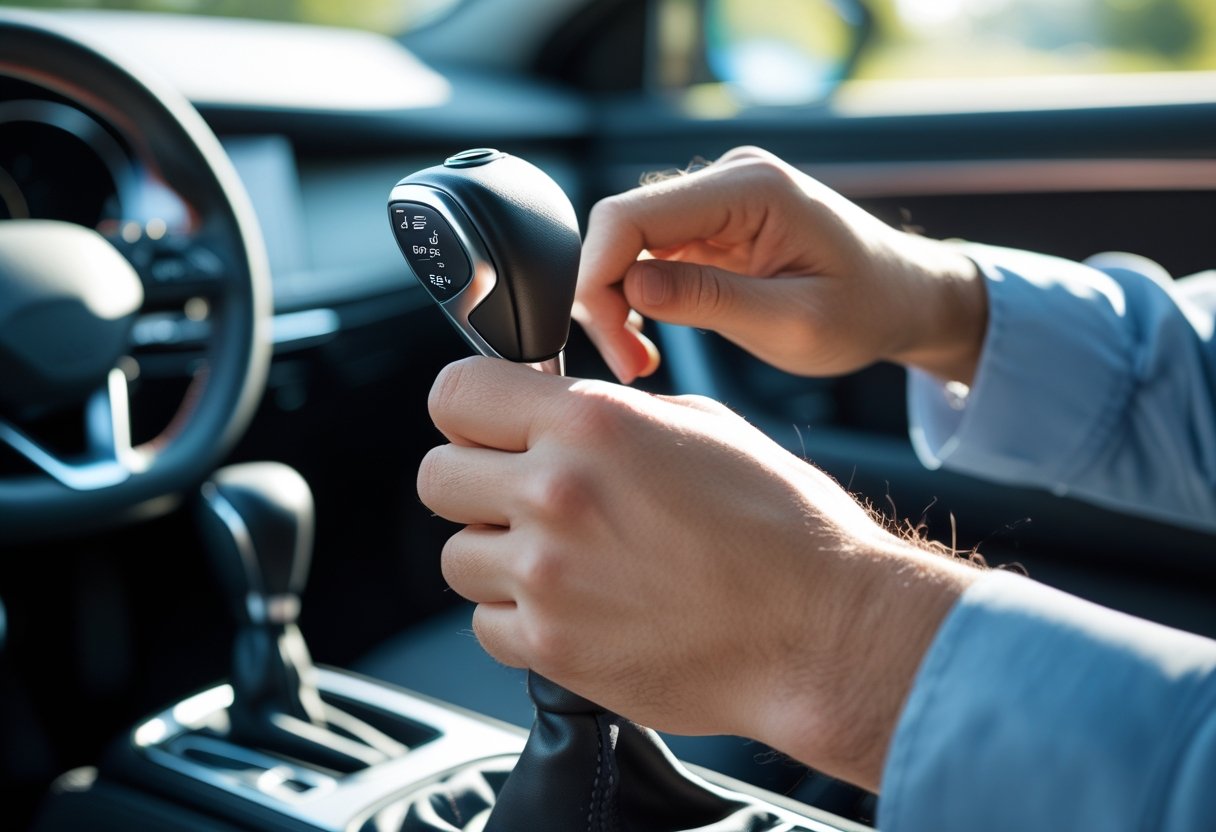
We’ve all been there – that awkward jerk when you release the clutch too quickly, or the grinding sound when you try to force the gear stick into place. These experiences can knock your confidence, but they’re completely normal parts of learning. Every skilled driver has gone through this exact same process, and with the right techniques, you’ll soon be shifting gears without even thinking about it.
Throughout this guide, we’ll walk you through everything you need to know, from understanding when your car needs a different gear to mastering the physical techniques that make gear changes feel effortless. We’ll also cover common driving scenarios and share practical tips that will serve you well throughout your driving journey. With a bit of patience and practice, you’ll develop the confidence to handle any gear change situation that comes your way.
Understanding the Basics of Gear Changes
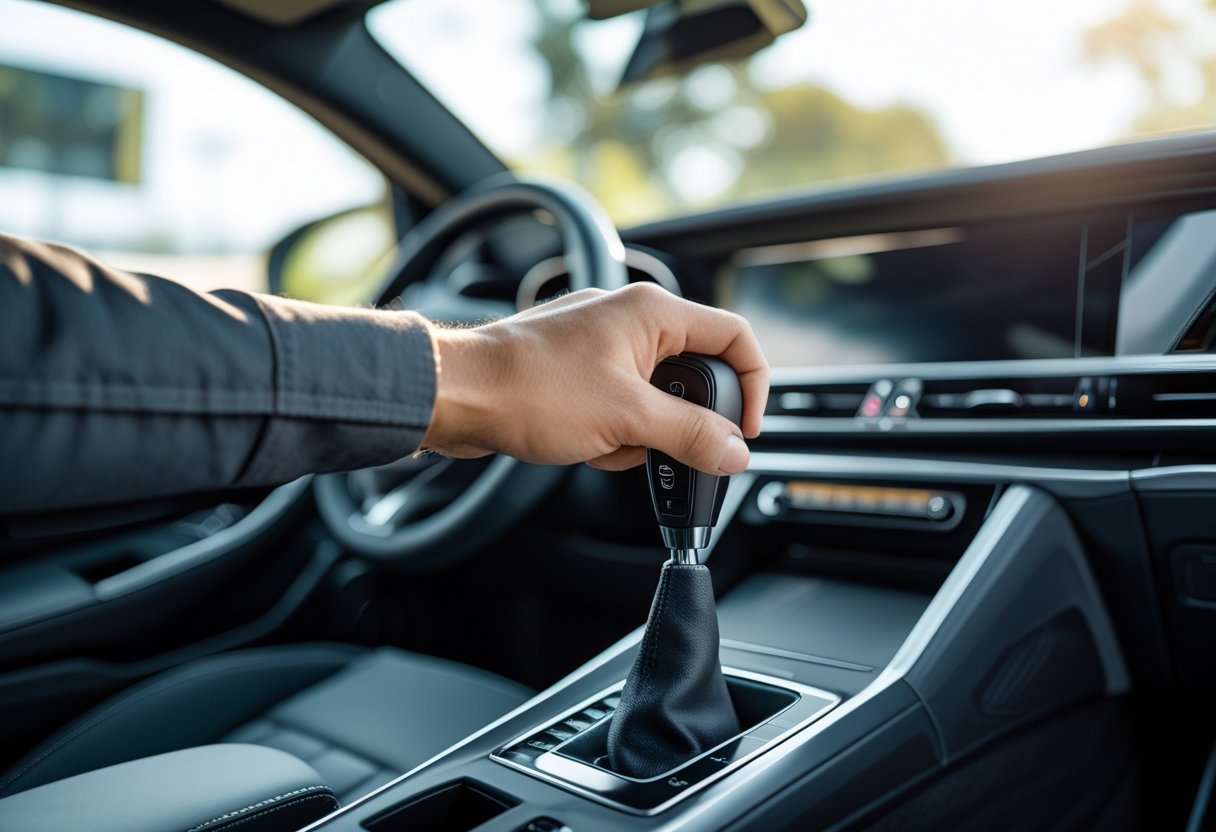
Manual cars rely on a clutch system that lets you disconnect the engine from the wheels, whilst different types of gear shifters help you select the right gear for your speed and driving conditions.
How Manual Gearboxes Work
A manual gearbox gives you complete control over your car’s power delivery. When you press the clutch pedal, you’re breaking the connection between the engine and the gearbox. This creates a brief moment where the engine spins freely, allowing you to shift gears without grinding or damage.
The gearbox contains different sized cogs that work together. First gear uses the largest cog ratio, giving you maximum pulling power but limited speed. As you move up through the gears, the ratios change to favour speed over power.
Think of it like a bicycle. You use low gears to get moving or climb hills, then shift to higher gears once you’re rolling. Each gear is designed for specific speed ranges, which is why we match our gear selection to our driving conditions.
The beauty of a manual car lies in this direct connection. You decide exactly when to change gear based on what you hear, feel, and see around you.
Key Parts: Clutch, Gear Stick, and Pedals
Your clutch pedal sits on the far left of the three pedals. Press it fully down with your left foot every time you change gear. Never rest your foot on it whilst driving, as this can cause expensive wear.
The gear stick (or gear lever) moves between different positions in a specific pattern. Most cars follow an H-pattern layout with first gear top left, second gear straight down, and so on. Some modern cars use different layouts, so always check before you start driving.
Your right foot controls two pedals: the accelerator (gas) on the right and the brake in the middle. Coordination between all these parts creates smooth gear changes. We lift off the accelerator, press the clutch, move the gear stick, then release the clutch whilst adding power again.
Practice this sequence slowly at first. Rushing leads to jerky changes and potential stalling.
Types of Gear Shifters
Traditional H-pattern shifters are the most common type you’ll encounter. The gear stick moves in a clear H-shape, with reverse usually requiring you to lift a collar or push down whilst moving to its position.
Sequential gear shifters work differently. Instead of moving to specific positions, you push forward or pull back to go up or down through the gears. These are less common in learner cars but appear in some sports vehicles.
Some cars feature short-throw shifters with reduced movement between gears. These feel more precise but require a lighter touch. Others have long-throw shifters that need more deliberate movements but offer clearer gear engagement.
Column-mounted shifters attach to the steering column rather than the floor, though these are rare in modern manual cars. Whatever type your car has, the basic principles remain the same: smooth movements and proper clutch control create the best results.
When to Change Gears for Safe and Smooth Driving
Learning to recognise the right moments for gear changes takes practice, but your car gives you clear signals when it’s time to upshift or downshift. We’ll help you understand these cues so you can make smooth transitions that keep you safe and improve fuel efficiency.
Signs It’s Time to Upshift
Your engine makes it quite obvious when it wants you to upshift to the next gear. Listen for that telltale high-pitched whirring sound – it’s your engine working harder than it needs to.
Speed is your first clue. Once you reach about 15 mph in first gear, it’s time to move to second. From there, upshift around every 10 mph until you hit fourth gear. Fifth and sixth gears are for cruising at higher speeds.
Watch your rev counter if your car has one. Most petrol engines are happiest when you change up between 2,500 and 3,000 RPM. Diesel engines prefer slightly lower revs, around 2,000 to 2,500 RPM.
The engine sound tells the whole story. A smooth, content hum means you’re in the right gear. That strained, racing sound? Time to upshift.
Your accelerator pedal gives hints too. If pressing it doesn’t make you go much faster, you’re likely in too low a gear for your speed.
Knowing When to Downshift
Downshifting isn’t just about slowing down – it’s about maintaining control and keeping your engine happy. We downshift when we need more pulling power or better control of our speed.
Approaching junctions is the most common time to downshift. As you slow from 30 mph to 15 mph for a roundabout, drop from fourth gear to second to match your new speed.
Hills are another clear signal. If your car starts struggling up an incline in fourth gear, drop to third or even second. The engine will thank you with smoother performance.
Traffic situations often require downshifting too. When crawling through stop-start traffic, second gear gives you better control than trying to stay in third.
Sharp corners need lower gears for stability. Coming round a tight bend at 20 mph? Second gear keeps everything smooth and controlled.
Emergency situations sometimes call for quick downshifts. Engine braking can help slow you down without relying solely on your brakes.
Speed, RPM, and Engine Sound Cues
Your car speaks to you constantly through three main channels: speed, engine revs, and sound. Learning this language makes gear changes feel natural.
Speed ranges give you rough guidelines:
- First gear: 0-15 mph
- Second gear: 10-25 mph
- Third gear: 20-35 mph
- Fourth gear: 30-45 mph
- Fifth/sixth gear: 40+ mph
These aren’t strict rules, though. Traffic conditions and road gradients change everything.
Engine sound is often more reliable than speed alone. A quiet, steady purr means you’re in the sweet spot. Loud revving suggests you need to upshift. A chugging, struggling sound means downshift immediately.
RPM readings take the guesswork out of gear changes. Keep most engines between 1,500 and 3,000 RPM for the best balance of power and fuel efficiency.
Remember that every car has its own personality. Some engines love to rev higher, whilst others prefer lower RPMs. Getting to know your specific car makes all the difference.
Cold engines need slightly different treatment too. They often prefer higher RPMs until they warm up properly.
Step-by-Step Guide to Changing Gears Smoothly
Mastering smooth gear changes comes down to perfect timing and gentle movements with your clutch pedal and accelerator. The secret lies in pressing the clutch pedal all the way down, moving the gear stick with confidence, and then bringing everything back together in perfect harmony.
Pressing the Clutch Pedal All the Way Down
This is where many learner drivers trip up, but we’re going to sort that out right now. When you press the clutch pedal, you need to push it down completely to the floor.
Half measures won’t work here. Your left foot needs to go all the way down until the pedal stops moving.
Think of the clutch as a connection between your engine and wheels. When you press the clutch pedal all the way down, you’re breaking that connection entirely. This gives you a clean slate to change gears smoothly.
Here’s what happens when you don’t press it fully:
- The gears grind against each other
- You hear horrible crunching noises
- The car jerks and jumps
- You damage the gearbox
Keep your left foot firmly planted on the clutch throughout the entire gear change. Don’t let it creep back up until you’re ready for the next step.
Gently Moving the Gear Stick
Now that your clutch is fully pressed, the gear stick becomes your best friend. Move it gently but confidently to your target gear.
Don’t yank or force the gear stick. It should glide smoothly from one position to another. If you feel resistance, the clutch probably isn’t pressed down enough.
Top tips for smooth gear stick movement:
- Use your whole hand, not just fingertips
- Apply steady, gentle pressure
- Let the gear stick guide you to its natural position
- Take your time, there’s no rush
Some gears require different movements. First and second gear sit on the left side of the H-pattern. Third and fourth are in the middle. Fifth (and sixth if you have one) are on the right.
Practice these movements when the car is switched off. Get familiar with where each gear lives. This muscle memory will serve you brilliantly when you’re actually driving.
Synchronising Clutch and Accelerator
This is where the magic happens, and honestly, it’s the bit that separates smooth drivers from jerky ones. You’re going to coordinate your left foot (clutch) with your right foot (accelerator).
Start bringing the clutch up slowly while giving the engine a tiny bit of accelerator. Not too much, just a gentle press.
The perfect timing looks like this:
- Clutch comes up gradually
- Accelerator gets pressed gently
- Both movements happen at roughly the same speed
- You feel the car start to move forward smoothly
Listen to your engine during this process. It should sound calm and controlled, not revving wildly or struggling. If the engine starts to sound strained, you need more accelerator. If it’s revving too high, ease off the accelerator slightly.
Bringing Up the Clutch Slowly
The final piece of our smooth gear change puzzle is releasing the clutch properly. This isn’t a quick movement, it’s a gradual, controlled release.
Bring your left foot up slowly and steadily. Feel for the bite point where the clutch starts to engage. You’ll notice the car’s behaviour change slightly when you hit this sweet spot.
Signs you’ve found the bite point:
- Engine sound changes slightly
- Car feels ready to move forward
- Revs might drop a little
- You can sense the connection forming
Once you’re past the bite point, continue lifting your foot smoothly until the clutch pedal is fully released. Keep that gentle pressure on the accelerator throughout this process.
Your left foot should come off the clutch pedal completely once the gear change is finished. Don’t rest your foot on the pedal between gear changes, as this can damage the clutch over time.
With practice, this entire sequence becomes second nature. Trust the process, and you’ll be changing gears smoothly before you know it.
Techniques for Confident Gear Changes
These advanced techniques help you master the timing and smoothness needed for professional-level gear changes. Rev matching creates seamless downshifts, whilst strategic gear skipping saves time and reduces wear on your clutch.
Rev Matching for Seamless Downshifts
Rev matching transforms jerky downshifts into smooth transitions that feel effortless. When we downshift without matching revs, the engine speed doesn’t match the gear we’re selecting. This creates that familiar jolt through the car.
The basic technique works like this:
- Press the clutch fully
- Give a quick blip of throttle whilst in neutral
- Select your lower gear immediately
- Release the clutch smoothly
The throttle blip raises engine speed to match what it needs to be in the lower gear. For example, when downshifting from 4th to 3rd at 25 mph, your engine needs more revs to match that speed in the lower gear.
Practice this technique when approaching roundabouts or junctions. Start with gentle downshifts from 3rd to 2nd gear. You’ll know you’ve got it right when the gear change feels completely smooth.
We recommend practising in quiet car parks first. Don’t worry if it feels awkward initially. Most drivers take several weeks to master rev matching properly.
Skipping Gears Safely
Skipping gears means moving from one gear to another without using every gear in between. This technique saves time and reduces clutch wear when done correctly.
Safe skipping scenarios include:
- 4th gear to 2nd when slowing for sharp turns
- 3rd gear to 1st when stopping at traffic lights
- 5th gear to 3rd on motorway slip roads
The key rule is matching your target gear to your current speed. If you’re doing 15 mph in 4th gear, you can safely skip to 2nd gear. Never skip gears when accelerating, as this strains your engine unnecessarily.
Always check these points:
- Your speed matches the gear you’re selecting
- You’re not forcing the gear lever
- The engine doesn’t labour after the change
We find that nervous learners often change through every single gear unnecessarily. Building confidence with gear skipping actually makes you a more efficient driver.
Block Changing Explained
Block changing combines multiple gear skips in sequence, typically when slowing down significantly. This advanced technique requires good judgement about speed and gear selection.
Common block changing situations:
- Motorway to roundabout (5th to 2nd)
- Dual carriageway to town driving (4th to 2nd)
- Hill descent control (4th to 2nd for engine braking)
Start by slowing to an appropriate speed using your brakes. Then select the gear that matches your new speed directly. Don’t worry about the gears in between.
For instance, approaching a roundabout at 50 mph in 5th gear, slow to 15 mph with your brakes, then change directly to 2nd gear. This saves time and reduces clutch wear compared to changing through every gear.
Practice guidelines:
- Master single gear skips first
- Use quiet roads for initial practice
- Focus on smooth clutch release
- Listen to your engine for confirmation
We encourage building up to block changing gradually. It’s a skill that separates confident drivers from hesitant ones.
Handling Common Gear Change Scenarios
Learning to drive a manual car means mastering specific situations that catch many new drivers off guard. These three scenarios require special attention and practice to build your confidence behind the wheel.
Starting from a Standstill
Getting moving from a complete stop is often the trickiest part of learning to drive. We call this the clutch control point, and it’s where most stalling happens.
Start with your left foot pressing the clutch pedal fully down. Select first gear and give the engine a gentle touch of gas with your right foot.
Now comes the crucial bit: slowly lift the clutch until you feel the car wanting to move forward. This is called the biting point. You’ll know you’ve found it because the engine sound changes slightly.
Hold the clutch steady at this point for a moment. The car should creep forward without any jerking or sudden movements.
Once you’re moving smoothly, you can lift the clutch completely and add more gas. Remember, first gear is only for getting started, so change up to second gear once you reach about 10 mph.
Practice this sequence repeatedly in a quiet car park. Getting comfortable with clutch control takes time, and everyone learns at their own pace.
Changing into Reverse Gear
Reverse gear often feels different from the forward gears, and that’s completely normal. Many cars require you to lift a collar on the gearstick or press down before you can select reverse.
Always come to a complete stop before selecting reverse gear. Never try to change into reverse whilst the car is still moving forward, as this can damage the gearbox.
Press the clutch fully down and move the handbrake up. Check your mirrors and look around carefully before selecting reverse gear.
Reverse gear is very powerful, so you need even gentler clutch control than when starting in first gear. The car will move quite quickly once the clutch bites, so take your time.
Use tiny movements with the clutch and barely any gas at all. Most reversing can be done with clutch control alone, without touching the accelerator.
Keep your movements slow and deliberate. Rushing leads to jerky reversing that makes parking much harder than it needs to be.
Hill Starts and Inclines
Hill starts terrify many learner drivers, but they become straightforward once you master the technique. The key is using your handbrake as a helping hand.
Stop on the hill with your handbrake firmly applied. Select first gear and find the clutch biting point as you normally would.
Give the engine slightly more gas than you would on flat ground. Hills need extra power to prevent the car from rolling backwards.
Here’s the clever part: once you feel the clutch biting strongly and the car pulling against the handbrake, release the handbrake smoothly.
The car should move forward without rolling back. If you feel it starting to roll, quickly reapply the handbrake and try again with more gas and a stronger bite point.
Don’t panic if it takes several attempts. Even experienced drivers occasionally roll back slightly on steep hills.
Practice on gentle slopes first, then gradually work up to steeper inclines as your confidence grows.
Tips and Habits for Lifelong Smooth Shifting
Mastering smooth gear changes isn’t just about following basic steps once or twice. The drivers who truly excel at manual transmission develop keen listening skills, avoid common pitfalls, and build instinctive responses through consistent practice.
Listening to the Engine and Feeling the Car
Your engine is constantly telling you when it needs a gear change. We need to become fluent in this mechanical language if we want silky smooth shifts every time.
Pay attention to the engine’s pitch and tone. When it sounds strained or starts revving high, it’s asking for a higher gear. A low, struggling sound usually means you need to shift down for more power.
Feel the vibrations through the steering wheel and seat. Your car communicates through these subtle movements. A gentle shake might indicate you’re in too high a gear for your current speed.
Listen for these engine cues:
- High-pitched revving = shift up
- Struggling, low rumble = shift down
- Smooth, steady hum = you’re in the right gear
Don’t rely solely on the speedometer. Different cars have different sweet spots for each gear. Some vehicles are happiest shifting at 2,000 RPM, others prefer 2,500 RPM.
Trust your senses over rigid rules. With practice, you’ll develop an intuitive feel for exactly when your particular car wants to change gears.
Avoiding Common Gear Change Mistakes
Even experienced drivers can fall into bad habits that make shifting jerky or damage the transmission. Let’s tackle the most frequent mistakes we see.
Never hold the gear stick whilst driving. Once you’ve selected your gear, get that hand back on the steering wheel where it belongs. Resting on the gear stick puts unnecessary pressure on the transmission components.
Common mistakes to avoid:
- Rushing the clutch release
- Shifting without fully pressing the clutch
- Holding the gear stick continuously
- Ignoring engine speed when downshifting
- Skipping regular practice sessions
Don’t force the gear stick if it resists. If a gear won’t engage easily, you’re probably trying to shift at the wrong engine speed. Release the clutch slightly, adjust your revs, then try again.
Avoid riding the clutch between gear changes. Press it down decisively, make your shift, then release it smoothly but completely.
Developing Muscle Memory Through Practice
Smooth shifting becomes automatic only through repetition. We need to train our muscles and mind to work together without conscious thought.
Start with basic exercises in a safe car park. Practice the clutch, gear, accelerator sequence repeatedly until it feels natural. Focus on smooth, deliberate movements rather than speed.
Practice routine suggestions:
- 10 minutes of stationary gear selection
- Low-speed shifting in empty car parks
- Hill start practice on quiet slopes
- Different weather condition experience
Try shifting without looking at the gear stick. Learning to drive means developing confidence in where each gear sits. Your hand should know the pattern instinctively.
Practice different scenarios regularly. City driving, motorway merging, and hill climbing all require slightly different shifting techniques. The more situations you encounter, the more adaptable you’ll become.
Set aside dedicated practice time each week. Even experienced drivers benefit from occasionally focusing purely on gear change smoothness rather than just getting from A to B.
Frequently Asked Questions
Learning to change gears smoothly takes practice, but understanding the basics makes everything easier. The clutch is your best friend, timing matters more than speed, and your engine will tell you when it’s ready for the next gear.
What’s the secret to mastering the perfect gear change in a manual transmission?
The secret lies in developing a gentle touch with the clutch pedal. We always tell our learners that smooth gear changes come from pressing the clutch fully down, moving the gear stick deliberately, and lifting the clutch back up slowly.
Think of it like a dance between your feet and hands. Your left foot controls the clutch whilst your right hand moves the gear stick. The magic happens when you coordinate these movements without rushing.
Practice makes perfect here. Start in a quiet car park where you can focus entirely on the feel of each gear change without worrying about traffic.
Can you share some top tips for ensuring a smooth transition between gears while driving?
Always ease off the accelerator before pressing the clutch. This reduces the strain on your engine and makes the gear change much smoother.
Take your time with the clutch release, especially when moving into first or second gear. These lower gears need more gentle treatment than the higher ones.
Keep both hands on the steering wheel when you’re not actively changing gear. We see many learners holding the gear stick whilst driving, which isn’t necessary and affects your control.
Listen to your engine’s rhythm. When it starts to sound strained or too high-pitched, that’s your cue to shift up to the next gear.
How do I know the best moment to shift gears without causing wear and tear on the vehicle?
Your ears are incredibly helpful here. When the engine sounds like it’s working too hard or revving too high, it’s time to change up to a higher gear.
Speed gives you another clue. We generally recommend changing from first to second around 10mph, second to third around 20mph, and so on. Every car feels slightly different though.
Watch your rev counter if your car has one. Most engines are happiest when you change up before the needle reaches the red zone.
For changing down, slow your speed first using the brakes, then select a gear that matches your new speed. This prevents unnecessary strain on both your clutch and engine.
What role does the clutch play in changing gears, and how can I use it effectively?
The clutch acts like a bridge between your engine and wheels. When you press it down fully, you disconnect the engine, allowing you to move the gear stick without grinding or resistance.
Think of the clutch as having three positions: up (engaged), down (disengaged), and the biting point (where it starts to engage). Finding that biting point is crucial for smooth starts and gear changes.
We always emphasise pressing the clutch all the way to the floor before changing gear. Halfway measures lead to crunchy, uncomfortable gear changes that aren’t good for your car.
Release the clutch slowly and smoothly. Quick, jerky movements cause the car to jolt and make your passengers feel queasy.
Could you explain the signs that indicate when to shift up or down a gear?
For shifting up, listen for that telltale high-pitched whining from your engine. Your car is basically asking for the next gear when it makes this sound.
You’ll also feel the car’s natural rhythm. When accelerating feels laboured despite pressing the gas pedal, a higher gear will help your engine breathe easier.
For shifting down, the signs are different. When approaching junctions, roundabouts, or hills, you’ll need more control and power than your current gear can provide.
If your car starts to judder or feels like it’s struggling, especially on inclines, dropping down a gear gives you the extra oomph you need.
In terms of safety and car control, why is it important to get gear changes right?
Proper gear selection keeps you in complete control of your vehicle. The right gear gives you the power to accelerate away from hazards or the engine braking to slow down safely.
Wrong gear choices can leave you stranded in dangerous situations. Being in too high a gear at a junction means sluggish acceleration when you need to move quickly.
Smooth gear changes also mean both hands return to the steering wheel faster. Fumbling with jerky gear changes takes your attention away from the road ahead.
Getting your gear changes right reduces wear on your clutch and engine, saving you money on repairs. More importantly, it makes you a more confident, capable driver who others can trust on the road.