

When Can You Tow a Trailer With a Provisional Licence? Essential UK Rules Explained
Getting behind the wheel with a provisional licence is an exciting step, but what happens when you need to tow a trailer? Many new drivers wonder if they can legally pull a caravan for that family holiday or help a mate move house with a small trailer.
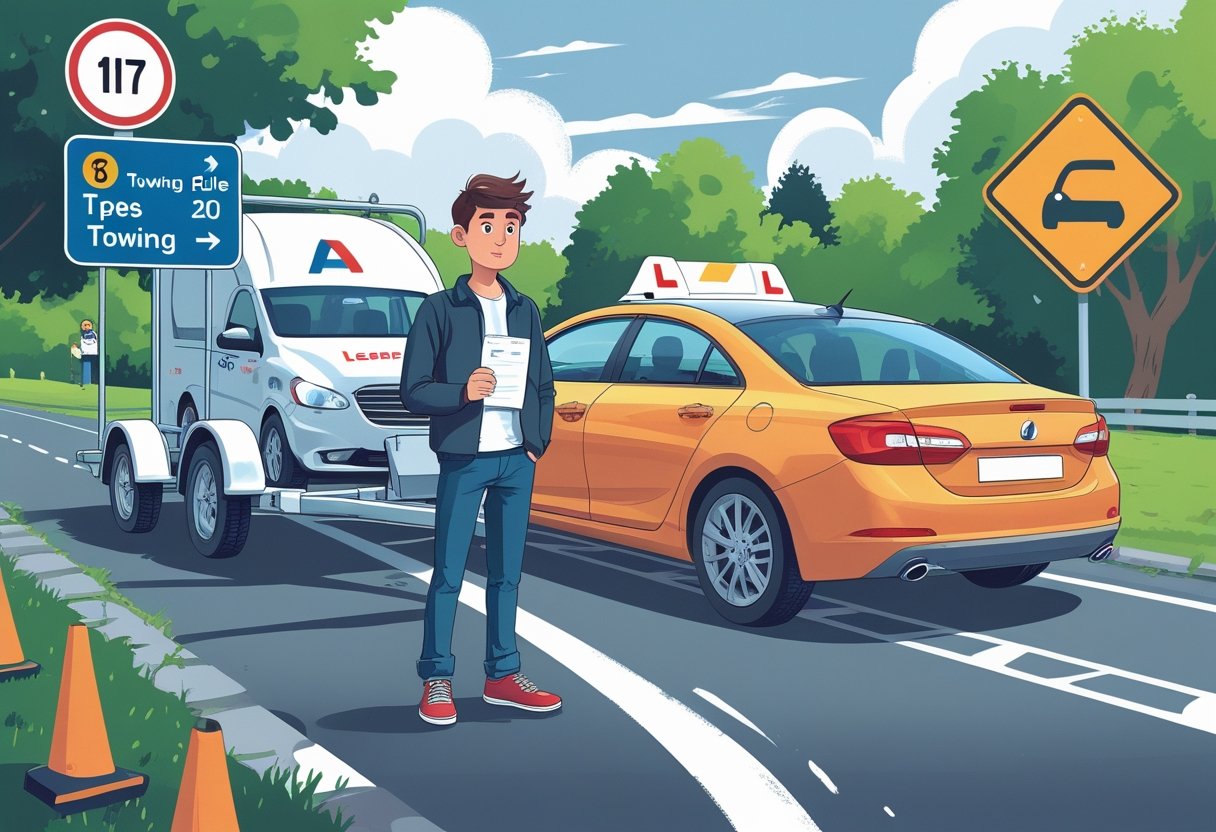
You cannot tow any trailer with just a provisional licence in the UK. The law is crystal clear on this point: you must hold a full car driving licence (category B) before you’re legally allowed to tow anything behind your vehicle. This rule applies whether you’re thinking about a tiny luggage trailer or a hefty caravan.
Don’t worry though, this doesn’t mean your towing dreams are dashed forever! Once you’ve passed your driving test and earned that full licence, a whole world of towing possibilities opens up. We’ll walk you through everything you need to know about weight limits, licence categories, and how to upgrade your permissions for heavier combinations, plus the essential safety rules that keep you and other road users protected.
Understanding Provisional Licences and Towing Restrictions
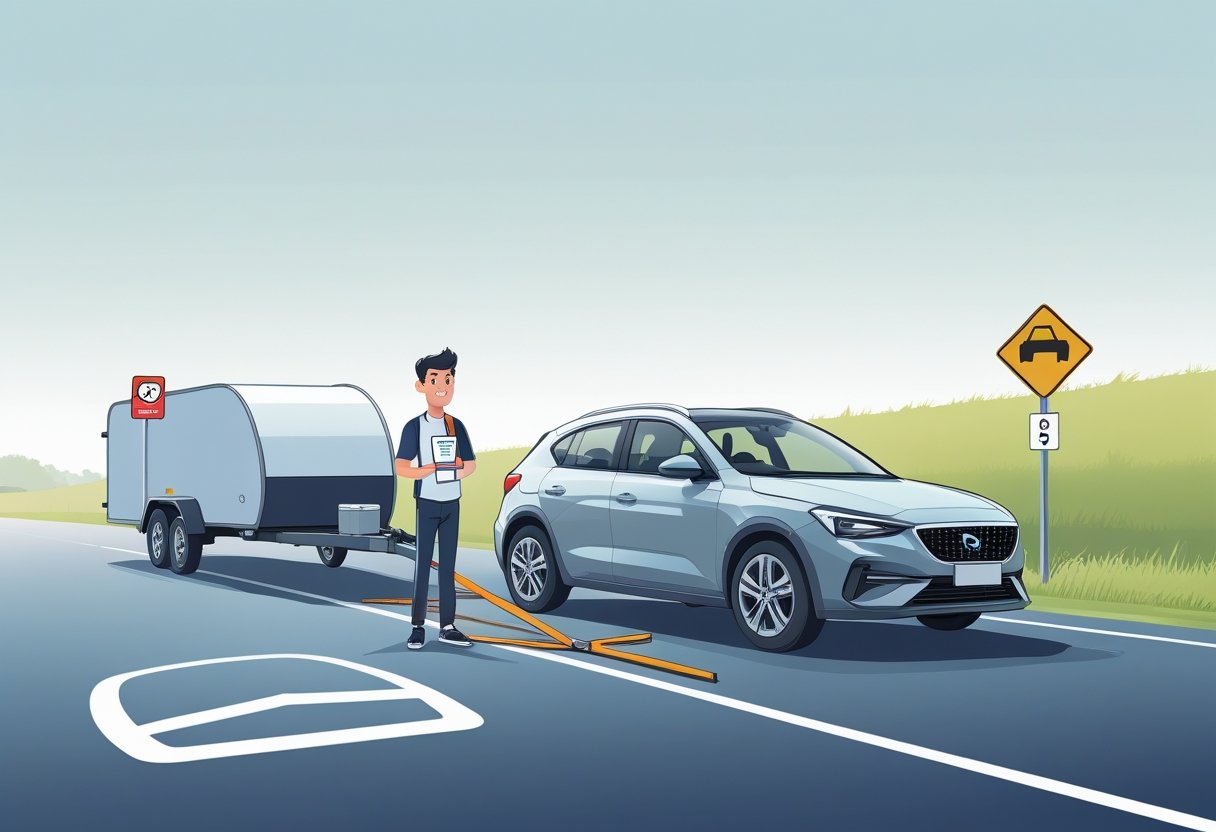
Provisional licences come with strict limitations when it comes to towing, and we need to understand why these rules exist. The law is crystal clear: learner drivers cannot tow trailers of any kind whilst driving on a provisional licence.
Definition of a Provisional Licence
A provisional licence is your first step towards independent driving freedom. It allows you to learn to drive on public roads, but only under specific conditions that keep everyone safe.
When we hold a provisional licence, we must always have a qualified supervisor sitting beside us. This person needs to be at least 21 years old and must have held a full car driving licence for a minimum of three years.
The provisional licence covers basic vehicle operation. We’re learning fundamental skills like steering, braking, and road awareness. These skills form the foundation for all future driving abilities.
Our learning period focuses on mastering one vehicle at a time. Adding a trailer would complicate this process significantly. The licence restricts us to cars, small vans, and motorcycles depending on which category we’ve applied for.
We cannot drive on motorways with a provisional licence. This restriction exists because motorway driving requires advanced skills and confidence that learner drivers are still developing.
Legal Restrictions on Towing With a Provisional Licence
UK law prohibits all provisional licence holders from towing trailers, caravans, or any other attachments. This rule applies regardless of trailer size or weight.
The restriction covers everything from small bike carriers to large caravans. Even the tiniest trailer attachment makes driving illegal for learner drivers.
We cannot tow whilst supervised, even with an experienced instructor or family member. The law makes no exceptions for professional driving lessons or practice sessions.
Breaking these towing restrictions can result in serious penalties. We might face fines, penalty points, or even prosecution. Insurance companies may also refuse to cover accidents involving illegal towing.
The rules apply to all provisional licence categories. Whether we’re learning to drive cars, motorcycles, or larger vehicles, towing remains forbidden until we pass our test.
Police officers can easily spot illegal towing situations. The penalties aren’t worth the risk, especially when we’re so close to gaining full driving privileges.
Why Towing Is Not Permitted for Learner Drivers
Towing dramatically changes how vehicles behave on the road. The extra weight affects braking distances, acceleration, and steering response in ways that experienced drivers find challenging.
Reversing with a trailer requires completely different techniques. The trailer moves in the opposite direction to our steering inputs, creating confusion that even skilled drivers struggle with initially.
We need both hands free for steering and gear changes whilst learning. Managing a trailer adds another layer of complexity that divides our attention from essential driving tasks.
Hills and slopes become much more difficult with trailers attached. The extra weight can cause vehicles to roll backwards or lose power unexpectedly.
Emergency braking situations become dangerous when towing. Trailers can push cars forward or cause jackknifing accidents that provisional drivers aren’t equipped to handle.
Road positioning requires extra skill with trailers. We need to judge wider turning circles and longer stopping distances whilst still mastering basic lane discipline.
Who Can Tow a Trailer: Full Licence Versus Provisional
Your licence type makes all the difference when it comes to towing. We’ll break down what full car licence holders can do versus the restrictions provisional drivers face, plus the age requirements that apply to everyone.
Towing Rights for Full Car Licence Holders
If you’ve passed your driving test and hold a full car licence (category B), you’re already entitled to tow certain trailers. This is brilliant news for many drivers who don’t realise they already have towing rights.
What we can tow with a full car licence:
- Small trailers up to 750kg
- Heavier trailers if the combined weight of car and trailer doesn’t exceed 3,500kg
- Most caravans suitable for family holidays
- Boat trailers for weekend adventures
The key thing to remember is the Maximum Authorised Mass (MAM). Your car’s MAM plus your trailer’s MAM must stay within legal limits. We find this catches many people out initially.
When we need additional qualifications:
- Combinations over 3,500kg total weight
- Large commercial trailers
- Heavy caravans paired with lighter cars
For these situations, we’d need to apply for category C1+E provisional licence and take the appropriate test.
Differences Between Provisional and Full Licence Privileges
Here’s where things get straightforward: provisional licence holders cannot tow anything. This applies whether you’re learning in a car, van, or any other vehicle category.
We understand this might feel limiting, especially if you’re eager to start towing for work or leisure. However, there are solid safety reasons behind this rule.
Why provisional drivers can’t tow:
- Learning basic vehicle control takes priority
- Additional weight affects braking and handling
- Reversing with trailers requires specific skills
- Safety considerations for other road users
Once you pass your practical test and receive your full licence, your towing rights activate immediately. There’s no waiting period or additional paperwork needed for basic towing within category B limits.
The good news: Modern driving instructors can include towing awareness in lessons, preparing you for when you do get your full licence.
Age and Licence Category Requirements
Age plays a crucial role in determining when we can start towing. The minimum age varies depending on what we want to tow and which vehicle we’re using.
Standard car licence towing ages:
- 17 years old: Minimum age for category B licence
- 18 years old: Required for some commercial towing applications
- 21 years old: Needed for larger vehicle categories
We must hold a full car driving licence before applying for any larger vehicle categories. This means if you want to tow heavy commercial trailers, you’ll need your category B first, then progress to C1+E.
Important age considerations:
- Insurance companies often have higher age requirements
- Some rental companies won’t hire to drivers under 25
- Experience matters as much as legal age
Remember, even with the right licence category, we still need to meet weight restrictions and follow all towing regulations. Age gets you the legal right, but safe towing comes with practice and proper preparation.
Key Towing Laws and Maximum Authorised Mass (MAM)
Understanding towing weight limits prevents legal troubles and keeps you safe on the road. The maximum authorised mass determines what trailers you can legally tow with different licence types.
What Is Maximum Authorised Mass (MAM)?
Maximum Authorised Mass (MAM) represents the total weight your vehicle or trailer can legally carry when fully loaded. Think of it as the absolute maximum weight limit set by the manufacturer.
You’ll find the MAM listed in your vehicle’s owner’s manual. It’s also displayed on a metal plate or sticker somewhere on your car or trailer.
MAM is not the same as the actual weight of your vehicle or trailer. It’s the heaviest they’re allowed to be when packed with passengers, luggage, or cargo.
For towing purposes, we need to consider two separate MAM figures:
- Your vehicle’s MAM (car plus maximum load)
- Your trailer’s MAM (trailer plus maximum load)
Getting these numbers right is crucial because exceeding them can lead to hefty fines. More importantly, it keeps you and other road users safe.
Calculating Combined Vehicle and Trailer Weights
Working out combined weights might seem tricky, but it’s straightforward once you know the method. We add the vehicle’s MAM to the trailer’s MAM to get the total combined weight.
Here’s a simple example:
- Car MAM: 2,000kg
- Trailer MAM: 1,200kg
- Combined MAM: 3,200kg
This combined figure determines which licence category you need. If you passed your test after 1 January 1997, your combined MAM cannot exceed 3,500kg.
Remember that MAM includes everything. Your car’s figure covers the vehicle weight plus passengers and luggage. The trailer’s MAM includes the trailer itself plus whatever you’re hauling.
Always check these weights before hitching up. Guessing can land you in serious trouble with traffic enforcement.
Vehicle and Trailer Weight Limits
Your licence determines exactly what trailer weights you can handle legally. The rules depend entirely on when you passed your driving test.
If you passed before 1 January 1997:
You can tow combinations up to 8,250kg MAM. This gives you plenty of flexibility for larger trailers and caravans.
If you passed from 1 January 1997 onwards:
Your limit drops to 3,500kg combined MAM. However, recent rule changes now allow you to tow trailers up to 3,500kg MAM without taking an additional test.
Individual trailer limits also apply:
- Trailers up to 750kg MAM can be towed by anyone with a standard car licence
- Trailers over 750kg require careful calculation of combined weights
These limits aren’t suggestions. Traffic police regularly check towing weights, and penalties for exceeding them include fines, penalty points, and potential licence suspension.
How to Check Your Vehicle’s Towing Capacity
Before you can legally tow with your provisional licence, we need to know exactly how much weight your vehicle can handle. The maximum authorised mass (MAM) determines what you can safely pull, and exceeding these limits could land you in serious trouble with the law.
Finding Towing Capacity in the Owner’s Manual
Your owner’s manual is the most reliable source for towing information. We always recommend checking here first because it contains the exact specifications for your vehicle model.
Look for sections labelled “towing,” “trailer,” or “specifications.” The manual will list your maximum towing capacity in kilograms. You’ll also find crucial details about nose weight limits and recommended equipment.
Many manuals include helpful charts showing different towing scenarios. These might cover braked versus unbraked trailers, or towing on steep hills. Keep your manual handy because you might need to reference it when choosing a trailer.
If you’ve lost your physical manual, don’t worry. Most manufacturers offer free digital copies on their websites. Simply search for your vehicle’s make, model, and year to download the correct version.
Using the Vehicle Identification Number (VIN) Plate
Your Vehicle Identification Number plate provides essential weight information when the manual isn’t available. This metal plate is usually located on the driver’s door frame or under the bonnet.
The VIN plate shows your vehicle’s maximum authorised mass and gross vehicle weight. These numbers help calculate your actual towing capacity. You might see terms like “GVW” or “MAM” followed by weight figures in kilograms.
Some VIN plates directly state the maximum towing weight. Others require a bit of maths. Subtract your vehicle’s kerb weight from the gross vehicle weight to find how much extra load you can carry or tow.
Modern vehicles often have QR codes on their VIN plates. Scanning these with your smartphone can instantly provide detailed specifications, including towing limits.
Towing Limits for Cars and Vans
Standard cars typically tow between 1,000kg and 2,500kg, depending on engine size and vehicle weight. Smaller engines generally mean lower towing capacities, whilst larger saloons and estates can handle heavier loads.
Vans usually offer much higher towing limits, often between 2,500kg and 3,500kg. However, your driving licence category still applies. Even if your van can tow 3,500kg, you’re limited by what your provisional licence allows.
Key weight categories to remember:
- Unbraked trailers: Usually 500kg to 750kg maximum
- Braked trailers: Up to your vehicle’s full towing capacity
- Combined weight: Vehicle plus trailer must stay within legal limits
Always leave some margin for safety. We suggest staying at least 10% below your maximum capacity, especially when you’re still learning to tow.
Upgrading Your Licence: Pathways for Towing Heavier Trailers
Moving beyond basic towing limits requires specific licence categories and comprehensive testing. The BE licence opens doors to heavier trailer combinations, whilst Category C1+E allows medium-sized lorry and trailer combinations up to 12 tonnes.
Applying for Category BE Entitlement
The BE licence represents your gateway to serious towing capability. This category lets you pull much heavier trailers and large caravans that exceed standard car licence limits.
What BE Licence Covers:
- Car and trailer combinations beyond normal limits
- Large touring caravans
- Heavy commercial trailers
- Horse boxes and livestock trailers
You’ll need to pass both theory and practical driving tests specifically for Category BE. The practical test focuses heavily on reversing manoeuvres, coupling and uncoupling procedures, plus general trailer handling skills.
Most driving instructors recommend getting comfortable with smaller trailers first. This builds your confidence before tackling the BE test requirements.
The investment opens up fantastic opportunities for business use or recreational towing. Many drivers find the BE entitlement transforms their capability for camping trips or small business ventures.
Category C1+E: Medium-Sized Lorry and Trailer Combinations
Category C1+E extends your C1 licence to include trailer combinations up to 12 tonnes total weight. This powerful combination suits those working in logistics, transport, or specialised trades.
Key Requirements:
- Must already hold C1 entitlement
- Apply for provisional C1+E licence first
- Pass lorry theory test if not already completed
- Complete C1+E practical driving test
The C1+E category bridges the gap between standard car towing and full HGV operations. You can drive 7.5-tonne trucks pulling substantial trailers legally.
This licence proves invaluable for delivery drivers, tradespeople, or anyone moving heavy equipment regularly. The 12-tonne combined weight limit handles most commercial applications outside full HGV work.
Training typically takes longer than BE preparation. The vehicles are larger, handling characteristics differ significantly, and safety considerations multiply with increased weight and size.
Overview of Lorry Theory and C1+E Driving Tests
The lorry theory test forms the foundation for C1+E entitlement. This comprehensive exam covers professional driving standards, vehicle safety systems, and load management principles.
Theory Test Components:
- Multiple-choice questions (100 questions, 85 needed to pass)
- Hazard perception test (19 clips, 67+ score required)
- Case study questions about real driving scenarios
The C1+E driving test challenges your practical skills with medium-sized lorry and trailer combinations. Examiners assess vehicle safety checks, coupling procedures, and advanced driving techniques.
Practical Test Elements:
- Pre-drive vehicle safety inspection
- Coupling and uncoupling trailer
- Reversing exercise into bay
- On-road driving assessment
We recommend booking professional instruction with C1+E qualified trainers. These specialists understand exactly what examiners expect and can shortcut your learning curve significantly.
Pass rates improve dramatically with proper preparation. The investment in quality training pays dividends when you’re confidently handling 12-tonne combinations professionally.
Essential Safety and Equipment Rules for Towing Trailers
Proper safety equipment and secure loading practices are non-negotiable when you’re learning to tow. We’ll cover the must-have safety devices that keep you legal, the differences between braked and unbraked systems, and how to secure your load properly.
Required Safety Devices: Breakaway Cable and Lights
Your trailer needs specific safety equipment to pass roadside checks and keep everyone safe on the road. The breakaway cable is your most critical safety device.
This cable connects your car to the trailer and automatically applies the trailer’s brakes if it becomes detached. We recommend checking this cable before every journey, as a faulty breakaway cable can result in prosecution and points on your licence.
Lighting requirements include:
- Working brake lights that match your car’s signals
- Indicators that flash in sync with your vehicle
- Rear reflectors for night-time visibility
- Number plate lights if you’re travelling after dark
Your trailer must display the same number plate as your towing vehicle. If something goes wrong with your lights during a journey, you could face an on-the-spot fine of £100 per faulty bulb.
We suggest carrying spare bulbs and fuses in your car. Modern trailers often use LED lights, which last longer and draw less power from your vehicle’s electrical system.
Braked vs. Unbraked Trailers
Understanding brake systems helps you choose the right trailer and stay within legal limits. Unbraked trailers are simpler but have strict weight restrictions.
You can only use an unbraked trailer if it weighs less than 750kg when fully loaded. These work well for small loads like garden waste or camping equipment.
Braked trailers can handle much heavier loads and are required for anything over 750kg. They use either:
- Override brakes that activate when you slow down
- Electric brakes controlled from your car’s cabin
Braked systems give you much better control, especially on hills or in emergency stops. The brakes automatically engage when you press your car’s brake pedal, providing balanced stopping power.
Your provisional licence allows you to tow braked trailers up to specific weight limits. We always recommend starting with lighter loads while you’re building confidence and experience.
Load Security and Roadside Checks
Securing your load properly prevents accidents and keeps you on the right side of the law. Police and DVSA officers regularly conduct roadside trailer checks, particularly during busy holiday periods.
Essential securing methods:
- Ratchet straps for heavy or awkward items
- Cargo nets for smaller loose items
- Load bars to prevent shifting during transport
Your load must not extend beyond the trailer’s edges or exceed height restrictions. Items that stick out can result in penalty points and fines up to £2,500.
We recommend distributing weight evenly with slightly more weight towards the front of the trailer. This prevents dangerous swaying that can cause you to lose control.
Check your load security at regular intervals during long journeys. A loose strap or shifting cargo can quickly turn dangerous, especially on motorways where you’re travelling at higher speeds.
Frequently Asked Questions
Most learners have specific questions about towing with a provisional licence. The rules are stricter for new drivers, and supervision requirements become more important when pulling a trailer.
What steps are needed to legally pull a trailer with a provisional licence in the UK?
You cannot legally tow any trailer with a provisional licence. This rule applies to all provisional licence holders, regardless of your experience level or the size of trailer you want to pull.
We understand this might feel limiting when you’re eager to start learning. The law requires you to pass your full driving test first before attempting any towing activities.
Once you’ve earned your full category B licence, you’ll automatically gain the right to tow certain trailers with your car. This approach helps ensure you’ve mastered basic driving skills before taking on the additional challenge of managing a trailer.
Could you enlighten me on the restrictions placed on provisional licence holders regarding trailer towing?
The restriction is absolute: provisional licence holders cannot tow anything. This includes small trailers, caravans, horse boxes, or any other type of trailer attachment.
Your supervising driver also cannot override this rule. Even with an experienced driver beside you, the law prohibits provisional licence holders from towing under any circumstances.
We know this can be disappointing if you’re planning camping trips or need to transport equipment. However, this restriction exists to prioritise road safety whilst you’re still developing your core driving abilities.
Is it possible to tow a caravan on a provisional licence, and if so, what should I know before setting off?
No, you cannot tow a caravan with a provisional licence. The same rules that prevent trailer towing also apply to caravans of any size.
This means your holiday plans might need adjusting until you pass your test. We recommend focusing on mastering car control first, as caravans require additional skills like reversing and understanding different turning dynamics.
Once you have your full licence, you’ll be able to tow caravans up to certain weight limits. The experience will be much more enjoyable when you’re confident with basic driving manoeuvres.
Can you share the specifics about trailer size and weight limitations for learners looking to tow?
There are no size or weight limitations for provisional licence holders because they cannot tow anything at all. The restriction is complete, regardless of how small or light the trailer might be.
We often hear learners ask about tiny trailers or lightweight attachments. Unfortunately, the law doesn’t distinguish between different trailer types when it comes to provisional licences.
Your focus should be on understanding what you’ll be able to tow once you pass. With a full category B licence, you’ll typically be able to pull trailers up to specific combined weight limits.
How do the supervision rules change when a provisional licence holder is towing a trailer?
Supervision rules don’t change because provisional licence holders cannot tow trailers under any circumstances. Your supervising driver cannot give permission or provide supervision for towing activities.
This applies even if your supervisor holds advanced towing qualifications or commercial driving licences. The restriction remains absolute for all provisional licence holders.
We recommend using this time to observe experienced drivers who are towing. Watch how they manoeuvre, reverse, and handle different traffic situations whilst pulling trailers.
In preparing for my driving test, what additional skills should I focus on to confidently tow a trailer with a provisional licence?
You cannot practise towing with a provisional licence, but you can develop skills that will help later. Focus on perfecting your reversing techniques, as these become crucial when manoeuvring with a trailer.
Master your spatial awareness and vehicle positioning. Understanding how your car moves through tight spaces will translate well to trailer handling once you’re qualified.
We suggest practising smooth acceleration and gentle braking. These skills become even more important when you’re pulling additional weight behind your vehicle after passing your test.