

Are Evening Driving Tests Harder Because of Darkness? Pass with Confidence
Many learner drivers wonder if booking an evening driving test puts them at a disadvantage. Evening driving tests aren’t necessarily harder due to darkness alone, but they do present unique challenges that can catch unprepared learners off guard. The reduced visibility and different road conditions during darker hours can make certain aspects of driving more demanding, particularly if you haven’t practised much in low-light situations.
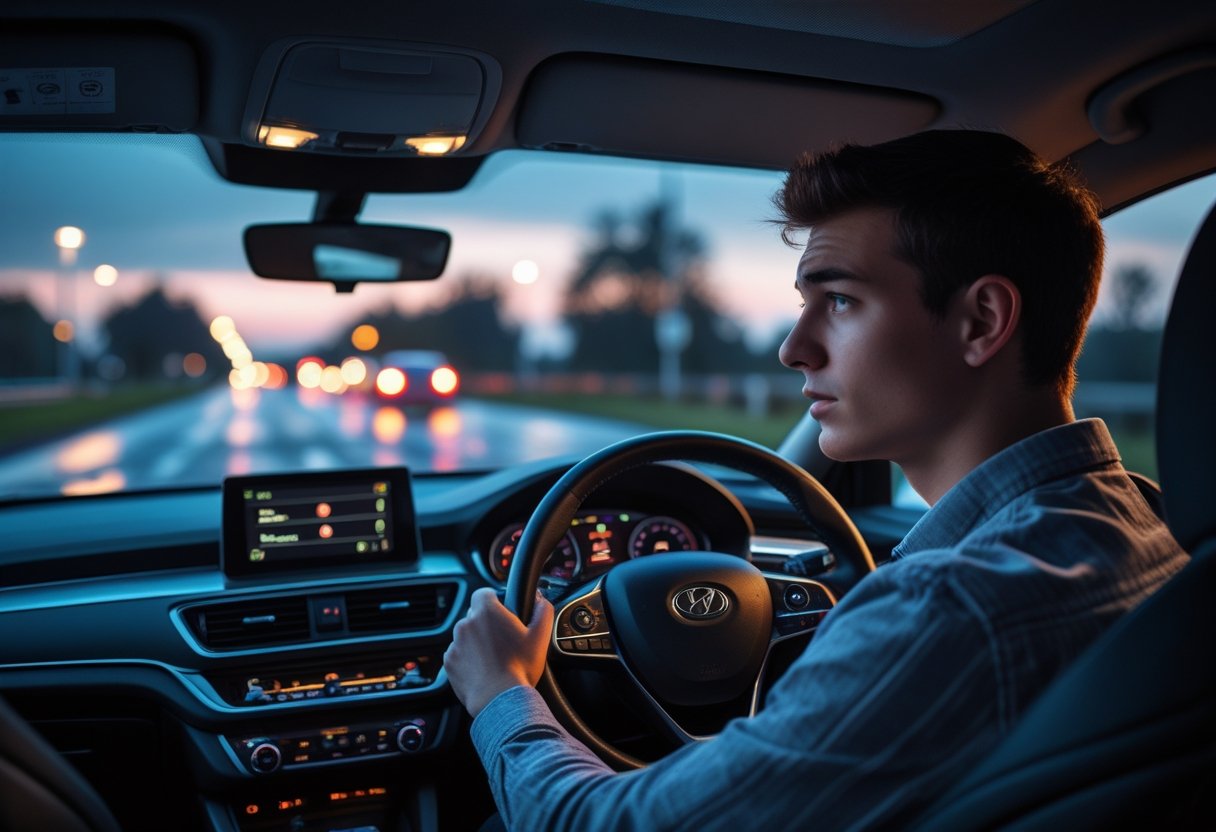
What’s surprising is that evening test slots actually have some of the highest pass rates, ranking as the third most likely time period for success. This suggests that whilst darkness creates additional challenges, it doesn’t automatically doom your chances of passing. The key difference lies in how well you’ve prepared for these specific conditions.
We’ll explore exactly what makes evening tests different, from how darkness affects your vision and hazard perception to the practical steps you can take to feel confident behind the wheel. You’ll discover why so many learners struggle with night driving, learn about the unique obstacles you might face, and get actionable tips to help you not just survive but thrive during your evening test.
How Darkness Impacts Evening Driving Tests
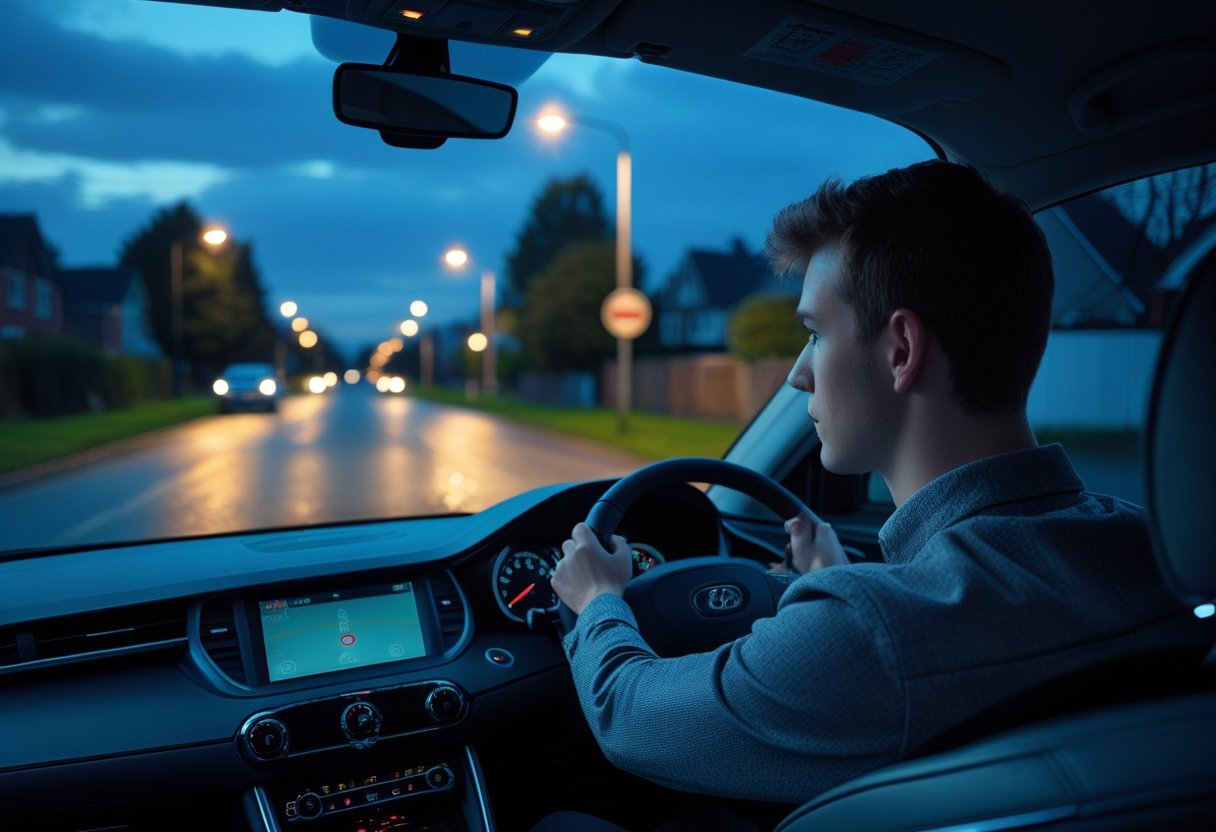
Evening tests bring unique challenges that daytime tests simply don’t have. Poor visibility creates different demands on your observation skills, whilst rush hour traffic adds complexity to an already nerve-wracking experience.
Differences Between Daytime and Evening Driving
The contrast between day and night driving becomes crystal clear once darkness falls. During daytime tests, we rely heavily on natural light to spot hazards, read road signs, and judge distances accurately.
When evening arrives, everything changes. Your eyes need time to adjust to lower light conditions. This means you’ll process visual information more slowly than usual.
Key differences include:
- Reduced peripheral vision in darkness
- Harder to judge speed and distance of other vehicles
- Street lighting creates uneven visibility patches
- Reflective road markings become more important
Night driving also demands different mirror usage. We need to check our mirrors more frequently because headlights can create blind spots. The glare from oncoming traffic makes it trickier to maintain steady observation.
Your examiner understands these challenges exist. They’re not expecting superhuman night vision from you. Instead, they want to see that you’ve adapted your driving style appropriately for the conditions.
Practice sessions in darkness before your test will help enormously. You’ll discover how your local test routes look different after sunset, giving you valuable familiarity with the area.
Visibility Challenges After Sunset
Poor visibility becomes your biggest opponent during evening driving tests. Street lights don’t illuminate everything evenly, creating pools of light separated by darker areas.
Pedestrians become much harder to spot, especially if they’re wearing dark clothing. We need to scan more actively for people crossing roads or walking near kerbs.
Road signs present another challenge. Some signs reflect headlight beams well, whilst others seem to disappear into the darkness. Traffic lights remain visible, but judging stopping distances becomes trickier.
Weather makes visibility worse:
- Rain creates reflections on wet roads
- Fog reduces visibility dramatically
- Even light drizzle can blur your windscreen
Your headlights become essential tools, not just accessories. Knowing when to dip your beams for oncoming traffic shows good consideration for other road users.
Driving in the dark also affects your depth perception. That parked car might seem further away than it actually is. Gap judgements at roundabouts require extra caution.
We recommend slowing down slightly to compensate for reduced visibility. This gives you more time to react to unexpected hazards that appear from the shadows.
Rush Hour and Changing Road Conditions
Evening tests often coincide with rush hour traffic, creating a perfect storm of challenges. Busy roads combined with fading light test your multitasking abilities to the maximum.
Traffic moves differently during peak hours. Stop-start conditions mean constant gear changes and clutch control. Other drivers might seem more impatient or aggressive after long working days.
Rush hour brings specific challenges:
- Increased traffic density on test routes
- More cyclists heading home from work
- School children still travelling in early evening
- Commercial vehicles making final deliveries
Road conditions change as temperatures drop in the evening. Surfaces that were dry at midday might become damp or slippery. This affects your stopping distances and cornering approach.
Parking manoeuvres become more complex when other cars are present. That quiet residential street from your practice sessions might now have vehicles parked on both sides.
We find that learners who’ve practised during different times of day cope better with these variations. Your driving instructor can help you experience various traffic conditions before test day.
The good news? Heavy traffic actually slows everything down, giving you more thinking time between decisions. Use this to your advantage by staying calm and methodical in your approach.
Night Vision and Common Vision Problems
Your eyes work differently in low light conditions, and certain vision problems can make night driving much more challenging for learner drivers. Understanding these changes helps you prepare better for evening driving tests and builds your confidence behind the wheel.
Night Vision Explained
When darkness falls, our eyes switch to a completely different way of seeing the world around us. We rely on special cells called rods that detect light and movement but can’t pick up colours or fine details very well.
This switch takes about 20 to 30 minutes to happen fully. During this time, our vision isn’t at its best. Road signs might look fuzzy, and we might struggle to spot pedestrians wearing dark clothing.
Key changes in low light:
- Objects appear less sharp and detailed
- Colours look muted or grey
- Depth perception becomes harder
- Glare from headlights affects us more
Many learner drivers notice they feel less confident when practising at night. This is completely normal. Our brains are working harder to process what we’re seeing, which can feel tiring.
The good news is that healthy eyes adapt well to these conditions once they’ve had time to adjust. If you’re struggling significantly with night vision, it might be worth booking an eye test before your evening driving test.
How Myopia and Astigmatism Affect Night Driving
Myopia (being short-sighted) can make night driving particularly tricky for learner drivers. Street signs that seem clear during the day suddenly become blurry blobs in the dark.
If you’re short-sighted, distant objects like traffic lights or road markings might appear fuzzy. This makes it harder to spot hazards early or read important signs. Many learners find they need to slow down more than usual to feel safe.
Astigmatism creates its own unique challenges at night. This condition causes light to scatter as it enters your eye, creating star-like patterns or halos around bright lights.
Common astigmatism symptoms while driving:
- Halos around headlights and street lamps
- Streaky or distorted lights
- Increased glare sensitivity
- Difficulty judging distances to other vehicles
Both conditions become more noticeable in low light because our pupils get bigger to let in more light. This makes any focusing problems more obvious.
If you have either condition, don’t worry. Proper glasses or contact lenses can make a huge difference to your night driving experience.
Contact Lenses and Glasses: What Learners Need to Know
Wearing the right vision correction can transform your night driving confidence. Both glasses and contact lenses work well, but each has specific advantages for evening driving tests.
Contact lenses often provide better peripheral vision, which is crucial when checking mirrors and blind spots. They don’t fog up in cold weather or get spotted with rain. Many learner drivers find they feel more natural when wearing contacts during lessons.
However, contact lenses can sometimes feel dry during longer drives, especially with air conditioning or heating running. This can make night driving feel less comfortable.
Glasses offer these night driving benefits:
- No risk of drying out or irritation
- Can include anti-glare coatings
- Easy to clean if they get dirty
- More stable vision in windy conditions
Anti-reflective coatings on glasses can be particularly helpful. They reduce glare from oncoming headlights and street lighting, making everything appear clearer and less dazzling.
Whatever you choose, make sure your prescription is up to date. Even small changes in your vision can feel much more significant when driving at night. We always recommend having an eye test within six months of your driving test.
Challenges Unique to Driving in the Dark
Darkness brings a whole new set of challenges that simply don’t exist during daylight hours. Bright headlights can temporarily blind you, hazards become much harder to spot, and your brain naturally starts feeling tired as evening approaches.
Dealing with Glare and High Beams
One of the biggest complaints we hear from learner drivers is about being dazzled by oncoming headlights. It’s genuinely uncomfortable and can leave you feeling completely vulnerable on the road.
When approaching vehicles have their high beams on, the glare can temporarily wipe out your vision. This happens because your pupils have adjusted to the darkness, making them extra sensitive to sudden bright light.
Here’s what helps when facing glare:
- Look slightly towards the left kerb rather than directly at oncoming lights
- Keep your windscreen spotlessly clean (smears make glare much worse)
- Slow down slightly until your vision clears
- Never retaliate by flashing your own high beams
Many newer cars have LED headlights that appear much brighter than older bulbs. Even on dip beam, these can feel overwhelming when you’re not used to driving in the dark.
The key is staying calm when you encounter glare. Your vision typically returns within a few seconds once the bright light passes.
Identifying Hazards in Low Light
Poor visibility makes spotting dangers much trickier than during daytime driving. Pedestrians wearing dark clothing, cyclists without lights, and road defects all become harder to notice.
Your depth perception also changes in darkness. Judging distances to other vehicles becomes more challenging, especially when you’re only seeing their lights rather than the actual cars.
Common hazards that catch night drivers off guard include:
- Pedestrians stepping out between parked cars
- Animals on rural roads (particularly common in autumn and winter)
- Potholes and road surface changes
- Broken-down vehicles with poor lighting
We recommend driving slightly slower than usual when visibility is limited. This gives you precious extra seconds to react when something unexpected appears in your headlight beam.
Road markings and cats’ eyes become your best friends in the dark. They help you maintain proper lane position when you can’t see familiar landmarks.
The Role of Fatigue and Focus
Your body naturally produces more melatonin as darkness falls, making you feel drowsy even if you’re not actually tired. This biological response affects everyone, not just new drivers.
Concentration becomes harder to maintain during evening hours. Your brain has to work much harder to process visual information in low light conditions.
Signs that fatigue is affecting your driving:
- Frequent blinking or heavy eyelids
- Difficulty focusing on road signs
- Finding your mind wandering
- Yawning repeatedly
If you’re taking an evening driving test, we suggest having a light meal beforehand and avoiding anything that might make you feel sluggish. Stay hydrated but don’t overdo it.
The combination of reduced visibility and natural tiredness means your reaction times slow down. Leave extra space between your car and the vehicle ahead to compensate for this.
Remember that other drivers might also be struggling with fatigue, making defensive driving even more important after dark.
Tips for Preparing for an Evening Driving Test
Evening test preparation requires specific focus on vehicle lighting systems and night vision adjustments. We need to account for reduced visibility conditions and plan our journey timing carefully to arrive confident and ready.
Essential Vehicle Checks and Lighting
Your vehicle’s lighting system becomes absolutely critical for evening tests. We recommend arriving at least 15 minutes early to perform thorough checks on all lights.
Pre-test lighting checklist:
- Headlights (dipped and full beam)
- Brake lights and indicators
- Hazard warning lights
- Number plate lights
Test each light function twice. Ask someone to help verify brake lights work properly. Clean all light lenses with a damp cloth to remove dirt or grime that reduces brightness.
Check your dashboard illumination works correctly. You’ll need to read your speedometer and warning lights clearly during the test. Adjust the dashboard brightness to a comfortable level before starting.
Interior lighting should function properly too. Your examiner needs to see documents clearly and make notes during the assessment.
Planning Your Route and Journey Timing
Evening traffic patterns differ significantly from daytime conditions. We suggest practising your test centre route during similar evening hours at least twice before test day.
Rush hour traffic often peaks between 5pm and 6:30pm on weekdays. Plan to arrive 20 minutes before your appointment time to account for potential delays.
Journey planning essentials:
- Check traffic conditions online before leaving
- Identify alternative routes to the test centre
- Locate nearby parking or drop-off points
- Confirm test centre opening hours for evening appointments
Bring all required documents in a clearly organised folder. Keep your provisional licence, theory test certificate, and any other paperwork easily accessible.
Pack a small torch as backup lighting. Though unlikely needed, it shows thorough preparation and provides peace of mind.
Optimising Your Vision for Success
Night vision takes time to adjust properly. We recommend avoiding bright screens or harsh lighting for 30 minutes before your test begins.
Your eyes need approximately 20 minutes to adapt fully to darker conditions. Arrive early enough to allow this natural adjustment process to occur before starting your assessment.
Vision preparation steps:
- Clean your glasses or contact lenses thoroughly
- Avoid looking directly at oncoming headlights
- Use peripheral vision to track pedestrians and cyclists
- Blink regularly to prevent eye strain
Driving at night requires different visual techniques than daytime driving. Focus slightly to the left of oncoming traffic to avoid headlight glare. Use your mirrors more frequently as blind spots become larger in reduced visibility.
If you feel your night vision isn’t quite right, mention this to your instructor during practice sessions. They can provide specific exercises to improve confidence with evening visibility challenges.
Statistics and Pass Rates for Evening Tests
The numbers tell a fascinating story about evening driving tests that might surprise you. Data shows evening slots actually have better success rates, and the reasons have nothing to do with darkness being harder.
What the Data Really Shows
Evening driving tests consistently outperform morning sessions when we look at the actual statistics. The national average pass rate sits at 47.9%, but evening slots regularly beat this figure.
Why evening tests work better:
- Less traffic congestion during test routes
- Calmer road conditions after rush hour
- Reduced stress levels in test candidates
Recent data from 2025 shows pass rates improved to 48.9% across all time slots. Evening tests contributed significantly to this increase.
Night driving isn’t actually tested during standard evening slots. Most evening tests finish before proper darkness sets in, especially during summer months.
The improvement comes down to practical factors rather than driving conditions. Fewer buses, school runs, and commercial vehicles mean smoother test experiences.
We’ve seen test centres report up to 5% higher pass rates for evening slots compared to busy morning periods.
Common Myths vs. Real Success Stories
Many learners worry that evening tests are deliberately harder or that examiners are stricter. The data proves this completely wrong.
Myth: Darkness makes everything more difficult
Reality: Standard evening tests rarely involve actual night driving
Myth: Fewer test slots mean higher standards
Reality: Pass rates are consistently higher, not lower
Real success stories show the opposite pattern. Sarah from Manchester passed on her third attempt after switching to a 4:30pm slot. “The roads were so much quieter, and I felt calmer,” she explains.
Traffic data supports these experiences. Evening rush hour typically ends by 6pm, creating ideal testing conditions.
The calmest period for driving tests runs between 2pm and 5pm. This sweet spot avoids both morning chaos and actual darkness.
Key advantages learners report:
- More relaxed mindset after work/school
- Better focus without morning grogginess
- Quieter residential areas during tests
Building Confidence: Thriving on Your Evening Test
Managing your nerves during dark conditions starts with proper preparation and using your night driving practice to build genuine confidence. We’ll show you practical ways to stay calm when visibility drops and how to turn your experience driving in the dark into a real advantage.
Calming Your Nerves in the Dark
Driving at night can feel intimidating, but we can help you transform that anxiety into focused confidence. The key lies in understanding that your examiner knows you’re facing different conditions and isn’t expecting perfection.
Start with breathing techniques before your test begins. Take three deep breaths whilst adjusting your mirrors. This simple routine helps reset your nervous system.
Focus on what you can control. Your headlights, speed, and following distance are all within your power. Don’t worry about other drivers’ actions or weather conditions.
Use positive self-talk during quiet moments. Remind yourself: “I’ve practised this,” or “I know how to drive safely in these conditions.”
Key calming strategies:
- Arrive 10 minutes early to settle in
- Do shoulder rolls to release tension
- Keep your hands relaxed on the steering wheel
- Remember that darkness often means quieter roads
The darkness actually creates a more controlled environment. Fewer pedestrians, less traffic, and clearer road markings under streetlights can work in your favour.
Using Practical Experience to Your Advantage
Your night driving practice becomes your secret weapon during an evening test. Every hour you’ve spent driving in the dark has prepared you for this moment.
Draw confidence from your experience. You’ve already navigated roundabouts with headlights, judged distances in low light, and managed your speed safely. These skills don’t disappear during your test.
Trust your muscle memory. Your hands know how to adjust the heating when windows fog up. Your eyes automatically check mirrors more frequently in darkness. Your foot naturally eases off the accelerator when visibility reduces.
Practical advantages you already possess:
- Better hazard perception from scanning further ahead
- Improved concentration from reduced distractions
- Smoother steering from focusing on road positioning
- Confident use of lights for signalling and visibility
Remember your successful night drives. Think about times you’ve handled challenging situations well. Maybe you smoothly navigated a busy car park or confidently overtook a cyclist with proper lighting.
Your evening test isn’t about proving you can drive in the dark for the first time. It’s about demonstrating skills you’ve already developed through practice.
Frequently Asked Questions
Evening driving tests present unique considerations around visibility, confidence, and examiner expectations. These practical questions address the most common concerns about taking your test when daylight fades.
What strategies can I use to boost my confidence for a driving test after dusk?
Practice makes perfect, especially when it comes to evening driving. We recommend booking several night-time lessons with your instructor before your test date. This hands-on experience helps you get comfortable with headlight positioning and judging distances in lower light.
Consider practising with an experienced driver during darker hours. Focus on residential areas first, then gradually work up to busier roads. Keep a record of your night driving practice so you can track your progress.
Remember that street lighting in most test areas provides excellent visibility. Your headlights will illuminate the road ahead clearly. Building familiarity with these conditions removes much of the anxiety around evening tests.
Do night-time driving tests offer different challenges compared to daytime ones?
Evening tests do present distinct differences from daytime exams. Visibility changes mean you’ll need to rely more heavily on your headlights and street lighting. Judging distances between vehicles can feel trickier at first.
However, evening roads are often quieter with less traffic. This can actually work in your favour, giving you more space to demonstrate your skills without the pressure of heavy congestion. You’ll have fewer distractions and more time to think through your manoeuvres.
The test format remains identical regardless of lighting conditions. Your examiner uses the same marking criteria and expects the same driving standards whether it’s bright sunshine or dusky twilight.
How can I best prepare for potential visibility concerns during an evening driving exam?
Start by ensuring your eyesight meets DVLA standards and consider an eye test if you’re unsure. Many drivers find night vision slightly more challenging, so knowing your eyes are in top condition boosts confidence enormously.
Practice using your lights properly during lessons. Learn when to dip your headlights for oncoming traffic and how to position them correctly. Get comfortable with your vehicle’s light controls so you can adjust them smoothly during the test.
Work on recognising road markings and signs under artificial lighting. White lines and reflective surfaces actually become more visible at night, which can help with lane positioning and navigation.
Can the lack of daylight affect the driving test’s difficulty, and how might I overcome this?
Reduced daylight does change driving conditions, but it doesn’t necessarily make tests harder. The key lies in adapting your driving style appropriately. You might need to slow down slightly and increase following distances to account for the lighting changes.
Focus on smooth, deliberate movements rather than rushing. Evening conditions reward careful, thoughtful driving over hasty decisions. Your examiner understands these conditions and adjusts their expectations accordingly.
Many learners find that concentrating harder in lower light actually improves their overall driving performance. You become more aware of your surroundings and make more deliberate choices behind the wheel.
What are the benefits of taking a driving test in the evening?
Evening tests often feature quieter roads with less traffic congestion. This means fewer complicated traffic situations and more opportunities to demonstrate your skills without external pressure from busy roads.
You’ll gain immediate confidence for night-time driving after passing. Many new drivers feel anxious about their first evening drives, but you’ll already have that experience under your belt with professional guidance.
Parking manoeuvres can be easier in the evening when fewer cars occupy residential streets. You’ll have more space options and less pressure from other road users waiting to pass.
How does the driving test examiner evaluate my performance in lower light conditions?
Examiners use identical assessment criteria regardless of lighting conditions. They’re looking for the same safe driving behaviours, proper observation, and good vehicle control whether it’s noon or dusk.
Your examiner will pay particular attention to how well you adapt your driving to the conditions. This includes appropriate use of lights, maintaining safe following distances, and adjusting your speed sensibly for visibility levels.
They understand that evening driving requires different skills and will credit you for demonstrating good adaptation. Smooth light control, confident navigation, and appropriate caution all count positively towards your overall performance.