

Penalty Points and Licence Revocation for New Drivers: A Practical Guide
Getting your first driving licence is an exciting milestone, but it comes with special responsibilities that many new drivers don’t fully understand. If you accumulate 6 or more penalty points within your first two years of driving, your licence will be automatically revoked and you’ll have to start over with a provisional licence. This harsh reality catches thousands of new drivers off guard each year.
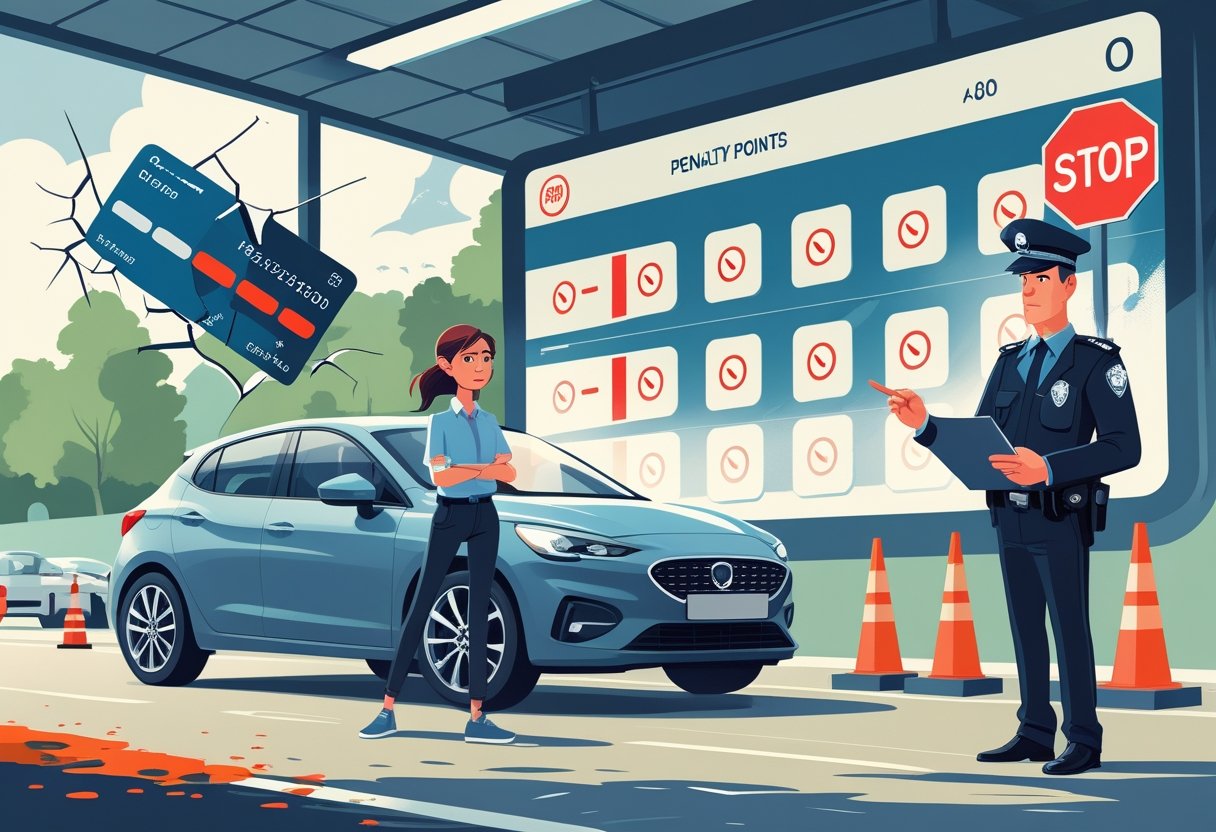
We know it sounds daunting, but don’t let this worry overshadow your driving journey. Understanding these rules from the start puts you in control and helps you make smarter decisions behind the wheel. The probationary period exists to encourage safe driving habits whilst you’re still building your confidence on the road.
In this guide, we’ll walk you through everything you need to know about penalty points as a new driver. From understanding which offences carry points to knowing your options if things go wrong, we’ve got you covered with practical advice that will help protect your hard-earned licence.
Understanding the New Driver Rules
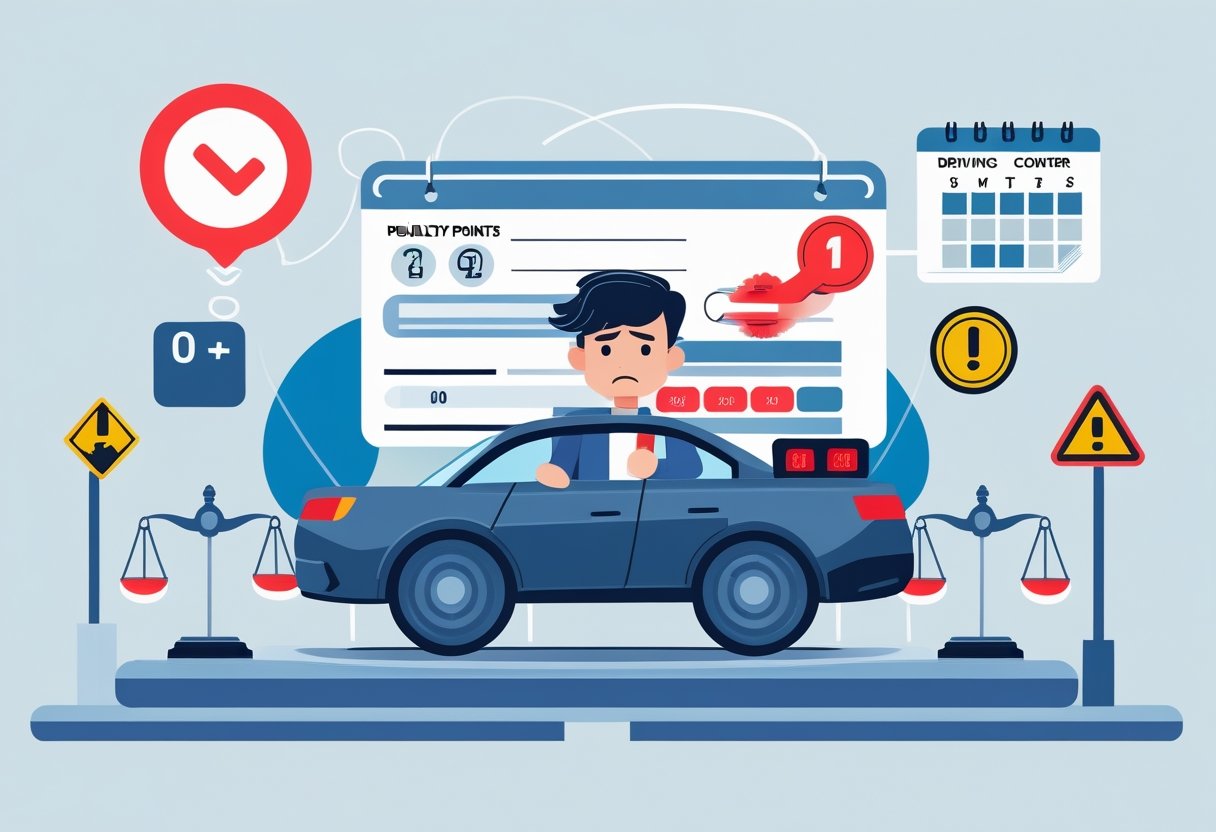
New drivers face stricter penalty point rules during their first two years on the road. We’ll explore what qualifies as a new driver, how the licence progression works, and the probationary period that could affect your driving privileges.
What Defines a New Driver?
When we talk about new drivers, we’re referring to anyone who has passed their first driving test and holds a full licence for less than two years. This definition applies whether you passed your practical driving test yesterday or 23 months ago.
The rules cover drivers who passed their test in Great Britain, Northern Ireland, or several other territories. If you’ve exchanged a foreign licence for a British one and then passed another driving test here, you’re also considered a new driver under these regulations.
Key point: The two-year period starts from when you pass your practical driving test, not when you receive your physical full licence. Even if you haven’t sent off for your full licence yet, the clock begins ticking immediately after passing.
There’s no additional probationary period if you pass tests for other vehicle categories later, such as motorcycle or lorry licences.
The Provisional Licence to Full Licence Journey
Your journey begins with a provisional licence, which allows you to learn and take your driving test. Any penalty points you receive on your provisional licence don’t disappear when you pass your test.
These points transfer directly to your full licence when you pass. This means you could start your driving career already carrying penalty points from your learner period.
For example, if you received three points whilst learning and then get another three points within two years of passing, you’ll face licence revocation. The system doesn’t give you a fresh start just because you’ve passed your test.
We recommend keeping a clean record during your learning phase to avoid complications later.
The Probationary Period Explained
The probationary period lasts exactly two years from your test pass date. During this time, you can only accumulate five penalty points before facing serious consequences.
If you reach six or more points within these two years, your licence gets automatically revoked. There’s no appeal process or second chances under this system.
When your licence is revoked, you must:
- Apply for a new provisional licence
- Pay all associated fees
- Pass both theory and practical tests again
The good news? Once you’ve successfully navigated these first two years without accumulating six points, you’ll be treated like any other driver. You’ll then have the standard 12-point threshold before facing a driving ban.
This probationary system encourages safe driving habits during your most vulnerable period as a new driver.
The Road Traffic (New Drivers) Act: The Legal Foundation
The Road Traffic (New Drivers) Act 1995 creates a two-year probationary period where your licence gets automatically revoked if you collect six or more penalty points. This law applies stricter rules to new drivers because research shows they’re more likely to have accidents, and enforcement happens automatically through the DVLA.
Key Provisions of the 1995 Act
The Road Traffic (New Drivers) Act 1995 came into force on 1st June 1997. It affects every driver who passed their first driving test on or after this date.
The six-point rule is the heart of this legislation. Once you accumulate six penalty points within two years of passing your test, your licence gets revoked immediately. There’s no appeal process or grace period.
Your two-year probationary period starts from the date you passed your practical driving test. This countdown continues even if you don’t collect your full licence straight away.
Any penalty points from your provisional licence carry over to your full licence. If these existing points plus new ones reach six within your probationary period, you’ll face revocation.
The Act covers all vehicle categories you’re licensed to drive. However, passing additional tests (like for lorries or motorcycles) doesn’t trigger another two-year period.
Foreign licence holders aren’t exempt. If you exchange an overseas licence for a British one and then pass further tests here, the Act applies to you too.
Why the Law Is Stricter for New Drivers
New drivers face higher accident rates during their first two years on the road. Statistics consistently show that inexperience leads to more serious driving errors and poor decision-making.
The government designed this stricter approach to protect both new drivers and other road users. By imposing tougher consequences, the law encourages recently qualified drivers to drive more carefully during their most vulnerable period.
We’ve seen that newly qualified drivers often feel overconfident after passing their test. The reality is that learning continues long after you receive your licence, and real-world driving presents challenges that test conditions can’t fully replicate.
The six-point threshold is deliberately low. Most driving offences carry three penalty points, which means just two minor infractions can cost you your licence during this probationary phase.
This approach has proven effective in reducing serious accidents among new drivers. The threat of having to retake both theory and practical tests serves as a powerful deterrent against risky driving behaviour.
How the Act Is Enforced
The DVLA handles enforcement automatically once you reach six penalty points. You don’t receive warnings or reminders about approaching this threshold.
When your licence gets revoked, you’ll receive official notification from the DVLA. You must surrender your licence immediately and cannot legally drive from that moment.
Getting back on the road requires starting from scratch. You’ll need to:
- Apply for a new provisional licence
- Pass the theory test again
- Pass the practical driving test again
- Pay all associated fees
Courts cannot prevent this revocation, even if they want to show leniency. The process happens automatically regardless of your personal circumstances or the nature of your offences.
The DVLA maintains detailed records of when you passed your test and tracks your penalty points accumulation. Their computer systems flag accounts that reach the six-point trigger automatically.
Police officers and traffic enforcement agencies report offences to the DVLA in the usual way. The system then cross-references your driver record to determine if revocation applies.
Penalty Points: How They Work for New Drivers
New drivers face stricter rules than experienced motorists when it comes to penalty points. Your driving record carries forward from your provisional licence, and reaching just six points within two years can trigger licence revocation.
What Are Penalty Points and How Are They Earned?
Penalty points are endorsements added to your driving record when you commit certain driving offences. Think of them as official marks that stay on your licence for a set period.
Common offences that earn penalty points include:
- Speeding (3 to 6 points)
- Using a mobile phone whilst driving (6 points)
- Running red lights (3 points)
- Careless driving (3 to 9 points)
The number of points depends on how serious the offence is. More dangerous behaviours earn higher point totals.
Points typically stay on your licence for four years from the date of the offence. However, they only count towards potential bans for three years.
Fixed penalty notices are the most common way to receive points. These arrive by post and give you the option to pay a fine and accept the points without going to court.
Carrying Points from a Provisional Licence
Many new drivers don’t realise that penalty points follow you from your provisional licence to your full licence. This can create problems if you’re not careful.
Let’s say you earned three points for speeding whilst learning to drive. When you pass your test, those points transfer automatically to your full licence.
If you then get another three points within two years of passing, you’ll hit the six-point limit. Your licence will be revoked even though you only committed one offence as a full licence holder.
This means:
- Always check your provisional licence for existing points before your test
- Be extra cautious during your first two years of driving
- Remember that your probationary period starts from when you pass, not when you get your full licence
The Six-Point Threshold: What It Means
The Road Traffic (New Drivers) Act 1995 sets a strict six-point limit for new drivers. This applies for two years after passing your first driving test.
Reaching six points triggers automatic licence revocation. There’s no discretion or appeals process like with regular driving bans.
What happens when you hit six points:
- Your licence is cancelled immediately
- You must apply for a new provisional licence
- You’ll need to pass both theory and practical tests again
- All your penalty points remain on your record
This rule applies whether you get six points from one serious offence or multiple smaller ones. Even paying fixed penalties doesn’t protect you from revocation.
The two-year period doesn’t reset if you pass tests for different vehicle categories later. It’s specifically tied to your first full driving licence.
Common Driving Offences That Lead to Points
New drivers face several common offences that can quickly add penalty points to their licence. Speeding violations, mobile phone use, driving without insurance, and careless driving are the most frequent ways drivers accumulate points during their first two years on the road.
Speeding: A Pitfall for Many
Speeding remains the most common driving offence amongst new drivers, and it’s easy to see why. When you’re getting used to your car and different road conditions, maintaining consistent speeds can feel challenging.
Most speeding offences carry 3 penalty points. This means just two speeding tickets within your first two years could put you dangerously close to the 6-point limit that triggers licence revocation.
The penalties vary based on how much you exceed the speed limit:
- 10% + 2mph over the limit: Usually results in a speed awareness course or 3 points plus a fine
- Significant speeding: Can lead to 4-6 points or even disqualification
- Extreme speeding: May result in immediate court appearance
We often see new drivers caught on dual carriageways where speed limits change frequently. Motorway slip roads are another common trap, especially when joining from 30mph areas onto 70mph sections.
Fixed penalty notices typically cost £100 plus 3 points. However, if your case goes to court, fines can reach £1,000 for most roads or £2,500 on motorways.
Mobile Phone Use While Driving
Using your mobile phone whilst driving is one of the most serious offences new drivers can commit. The penalties are severe: 6 penalty points and a £200 fine.
For new drivers, this single offence means automatic licence revocation. There’s no appeal process, no second chances, and no reduction in points.
What counts as mobile phone use:
- Making or receiving calls without hands-free equipment
- Texting or using messaging apps
- Taking photos or videos
- Using social media
- Playing games or music apps
Even touching your phone to skip a song or check the time can result in prosecution. The safest approach is to put your phone in the boot or glove compartment before starting your journey.
Hands-free devices are legal but can still be dangerous if they distract you from driving safely. Police can still prosecute for careless driving if phone use affects your driving ability.
Driving Without Insurance
Driving without valid insurance is a serious offence that carries harsh penalties. The standard punishment includes 6-8 penalty points, which means immediate licence revocation for new drivers.
Courts can also impose fines up to £5,000 and disqualification from driving. Your car may be seized and destroyed if you cannot prove ownership and valid insurance.
Common insurance mistakes new drivers make:
- Assuming they’re covered on someone else’s policy
- Letting policies lapse due to missed payments
- Providing incorrect information that invalidates coverage
- Not updating addresses or vehicle details
Continuous Insurance Enforcement means you need insurance even when your car isn’t being driven, unless you declare it off the road with a SORN (Statutory Off Road Notification).
We recommend keeping physical copies of your insurance documents in your car. Digital copies on your phone are acceptable, but having backup paper copies prevents complications if your phone battery dies during a police stop.
Young driver insurance can be expensive, but the cost of driving without cover is far higher. Compare quotes regularly and consider black box policies, which often offer significant savings for careful drivers.
Careless and Dangerous Driving
Careless driving covers a broad range of behaviours that fall below the expected standard of a competent driver. These offences typically carry 3-9 penalty points depending on severity.
Examples of careless driving include:
- Not checking mirrors before manoeuvres
- Following too closely (tailgating)
- Poor lane discipline
- Ignoring traffic signs or road markings
Dangerous driving is more serious and can result in 3-11 penalty points or immediate disqualification. This includes driving that falls far below acceptable standards and creates obvious danger to others.
The distinction between careless and dangerous driving often depends on circumstances. Weather conditions, traffic density, and potential consequences all influence how courts classify offences.
Penalties range significantly. Careless driving might result in 3 points and a £100 fine, whilst dangerous driving can lead to prison sentences, unlimited fines, and extended driving bans.
New drivers often struggle with complex junctions, roundabouts, and parking manoeuvres. Take extra time at these locations rather than rushing and risking points on your licence.
Licence Revocation: What Happens and Next Steps
When your driving licence gets revoked under the New Drivers Act, the DVLA automatically cancels your full licence and you’ll need to start the journey back to full driving privileges from scratch. This means applying for a new provisional licence, studying for your theory test again, and taking both practical and theory tests once more.
How and When Your Licence Is Revoked
The moment you accumulate six or more penalty points within two years of passing your test, the revocation process kicks in automatically. There’s no warning letter or grace period.
The DVLA will send you a letter confirming your driving licence revoked status. You must surrender your full licence immediately and stop driving.
What triggers revocation:
- Two speeding fines (3 points each)
- One serious offence worth 6 points
- Any combination totalling 6+ points
The two-year countdown starts from when you passed your practical test, not when you received your physical licence. Any points from your provisional licence carry over and count towards this total.
You cannot appeal this automatic revocation process. It’s a legal requirement under the Road Traffic (New Drivers) Act 1995.
Once revoked, you’re legally required to stop driving immediately. Continuing to drive without a valid licence could result in further penalties, including potential prosecution.
Getting Back on the Road: The Retesting Process
Getting your driving licence back requires starting from the beginning, but don’t let this discourage you. Many drivers find the second time round goes much smoother.
First, apply to the DVLA for a new provisional licence. You’ll need to pay the standard application fee. Your penalty points will transfer to this new provisional licence.
The retesting process involves:
- Theory test (including hazard perception)
- Practical driving test
- Meeting current eyesight requirements
You can start learning with an instructor or qualified supervisor as soon as your new provisional licence arrives. Many driving schools offer refresher courses specifically for drivers in your situation.
Book your theory test once you feel confident with the material. The questions and format may have changed since you first passed, so fresh revision is essential.
After passing your theory test, you can book your practical test. Most people find they need fewer lessons than complete beginners since muscle memory often returns quickly.
Life with L Plates Again: Restrictions and Responsibilities
Returning to provisional licence status means following all learner driver rules again. This adjustment can feel frustrating, but it’s temporary.
You must display L plates whenever driving and always have a qualified supervisor with you. They need to be over 21 with a full licence held for at least three years.
Key restrictions include:
- No driving on motorways
- Zero alcohol tolerance
- L plates must be clearly visible
- Qualified supervisor required at all times
Your penalty points remain on your provisional licence throughout this period. Once you pass both tests again, these points transfer to your new full licence.
The good news is there’s no additional probationary period after regaining your full licence. You’ll be treated like any other driver regarding future penalty points.
Consider this experience a valuable lesson in road safety. Many drivers who go through licence revocation become more cautious and skilled drivers as a result.
Appealing and Avoiding Revocation
New drivers facing potential licence revocation have several legal options to explore. You can defend charges through court hearings, present special reasons arguments, or demonstrate exceptional mitigating circumstances that might influence the outcome.
Legal Defences and Mitigating Circumstances
When we’re facing a driving offence that could push us over the six-point threshold, building a strong legal defence becomes crucial. Mitigating circumstances can significantly impact how courts view our case.
Personal hardships often carry weight in court proceedings. Loss of employment, family emergencies, or caring responsibilities can demonstrate why losing our licence would create exceptional hardship.
Medical conditions that affected our driving at the time of the offence may also qualify as mitigating factors. We’ll need proper medical documentation to support these claims.
Financial circumstances sometimes influence court decisions too. If losing our licence would prevent us from earning a living or supporting dependants, courts may consider alternative penalties.
The key is presenting genuine, well-documented circumstances rather than general excuses. Courts appreciate honesty and detailed evidence that shows why our specific situation deserves special consideration.
Special Reasons Arguments
A special reasons argument focuses on the unique circumstances surrounding the actual offence rather than our personal situation. These arguments can prevent penalty points from being added to our licence.
Common special reasons include driving very short distances in emergencies or being misled about legal requirements. The driving must have been absolutely necessary and the distance minimal.
We might also argue that our drinks were spiked (for drink-driving cases) or that we genuinely believed we were legally entitled to drive. Strong evidence supporting these claims is essential.
The circumstances must be truly exceptional and directly connected to the offence itself. Courts won’t accept special reasons arguments for routine situations or poor planning on our part.
Success requires detailed preparation and usually legal representation to present the argument effectively.
Court Hearings and Challenging Offences
Rather than accepting fixed penalty notices, we can choose to contest charges through court hearings. This strategy works best when we have genuine grounds to challenge the evidence.
Technical defences might include faulty speed cameras, incorrect procedures during traffic stops, or insufficient evidence of the alleged offence. Police must follow strict protocols when issuing penalties.
During court proceedings, we can request driver improvement courses instead of penalty points. Some magistrates offer this alternative for first-time offenders or minor infractions.
Negotiating for short driving bans instead of penalty points can also prevent revocation. A brief disqualification might be preferable to accumulating points that trigger automatic licence loss.
We should never attend court without proper legal representation. Motoring law specialists understand the technical aspects and can identify weaknesses in prosecution cases that we might miss.
Insurance and Long-Term Consequences
Having your driving licence revoked brings immediate insurance challenges and creates lasting effects on your driving record. These consequences extend far beyond the initial revocation period and require careful planning to rebuild your reputation as a responsible driver.
Insurance Implications After Revocation
Finding affordable car insurance after licence revocation becomes significantly more challenging. Most insurers view revocation as a major red flag, placing you in high-risk categories that come with substantial premium increases.
When your licence gets revoked, you’ll need to inform your current insurer immediately. They may cancel your policy outright or refuse to renew it. This creates a gap in your insurance history, which insurers don’t look upon favourably.
Once you regain your full driving licence, expect to pay considerably higher premiums for several years. Insurance companies typically view revoked drivers as high-risk clients for at least three to five years after reinstatement.
Specialist insurers often become your best option initially. These companies focus specifically on drivers with convictions or licence issues. Whilst their premiums remain higher than standard policies, they’re usually more willing to provide cover when mainstream insurers won’t.
The fixed penalty points that led to your revocation will remain visible on your driving record. Most insurers ask about convictions from the past five years, meaning you’ll need to declare these details when obtaining quotes.
Building a Positive Driving Record
Creating a clean driving record after revocation requires patience and consistent safe driving habits. Your focus should be on demonstrating reliability and responsibility behind the wheel over an extended period.
Start by completing your theory and practical tests successfully on your first attempts. This shows insurers and future employers that you’ve learned from previous mistakes and taken driving seriously.
Consider taking an advanced driving course after regaining your licence. Courses like Pass Plus or those offered by the Institute of Advanced Motorists demonstrate your commitment to safe driving. Many insurers offer discounts for completing these programmes.
Maintain a completely clean record for at least two years after reinstatement. Even minor speeding tickets or parking fines can significantly impact your insurance costs during this crucial rebuilding period.
Telematics insurance (black box policies) can help prove your safe driving habits. These policies monitor your driving behaviour and reward careful drivers with lower premiums. For newly reinstated drivers, they provide concrete evidence of improved driving standards.
Keep detailed records of your driving history, including certificates from any additional training courses. This documentation helps when discussing your case with insurers or potential employers.
Tips to Avoid Further Offences
Preventing additional penalty points requires developing strong defensive driving habits and staying constantly aware of traffic laws. Even small mistakes can have serious consequences for drivers rebuilding their records.
Know your speed limits and stick to them religiously. Consider using a GPS device or smartphone app that alerts you to speed cameras and changing limits. Many revocations stem from accumulating multiple speeding offences.
Plan your journeys carefully to avoid rushing. Running late often leads to poor decisions like speeding, aggressive overtaking, or using mobile phones whilst driving. Give yourself extra time for every trip.
Stay updated with current traffic laws, as regulations change periodically. Recent changes include stricter penalties for mobile phone use and new rules around smart motorways. Ignorance of updated laws won’t protect you from fixed penalty notices.
Regular vehicle maintenance prevents technical offences that could result in penalty points. Check your lights, tyres, and MOT certificate regularly. Driving with defective equipment can lead to endorsements on your driving licence.
Consider using hands-free technology for navigation and communication. Keep your mobile phone out of reach to avoid temptation. Even touching your phone whilst driving can result in six penalty points, which would immediately revoke a new driver’s licence again.
Create accountability systems like asking family members to remind you about safe driving practices. Some people find it helpful to display reminder notes in their car about maintaining safe following distances and checking mirrors regularly.
Frequently Asked Questions
New drivers face unique challenges with penalty points, including automatic licence revocation at just six points within two years. The probationary period brings stricter rules that differ significantly from experienced drivers.
How many penalty points can I accumulate before my licence is at risk of being revoked?
As a new driver, your licence will be revoked if you accumulate six or more penalty points within two years of passing your test. This is much stricter than the usual 12-point limit for experienced drivers.
The two-year probationary period starts from the day you pass your practical driving test. Any penalty points you had on your provisional licence count towards this six-point total.
Once you reach six points, your licence gets cancelled automatically. There’s no grace period or warning system.
What’s the duration a penalty point stays on a new driver’s licence?
Penalty points typically remain on your licence for four years from the date of the offence. However, they only count towards penalty totals for three years in most cases.
For new drivers, the crucial period is those first two years after passing your test. Points earned during this time can trigger licence revocation at just six points.
Even after your two-year probationary period ends, those points still appear on your licence record. They’ll continue showing until the four-year period expires.
Could you clarify the process for regaining a driver’s licence after revocation?
If your licence gets revoked, you’ll need to start the learning process again from scratch. First, you must apply and pay for a new provisional licence.
You’ll then need to pass both your theory test and practical test again. This includes the hazard perception part of the theory test.
Until you pass both tests, you can only drive as a learner driver. This means displaying L plates and having supervision from a qualified driver at all times.
The whole process can take several months and costs significantly more than keeping your original licence.
What specific driving offences typically lead to penalty points for novice motorists?
Speeding remains the most common offence that catches new drivers, typically carrying three to six points depending on severity. Even minor speeding can push you over the six-point limit.
Using a mobile phone whilst driving carries six points immediately. This single offence means instant licence revocation for new drivers.
Other common offences include careless driving (three to nine points), not having proper insurance (six to eight points), and running red lights (three points).
Drink driving or drug driving often result in immediate disqualification rather than points, but the consequences are far more serious.
Are there any educational courses available that might prevent points from being added to my licence?
Speed awareness courses can replace penalty points for minor speeding offences in many areas. You’ll typically get offered this option if you’re slightly over the limit and haven’t attended a course recently.
These courses cost around £100 but save you three penalty points on your licence. For new drivers, this could mean keeping your licence instead of facing revocation.
Not all police forces offer these courses, and they’re only available for first-time minor offences. You can’t use them to avoid points for serious offences like mobile phone use.
The course takes about four hours and covers safe driving techniques and speed awareness.
In what way does the penalty point system differ for drivers within their first two years on the road?
The biggest difference is the six-point revocation threshold compared to 12 points for experienced drivers. This means new drivers have half the margin for error.
New drivers can’t typically choose short driving bans instead of points to avoid revocation. The automatic system kicks in as soon as you reach six points.
Your two-year probationary period applies only to your first full driving licence. If you later pass tests for other vehicle categories, you won’t get another probationary period.
The stricter rules reflect research showing new drivers face higher accident risks during their first years on the road.