

What to Do If Your Driving Lesson Gets Cancelled: Next Steps & Smart Solutions
A cancelled driving lesson can turn your perfectly planned day upside down, especially when you’ve been counting down the hours to get behind the wheel. Whether it’s your instructor falling ill, their car breaking down, or unexpected circumstances beyond anyone’s control, these disruptions happen more often than you’d like to think.

When your driving lesson gets cancelled, the most important thing is to immediately contact your instructor to reschedule and understand their cancellation policy, then use the unexpected free time productively by studying theory or practising hazard perception. Don’t let frustration derail your progress or dampen your enthusiasm for learning to drive.
We know how disappointing it feels when you’ve mentally prepared yourself for a lesson, only to receive that last-minute call or text. The good news is that with the right approach, you can turn this setback into an opportunity to strengthen other aspects of your driving knowledge and keep moving forward on your journey to independence.
Key Takeaways
- Contact your instructor immediately to understand why the lesson was cancelled and arrange a new appointment
- Use the unexpected free time to study your theory, practise hazard perception, or review driving techniques online
- Stay positive and remember that cancelled lessons are temporary setbacks that won’t impact your long-term driving success
Immediate Steps After a Driving Lesson Cancellation
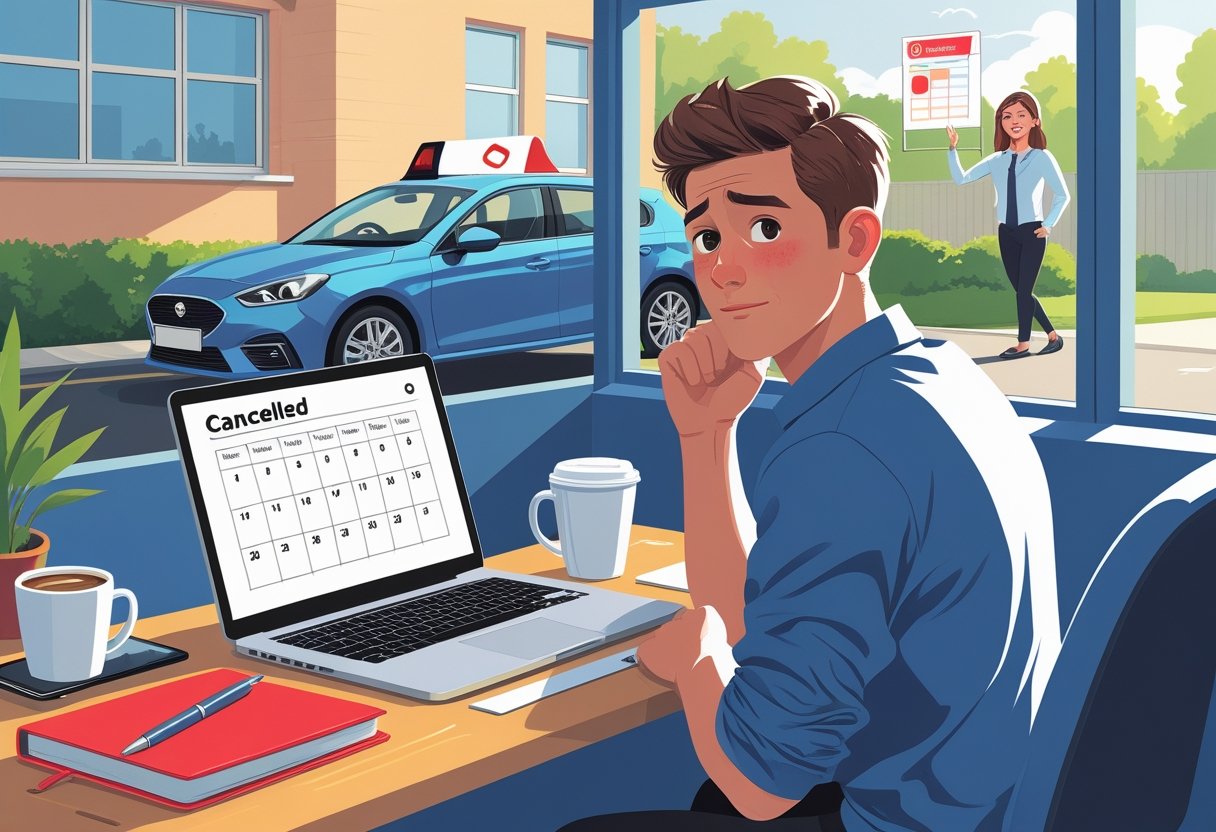
When your instructor cancels your lesson, taking quick action helps you stay on track with your driving progress. The key is to confirm what’s happened, understand why, and keep your learning momentum going strong.
Check for Official Communication from Your Instructor
First things first: make sure you’ve actually received proper notice about the cancellation. Check your phone, emails, and any texts from your driving school.
Most instructors will try to contact you as soon as they know about a problem. They might call first, then follow up with a text message or email to confirm the details.
What to look for:
- Direct calls or voicemails from your instructor
- Text messages with cancellation details
- Emails from your driving school
- Messages through driving school apps or booking systems
If you haven’t heard anything official but suspect there might be an issue, don’t just assume. Ring your instructor directly to confirm whether your lesson is still going ahead.
Sometimes technical problems mean messages don’t get through. We’ve all been there when our phones decide to have a moment! It’s always better to double-check than to turn up to a cancelled lesson or miss one that’s still happening.
Clarify the Reason for the Cancellation
Understanding why your lesson got cancelled helps you know what to expect next. Different reasons often mean different solutions and timescales for rebooking.
Common cancellation reasons include:
- Instructor illness or emergency
- Car mechanical problems or MOT issues
- Severe weather conditions making driving unsafe
- Instructor’s personal commitments or training requirements
Ask your instructor directly about the reason if it wasn’t clear in their message. This isn’t being nosy – it’s practical planning.
If it’s a one-off emergency, you might be able to rebook quickly. But if your instructor has ongoing health issues or car problems, you’ll need a different approach.
Weather-related cancellations are usually temporary. Once conditions improve, lessons can resume normally. Mechanical issues might take longer to sort out, especially if parts need ordering.
Review Your Driving School’s Policies
Now’s the perfect time to check what your driving school’s cancellation policy actually says. Most schools have clear rules about notice periods and what happens with fees.
Key policy points to check:
- How much notice instructors must give for cancellations
- Whether you’re entitled to a refund or credit
- Alternative instructor options within the school
- Rebooking priorities for cancelled lessons
Many driving schools have a 48-hour cancellation policy that works both ways. If your instructor cancels with less notice than their own policy requires, you might have extra options available.
Look at your original booking confirmation or the school’s website for these details. If you can’t find the information easily, give them a ring to clarify.
Some schools offer backup instructors when your regular one isn’t available. Others might give you priority booking for the next available slot with your usual instructor.
Stay Flexible with Your Schedule
Keeping an open mind about timing helps you get back on the road faster. The more flexible you can be, the sooner you’ll have another lesson booked.
Consider accepting lessons at different times of day or days of the week than usual. Your instructor might have gaps in their schedule that don’t match your normal slot but work perfectly well for learning.
Ways to stay flexible:
- Accept earlier or later time slots
- Try different days of the week
- Consider slightly longer or shorter lessons to fit available times
- Be open to lessons with other instructors temporarily
If you’re preparing for a DVSA driving test, remember that the new 10-day cancellation rule means planning ahead is crucial. Keep this in mind when rebooking lessons close to your test date.
Don’t let one cancelled lesson derail your entire learning schedule. Learner drivers who stay positive and adaptable often progress faster than those who get stuck on rigid timetables.
Your driving lessons are an investment in your future independence. One bumpy day doesn’t change the bigger picture of becoming a confident driver.
How to Reschedule Your Driving Lesson Smoothly
When your driving lesson gets cancelled, reaching out to your instructor quickly and being flexible with timing options will help you secure a new slot. Having backup instructors in mind can also keep your learning on track.
Contact Your Instructor Promptly
Speed matters when rescheduling driving lessons. Most driving schools follow a 48-hour cancellation policy, but this works both ways. The sooner you contact your instructor about rebooking, the better your chances of getting a slot that suits you.
Send a text or ring your instructor immediately after receiving cancellation news. Many instructors check their phones regularly throughout the day. Don’t wait until evening or assume they’ll sort it out for you.
Be specific about your availability when you make contact. Instead of saying “anytime next week,” offer concrete options like “Tuesday after 4pm or Thursday morning.” This saves back-and-forth messages and shows you’re serious about rebooking.
Keep your communication polite but direct. Remember, your instructor likely feels bad about the cancellation too. A friendly approach often leads to them going the extra mile to find you a replacement slot.
Explore Alternative Lesson Times
Flexibility opens doors to more lesson opportunities. If you normally book Saturday mornings, consider trying weekday evenings or early morning slots. These times often have better availability.
Think beyond your usual preferences. Many learner drivers avoid rush hour lessons, but these can actually be valuable practice. Evening slots between 6-8pm are sometimes easier to book than weekend sessions.
Consider intensive lesson blocks if your instructor offers them. A two-hour session might be available when single-hour slots aren’t. This can actually benefit your learning by giving you more time to build confidence behind the wheel.
Ask your instructor about their cancellation list. When other students cancel, you could grab their slot with short notice. This works particularly well if you have a flexible schedule.
Consider Different Instructors If Needed
Having a backup instructor can save your driving progress. If your regular instructor can’t reschedule within a reasonable time, don’t let your skills go rusty whilst waiting.
Research instructors in your area who work with the same driving school. They’ll have access to your lesson notes and progress records. This means less time explaining where you’re up to with your learning.
Book a trial lesson with an alternative instructor. Most learner drivers worry about switching, but good instructors adapt their teaching style to match your needs. You might even learn techniques that click better with you.
Contact your driving school’s office rather than just your individual instructor. They often know which instructors have availability and can arrange transfers smoothly. Some schools guarantee to find you alternative slots within 48 hours of cancellation.
Understanding Why Driving Lessons Get Cancelled
Driving lessons can get cancelled for several reasons that are usually beyond anyone’s control. Weather conditions, instructor health problems, and car troubles are the main culprits that can disrupt your learning schedule.
Bad Weather and Road Conditions
Heavy rain, snow, or ice can make roads dangerous for learner drivers. We always prioritise safety over keeping to schedules.
Most driving instructors won’t take learners out when weather conditions become hazardous. Poor visibility, flooding, or icy roads create unnecessary risks that experienced drivers find challenging, let alone those still learning.
The DVSA also cancels driving tests during severe weather. This affects lesson timing since many instructors prefer not to teach right before cancelled test dates.
Fog, heavy downpours, and strong winds are common reasons for cancellations. Your instructor knows local road conditions better than anyone. They’ll make the call based on current weather and forecasts.
Don’t feel disappointed if lessons get postponed due to weather. It’s actually good judgement from your instructor. Driving in dangerous conditions whilst learning can knock your confidence and create bad habits.
Instructor Illness or Emergencies
Driving instructors are human beings who occasionally fall ill or face family emergencies. Unlike office workers, they can’t work from home or delegate their responsibilities.
Sudden illness, medical appointments, or family crises can force instructors to cancel at short notice. Most instructors try to give as much warning as possible, but emergencies happen unexpectedly.
Some instructors work alone, which means there’s no backup when they’re unwell. Larger driving schools might offer replacement instructors, but this isn’t always possible at short notice.
Food poisoning, flu, or personal emergencies are typical reasons for same-day cancellations. Your instructor would rather cancel than risk passing illness to you or teaching whilst distracted by personal problems.
Remember that instructors lose income when they cancel lessons. They only do so when absolutely necessary.
Vehicle Issues and Maintenance
Dual-control cars need regular servicing and occasional repairs. Brake failures, clutch problems, or electrical faults can make vehicles unsafe for learner drivers.
MOT tests, services, and unexpected breakdowns can disrupt lesson schedules. Instructors usually try to book maintenance during quieter periods, but urgent repairs can’t wait.
Tyre punctures, engine troubles, or failed safety checks might force immediate cancellations. Dual-control systems are complex and need proper maintenance to work correctly.
Some instructors have backup vehicles, but many work with just one car. When that car needs repairs, lessons have to stop until it’s roadworthy again.
Your instructor won’t risk taking you out in a faulty vehicle. This protects both your safety and their professional reputation.
What to Do If Your Practical or Theory Test Is Also Affected
When your driving lesson gets cancelled, there’s a good chance your upcoming test might face disruption too. We’ll help you check your test status with the DVSA, secure a replacement slot quickly, and navigate cancellation finder services effectively.
Check Test Status via the DVSA
Your first port of call should always be the Driver and Vehicle Standards Agency’s official channels. If bad weather or other circumstances have affected your lesson, these same conditions often impact test centres across your area.
Check these DVSA resources immediately:
- Your booking confirmation email (contains direct test centre phone number)
- DVSA’s official website for regional updates
- Text alerts if you’ve signed up for notifications
Ring your test centre directly if you suspect weather conditions might cause problems. The staff there know local road conditions better than anyone and can tell you straight away whether tests are running normally.
Don’t just assume your test is cancelled because your lesson was. Test centres sometimes operate under different criteria than driving schools, particularly during marginal weather conditions.
Find a New Test Date or Slot
If your test does get cancelled, the DVSA will automatically rebook you within three working days (up to seven during extended bad weather periods). However, this new date might not work with your schedule or preparation timeline.
Your rebooking options include:
- DVSA automatic rebooking: Free replacement slot assigned automatically
- Manual rescheduling: Change the offered date through your online account
- Fresh booking: Start completely new if the wait times are shorter
Remember that driving test waiting times vary dramatically across different areas. Sometimes booking a test in a neighbouring town can get you back on track weeks earlier than waiting for your local centre.
If you failed a previous test recently, you’ll still need to observe the 10 working day waiting period before taking another attempt.
Use Reliable Cancellation Finders
Driving test cancellations happen daily as other learners change their plans or feel unprepared. These cancelled slots become available immediately and can dramatically reduce your waiting time.
The DVSA doesn’t run or endorse any cancellation finder services, but several legitimate options exist. Look for services that check the official DVSA booking system regularly throughout the day.
Key features of reliable cancellation finders:
- Real-time monitoring of DVSA booking system
- Text or email alerts for your preferred locations
- Transparent pricing (many offer free basic services)
- Good user reviews and established track record
Be prepared to act quickly when you receive cancellation alerts. Popular slots in busy areas can disappear within minutes of becoming available.
Some services can even book the slot automatically on your behalf, though you’ll need to provide your booking reference and personal details securely.
Claiming Expenses and Managing Costs After a Cancellation
When the DVSA cancels your driving test at short notice, you might be entitled to claim back certain out-of-pocket expenses. Understanding the eligibility criteria and application process can help you recover some of the costs you’ve already incurred.
Eligibility for Out-of-Pocket Expenses
Short notice means the DVSA cancelled your test with less than 3 clear working days’ notice. Weekends and bank holidays don’t count as working days.
You have 6 months from your original test date to submit a claim. After this window closes, you won’t be able to recover any expenses.
However, you cannot claim if your test was cancelled due to:
- Bad weather or poor lighting conditions
- Problems with your vehicle
- Personal issues like illness on test day
For theory tests, we can claim for lost earnings from unpaid leave (typically half a day after tax and National Insurance). Travel costs to and from the test centre are also eligible.
Driving test cancellations allow you to claim lost wages from unpaid leave. If you used an instructor’s vehicle, you can claim vehicle hire costs based on their standard hourly lesson rate.
Different test types have maximum claimable hours:
| Test Type | Maximum Hours |
|---|---|
| Car | 2 hours |
| Motorcycle | 4 hours |
| Lorry/Bus | 4 hours |
How to Apply for a Refund
Download the official claim form from the DVSA website. Fill it in completely on your device, then print and sign the physical copy.
Create clear scans or photos of each page. Email these to the DVSA along with all supporting documents.
Alternatively, post your completed form and documents to:
DVSA
PO Box 349
Newcastle-upon-Tyne
NE12 2GN
Remember, submitting a claim doesn’t guarantee you’ll receive compensation. The DVSA reviews each case individually.
Documenting Your Supporting Evidence
Strong documentation makes the difference between a successful and rejected claim. Gather these essential documents before applying.
You’ll need receipts for travel costs showing your journey to and from the test centre. Keep tickets, fuel receipts, or parking charges.
An employer’s letter on headed paper must confirm you took unpaid leave. This should show your lost earnings after tax and National Insurance deductions, normally for half a day only.
For instructor vehicle hire, ask them to complete section 2 of the claim form. Alternatively, they can provide a signed, dated receipt on letterheaded paper showing their standard hourly lesson rate.
Other expense receipts must display your name, the amount charged, and the period covered. Missing documentation will affect your claim’s success.
You cannot claim for driving lessons before your test date, training courses arranged beforehand, or extra lessons whilst waiting for a rearranged test.
Staying Motivated and Making the Most of the Delay
A cancelled driving lesson doesn’t mean your progress stops. We can turn this waiting time into a valuable opportunity to strengthen your theory knowledge and build confidence for your next practical session.
Practising Theory and Hazard Perception Skills
This unexpected free time gives us the perfect chance to dive deeper into theory preparation. Most learner drivers spend their lesson time focused on practical skills, leaving theory study for rushed evening sessions.
Download a quality theory test app like the official DVSA app or 4in1 App. These programmes offer the most up-to-date questions that mirror the real test format.
Focus on your weak areas first. If you struggle with stopping distances, spend 20 minutes memorising those figures. Road signs giving you trouble? Create flashcards for the tricky ones.
Hazard perception practice becomes especially valuable during delays. Watch clips multiple times and notice how experienced drivers spot developing situations early.
Try this approach:
- First viewing: Click when you see any potential hazard
- Second viewing: Focus on timing your clicks correctly
- Third viewing: Analyse what clues warned you about the hazard
Set yourself a mini goal, like completing 10 mock theory tests or achieving 90% on hazard perception. This gives you something concrete to accomplish whilst waiting for your rescheduled lesson.
Using the Waiting Time for Extra Confidence
We can use this delay to strengthen your mental preparation for driving. Many learner drivers feel nervous before lessons, and this extra time helps build genuine confidence.
Study your local driving test routes if you’re close to test standard. Most areas have 3-5 common routes that examiners use regularly. Walk or cycle these routes to familiarise yourself with tricky junctions and roundabouts.
Practice mental rehearsal of challenging manoeuvres. Close your eyes and visualise performing a perfect parallel park or three-point turn. Athletes use this technique because it genuinely improves real-world performance.
Read the Highway Code sections that relate to your recent lessons. If you’ve been working on dual carriageways, study those specific rules and recommended procedures.
Consider watching YouTube channels from qualified driving instructors. They often explain concepts differently than your regular instructor, which can provide that “lightbulb moment” for difficult topics.
Create a driving journal to track your progress. Write down what you’ve learned recently and what you want to focus on next lesson. This keeps you engaged with your driving development.
Seeking Feedback from Past Lessons
Use this time to reflect on your recent driving sessions and identify areas for improvement. We often rush from lesson to lesson without properly processing what we’ve learned.
Contact your driving instructor to discuss your progress via text or email. Ask specific questions about skills you’ve been practising. Most instructors appreciate students who show genuine interest in improvement.
Questions you might ask:
- “Which aspect of my roundabout approach needs the most work?”
- “Am I checking mirrors frequently enough during manoeuvres?”
- “What should I focus on for our next lesson?”
Review any notes your instructor has given you. Many learner drivers collect feedback sheets but never read them properly. Spend 10 minutes understanding exactly what each comment means.
Think about your lesson patterns. Do you make the same mistakes repeatedly? Are you more confident in certain weather conditions? Understanding these patterns helps you prepare better strategies.
Plan specific questions for your next lesson based on this reflection. Rather than saying “I’m not sure about roundabouts,” try “Can we practice reading traffic flow when approaching mini-roundabouts?”
This thoughtful approach shows your instructor that you’re serious about learning and helps them plan more effective lessons tailored to your needs.
Frequently Asked Questions
When your driving lesson gets cancelled, you’ll likely have practical questions about next steps and making the most of the situation. These common concerns cover everything from rescheduling procedures to productive ways to spend your unexpected free time.
How can I best utilise the unexpected free time when my driving lesson is unexpectedly postponed?
Your cancelled lesson creates a perfect opportunity to strengthen your theory knowledge. We recommend diving into the Highway Code or practising hazard perception tests online.
You can also watch driving tutorial videos on YouTube. Focus on specific skills like parallel parking or roundabouts that you’ve been working on.
Consider taking a walk or bus ride along your usual lesson route. Observe road signs, traffic patterns, and potential hazards from a passenger perspective.
If weather caused the cancellation, use this time to research driving in different conditions. Understanding how rain or fog affects stopping distances will benefit your future lessons.
What steps should I take to rearrange a driving lesson after it’s been cancelled?
Contact your instructor immediately to discuss rebooking options. Most driving schools have 48-hour cancellation policies, so availability might be limited for the same week.
Check your calendar and offer several alternative time slots. Being flexible with dates and times increases your chances of securing a replacement lesson quickly.
If your instructor can’t accommodate you soon enough, ask about their cancellation list. Many students cancel last-minute, creating unexpected openings.
Document the cancellation details in writing. Keep records of when the lesson was cancelled and any agreed rebooking arrangements for future reference.
Is there a way to prevent future cancellations from happening to my driving lessons?
Choose instructors with reliable track records and good reviews. Independent instructors often have more flexibility than large driving schools when unexpected issues arise.
Book lessons during optimal times like mid-morning or early afternoon. These slots have fewer competing commitments and better weather conditions.
Discuss backup plans with your instructor beforehand. Some instructors offer alternative indoor theory sessions when practical driving isn’t possible.
Consider booking lessons in blocks rather than individually. Instructors prioritise students who’ve invested in multiple sessions and are less likely to cancel on regular pupils.
After a driving lesson cancellation, what should I focus on to ensure I’m still progressing?
Review your most recent lesson feedback and practise mental rehearsals of challenging manoeuvres. Visualisation helps maintain muscle memory between practical sessions.
Work on areas that don’t require actual driving. Study traffic signs, road markings, and right-of-way rules that form the foundation of good driving.
If you have a provisional licence holder in your family, observe their driving techniques. Notice how they handle situations you’ve been learning about.
Keep a driving journal noting questions or concerns that arise between lessons. This ensures productive discussions when you next meet your instructor.
Who should I contact first if my instructor cancels a driving lesson at the last minute?
Your instructor should be your first point of contact to understand the reason for cancellation and discuss immediate rebooking options. Most instructors will proactively reach out when cancellations occur.
If you can’t reach your instructor directly, contact their driving school’s main office. They often have multiple instructors and might arrange a replacement lesson with someone else.
For lessons booked through online platforms, use their customer support channels. Companies like Instruct Me have specific procedures for handling instructor cancellations and may offer compensation.
Document the cancellation time and method of contact. If the instructor frequently cancels without adequate notice, you’ll need this information when seeking alternative arrangements.
Are there any constructive activities I can engage in while waiting for the next available driving lesson slot?
Take advantage of free theory test apps and websites to sharpen your knowledge. The DVSA’s official materials provide the most accurate practice questions.
Visit your local test centre during quiet periods to familiarise yourself with the area. Knowing the surrounding roads reduces anxiety when your actual test approaches.
Join online learner driver communities and forums. Other students often share valuable tips and experiences that complement your formal instruction.
Consider booking an intensive driving course if regular lessons become unreliable. These concentrated programmes reduce the impact of individual cancellations on your overall progress.