

Published 26 November 2025, updated 12 July 2026
Navigating Tricky Junctions Like Staggered Crossroads: Essential Advice for Learner Drivers
Driving through staggered crossroads can feel like navigating a puzzle, especially when you’re still building your confidence behind the wheel. Unlike regular crossroads where roads meet in a neat cross pattern, staggered junctions throw you a curveball with roads that don’t quite line up. These offset intersections appear as two separate T-junctions positioned close together, creating a zigzag pattern that requires extra attention and care.
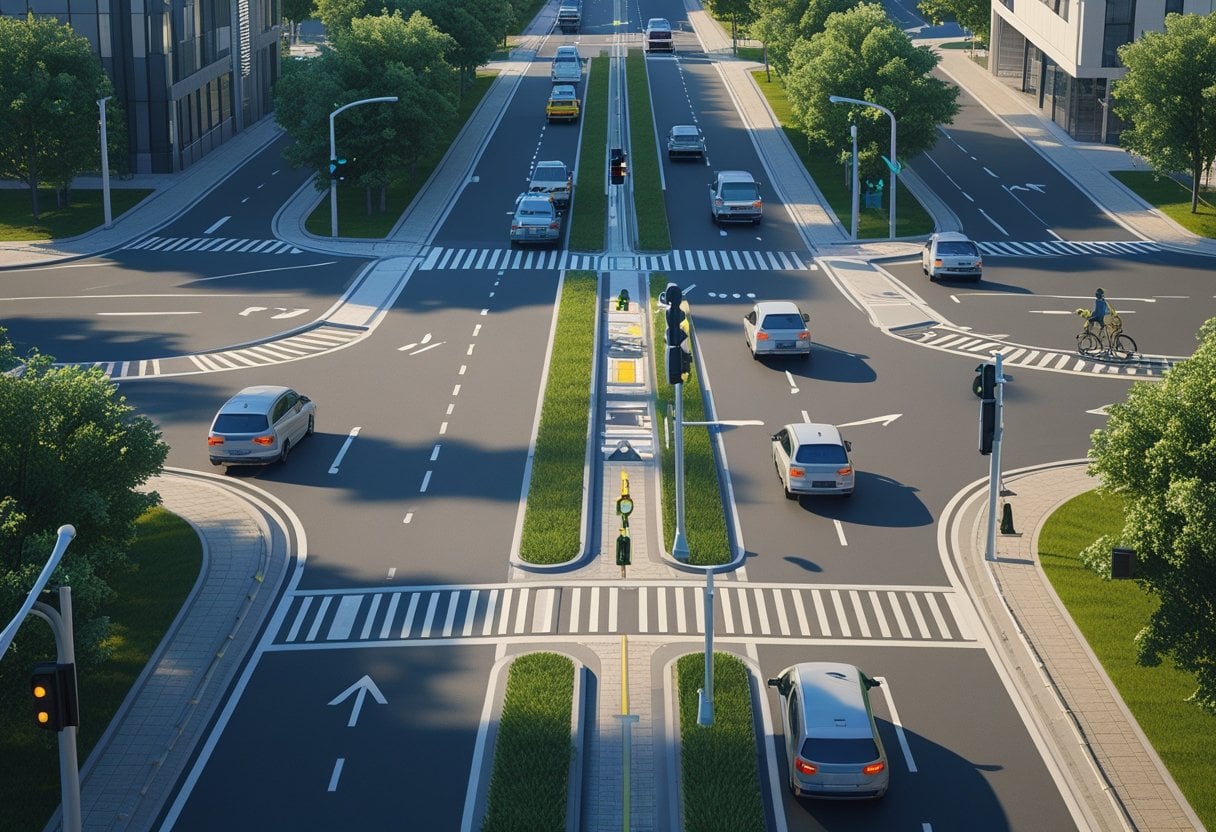
The key to mastering staggered crossroads lies in treating each part as a separate junction, slowing down early, and taking extra time to observe traffic from all directions. Many learner drivers find these junctions tricky because the offset design can make it harder to spot approaching vehicles and judge gaps safely. The good news is that once you understand how they work, you’ll feel much more confident tackling them.
Tricky junctions like these become second nature with focused repetition, so our intensive course packages for mastering tricky junctions are a smart way to conquer them quickly.
We’ve all been there, approaching an unfamiliar junction and feeling that flutter of uncertainty. Staggered crossroads are particularly common on driving tests because they test your observation skills, hazard awareness, and ability to adapt your driving to different road layouts. With the right approach and plenty of practice, these junctions will soon become just another part of your driving toolkit.
Key Takeaways
- Staggered crossroads are offset junctions that look like two T-junctions positioned close together rather than a traditional crossroads
- Always slow down early and treat each part of the staggered junction as a separate decision point with its own hazards
- Extra observation time is essential because the offset design can make it harder to spot traffic approaching from different directions
Understanding Staggered Crossroads
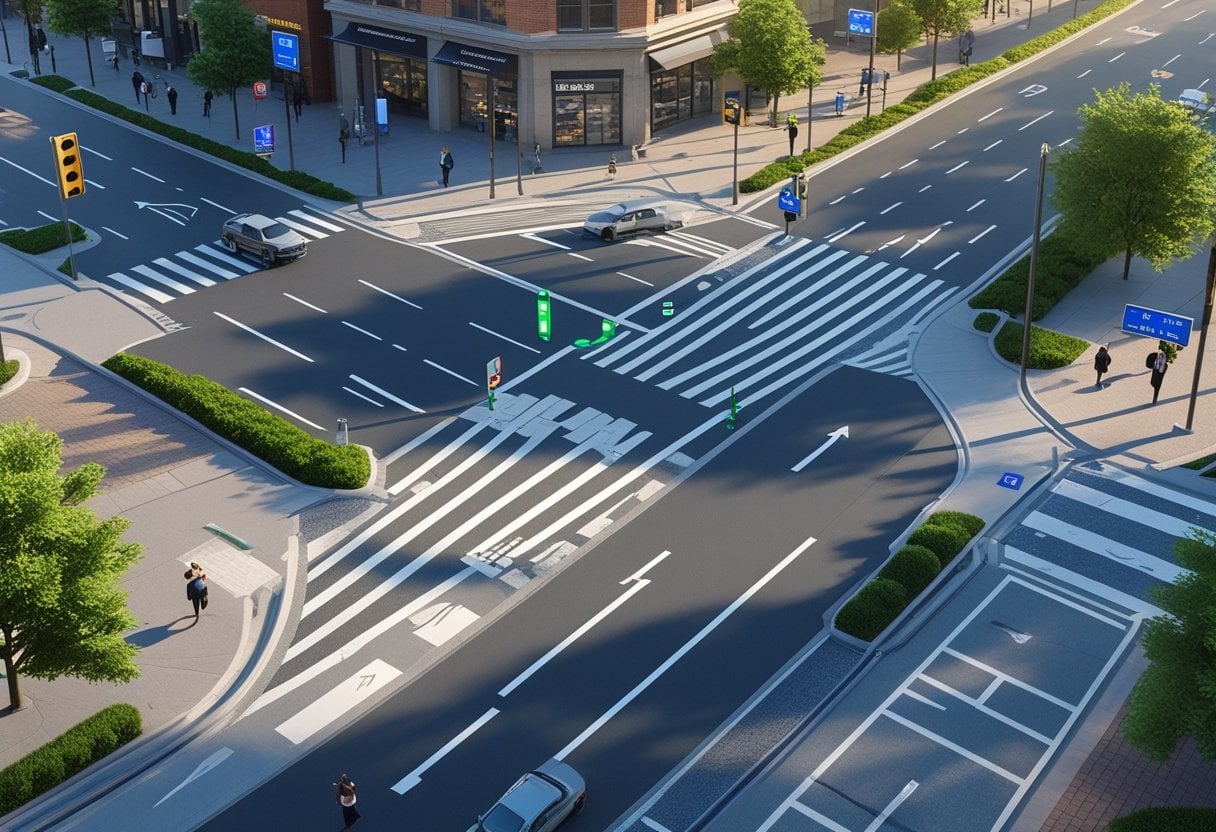
Staggered crossroads feature offset junction points where side roads don’t line up directly opposite each other on a major route. These junctions create unique challenges because they break the familiar crossing pattern we expect at standard crossroads, requiring extra observation and careful timing.
What Defines a Staggered Junction
A staggered junction occurs when two minor roads meet a major road but aren’t positioned directly opposite each other. Instead, they’re offset by several metres, creating a distinctive “stepped” pattern.
Think of it like this: if you’re travelling on a minor road and want to continue straight across to the other side, you can’t go directly across. You’ll need to join the major road first, travel a short distance, then turn off onto the continuing minor road.
The offset distance typically ranges from just a few metres to about 50 metres. This spacing is deliberate. Traffic engineers design these junctions to improve safety by preventing vehicles from different directions colliding head-on when crossing simultaneously.
Key features of staggered junctions:
- Two separate T-junctions close together
- Minor roads don’t align directly
- Requires two-stage crossing manoeuvre
- Often controlled by give way or stop signs
How Staggered Crossroads Differ from Standard Crossroads
Standard crossroads allow you to drive straight across in one smooth movement. The opposing roads line up perfectly, creating a clear path from one side to the other.
At staggered crossroads, this direct route doesn’t exist. We must approach these junctions differently because the geometry forces us to change our usual driving pattern.
Standard crossroads characteristics:
- Direct crossing possible
- All four arms meet at one point
- Single observation point needed
- Simultaneous turns from multiple directions
Staggered crossroads characteristics:
- Two-stage crossing required
- Roads offset from each other
- Multiple observation points needed
- Reduced conflicting movements
The most significant difference is timing. At standard crossroads, we make one decision and execute it. With staggered junctions, we’re essentially dealing with two separate T-junctions in quick succession.
Why These Junctions Are Considered Tricky
Staggered crossroads catch many drivers off guard because they disrupt our mental expectations. Our brains anticipate familiar road patterns, and when those patterns change, we need extra processing time.
The main challenge lies in observation. At standard crossroads, we scan left, right, and ahead from one position. Staggered junctions require us to gather information from multiple angles as we navigate the offset.
Common difficulties include:
- Sight lines: Buildings or vegetation often block our view between the two junction points
- Traffic flow confusion: Other drivers may be unfamiliar with the layout too
- Signal timing: We need to judge gaps for two separate manoeuvres
- Road positioning: Staying in the correct lane becomes more complex
Many learner drivers find these junctions particularly challenging during their first encounters. The key is recognising the layout early and adjusting your approach accordingly.
Remember that staggered crossroads were designed with safety in mind. Once you understand their logic, they become much more manageable and actually offer improved safety compared to busy standard crossroads.
Approaching Staggered Crossroads Safely
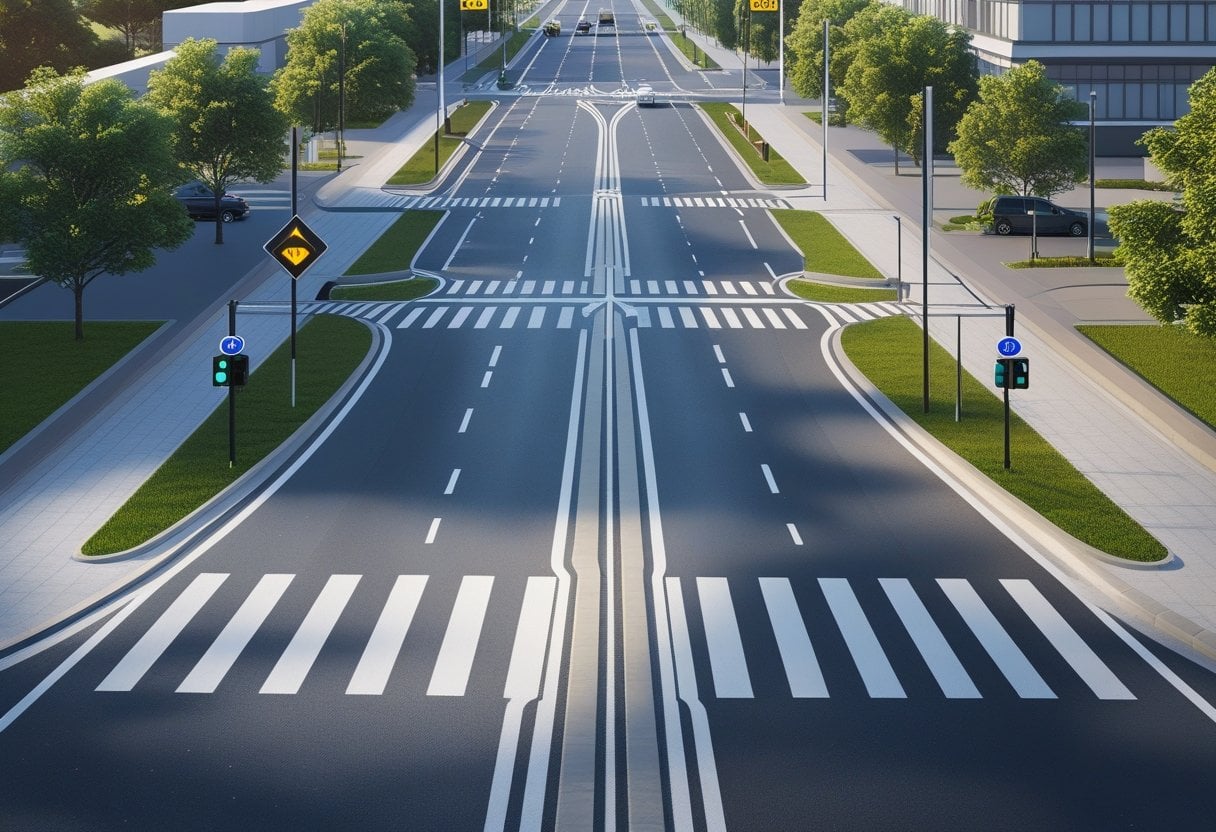
Successfully navigating staggered crossroads starts with early recognition and proper speed control. We’ll need to watch for advance warning signs, adjust our approach speed carefully, and understand what the road markings are telling us about the junction ahead.
Spotting Advance Warning Signs
We can often spot staggered crossroads before we reach them by looking for specific warning signs. These triangular warning signs show a diagram of the staggered layout, helping us prepare early.
The signs typically appear around 100 metres before the junction. This gives us plenty of time to slow down and plan our approach.
Key warning signs to watch for:
- Staggered junction symbol on yellow warning signs
- “Slow” road markings painted on the tarmac
- Give way signs positioned at odd angles
We might also notice that street lighting changes or becomes more frequent near these junctions. This is another helpful clue that we’re approaching a more complex road layout.
Traffic often builds up at staggered crossroads during busy periods. If we spot cars ahead moving slowly or stopping frequently, it’s likely we’re approaching one of these tricky junctions.
Managing Approach Speed and Position
Our approach speed makes all the difference when dealing with staggered crossroads. We need to slow down well before reaching the junction, not at the last minute.
A good rule is to reduce speed to around 15-20 mph as we approach. This gives us time to observe traffic from multiple directions and react safely.
Proper positioning involves:
- Staying in the correct lane for our intended direction
- Keeping left unless we need to turn right
- Maintaining a safe following distance from the car ahead
We should position ourselves where we can see clearly in all directions. Sometimes this means edging forward slowly at the give way line.
The offset nature of staggered junctions means traffic can appear from unexpected angles. Slower speeds help us spot vehicles that might be hidden behind buildings or other obstacles.
Importance of Road Markings
Road markings at staggered crossroads tell us exactly where to stop and which direction has priority. We must pay close attention to these painted guides on the road surface.
Give way markings appear as broken white lines across our lane. These mean we must give way to traffic on the major road before proceeding.
Essential markings include:
- Give way lines (broken white triangles)
- Stop lines (solid white lines)
- Lane dividers showing correct positioning
- Arrows indicating permitted turning movements
The road markings often reveal the staggered nature of the junction before we can see it clearly. Double give way lines or unusually positioned markings are strong clues.
We should always come to a complete stop at stop lines, even if the road appears clear. At give way lines, we can proceed if it’s safe, but we must be ready to stop for other traffic.
Giving Way and Priority Rules
Understanding who has the right of way at staggered junctions keeps traffic flowing smoothly and prevents accidents. The key is knowing when you’re on a major road versus a minor road, and how to handle emerging traffic safely.
Major and Minor Roads: Who Goes First?
When you’re approaching a staggered junction, the golden rule is simple: traffic on the major road always has priority. If you’re coming from a minor road, you’ll need to give way to vehicles already on the main carriageway.
Look out for the telltale signs that indicate you’re on the minor road. These include give way signs, triangular markings painted on the road surface, or broken white lines across your path. These aren’t just suggestions – they’re your legal requirement to yield.
When you’re on the major road approaching a staggered junction, don’t assume other drivers will follow the rules. Stay alert and be ready to slow down if someone pulls out unexpectedly.
Traffic emerging from either side of the staggered junction must wait for a safe gap. This means you have the right to proceed, but it’s always wise to maintain a steady speed that allows you to react if needed.
Dealing With Emerging Traffic
Emerging traffic can appear from both sides at staggered junctions, making them trickier than standard T-junctions. The key is positioning yourself correctly and reading the situation ahead.
When you’re the one emerging, treat each part of the manoeuvre separately. First, join the major road safely by finding an adequate gap. Then, if you need to cross to the opposite minor road, signal and position for your second turn.
Keep your observations sharp when approaching these junctions. Check both sides for vehicles waiting to emerge, and watch for pedestrians who might be crossing between the staggered roads.
If you’re crossing from one minor road to another, don’t try to do it in one go unless the roads are very close together. Two separate moves are safer and give you better control.
Common Priority Mistakes to Avoid
One frequent error is assuming you can rush across because “it’s just a small gap.” This often leads to dangerous situations where you’re stuck in the middle of the major road.
Never pull out if you’re not certain about the speed of approaching traffic. It’s better to wait for the next gap than to force other drivers to brake suddenly.
Don’t forget about pedestrians and cyclists. They have priority when crossing roads you’re turning into or out of. If they’ve started crossing, you must wait.
Another common mistake is not checking both directions properly at staggered junctions. Because roads join from multiple angles, threats can come from unexpected directions.
Executing Manoeuvres at Staggered Crossroads
Staggered crossroads require a different approach than standard crossroads because the roads don’t line up directly opposite each other. We need to break down complex movements into manageable steps and pay extra attention to positioning and timing when navigating these offset junctions.
Treating Each Junction as Separate
The golden rule for staggered crossroads is simple: treat each part as its own junction. This approach keeps you safe and makes the whole process much more manageable.
When you’re crossing from one minor road to another, don’t try to cut across in one swift movement. Instead, we recommend stopping at the major road first, then making your second turn when it’s safe.
This two-step method gives you better control. You can check for traffic properly at each stage rather than rushing through a complicated manoeuvre.
Here’s how it works:
- Complete your first turn onto the major road
- Position yourself correctly for the second turn
- Check mirrors and blind spots again
- Execute the second part when clear
Many learner drivers feel tempted to rush through staggered junctions. But taking your time actually makes you a safer, more confident driver.
Turning Left Then Right Across a Major Road
This combination feels tricky at first, but it becomes natural with practice. The key is getting your positioning spot on from the very beginning.
Start by positioning yourself normally for a left turn. Check your mirrors, signal left, and join the major road when it’s safe. Don’t worry about the upcoming right turn just yet.
Once you’re on the major road, immediately start preparing for your right turn. Check your interior mirror, then your right-hand wing mirror. Signal right as soon as it’s safe to do so.
Position your car closer to the centre line, but don’t rush this movement. Other drivers need time to see your intentions and react accordingly.
The trickiest part is judging the gap between oncoming traffic. If you’re not certain there’s enough space, wait. It’s better to let a few cars pass than to pull out unsafely.
Right-Turn Techniques and Blind Spots
Right turns at staggered junctions demand extra caution because you’re crossing oncoming traffic twice. We need to be absolutely certain about our observations and timing.
Your blind spot checks become crucial here. Before moving into the centre of the road, glance over your right shoulder. Motorcycles and cyclists often appear in these blind spots without warning.
Position yourself just left of the centre line, not right on it. This gives oncoming traffic more room and helps prevent any scraping if larger vehicles pass by.
When you’re waiting in the junction, keep your wheels pointing straight ahead. If someone hits you from behind, you won’t get pushed into oncoming traffic.
Don’t feel pressured to go just because other drivers are waiting. Take the time you need to ensure both parts of your manoeuvre are completely safe.
Watch for pedestrians crossing at both junctions. They might not expect cars to be turning from unusual angles, so make eye contact when possible to ensure they’ve seen you.
Challenges of Visibility and Road Conditions
Poor visibility and challenging road conditions can turn even simple junctions into complex driving situations. These factors affect your ability to spot other traffic early and make safe decisions about when to proceed.
Limited Sight Lines and Open vs Closed Junctions
Open junctions give us clear views of approaching traffic from all directions. We can easily see cars coming and judge their speed and distance. This makes our decisions much simpler.
Closed junctions present the real challenge. Buildings, hedges, parked cars, or fences block our view of the main road. We might only see traffic when it’s already very close.
At closed junctions, we need to reduce our approach speed significantly. Creeping forward slowly helps us gradually reveal more of the road. This technique is called “peeping and creeping.”
Position your car so you can see as far as possible in both directions. Sometimes this means stopping twice: once at the give way line, then again when you’ve moved forward enough to see clearly.
Weather conditions make visibility even trickier. Rain, fog, or bright sunlight can reduce what we can see. Adjust your approach speed based on these conditions too.
Navigating Junctions Without Road Markings
Unmarked junctions catch many drivers off guard. Without road markings or signs telling us who has priority, we must treat these as equal priority situations.
The key rule is simple: slow down and be ready to give way to traffic already on the junction or approaching from your right. This applies even when no signs are visible.
Look for worn-away markings on the road surface. Sometimes paint fades but slight indentations remain. These give clues about the junction layout.
Watch other drivers’ behaviour carefully. If cars on the main road aren’t slowing down, they likely have priority. If they’re being cautious, it might be an equal priority junction.
Approach speed becomes critical here. Come in slowly enough that you can stop safely if another vehicle appears. This gives you time to assess the situation properly.
Rural Roads and High-Speed Approaches
Rural junctions often catch us by surprise because traffic approaches at higher speeds. Cars on country roads might be doing 50-60mph, giving us less time to judge gaps safely.
Hedge-lined roads are particularly challenging. We can’t see approaching vehicles until they’re quite close. The same “peeping and creeping” technique works here, but we need even more caution.
Listen for approaching traffic when visibility is limited. Engine sounds, especially from motorcycles or heavy vehicles, can give us early warning.
Gravel or mud on rural roads affects our grip and stopping distances. Factor this into your approach speed and gap judgements. Wet leaves in autumn create similar hazards.
Take extra time at rural junctions. The gap you think is safe might not be if the approaching car is travelling faster than you estimated. When in doubt, wait for a clearly safe opportunity.
Staggered Crossroads on the Driving Test
Staggered junctions require specific techniques to navigate safely during your test, including proper use of MSM and PSL routines and understanding common scenarios examiners present. Building confidence through targeted practice helps you handle these offset crossroads with the precision your examiner expects.
Common Test Scenarios Involving Staggered Junctions
During your driving test, we’ll encounter staggered junctions in several typical situations. The most common scenario involves crossing from one minor road to another across a busy main road.
Your examiner might direct you to turn right from a minor road, cross the major carriageway, then immediately turn left into the opposite minor road. This requires treating it as two separate manoeuvres rather than one continuous movement.
Another frequent test scenario places you on the major road approaching traffic emerging from both sides of the staggered junction. Here, we need to demonstrate awareness of vehicles that might be crossing between the offset roads.
Key test scenarios include:
- Crossing between opposing minor roads
- Turning from the major road into either junction
- Emerging onto the major road from a minor approach
- Dealing with traffic already positioned between the junctions
The examiner watches how we handle the offset nature of these junctions. They expect us to show clear understanding that staggered crossroads aren’t standard crossroads, even when the offset distance seems minimal.
MSM and PSL Routines for Success
The MSM routine (Mirrors, Signal, Manoeuvre) becomes crucial at staggered junctions, but we must apply it thoughtfully for each separate movement. Start your routine earlier than you might at simpler junctions.
Check your mirrors well before the first junction approach. Signal appropriately for your initial turn or emergence onto the major road. Complete this first manoeuvre fully before beginning your MSL routine for the second movement.
PSL positioning requires extra attention at staggered crossroads. Position your vehicle correctly for each individual turn rather than trying to cut across diagonally. This means:
- Stop completely at the first give way line
- Position centrally in your chosen lane on the major road
- Check mirrors and signal again for your second turn
- Move to the appropriate lane position for the next manoeuvre
Speed control becomes particularly important here. We need enough control to stop safely at each decision point, yet sufficient momentum to join traffic flows confidently when gaps appear.
Building Confidence With Practice
Practice makes these complex junctions feel manageable on test day. Start by identifying staggered crossroads in your local area during lessons with your instructor.
Focus initially on quieter examples where you can practice the two-stage approach without pressure from heavy traffic. This builds muscle memory for the correct sequence of actions.
Work up to busier staggered junctions gradually. Practice during different times of day to experience various traffic conditions. This helps you judge gaps confidently when vehicles are emerging from multiple directions simultaneously.
Effective practice techniques include:
- Verbally talking through each stage with your instructor
- Practicing observations at each decision point
- Building familiarity with common staggered junction layouts
- Developing timing for busy traffic periods
Record your practice sessions mentally, noting which aspects felt challenging. Discuss these areas with your instructor so you can focus additional practice time on your weaker points before test day arrives.
Frequently Asked Questions
These common questions about staggered crossroads cover everything from approach techniques and right-of-way rules to staying safe during busy periods. Understanding proper signalling methods and navigation strategies will help you handle these challenging junctions with greater confidence.
What’s the best approach to confidently tackle staggered crossroads?
The key to handling staggered crossroads lies in treating each offset junction as a separate challenge rather than one continuous movement. We recommend approaching at a steady, controlled speed that allows you to assess both stages of the crossing.
Start by identifying the layout early. Look for road markings and signs that indicate you’re approaching a staggered junction rather than a straight crossroads.
Position your vehicle correctly for the first stage of the manoeuvre. If you’re turning right, move towards the centre line but don’t commit to the full crossing until you’ve checked the first junction thoroughly.
Take your time between the two stages. There’s no rush to complete both parts of the crossing immediately, and pausing between stages often provides better visibility and safer decision-making.
Practice makes perfect with these junctions. The more you encounter them during lessons, the more natural your approach will become.
Could you shed some light on the right-of-way rules when dealing with staggered crossroads?
Right-of-way at staggered crossroads follows the same basic principles as regular junctions, but you need to apply them twice during your crossing. Traffic on the major road always has priority over vehicles emerging from minor roads.
When you’re crossing from one minor road to another, you must give way to traffic on the major road at both stages of your journey. This means stopping and checking twice if necessary.
If there are ‘give way’ or ‘stop’ signs, these apply to each individual junction within the staggered layout. You might encounter different signs at each stage, so stay alert.
Traffic lights at staggered crossroads can be particularly tricky. Some junctions have separate signals for each stage, whilst others use one set to control the entire crossing area.
Remember that other drivers might not expect your two-stage movement. Be prepared for impatient motorists who don’t understand why you’re taking longer to cross.
How can I stay safe while navigating through staggered junctions, especially during peak traffic hours?
Busy periods require extra caution at staggered crossroads because visibility often becomes compromised by queuing traffic. We suggest waiting for larger gaps between vehicles rather than rushing through tight spaces.
Watch out for buses and lorries that can completely block your view of oncoming traffic. These large vehicles make it nearly impossible to see what’s approaching from either direction.
Don’t get trapped in the middle section during heavy traffic. Only begin your crossing when you’re confident you can complete at least the first stage without blocking other road users.
Use your mirrors frequently to monitor traffic building up behind you. Other drivers might become frustrated, but don’t let their impatience pressure you into making unsafe decisions.
Consider alternative routes during peak hours if you’re not yet comfortable with complex staggered junctions. There’s nothing wrong with choosing easier roads whilst you’re still building confidence.
Keep your engine running and stay in gear whilst waiting between stages. This allows you to move quickly when a safe gap appears or reverse back if necessary.
Can you offer some top tips for dealing with the unpredictability of staggered crossroads?
Expect the unexpected at staggered crossroads because other drivers often misread these junctions too. Stay flexible with your plans and be ready to adapt your approach based on what’s actually happening around you.
Create multiple escape plans before you begin crossing. Know where you can safely stop, reverse, or change direction if conditions change unexpectedly.
Watch for pedestrians and cyclists who might not follow the same crossing pattern as vehicles. They often take shortcuts that don’t align with the staggered road layout.
Pay attention to road surface markings that might have worn away or become unclear. Older staggered junctions sometimes have confusing or faded lane markings that can mislead drivers.
Trust your instincts if something feels wrong. It’s better to wait longer or turn back than to push through a situation that makes you uncomfortable.
Learn to read other drivers’ intentions by watching their positioning and indicators. This helps you predict their movements and plan your own crossing accordingly.
What should I keep in mind about signalling at staggered junctions to communicate clearly with other road users?
Your indicator signals need to match each stage of your journey through the staggered crossing. This means you might need to change your signal between the first and second parts of the manoeuvre.
Cancel your indicator after completing the first stage if your direction changes for the second stage. Leaving the wrong signal on can confuse other drivers about your intentions.
Use your indicators early enough to give other road users adequate warning. This is especially important at staggered junctions where drivers need more time to understand complex traffic movements.
Be aware that your signals might be visible to traffic at both parts of the staggered junction simultaneously. Make sure your indicator accurately reflects your immediate next move.
Consider using hazard lights briefly if you need to stop unexpectedly between the two stages. This alerts other drivers that you’re dealing with a temporary situation.
Remember that eye contact and hand gestures can supplement your indicator signals when dealing with confused or hesitant drivers at complex junctions.
Is there a foolproof method to memorise the layout of staggered crossroads for easier navigation?
Regular practice on familiar staggered crossroads helps build your mental map of these junctions. Start with quieter examples during off-peak hours to develop your understanding.
Use landmarks and visual cues to remember the sequence of movements required. Notice shop signs, street furniture, or road markings that can help you recall the junction layout.
Study online maps and satellite images of staggered crossroads in your local area. This bird’s-eye view helps you understand the offset pattern before you encounter it in person.
Take notes after practising different staggered junctions with your instructor. Write down what worked well and what felt challenging about each specific location.
Create mental checkpoints for each stage of the crossing. Think “first check left, cross to middle, second check right, complete crossing” as a simple sequence to remember.
Drive through the same staggered crossroads multiple times during lessons to build familiarity. Repetition helps these complex movements become more automatic over time.
Ready to pass in weeks, not months?
LPOD Academy runs tailored intensive driving courses from 10 to 50 hours across most of the UK, with your theory and practical test support included.
Ready to Book Driving Lessons?
LPOD Academy offers intensive driving courses across the UK. Find your nearest location: